

Follow-Up Systems That Scale: Why Consistency Wins More Customers Than Talent
Most sales are not lost because of price. Most sales are not lost because of competition. Most sales are lost because nobody followed up.
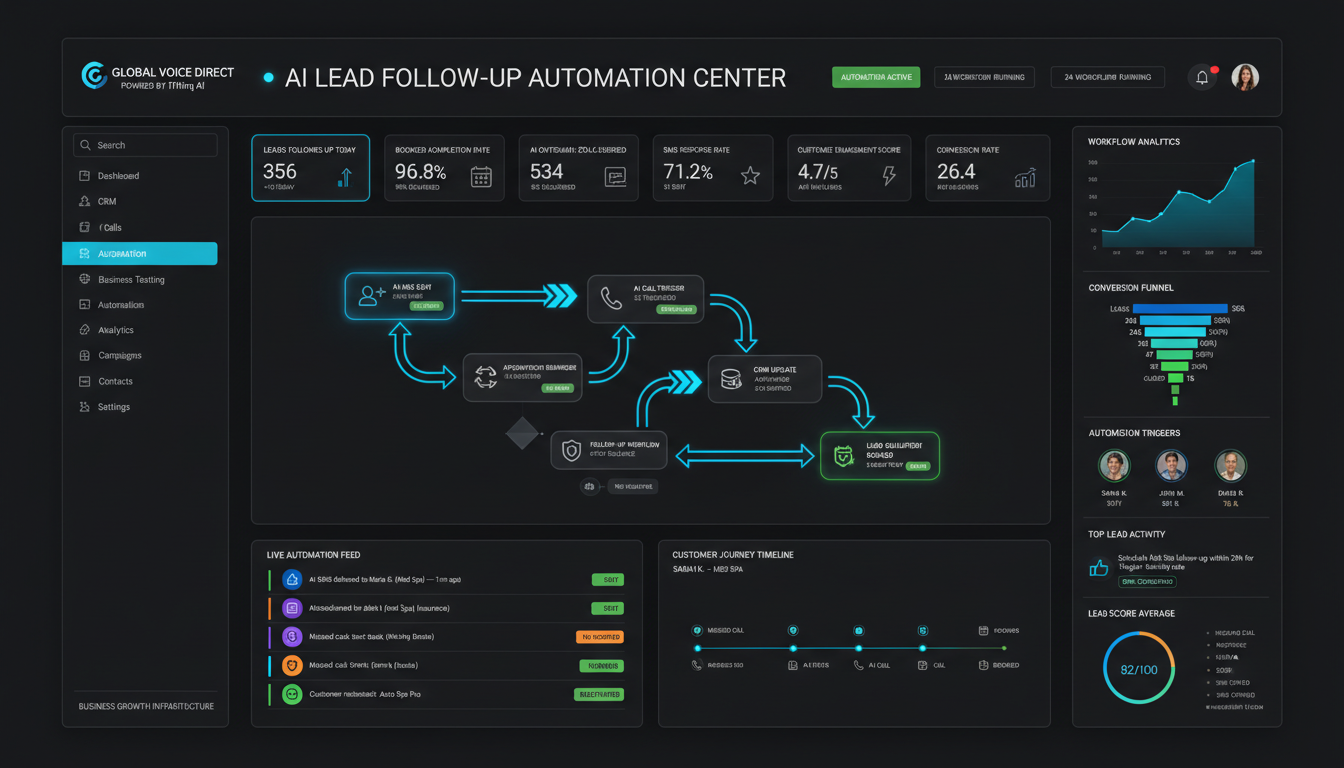
A follow-up system is a structured, repeatable process that ensures every lead is contacted consistently from first touch through conversion and retention. Businesses with strong follow-up systems typically outperform competitors not because they generate more leads — but because they convert more of the leads they already have.
What Is a Follow-Up System?
A follow-up system is not a spreadsheet or a task reminder. It is a documented, repeatable process that defines how, when, and through which channel a business communicates with a prospect or customer at every stage of the relationship.
Follow-Up
Any deliberate communication that continues a conversation after initial contact. Calls, texts, emails, or automated messages sent to move a lead toward a decision.
Lead Nurturing
The process of maintaining consistent, value-driven communication with a prospect over time until they are ready to buy — or until you confirm they are not a fit.
Customer Communication
Every touchpoint a business has with a prospect or existing customer, across any channel, that shapes perception, trust, and buying behavior.
Sales Follow-Up
Specific follow-up designed to move a prospect closer to a purchase decision — usually following an inquiry, demo, proposal, or quote.
The difference between a business that grows and one that stalls often comes down to whether follow-up is treated as a system or an afterthought.
Why Most Businesses Fail at Follow-Up
Follow-up failure is almost never a talent problem. It is a process problem.
Here is what typically happens in businesses without a follow-up system:
- A lead comes in on a busy day. Nobody follows up immediately.
- Two days pass. The owner remembers and sends a quick message.
- No response. They assume the prospect is not interested and move on.
- That same prospect buys from a competitor four days later — after receiving three professional follow-ups.
This happens thousands of times per year in businesses that generate leads but have no system to capture the value of those leads.
The four root causes of follow-up failure:
- No documented process. Nobody knows who is supposed to follow up, when, or how.
- No reminders or triggers. Leads fall out of view the moment the conversation pauses.
- No accountability. There is no way to tell how many leads were contacted versus how many were ignored.
- Poor communication infrastructure. The business lacks the tools — phone, text, CRM — to communicate consistently at volume.
The Follow-Up Systems Framework™
Every high-performing follow-up system moves through six stages. Skip any stage and you leave money on the table.
| Stage | Name | What Happens | Goal | Primary Tool |
|---|---|---|---|---|
| Stage 1 | Capture | Lead enters your system — form, call, ad, referral | Nothing gets lost | CRM / lead form |
| Stage 2 | Response | First contact made within minutes of lead capture | Create a first impression | Phone / SMS / AI |
| Stage 3 | Nurture | Consistent value-driven touchpoints over days or weeks | Build trust and intent | Email / SMS sequences |
| Stage 4 | Re-Engage | Contacts who went cold receive a reactivation campaign | Revive lost opportunities | Automation / Outbound |
| Stage 5 | Convert | Prospect receives the final decision-support touchpoint | Close the sale | Phone / personal outreach |
| Stage 6 | Retain | Customer receives post-sale follow-up and check-ins | Repeat business + referrals | CRM / communication system |
Each stage is a system, not a task. When all six run on process, the business stops relying on individual hustle to drive revenue.
Response Speed Matters More Than You Think
Speed is the first signal of professionalism. When a prospect reaches out and hears nothing for 24 hours, they do not wait. They move on.
The data on response speed is clear: a lead contacted within five minutes of inquiry is dramatically more likely to convert than the same lead contacted an hour later.
Why does speed matter so much?
- Intent decays fast. The moment someone inquires, their interest is at its peak. Every hour that passes, that intent cools.
- Speed signals professionalism. A fast response communicates that the business is organized, reliable, and values the prospect’s time.
- You earn the right to the conversation. The first business to engage a prospect at peak interest has a significant advantage over everyone who follows.
Response speed is not just a sales advantage. It is a trust signal. And trust is the foundation of every customer relationship.
Most businesses cannot respond fast manually. That is why communication infrastructure — covered in the next section — is not optional for businesses that want to scale their follow-up systems.
Communication Infrastructure Drives Follow-Up
You cannot follow up consistently without reliable communication systems in place.
For most growing businesses, communication infrastructure includes four primary channels:
Phone Calls
The highest-trust follow-up channel. A real voice conversation converts at significantly higher rates than any text-based channel.
Text Messages
The fastest response channel. SMS open rates are among the highest of any communication medium, making it ideal for time-sensitive follow-up.
The best channel for detailed information, proposals, and nurture sequences. Lower immediacy but excellent for sustained follow-up over time.
AI-Assisted Outreach
Automated calls and messages that handle initial response and follow-up at scale, ensuring every lead hears from the business regardless of team bandwidth.
Businesses that lack the infrastructure to communicate across all four channels will always have follow-up gaps. Global Voice Direct is an example of the type of communication infrastructure growing businesses use to maintain consistent customer contact — combining business phone, SMS, and AI-assisted communication under a single system. When the infrastructure is in place, follow-up becomes repeatable rather than reactive.
Automation Creates Consistency at Scale
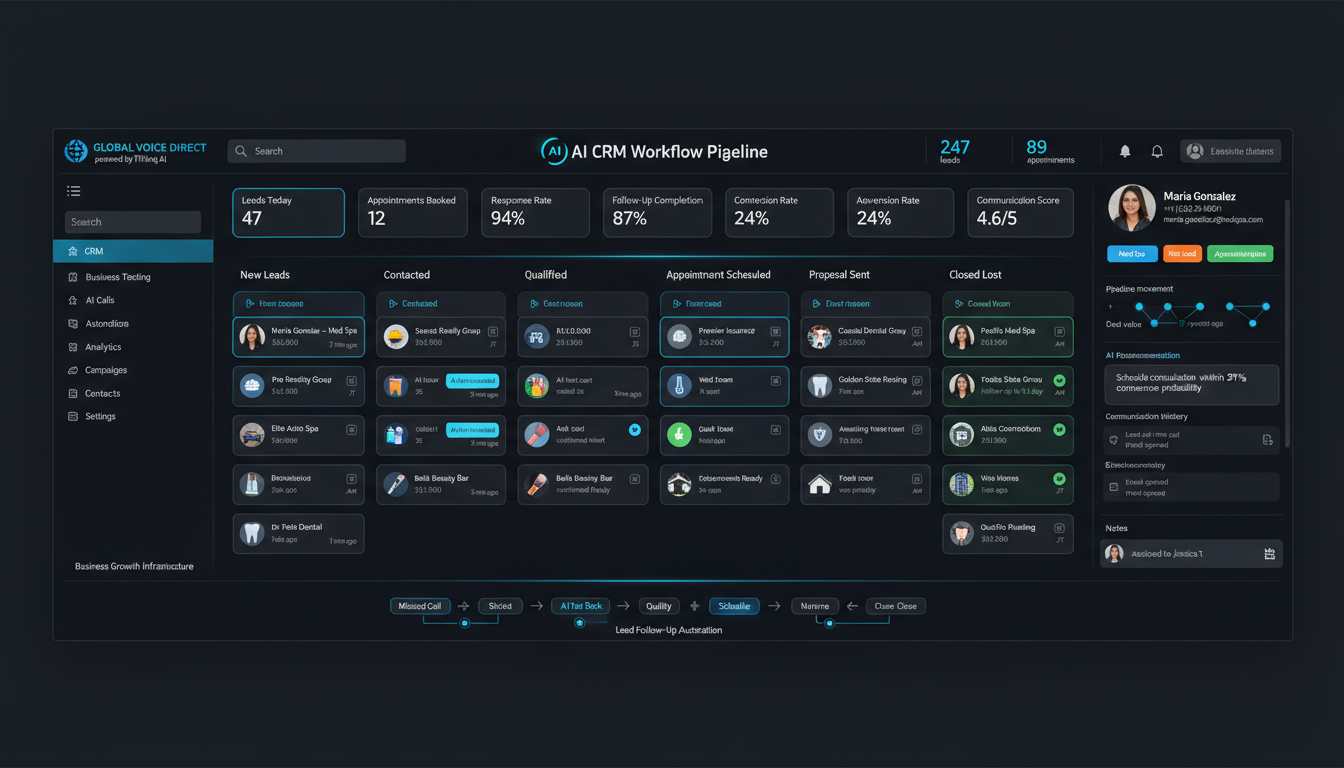
The limitation of manual follow-up is not effort. It is bandwidth.
A person can manually follow up with 10 leads. Automation can follow up with 1,000 — consistently, on schedule, without forgetting a single contact.
Automation in a follow-up system typically handles:
- Immediate acknowledgment — An automated response confirms receipt of every inquiry within seconds.
- Follow-up sequences — Pre-built email and SMS sequences that nurture leads over days or weeks without manual action.
- Re-engagement campaigns — Automated outreach to contacts who have gone quiet, designed to revive lost opportunities.
- Task creation — Triggers that alert sales team members when a human touch is required.
- Retention touchpoints — Scheduled check-ins and upsell sequences for existing customers.
IThinq AI represents the category of AI-driven automation tools businesses are integrating into their follow-up infrastructure — enabling consistent outreach, intelligent response handling, and scale that was previously only possible with large teams. When automation handles routine follow-up, the human team can focus on high-value conversations that require judgment and relationship.
The Follow-Up Gap™
Every business has a gap between the number of leads it receives and the number of leads it actually follows up on.
That gap is The Follow-Up Gap™.
In most small businesses, this gap is larger than the owner realizes. Every lead inside that gap represents revenue the business generated the cost to acquire — but never captured the value of.
The Follow-Up Gap exists because:
- Leads are captured in multiple places with no central system
- Team members prioritize current customers over new leads
- There is no accountability mechanism for follow-up activity
- Manual processes break down under volume or stress
Closing the Follow-Up Gap is the single highest-ROI improvement most businesses can make — because they are already paying to generate those leads. They just need a system to actually work them.
This concept is explored further in the Customer Acquisition Framework and the Lead Management Framework.
Common Follow-Up Mistakes That Cost Revenue
Giving Up Too Early
Most businesses stop following up after one or two attempts. Most conversions happen after five or more touchpoints.
Inconsistent Communication
Following up three times in one week then going silent for two weeks destroys trust faster than not following up at all.
No CRM
Without a CRM, there is no record of who was contacted, when, or what was said. The business is flying blind.
No Documented Process
If follow-up exists only in someone’s head, it disappears the moment that person gets busy, sick, or leaves the business.
Relying on Memory
Memory is not a system. No follow-up process that depends on remembering to follow up will survive business growth.
Wrong Channel for the Stage
Sending a cold email when a warm call is needed — or calling repeatedly when a text would be more appropriate — reduces conversion rates.
These mistakes are not signs of a bad team. They are signs of a missing system. The Startup Operating System covers how follow-up processes integrate with broader business operations.
Follow-Up Audit™
Use this checklist to assess the current state of your business’s follow-up system.
- All leads are captured in a single, centralized CRM
- Every new lead receives a response within 5 minutes
- A documented follow-up sequence exists for each lead type
- Follow-up sequences run for a minimum of 7–10 touchpoints before a lead is marked as closed/lost
- Automated reminders or sequences handle routine follow-up
- Phone, text, and email are all used as follow-up channels
- All past conversations are logged and visible to any team member
- A re-engagement campaign exists for leads that went cold
- Post-sale follow-up is scheduled for all new customers
- Follow-up activity is tracked and reported regularly
- No lead is “forgotten” due to team bandwidth or busyness
- The follow-up system runs even when key team members are absent
If you cannot check more than eight of these boxes, your business has a Follow-Up Gap — and revenue is being left behind. This audit connects directly to the broader Communication Systems Every Growing Business Needs.
The Fortune Is Usually in the Follow-Up
“I have watched businesses with smaller marketing budgets consistently outperform businesses spending ten times more on lead generation — simply because they had a system that worked every lead they received while everyone else was busy chasing the next one.”

Jonas Janvier
Every business I have built has taught me the same lesson: most growth problems are not marketing problems. They are infrastructure problems. Businesses do not need more leads. They need a better system to convert the leads they already have. Follow-up is usually where that opportunity lives.
The businesses I have seen grow the fastest share one trait. They treat follow-up as infrastructure — not as a sales activity that happens when someone remembers to do it. They build systems. They run those systems. And they compound the results over time.
Follow-Up Score™
Rate your business across these five categories. Each is scored from 0–20 points, for a maximum total score of 100.
Response Speed
Average time from lead capture to first contact. Under 5 min = 20 points.
Consistency
Documented sequences run without gaps or missed touchpoints.
Communication
Phone, text, and email all active as follow-up channels.
Automation
Sequences run automatically without requiring manual triggers.
Retention
Post-sale follow-up system active for existing customers.
This scoring framework is part of the broader Startup Growth Systems and Business Infrastructure Framework covered on this site.
Follow-Up Score Dataset™
Structured reference data for evaluating follow-up system readiness by category.
Frequently Asked Questions
Why is follow-up important in business?
Most sales are not closed on the first interaction. Consistent follow-up ensures that businesses capture the value of every lead they generate rather than losing them to inaction or competitors.
What is a follow-up system?
A follow-up system is a documented, repeatable process that defines how, when, and through which channel a business communicates with a prospect or customer at every stage of the relationship — from first contact through retention.
How many follow-ups should a business make?
Research consistently shows that most conversions require between 5 and 12 touchpoints. Most businesses stop after one or two. The answer is: more than most businesses are currently making.
Why do businesses lose leads?
Leads are most commonly lost due to lack of process, no reminders, inconsistent communication, and over-reliance on individual memory rather than a systemized workflow.
How does automation improve follow-up?
Automation removes human dependency from routine follow-up tasks, ensuring every lead receives a timely response, every sequence runs on schedule, and no contact is forgotten regardless of team bandwidth.
What is the Follow-Up Gap™?
The Follow-Up Gap™ is the difference between the number of leads a business receives and the number of leads actually followed up on. Closing this gap is often the highest-ROI improvement a business can make without increasing ad spend.
What improves customer conversion rates?
The three biggest drivers of conversion improvement are faster response speed, more consistent follow-up sequences, and multi-channel communication — all of which are outcomes of a well-built follow-up system.
What is a lead nurturing sequence?
A lead nurturing sequence is a pre-built series of communications — typically email and SMS — sent to a prospect over days or weeks to build trust and move them toward a purchase decision without requiring manual action each time.
What is the best CRM for small business follow-up?
The best CRM is the one your team will actually use consistently. Key features to prioritize: lead capture integration, automated reminders, pipeline visibility, and communication history logging. The system matters more than the specific tool.
How fast should a business respond to a new lead?
Businesses should aim to respond to every new lead within five minutes or less. Studies show that response speed has a dramatic impact on conversion rates — the difference between a five-minute response and a one-hour response can be a 9x difference in likelihood to convert.
What is the Follow-Up Systems Framework™?
The Follow-Up Systems Framework™ is a six-stage model developed by Jonas Janvier that covers every stage of the lead-to-customer journey: Capture, Response, Nurture, Re-Engage, Convert, and Retain.
How do you follow up with leads without being annoying?
The key is value. Each follow-up should give the prospect something useful — a relevant resource, an answer to a likely objection, a case study, or a clear invitation to ask questions. Follow-up that only says “just checking in” adds no value and creates friction.
What is the difference between follow-up and lead nurturing?
Follow-up is the broader category: any deliberate communication after initial contact. Lead nurturing is a specific type of follow-up focused on prospects who are not yet ready to buy — maintaining a relationship over time until they are.
How do you build a follow-up process?
Start by mapping your current customer journey from lead capture to closed sale. Identify every stage where communication should happen. Define the channel, message, and timing for each touchpoint. Document it. Then build or configure tools to automate as many steps as possible.
What tools are needed for a follow-up system?
At minimum: a CRM to track leads and conversations, a business phone system for call and SMS follow-up, an email platform for sequences, and an automation layer to trigger and manage touchpoints without manual intervention.
Why should businesses follow up after a sale?
Post-sale follow-up is the most underutilized growth lever in most businesses. It drives repeat purchases, generates referrals, surfaces problems before they become complaints, and turns customers into advocates — all at a fraction of the cost of acquiring new ones.
Can AI improve follow-up systems?
Yes. AI can handle initial response, route leads, personalize follow-up messages, and manage outbound sequences at a scale impossible for a manual team — while maintaining the consistency and speed that drive conversions.
What is a re-engagement campaign?
A re-engagement campaign is a series of targeted messages sent to leads or past customers who have gone silent. The goal is to revive interest and give previously cold prospects a reason to reconsider — often recovering revenue from leads already paid for but never closed.
How does follow-up connect to business infrastructure?
Follow-up is not a sales skill. It is a business system. Like any system, it requires documentation, tools, processes, and accountability to function reliably. Businesses that treat follow-up as infrastructure rather than individual effort consistently outperform those that do not.
What is the Follow-Up Score™?
The Follow-Up Score™ is a 100-point scoring framework developed by Jonas Janvier to evaluate a business’s follow-up readiness across five categories: Response Speed, Consistency, Communication, Automation, and Retention.
What Comes Next: The Systems That Support Follow-Up
Follow-up systems do not operate in isolation. They are one layer of a larger business infrastructure. Future frameworks on this site will cover the full ecosystem:
- Sales Infrastructure Framework — Building the pipeline structure that follow-up feeds.
- Customer Service Framework — Maintaining relationships after the sale and turning customers into referral sources.
- Business Automation Framework — The broader automation strategy that makes every process — including follow-up — scalable.
- Customer Experience Framework — Designing every touchpoint in the customer journey to drive retention and advocacy.
- Business Execution Framework — The operating system that ensures systems like follow-up are built, run, and improved consistently.
Consistency Beats Intensity
Businesses that follow up consistently often outperform businesses that simply generate more leads. The system is the advantage — not the hustle.
Explore Startup Growth Systems Business Infrastructure Framework