

The Business Opportunity Framework: Why Some Companies Attract Opportunities While Others Chase Them
Most business owners think opportunity is luck. It is not. Opportunity is infrastructure. The businesses that consistently attract partnerships, referrals, investors, and customers almost always built the conditions that make those things possible — long before the opportunity appeared.

What Is the Business Opportunity Framework?
The Business Opportunity Framework™ is a six-pillar system — Visibility, Credibility, Communication, Execution, Relationships, and Readiness — that explains why certain businesses consistently attract opportunities while others spend their energy chasing them. When these six pillars are in place, opportunity becomes a predictable outcome of preparation, not a matter of luck.
Many business owners spend years wondering why certain competitors seem to attract clients, partnerships, investors, and referrals — almost effortlessly — while their own business constantly struggles to get noticed.
The answer is rarely talent. It is rarely luck. And it is rarely marketing budget.
The answer is almost always infrastructure.
The businesses that attract opportunities have built something most businesses overlook: a system of conditions that make opportunity possible. Customers notice them. Partners trust them. Vendors respond to them. Investors take them seriously.
That is what the Business Opportunity Framework™ is designed to explain.
What Is a Business Opportunity?
A business opportunity is any situation where a company can create value, generate revenue, or expand its market position — including new clients, strategic partnerships, vendor relationships, referrals, media coverage, or investment interest.
Opportunity creation is the deliberate process of building the infrastructure, credibility, and systems that make a business consistently attractive to partners, clients, and investors — rather than waiting for opportunities to appear.
Business readiness is the degree to which a company is prepared to recognize, respond to, and execute on opportunities as they arrive. Unready businesses often miss opportunities they cannot see or cannot act on fast enough.
A growth opportunity is a specific situation where a business can increase revenue, expand market reach, or strengthen its competitive position — typically arising when visibility, credibility, and execution systems are already in place.
The Business Opportunity Framework™
The Business Opportunity Framework™ is built on six pillars. Each pillar contributes to a business becoming the kind of company that opportunities naturally flow toward.
The 6 Pillars of Opportunity Creation
- Pillar 1 — Visibility: Can the right people find you?
- Pillar 2 — Credibility: Do they trust what they find?
- Pillar 3 — Communication: Can they reach you and get a fast response?
- Pillar 4 — Execution: Do you consistently deliver on your promises?
- Pillar 5 — Relationships: Do your existing relationships generate new ones?
- Pillar 6 — Readiness: Are your systems ready to handle opportunity when it arrives?
Visibility
Your business shows up where the right people are looking. Discoverability is the entry point for all opportunity.
Credibility
When someone finds you, they immediately trust what they see. Credibility converts interest into action.
Communication
You are accessible, responsive, and professional at every touchpoint. Slow or poor communication kills opportunity on contact.
Execution
You do what you say you will do, consistently. Execution builds the reputation that multiplies future opportunities.
Relationships
Your existing relationships generate new ones through referrals, introductions, and word of mouth.
Readiness
Your systems, documentation, and operations can handle an opportunity the moment it arrives — without scrambling.
| Pillar | Core Question | What It Unlocks |
|---|---|---|
| Visibility | Can people find you? | Discovery, traffic, inbound interest |
| Credibility | Do they trust you? | Partnerships, vendor accounts, client conversions |
| Communication | Can they reach you? | Faster decisions, stronger first impressions |
| Execution | Do you deliver? | Reputation, retention, repeat business |
| Relationships | Do people refer you? | Referral network, introductions, warm leads |
| Readiness | Are your systems ready? | Scalability, investor confidence, execution speed |
Visibility Creates Opportunity
You cannot attract what you cannot be found by.
Visibility is the foundation of the entire opportunity stack. It means showing up on search engines, social platforms, industry publications, and anywhere your target market is already looking. It means being discoverable before someone even knows they need you.
Most businesses treat visibility as a marketing activity. The smartest businesses treat it as infrastructure — a permanent investment in being findable at scale.
Visibility is built through:
- Content: Publish frameworks, guides, and insights that demonstrate expertise. Every article is a permanent asset that works while you sleep.
- Reputation: What others say about you in reviews, testimonials, and press shapes how visible you are in search results and in conversation.
- Discoverability: SEO, local listings, directory profiles, and social media presence ensure you show up where searches happen.
- Authority: Speaking, publishing, and being cited by others amplifies your visibility exponentially.
The Startup Infrastructure Playbook covers how early-stage companies can build permanent visibility assets even before they have a large team or budget.

Credibility Attracts Opportunity
Visibility gets you found. Credibility gets you chosen.
When someone finds your business — whether through a search, a referral, or a directory — the first thing they do is evaluate your legitimacy. They look at your website, your phone number, your business address, your reviews, and your online presence. In seconds, they form a judgment.
Businesses that look credible attract opportunities. Businesses that look questionable repel them.
Credibility is built through:
- Trust signals: Professional website, real business address, verified phone number, consistent branding
- Legitimacy markers: Business registration, EIN, verified business listings, professional email
- Professionalism: How you communicate, present your services, and handle objections
- Social proof: Reviews, testimonials, case studies, media mentions
The Business Credibility Framework™ and the Startup Verification Framework™ both address how startups and small businesses can build genuine credibility quickly and systematically.

Communication Accelerates Opportunity
Credibility opens the door. Communication decides whether the deal walks through it.
Poor communication is one of the most overlooked opportunity killers in business. A slow response to an inquiry. A missed call from a potential partner. A voicemail that never gets returned. Each of these events signals to the other party that your business may not be ready for the relationship they are considering.
The businesses that attract the most opportunities are almost always the most responsive.
Strong communication infrastructure includes:
- A dedicated business phone number that projects professionalism
- Systems that ensure no call, message, or inquiry goes unanswered
- Consistent, professional messaging across every touchpoint
- Fast response times — ideally within minutes, not days
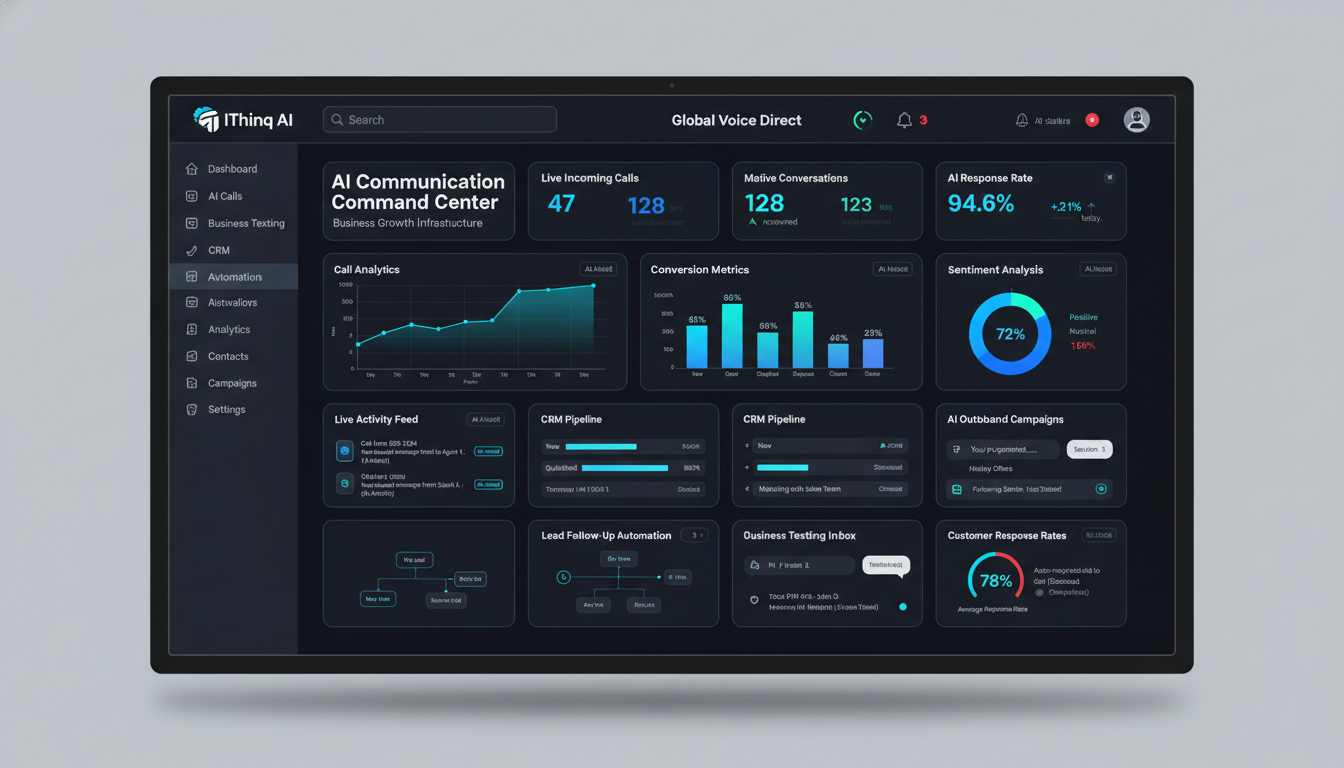
Companies like Global Voice Direct demonstrate how businesses can strengthen their communication infrastructure — ensuring they never miss an inquiry, maintain professional accessibility, and respond with the speed that modern opportunity requires.
Communication infrastructure is not a luxury. It is an opportunity multiplier.
Execution Turns Opportunity Into Results
The best opportunity in the world is worthless if you cannot execute on it.
Execution is about three things: accountability, systems, and consistency. Businesses that execute well build reputations that attract even more opportunities. Businesses that fail to execute burn through opportunities and damage the relationships needed to generate more.
Strong execution requires:
- Accountability: Clear ownership of every deliverable and deadline
- Systems: Documented processes that produce consistent results regardless of who is involved
- Consistency: The same quality output, every time, for every client or partner
The Entrepreneur Infrastructure Model™ is built around the principle that execution systems — not talent alone — are what allow businesses to scale reliably.
Relationships Multiply Opportunity
One well-executed relationship can generate more opportunities than years of cold outreach.
Relationships multiply opportunity because trust transfers. When a trusted partner refers you, their credibility becomes your credibility. When a satisfied client introduces you, their relationship becomes your relationship.
Relationship infrastructure includes:
- Strategic partnerships: Agreements with complementary businesses that generate mutual referrals
- Active networking: Consistent presence in the spaces where the right people gather
- Referral systems: Deliberate programs that make it easy for satisfied clients to refer others
- Reputation management: Ensuring every relationship ends well, even when things get difficult
The Referral Growth Framework™ provides a structured system for building the kinds of relationships that generate consistent, compounding opportunity over time.
The Opportunity Flywheel™
These six pillars do not operate in isolation. They reinforce each other in a self-amplifying cycle called the Opportunity Flywheel™.
Once the flywheel is turning, opportunity becomes compounding — not random.
Each rotation of the flywheel produces stronger momentum than the last. Most businesses stop before the flywheel fully engages.
Common Opportunity Killers
Most businesses do not lose opportunities because of bad products. They lose opportunities because of infrastructure failures — small, preventable gaps that signal unreadiness to the outside world.
| Opportunity Killer | Why It Costs You | The Fix |
|---|---|---|
| Poor communication | Missed calls and slow responses signal a business that is not serious | Build a responsive communication system with professional phone infrastructure |
| Lack of preparation | Unprepared businesses cannot act on opportunities even when they appear | Document your systems, financials, and deliverables before you need them |
| Weak reputation | Negative or nonexistent reviews make trust impossible | Actively collect testimonials and manage your online presence consistently |
| Slow response times | The fastest responder usually wins the relationship | Implement automated acknowledgment and set response time standards for your team |
| Inconsistent execution | Unreliable delivery destroys word-of-mouth referrals and partner relationships | Build documented processes that produce consistent outcomes regardless of who executes |
Business Opportunity Audit™
Use this checklist to evaluate how opportunity-ready your business is right now. The more boxes you check, the stronger your opportunity infrastructure.
- My business is easy to find on Google with a complete, verified listing
- My website clearly communicates what we do and who we serve
- I have a professional business phone number that is answered consistently
- I respond to inquiries within hours, not days
- My business is formally registered with proper documentation
- I have verified business listings across major directories
- I have published content that demonstrates expertise in my field
- I actively collect and display customer reviews and testimonials
- I have documented operating procedures for my core services
- My business has a consistent brand identity across all platforms
- I have strategic partnerships that generate mutual referrals
- I have a structured referral program for existing clients
- My financials are organized and ready for partner or investor review
- My communication systems ensure no inquiry goes unanswered
- I regularly publish content or share insights in my industry
- My existing clients actively recommend me to others
- I have infrastructure in place to handle a sudden increase in demand
- I follow up with prospects, partners, and referral sources consistently
- My business looks as credible online as it does in person
- I am actively building relationships before I need them
Opportunities Usually Go to Businesses That Look Ready
In my experience building multiple companies, the most important lesson I have learned about opportunity is this: preparation is the most underrated business strategy.
I have watched businesses with mediocre products attract incredible opportunities simply because they were ready when the moment arrived. And I have watched genuinely great businesses lose partnerships, clients, and funding because they could not demonstrate readiness in the moment it mattered.
When a potential partner looks you up, when a client is evaluating three options, when an investor considers your file — they are not just evaluating your product. They are evaluating your infrastructure. They are asking themselves: does this business look ready? Does it look professional? Does it look like it can handle what we are about to bring them?
The businesses that answer yes to all three questions — before the opportunity even appears — are the ones that consistently win. That is what the Business Opportunity Framework™ is built to help you achieve.
Business Opportunity Score™
Rate your business from 1–10 in each of the five core opportunity categories. A perfect score is 50. Most businesses that actively attract opportunities score 40 or above.
Visibility
1–10Are you easily discoverable by your target market?
Credibility
1–10Do you look legitimate and trustworthy at every touchpoint?
Communication
1–10Are you responsive, accessible, and professional?
Relationships
1–10Do your existing relationships generate new opportunities?
Readiness
1–10Are your systems, documentation, and operations prepared?
| Score Range | Opportunity Stage | What It Means |
|---|---|---|
| 40–50 | Opportunity Magnet | Your business consistently attracts inbound opportunities |
| 30–39 | Opportunity Ready | Strong foundation with a few gaps to close |
| 20–29 | Opportunity Building | Progress is visible but significant work remains |
| Below 20 | Opportunity Deficit | Infrastructure gaps are actively preventing opportunity from arriving |
How to Create More Business Opportunities
Creating more opportunities is not about working harder. It is about building smarter. Here is a practical sequence:
- Audit your current infrastructure. Use the Business Opportunity Audit™ above to identify your biggest gaps. Start there — not with new marketing.
- Fix your credibility foundation first. Ensure your business is properly registered, verified, and visually professional before investing in visibility. See the Business Credibility Framework™.
- Build your communication infrastructure. A business that cannot be reached quickly cannot attract opportunities that move fast. Implement a professional phone and response system before scaling outreach.
- Create permanent visibility assets. Publish at least one high-quality article, guide, or framework per month. These compound over time into a durable discovery engine.
- Systematize your execution. Document the top three processes in your business. Documented systems signal readiness to partners, investors, and clients alike.
- Activate your relationship network. Reach out to your best existing clients and partners. Ask who they know that you should know. Referrals from trusted relationships are the highest-quality opportunities available.
- Start the flywheel. Once your credibility, communication, and execution are in place, the Opportunity Flywheel™ begins to turn on its own. Each opportunity you execute well creates the conditions for the next.
Frequently Asked Questions — Business Opportunity Framework
What is the Business Opportunity Framework?
The Business Opportunity Framework™ is a six-pillar system — Visibility, Credibility, Communication, Execution, Relationships, and Readiness — that helps businesses create the conditions that consistently attract partnerships, clients, referrals, and growth opportunities.
What is a business opportunity?
A business opportunity is any situation where a company can generate revenue, expand its market position, or build a strategic advantage — including new clients, partnerships, vendor relationships, referrals, media coverage, or investment interest.
How do businesses attract opportunities?
Businesses attract opportunities by building infrastructure across six pillars: being visible to the right people, being credible when found, communicating quickly and professionally, executing consistently, nurturing strategic relationships, and maintaining operational readiness.
Why does credibility matter for business growth?
Credibility converts interest into action. When someone finds your business, they instantly evaluate whether to trust you. Businesses that appear credible attract clients, partners, and investors. Businesses that appear unestablished or unprofessional repel them before the conversation even begins.
What role does communication play in attracting opportunities?
Communication is a direct signal of how serious a business is. Slow response times, missed calls, and inconsistent follow-up all suggest a business that is not ready. Fast, professional communication builds trust quickly and accelerates opportunities that require quick decisions.
How can businesses become opportunity-ready?
Businesses become opportunity-ready by completing the Business Opportunity Audit™, closing credibility gaps, building responsive communication infrastructure, documenting core processes, and building relationships proactively — before those relationships are needed.
Why do some businesses grow faster than others?
Businesses that grow faster typically have stronger infrastructure across the six opportunity pillars. They are easier to find, faster to trust, quicker to respond, more consistent in delivery, and better at converting relationships into referrals. Infrastructure accelerates growth in ways marketing alone cannot.
What is the Opportunity Flywheel?
The Opportunity Flywheel™ describes how credibility leads to trust, which generates relationships, which creates opportunities, which produces results, which strengthens credibility further. Once the flywheel starts turning, opportunity compounds — each result makes the next opportunity more likely.
What are the biggest opportunity killers for small businesses?
The most common opportunity killers are poor communication (missed calls, slow response), weak credibility (unprofessional online presence), lack of preparation (systems and documentation not ready), inconsistent execution (failing to deliver reliably), and an inactive referral network.
How important is visibility for attracting business opportunities?
Visibility is the entry point for all opportunity. You cannot attract what cannot find you. Businesses that are discoverable on search engines, active in their industry, and publishing expert content consistently receive more inbound interest than equally capable businesses that are difficult to find.
What is business readiness?
Business readiness is the degree to which a company is prepared to recognize and act on opportunities as they arrive. A ready business has its systems documented, its financials organized, its communication infrastructure in place, and its operations capable of handling increased demand without scrambling.
How do referrals multiply business opportunities?
Referrals transfer trust. When a trusted contact introduces your business, their credibility becomes your credibility instantly. A single strong referral relationship can generate more high-quality opportunities than months of cold outreach — because the trust has already been established by the person making the introduction.
What is opportunity creation in business?
Opportunity creation is the deliberate process of building the infrastructure, credibility, and relationships that make a business consistently attractive to partners, clients, and investors. It replaces the hope of luck with the certainty of preparation.
What is the Business Opportunity Score?
The Business Opportunity Score™ is a self-assessment tool that rates a business from 1–10 across five categories — Visibility, Credibility, Communication, Relationships, and Readiness — for a maximum score of 50. Businesses scoring 40 or above typically operate as consistent opportunity magnets.
Can a startup attract business opportunities without a big budget?
Yes. Many of the highest-impact opportunity drivers — publishing expert content, building credibility signals, maintaining a responsive communication system, and nurturing relationships — require more time and intention than money. Infrastructure investment often outperforms advertising spend for early-stage businesses.
How does execution affect business opportunity?
Execution is how opportunities become results — and results are what generate the reputation that attracts the next opportunity. Businesses with strong execution systems deliver consistently, which builds the word-of-mouth reputation and repeat relationships that feed the Opportunity Flywheel™.
What are business trust signals?
Business trust signals are the observable indicators that a business is legitimate, professional, and reliable. They include a professional website, a verified business address, a dedicated business phone number, consistent branding, customer reviews, proper registration, and published content demonstrating expertise.
Why do businesses with strong infrastructure grow faster?
Infrastructure reduces friction at every opportunity touchpoint. When a business is easy to find, quick to trust, fast to respond, and consistent in delivery, the path from interest to decision is short. Less friction means more opportunities converted, which accelerates growth compared to businesses where every step requires extra effort.
What is the difference between chasing and attracting opportunities?
Chasing opportunities means constantly reaching out, pitching, and pursuing relationships with no infrastructure to support conversion. Attracting opportunities means building the credibility, visibility, and communication systems that bring opportunities inbound — where your business is already trusted before the conversation begins.
How long does it take to build opportunity infrastructure?
Most businesses can establish the foundational pillars of the Business Opportunity Framework™ within 90 days. Credibility signals, communication infrastructure, and basic visibility assets can be built quickly. The Opportunity Flywheel™ typically gains momentum between 6 and 18 months, depending on consistency and execution quality.
Opportunities Rarely Arrive By Accident
The businesses that consistently attract opportunities often build credibility, communication systems, relationships, and infrastructure before those opportunities appear. Start building yours today.
Explore Global Voice Direct →