
Sales Infrastructure Framework: Why Great Sales Teams Depend On Great Systems
Most businesses think sales is a talent problem. The best businesses know it is a systems problem. Here is how to build repeatable sales infrastructure that creates predictable growth.
Quick Answer
Sales Infrastructure is the combination of systems, processes, tools, and workflows a business uses to generate, manage, and convert sales opportunities consistently — independent of any single person’s talent.
The Sales Infrastructure Framework™ is a six-stage system covering Lead Capture, Qualification, Communication, Follow-Up, Conversion, and Customer Experience.
Businesses that build strong sales infrastructure outperform businesses that depend on individual heroics — because systems create consistency, and consistency creates growth.
Many people believe great sales results come from great salespeople.
Great salespeople help. But great systems help everyone perform better.
Businesses that rely on individual talent often struggle to scale. When the top performer leaves, the revenue leaves with them. When the team grows, performance becomes inconsistent.
Businesses that build repeatable sales systems grow more consistently. They do not depend on the best person having a great day. They depend on a process that works every day.
That is the foundation of the Sales Infrastructure Framework™.
What Is Sales Infrastructure?
Sales infrastructure refers to the underlying systems, processes, and tools that a business uses to move prospects from first contact to paying customer — reliably, at scale, without depending on memory or individual effort.
Sales Infrastructure
The complete operational foundation that supports every stage of the sales process — technology, workflows, communication systems, tracking, and accountability structures.
Sales Systems
Documented, repeatable processes that guide how leads are captured, qualified, communicated with, followed up on, and converted — without relying on any single person’s judgment in the moment.
Sales Process
A defined sequence of stages a prospect moves through — from first awareness to closed sale — with clear actions, timelines, and responsibilities at each stage.
Sales Operations
The management layer that keeps sales systems running — measuring performance, identifying breakdowns, improving processes, and aligning technology with business goals.
Featured Snippet Answer
What is a Sales Infrastructure Framework? A Sales Infrastructure Framework is a structured system for organizing every stage of the sales process — from lead capture to customer experience — using defined workflows, communication tools, and measurement systems so that sales results are driven by process rather than by individual talent alone.
Why Most Sales Problems Are System Problems
When a business is not converting enough opportunities, the default explanation is usually the sales team. The real explanation is usually the system underneath the sales team.
Inconsistent Follow-Up
Most lost deals are not lost because of price or product. They are lost because nobody followed up at the right time. Without a defined follow-up system, follow-up depends on how busy each person feels that day.
Poor Lead Tracking
When leads live in email inboxes, sticky notes, or mental memory, opportunities fall through the cracks. A pipeline without visibility is a pipeline that leaks revenue.
Weak Communication Infrastructure
Slow response times, missed calls, and inconsistent messaging tell prospects that your business may not be reliable. Communication is often the first impression — and systems determine how consistently that impression lands.
Lack of Accountability
If there is no measurement, there is no accountability. Teams cannot improve what they cannot see. Sales infrastructure creates the visibility that makes improvement possible.
The pattern is consistent: businesses that diagnose these issues as people problems keep hiring and firing. Businesses that diagnose them as system problems fix the system — and the performance follows.
The Sales Infrastructure Framework™
The Sales Infrastructure Framework™ organizes the entire sales operation into six stages. Each stage has a defined purpose, key actions, and the infrastructure required to execute it consistently.
| Stage | Name | Purpose | Key Infrastructure |
|---|---|---|---|
| Stage 1 | Lead Capture | Get every potential opportunity into a trackable system | Forms, CRM intake, phone systems, landing pages |
| Stage 2 | Qualification | Identify which leads deserve the most attention | Lead scoring, qualification criteria, pipeline stages |
| Stage 3 | Communication | Establish responsive, professional contact with prospects | Business phone, AI receptionist, messaging systems |
| Stage 4 | Follow-Up | Maintain consistent contact until a decision is made | Automated sequences, CRM reminders, drip campaigns |
| Stage 5 | Conversion | Move qualified prospects to a closed sale | Proposals, e-signatures, payment systems, closing scripts |
| Stage 6 | Customer Experience | Deliver on promises and create conditions for retention and referral | Onboarding workflows, service delivery systems, feedback loops |
Every stage builds on the one before it. A business can have excellent communication but terrible follow-up — and still lose deals. The framework works when all six stages are operational, not just a few.
Lead Qualification Systems
Not every lead deserves equal time. One of the most important things a sales system does is help a business decide where to focus.
Without a qualification system, teams spend time on the wrong opportunities. They chase cold prospects while warm ones go uncontacted. They run full pitches for buyers who were never going to move forward.
Identifying Real Opportunities
A qualification framework — based on budget, authority, need, and timeline — helps teams quickly identify which leads have genuine potential and which need to be nurtured longer or released.
Prioritization
Lead scoring assigns values to specific behaviors and attributes. This allows teams to rank opportunities and ensure the highest-priority leads receive the fastest, most attentive response.
Sales Efficiency
When time is directed toward qualified opportunities, conversion rates rise — not because the pitch got better, but because the audience got better. Qualification is the first performance multiplier in sales infrastructure.
Communication Drives Sales

Speed and consistency of communication may be the single most underrated factor in sales performance.
Studies consistently show that the probability of reaching and converting a lead drops dramatically within minutes of first contact. Businesses that respond faster close more — not because they are better salespeople, but because they are there first.
Responsiveness
Response time is a signal. A fast response tells a prospect their inquiry matters. A slow response tells them to look elsewhere. Systems — not intentions — determine how fast a business responds.
Trust
Professional, consistent communication builds the trust prospects need before they make a buying decision. Every interaction is an opportunity to either build or erode that trust.
Customer Experience
Communication is the customer experience before the sale happens. How a prospect is treated during the sales process predicts how they believe they will be treated as a customer.
Businesses like Global Voice Direct provide communication infrastructure — including AI-powered phone and messaging systems — that helps businesses improve responsiveness and ensure no inquiry goes unanswered. Communication systems are a core pillar of modern sales infrastructure, not an afterthought.
Technology Supports Sales
Technology does not replace great sales processes. It amplifies them. The right tools make a good system faster, more consistent, and more measurable.
CRM Systems
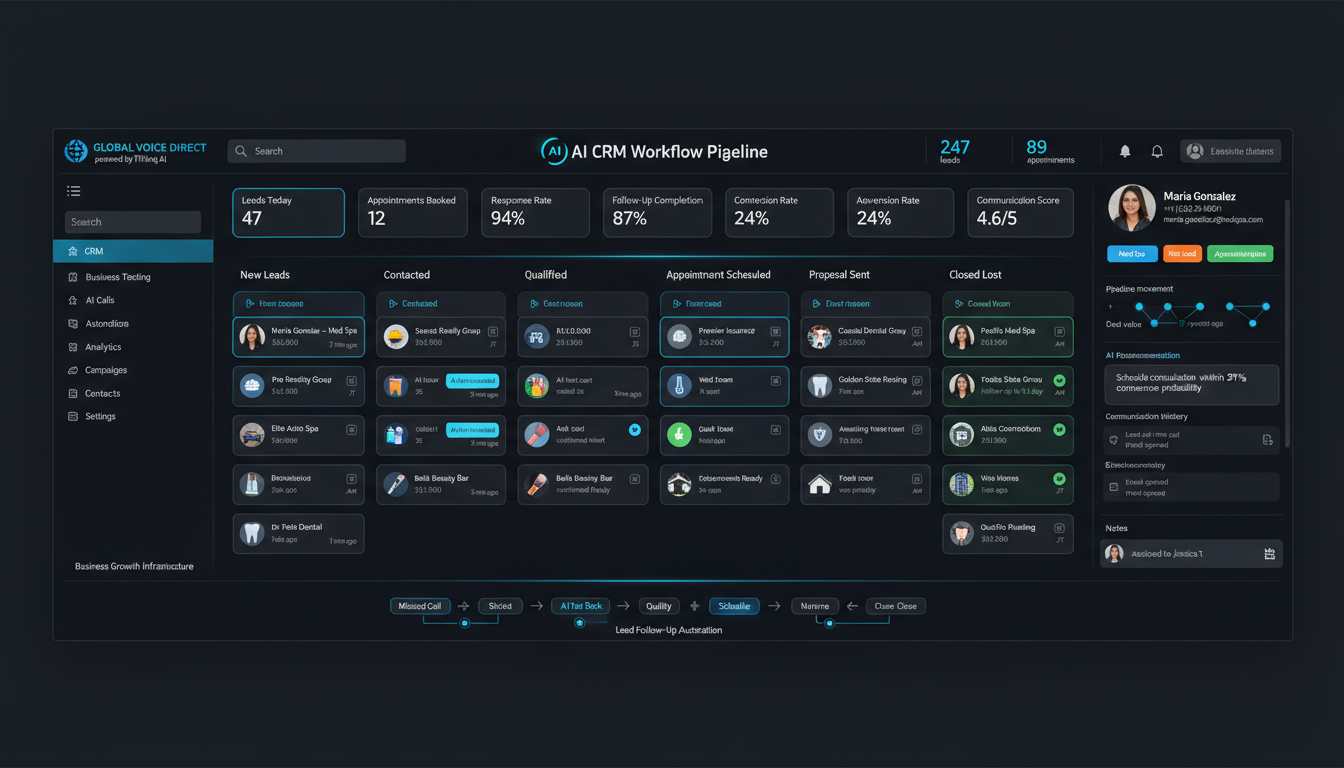
A Customer Relationship Management platform is the central database for all prospect and customer interactions. Without a CRM, nothing is trackable. With a well-configured CRM, every opportunity has a home, a status, and a next action.
Automation
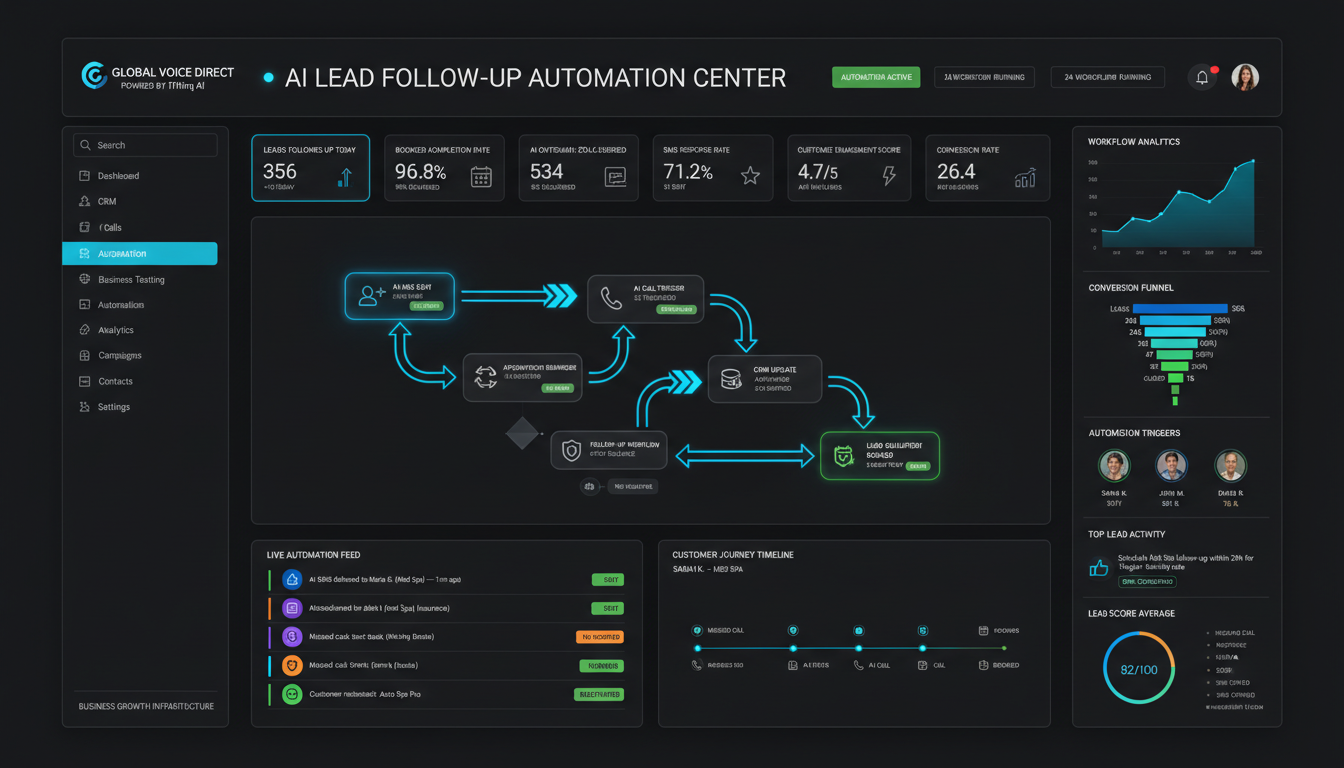
Automation handles the repetitive but critical parts of sales: sending follow-up messages on schedule, routing leads to the right person, triggering reminders before a prospect goes cold. Automation creates consistency that humans alone cannot maintain at scale.
Analytics
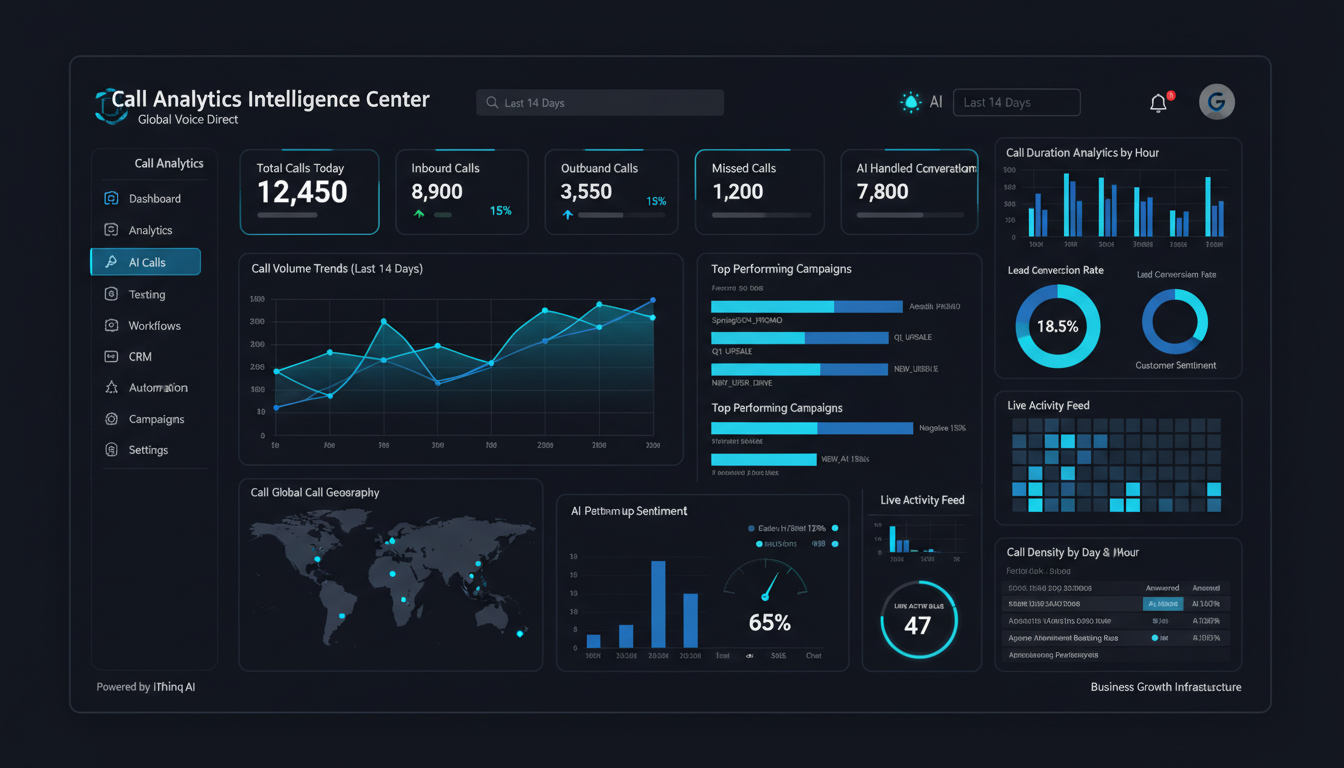
Analytics turn sales activity into actionable intelligence. Which stage do deals most often stall? Which lead sources convert best? Which communication method gets the fastest response? Analytics answer these questions — and those answers improve the system.
Platforms like IThinq AI represent the next generation of sales technology — using AI-driven workflows to improve follow-up consistency, communication timing, and lead management at scale. When AI is embedded into sales infrastructure, the system becomes smarter over time.
The Sales Conversion Gap™
Every business has a gap between the opportunities it creates and the opportunities it converts. That gap is not random. It is the measurable cost of missing infrastructure.
The Sales Conversion Gap™ is the difference between the number of sales opportunities a business generates and the number that actually close. For most businesses, the gap is far larger than it needs to be — and the cause is almost always infrastructure, not talent.
Infrastructure gaps that widen the conversion gap:
- Leads captured but never followed up with
- Prospects who went cold because communication was slow
- Opportunities lost because there was no qualification process
- Deals that stalled because no one had a defined next step
- Customers who did not return because the post-sale experience was poor
Closing the Sales Conversion Gap™ is not about hiring better closers. It is about building a system that captures, qualifies, nurtures, and converts every real opportunity the business creates.
Common Sales Infrastructure Mistakes
No CRM
Running sales from memory, email threads, or spreadsheets means leads fall through cracks constantly. A CRM is not optional for businesses that want to scale. It is the minimum requirement for visibility.
Inconsistent Follow-Up
Most businesses follow up once or twice and stop. Most buyers need five or more touchpoints before making a decision. Without a documented follow-up system, deals are left on the table every week.
Poor Communication Infrastructure
Missed calls, slow email responses, and inconsistent messaging create doubt before the sale starts. Investing in communication systems before there is a problem is significantly cheaper than recovering lost prospects after.
No Lead Qualification Process
Treating every lead the same burns time on the wrong opportunities and neglects the right ones. Qualification criteria exist to focus effort where it creates the highest return.
No Measurement System
If a business does not measure conversion rates by stage, it cannot identify where deals are being lost. Measurement is the foundation of improvement. Without it, the same problems repeat indefinitely.
Sales Infrastructure Audit™
Use this checklist to assess the current state of your sales infrastructure. Every unchecked item is a potential revenue leak.
- All leads are captured in a CRM or centralized tracking system
- Every lead is assigned to a specific owner with a defined next action
- Lead qualification criteria are documented and consistently applied
- A defined follow-up sequence exists for every lead stage
- Automated follow-up is in place to maintain contact between manual touchpoints
- Response time targets are defined and measured
- Business phone and messaging systems are professionally managed
- All inbound calls and inquiries are answered or promptly returned
- Proposal and closing processes are standardized
- Sales pipeline stages are clearly defined and consistently used
- Conversion rates are tracked at each pipeline stage
- Lost deal reasons are recorded and reviewed regularly
- A customer onboarding process exists after the sale closes
- Post-sale communication is systematized, not ad hoc
- Sales performance is reviewed on a regular schedule with clear metrics
If fewer than 10 of these items are in place, your Sales Conversion Gap™ is likely significant — and the path to closing it starts with building the infrastructure, not adding salespeople.
The Best Sales Teams Usually Have The Best Systems
After working with startups and growing businesses across different industries, I keep seeing the same pattern. A business hires talented salespeople, gets some wins, then hits a wall. Revenue becomes inconsistent. When the top performer leaves, everything drops.
The problem was never the people. The problem was that everything lived in their heads.
The businesses that grow consistently are not the ones with the best individual performers. They are the ones that built systems those performers can work inside of. They have a defined process for every stage. They have tools that enforce consistency. They measure what matters so they know where to improve.
Sales heroics might get you to your first million. Sales systems are what get you to your tenth. The infrastructure is the strategy.

Jonas Janvier
Founder, Global Voice Direct & IThinq AISales Infrastructure Score™
Use the Sales Infrastructure Score™ to benchmark where your business stands across each pillar of sales infrastructure. Rate each category from 1–5 and total your score to identify readiness level.
| Category | Description | Score 1–5 | Readiness |
|---|---|---|---|
| Lead Management | Leads captured, tracked, and assigned in a CRM with defined pipeline stages | __ / 5 | 1–2: Basic |
| Communication | Responsive, professional inbound/outbound communication with defined SLAs | __ / 5 | 3: Developing |
| Follow-Up | Documented multi-touch follow-up sequences with automation support | __ / 5 | 4: Established |
| Conversion | Standardized closing process, proposal templates, and conversion tracking | __ / 5 | 5: Advanced |
| Customer Experience | Systematized onboarding, post-sale communication, and feedback loops | __ / 5 |
5–10: Foundational
Sales infrastructure is largely absent. Revenue depends entirely on individual effort and relationships. Building a CRM and defining a sales process is the first priority.
11–17: Developing
Some systems exist but are inconsistently applied. The business is outgrowing its current infrastructure. Formalization and automation are the next steps.
18–21: Established
Core infrastructure is in place and producing consistent results. Focus on measurement, optimization, and closing specific gaps in conversion performance.
22–25: Advanced
Sales infrastructure is a competitive advantage. Growth is predictable, performance is measurable, and the system improves itself through data. Focus on scale.
Frequently Asked Questions
What is sales infrastructure?
Sales infrastructure is the combination of systems, processes, tools, and workflows a business uses to generate, manage, and convert sales opportunities consistently — without depending on any single person’s memory or talent.
Why do sales systems matter?
Sales systems create consistency. Consistent actions produce consistent results. Businesses that rely on individual talent produce inconsistent revenue — because performance depends on who shows up that day, not on a repeatable process.
What is the Sales Infrastructure Framework™?
The Sales Infrastructure Framework™ is a six-stage model covering Lead Capture, Qualification, Communication, Follow-Up, Conversion, and Customer Experience. It provides a complete blueprint for building a repeatable sales operation.
How can businesses improve conversion rates?
Improving conversion rates starts with identifying where deals are being lost. Most conversion problems are infrastructure problems — slow follow-up, poor communication, or no defined closing process. Fix the system first, and conversion improves naturally.
What role does communication play in sales?
Communication is often the first impression a prospect has of a business. Response speed, professionalism, and consistency all signal how reliable the business will be as a partner or vendor. Communication infrastructure directly affects conversion rates.
Why is follow-up so important in sales?
Most buyers need multiple touchpoints before making a decision. Businesses that follow up consistently convert more opportunities — not because they are more persuasive, but because they stay visible when competitors have already given up.
How does automation improve sales performance?
Automation removes the dependency on human memory for repetitive but critical tasks — sending follow-up messages, routing leads, triggering reminders. It ensures the right action happens at the right time, every time, at scale.
What is a CRM and why do sales teams need one?
A CRM (Customer Relationship Management) platform is the central system where all prospect and customer information, interactions, and pipeline stages are tracked. Without a CRM, sales operations are opaque and unmanageable at scale.
What is the Sales Conversion Gap™?
The Sales Conversion Gap™ is the difference between the number of sales opportunities a business creates and the number it actually converts to customers. Closing this gap requires better infrastructure, not just better salespeople.
How do you build a lead qualification system?
A lead qualification system starts with defining the criteria that indicate a high-potential prospect — typically budget, decision-making authority, need, and timeline. These criteria are then applied consistently at the top of the pipeline to prioritize sales effort.
What is sales operations?
Sales operations is the management function that keeps sales systems running effectively — measuring performance, identifying breakdowns, aligning technology with business goals, and continuously improving the sales process.
How many follow-ups does it take to close a sale?
Research consistently shows that most sales require five or more follow-up contacts before a decision is made — yet most sales teams stop after one or two. A systematic follow-up process is one of the highest-ROI investments in sales infrastructure.
What does good sales infrastructure look like for a startup?
For a startup, good sales infrastructure starts simple: a CRM to track leads, a defined qualification process, a communication system that ensures no inquiry goes unanswered, and a documented follow-up sequence. These four elements alone will outperform most competitors at the early stage.
How does AI improve sales systems?
AI improves sales systems by automating communication, qualifying leads at scale, timing follow-up messages intelligently, and surfacing data patterns that humans would miss. AI does not replace the sales process — it makes the sales process faster and more consistent.
What is a sales process framework?
A sales process framework is a documented sequence of stages and actions that every prospect moves through — from first contact to closed sale. It defines who does what at each stage, what the success criteria are, and what happens next.
Why do businesses lose sales they should have closed?
Most lost sales can be traced back to infrastructure failures: a lead that was never properly followed up, a prospect who called and got no answer, a proposal that was sent but never tracked. The talent existed — the system did not support it.
What is the relationship between sales and customer experience?
Sales and customer experience are not separate functions — they are sequential. How a prospect is treated during the sales process directly shapes their expectations as a customer. Strong post-sale infrastructure begins with strong sales infrastructure.
What is business growth infrastructure?
Business growth infrastructure is the broader operational foundation that supports a business’s ability to grow consistently — including sales systems, communication infrastructure, financial infrastructure, and technology systems. Sales infrastructure is one critical layer within this larger framework.
How do you measure sales infrastructure effectiveness?
Key metrics include lead response time, pipeline conversion rates by stage, follow-up completion rates, close rate by lead source, and customer acquisition cost. These metrics reveal where the system is performing well and where it needs investment.
What comes after sales infrastructure?
After a business builds strong sales infrastructure, the next priority is customer service infrastructure — systematizing the experience after the sale to drive retention, referrals, and long-term revenue. The Sales Infrastructure Framework™ connects directly to the Customer Service Framework.
Where This Framework Leads
The Sales Infrastructure Framework™ is one layer in a broader ecosystem of business infrastructure. Once sales systems are in place, the next frameworks to build are:
Customer Service Framework
How businesses systematize the experience after the sale — creating retention, referrals, and long-term revenue through service infrastructure.
Business Automation Framework
How businesses identify and automate repetitive operations across sales, service, communication, and finance to remove bottlenecks and scale without proportional headcount growth.
Customer Experience Framework
How businesses design every touchpoint — from first inquiry to long-term relationship — to create trust, loyalty, and compounding referral value.
Business Execution Framework
How businesses turn strategic plans into operational results — aligning systems, people, and accountability structures to produce consistent execution at scale.
The progression is clear: Customer Acquisition → Lead Management → Follow-Up → Sales Infrastructure → Customer Service → Retention → Predictable Growth. Each framework builds on the one before it. Strong infrastructure at every layer is what separates businesses that scale from businesses that stall.
Sales Improves When Systems Improve
The businesses that grow consistently usually build sales systems that make success repeatable. The infrastructure is the strategy.