

Startup Infrastructure · Founder Playbook
The Startup Technology Stack: The Systems Every Business Needs To Launch, Grow, And Scale
Most founders think they have a marketing problem. Usually, they have an infrastructure problem. Here is the small set of systems that actually move a business forward — and how to assemble them without drowning in tools.
Quick Answer
A startup technology stack is the connected set of systems a business uses to communicate, manage customers, market, sell, automate, and measure. A strong stack is small, integrated, and documented — usually seven core layers: communication, customer management, marketing, sales, automation, analytics, and documentation. The goal is never more tools. The goal is fewer systems used extremely well.
Many entrepreneurs spend months hunting for the perfect software. They open twenty tabs, watch demos, sign up for free trials, and end up with a graveyard of half-used apps. I have done it. Most founders I work with have done it too.
The truth is simpler than the hunt suggests. Most successful businesses use a small number of systems — and they use them extremely well. Technology is supposed to support growth, not create a second job managing the technology itself.
So this is not a software review. It is not a telecom article. It is a map of the core systems a modern business actually needs, organized into a framework you can build against. I call it the Startup Technology Stack Framework™, and it is the backbone of how I run multiple companies at once.
Section 1
What Is A Startup Technology Stack?
Before you can build a stack, you need shared definitions. Here are the four terms that matter, written plainly enough for anyone on your team to understand.
Technology Stack — The complete set of software and digital systems a business uses to operate. Think of it as the plumbing and wiring behind everything customers see.
Business Technology — Any tool that helps a company communicate, organize, sell, or serve customers. Email, phone systems, and a CRM all count.
Startup Infrastructure — The foundational systems a new business stands on. Good infrastructure makes a one-person company look and operate like an enterprise.
Business Systems — Repeatable processes — often powered by technology — that produce the same result every time, whether the founder is in the room or not.
Here is the one-line version worth memorizing: your technology stack is how your business runs when you are not looking.
Section 2
Why Technology Matters
Technology earns its place by doing four jobs. If a tool does not clearly help with one of these, it does not belong in your stack.
Communicate
Answer customers fast, never miss a call, and keep conversations in one place. A missed call is often a lost sale.
Organize
Know who your leads are, where deals stand, and what needs follow-up — without living inside a messy inbox.
Automate
Let software handle the repetitive work: reminders, follow-ups, confirmations. Your time goes to what only you can do.
Scale
Handle ten times the volume without ten times the staff. Systems absorb growth that would otherwise break you.
Simple example: a med spa that misses three calls a day during treatments is quietly losing clients. Add a system that captures and follows up on every inquiry automatically, and the same staff suddenly books more without working harder. That is what good technology does — it removes the leaks.
Section 3 · The Framework
The Startup Technology Stack Framework™
Seven layers, built in order. Each one supports the next. You do not need every layer on day one — but you do need to know where each piece eventually goes.
Communication Systems
How your business talks to customers and teams — phone, text, and messaging in one place.
Customer Management
A single source of truth for every lead, contact, and customer relationship.
Marketing Systems
How you attract attention and capture interest — website, content, and lead capture.
Sales Systems
How interest turns into revenue — pipelines, quotes, and structured follow-up.
Automation Systems
The connective tissue that does repetitive work for you across every other layer.
Analytics Systems
How you measure what is working so decisions are based on data, not guesswork.
Documentation Systems
Where processes live so the business runs the same way every time, with or without you.
Section 4 · Layer 1
Communication Systems
This is the layer most founders underestimate and the one that costs them the most when it is weak. If customers cannot reach you cleanly, nothing else in the stack matters.

Business Phone Systems
A dedicated business line — separate from your personal cell — that can ring anywhere and capture every call.
Messaging & Texting
Many customers prefer to text. Business texting keeps those conversations professional and on record.
Team Communication
Internal channels so your team stays aligned without losing decisions inside email threads.
Customer Communication
One unified place where calls, texts, and messages live — so no conversation falls through the cracks.
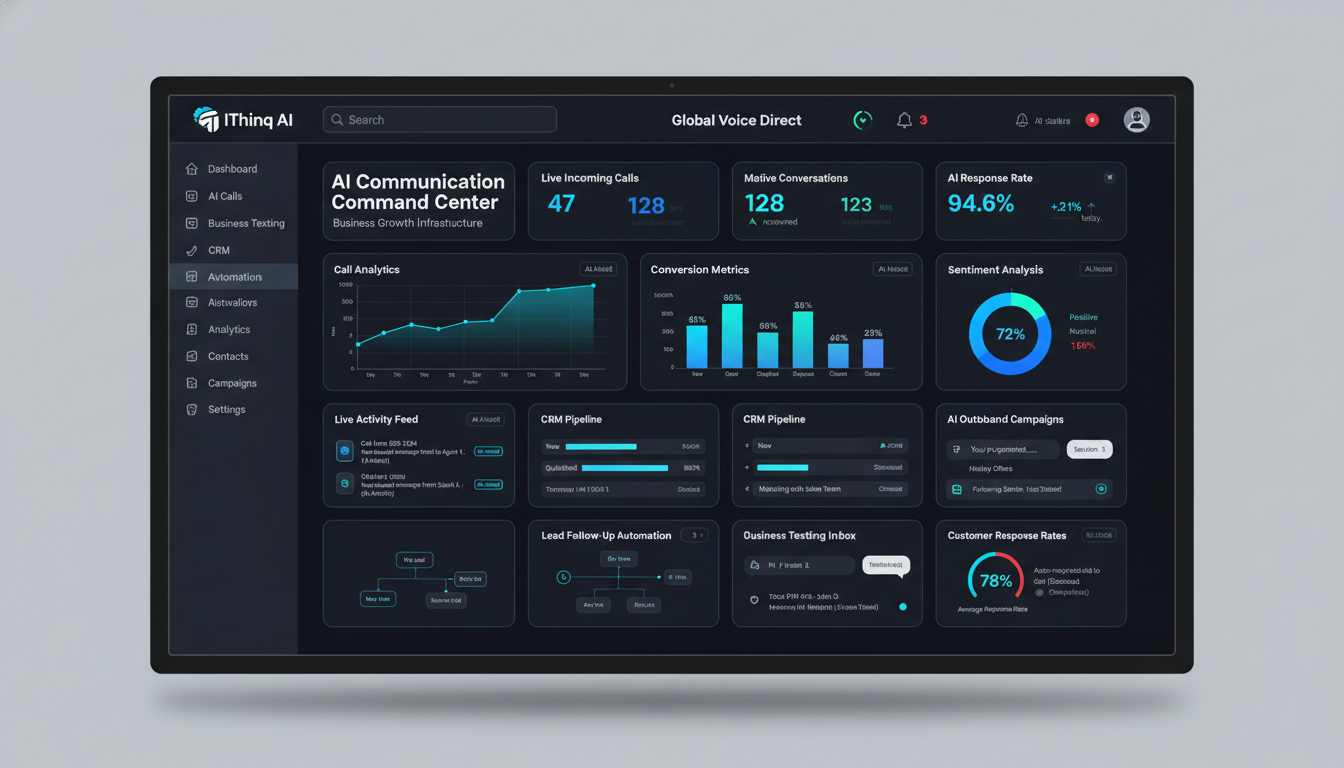
Platforms such as Global Voice Direct exist to centralize this layer — bringing business calling, texting, and customer communication into a single system instead of a scattered pile of personal phones and disconnected apps. The principle to take away is the centralization itself: one communication hub beats five disconnected ones every time.
Section 5 · Layer 2
Customer Relationship Management (CRM)
A CRM is the memory of your business. Without one, your customer relationships live in your head, your inbox, and a few sticky notes — which means they are one bad week away from disappearing.
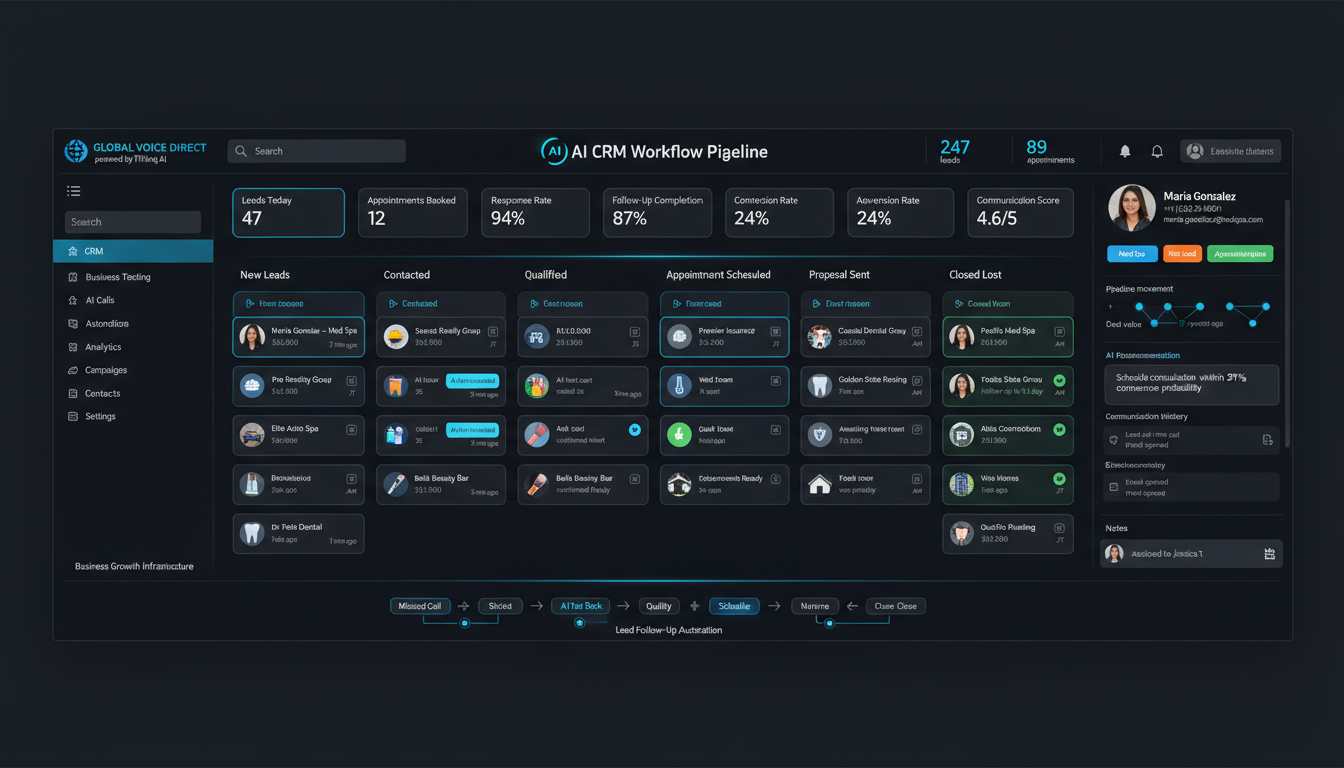
Lead Tracking
Every inquiry captured in one list, so no potential customer is forgotten.
Customer Tracking
A full history of every interaction, purchase, and note for each relationship.
Pipeline Management
A visual board showing exactly where every deal stands and what to do next.
Here is the rule: every business eventually needs a CRM. The only question is whether you adopt one early — while it is easy — or later, after you have already lost track of leads you paid to acquire. Start simple. A CRM you actually update beats a powerful one you ignore.
Section 6 · Layer 5
Automation Systems
Automation is where small teams start to feel large. It is the difference between a founder doing everything by hand and a business that keeps moving while the founder sleeps.
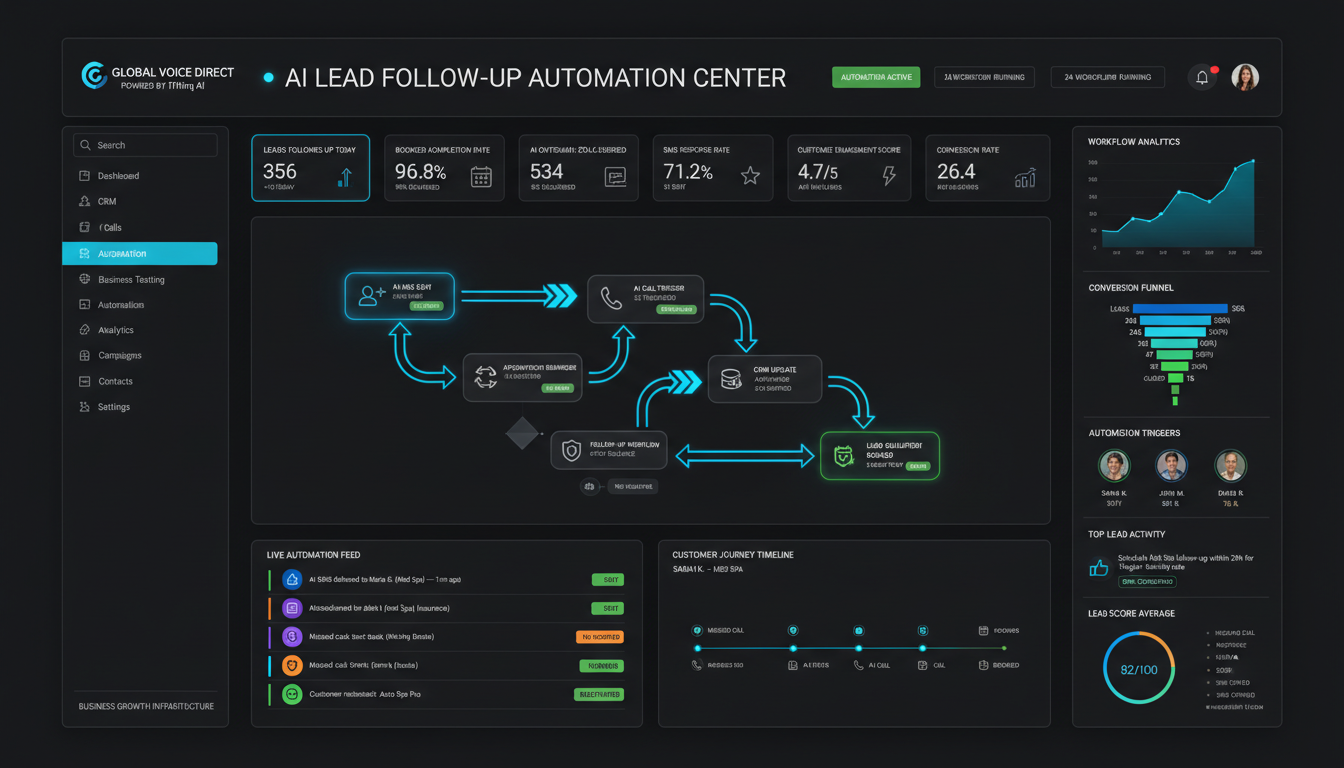
Follow-Up Automation
New leads get an instant, consistent response — even at 2 a.m. — instead of waiting for you.
Task Automation
Reminders, confirmations, and routine steps happen on their own, so nothing slips.
Communication Automation
Appointment reminders and updates send themselves, reducing no-shows and busywork.
Modern automation increasingly runs on AI. Tools like IThinq AI show how businesses use AI-driven automation to improve responsiveness and customer engagement — answering, routing, and following up faster than a human team could on its own. The lesson is not to automate everything; it is to automate the repetitive work so your people are free for the work that needs a human.
Section 7
Technology Mistakes Entrepreneurs Make
I have made most of these myself. Each one feels productive in the moment and quietly costs you later.
Too Many Tools
Five apps doing one job each, none of them mastered. Complexity disguised as progress.
No Integration
Systems that do not talk to each other force you to be the human bridge copying data between them.
No Systems
Relying on memory and heroics instead of repeatable processes. It does not survive growth.
No Documentation
Everything lives in the founder’s head, so nothing can be delegated or scaled.
Chasing Trends
Adopting whatever is loud this month instead of what your business actually needs.
Buying Before Defining
Picking software before deciding what problem it solves. Define the job first, then choose the tool.
Section 8
Technology Stack By Business Stage
You do not build all seven layers at once. You add them as the business earns the need. Here is what each stage typically requires.
Get Found & Get Reachable
- Business phone & texting
- Simple website / lead capture
- Basic CRM or contact list
- One email system
Organize & Follow Up
- Full CRM with pipeline
- Follow-up automation
- Marketing & content systems
- Basic analytics
Systematize & Delegate
- Integrated, connected stack
- AI-driven automation
- Full analytics dashboards
- Documented processes (SOPs)
Section 9 · Self-Assessment
The Startup Technology Audit™
Run your business through this checklist. Each box you cannot honestly check is a leak worth fixing before you spend another dollar on marketing.
CommunicationDo you have a dedicated business phone and texting system that captures every inquiry?
Customer ManagementIs every lead and customer tracked in one CRM, not scattered across apps?
Follow-UpDoes every new lead get a response automatically, even outside business hours?
IntegrationDo your core systems share data, or are you the human copying between them?
AnalyticsCan you see where your customers come from and which efforts actually work?
DocumentationCould someone new run a core process from written instructions tomorrow?
Section 10 · Founder Insight
Technology Should Simplify Growth, Not Complicate It
When I started running multiple businesses at once — a med spa, a communication platform, an AI company — I learned a hard lesson fast: you cannot scale chaos. Every time I tried to grow on willpower and memory, something broke. A lead went cold. A call got missed. A process lived only in my head and then I was the bottleneck.
What changed everything was treating infrastructure as the product behind the product. I stopped asking “what new tool is exciting?” and started asking “what system removes me as the single point of failure?” The answer was almost never another app. It was fewer systems, connected well, with the repetitive work automated and the important work documented.
Here is what I tell every founder I advise: most businesses do not have a marketing problem. They have an infrastructure problem. Fix the plumbing first, and the marketing finally has somewhere to land.
Section 11 · Scoring Framework
The Technology Readiness Score™
Score your business 0–2 in each of the five categories below, then total it. The result tells you not just where you stand, but what to build next.
Keep Building
Related Founder Frameworks
Coming soon in this series: the Startup Operations Framework, Startup Growth Systems, AI Tools Every Entrepreneur Should Know, the Business Automation Framework, and Communication Systems Every Growing Business Needs — each one expanding a layer of the stack above.
Section 12
Frequently Asked Questions
What is a startup technology stack?
It is the connected set of systems a business uses to communicate, manage customers, market, sell, automate, and measure. A good stack is small, integrated, and documented.
What software does a startup need?
At minimum: a business phone and texting system, a simple CRM, an email system, and a way to capture leads. Add automation and analytics as you grow.
What is a CRM?
A Customer Relationship Management system. It is the single place where every lead, contact, and customer interaction is tracked, so nothing is forgotten.
Why is automation important?
Automation handles repetitive work — follow-ups, reminders, confirmations — so a small team can serve more customers without burning out or dropping the ball.
How many tools should a startup use?
As few as possible. It is better to master a handful of connected systems than to juggle twenty disconnected ones. Fewer tools, used well, win.
What technology helps businesses grow?
Systems that remove leaks and bottlenecks: reliable communication, a CRM, follow-up automation, and clear analytics. Growth follows when nothing slips.
What is the difference between a tool and a system?
A tool is software. A system is a repeatable process — often powered by a tool — that produces the same result every time, with or without the founder.
Do I need a CRM if I only have a few customers?
Yes, and that is the best time to start. Adopting a CRM while small is easy. Adopting one after you have lost track of leads is painful.
What is business infrastructure?
The foundational systems a business runs on — communication, customer management, automation, and documentation. Good infrastructure lets a small team operate like a large one.
What is the most important layer of the stack?
Communication. If customers cannot reach you cleanly and you cannot follow up, no other system can save the relationship.
Should I integrate my tools?
Whenever possible. Disconnected tools force you to manually move data between them, which wastes time and creates errors. Integration is where the leverage is.
How does AI fit into a technology stack?
AI mostly strengthens the automation layer — answering, routing, and following up faster than a human team could alone, so people are freed for higher-value work.
What is a sales pipeline?
A visual representation of where each potential deal stands, from first contact to closed sale, so you always know what needs attention next.
Why do startups fail with technology?
Usually from too many disconnected tools, no integration, no documented systems, and chasing trends instead of solving real problems. Complexity quietly kills momentum.
When should I add automation?
As soon as you notice yourself repeating the same manual task — like following up on leads. If you do it more than a few times a week, automate it.
What is documentation in a business?
Written processes — sometimes called SOPs — that capture how core tasks are done, so the business can run consistently and work can be delegated.
How do I know if my stack is working?
Score it. Run the Technology Readiness Score™ above across communication, CRM, automation, analytics, and documentation to see where the gaps are.
Is a business phone system really necessary?
Yes. A dedicated business line keeps you reachable, professional, and able to capture every call — which a personal cell mixed with everything else cannot reliably do.
What should I build first?
Start with communication and customer management. Make sure people can reach you and that you never lose track of who they are. Everything else builds on that.
Does a small business really need all seven layers?
Not immediately. You add layers as the business earns the need. But knowing where each layer goes lets you build in the right order instead of patching chaos later.
Build Systems That Scale
The right technology stack helps businesses operate more efficiently, communicate better, and grow with confidence. Start with the foundation — and build from there.