

Customer Acquisition Framework
Most businesses spend more acquiring customers than they should — because the infrastructure underneath the marketing is broken. This framework fixes the foundation first.

Most businesses treat customer acquisition as a marketing problem. Spend more on ads. Post more content. Run more promotions. Drive more traffic.
But here is what those businesses consistently miss: marketing brings people to the door. Infrastructure determines what happens when they arrive.
If your follow-up is slow, your communication is inconsistent, your credibility signals are weak, and your conversion process has gaps — then more marketing does not produce more customers. It produces more wasted spend.
The Customer Acquisition Framework™ is built around a different starting point. Before you increase the volume of leads coming in, you fix the system that converts them. Before you spend more on acquisition, you close the infrastructure gaps that are quietly draining the return on every dollar you already invest.
Fix the foundation. Then scale. That is the sequence that produces compounding returns instead of compounding costs.
The Customer Acquisition Framework™
A ten-stage infrastructure-first approach to customer acquisition — built for small businesses and startups that want to convert more of the leads they already have before spending more to generate new ones.
Quick Summary — The Customer Acquisition Framework™
- Stage 1 — Credibility: build trust before the first conversation
- Stage 2 — Lead Capture: every inquiry enters the system automatically
- Stage 3 — Speed to Lead: respond before the competitor does
- Stage 4 — Follow-Up: multi-touch sequences that convert over time
- Stage 5 — Communication Infrastructure: professional at every touchpoint
- Stage 6 — Trust Building: consistent signals that close the hesitation gap
- Stage 7 — Conversion: a clear process from interested to committed
- Stage 8 — Onboarding: validate the customer’s decision immediately
- Stage 9 — Retention: keep the customers you worked hard to acquire
- Stage 10 — Referral: turn customers into acquisition channels
Credibility First — Win Before the Conversation Starts
The customer acquisition process does not start when a lead fills out a form. It starts when they Google your business before they ever make contact.
What they find in those first few seconds determines whether they reach out at all. A professional website, consistent directory listings, verifiable business information, and visible reviews are the trust signals that tell a prospect this business is real, established, and worth their time. Without them, the lead never becomes a contact.
Credibility is the prerequisite for every other stage in this framework. Build it first. Verify your business information everywhere it appears. Collect and display reviews consistently. Make your online presence reflect the professional standard your business actually operates at.
“Acquisition starts before the ad. It starts with what a prospect finds when they search your name.”
Lead Capture — Every Inquiry Into the System
Every lead that enters your business through a manual process is a lead at risk. Forms that require someone to check. Calls that require someone to log. Emails that get filed without follow-up. Each manual step is a potential gap between inquiry and response.
Lead capture automation eliminates those gaps. Every channel — web form, inbound call, text, chat — routes directly into your CRM with an instant acknowledgment sent automatically. The lead is captured, tagged, and queued before anyone on the team has seen it.
No lead should ever fall through because someone forgot to log it. Build the system once and let it run. Your acquisition cost drops immediately when the leads you are already generating stop disappearing into manual process gaps.
Speed to Lead — First Response Wins
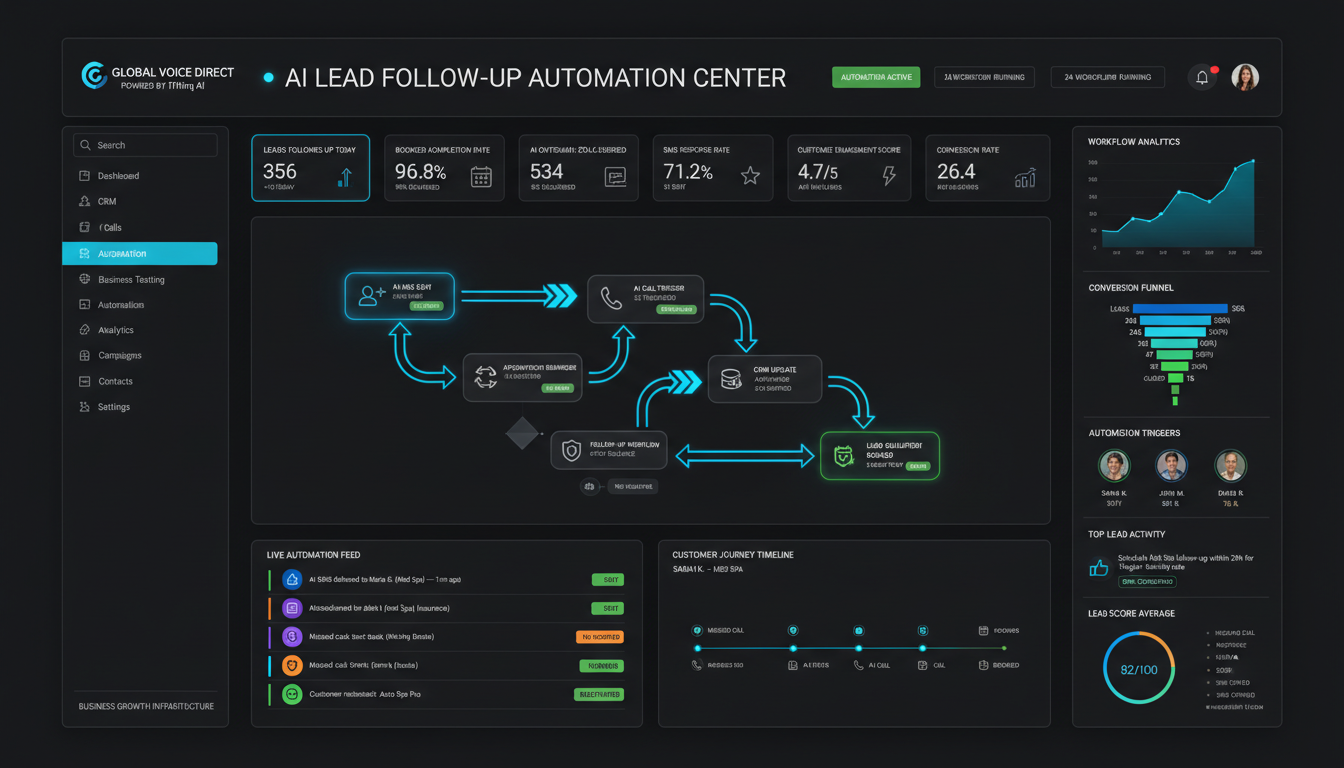
Speed to lead is the single most measurable variable in customer acquisition. Leads contacted within five minutes of inquiry convert at dramatically higher rates than those contacted within an hour. And leads contacted within seconds — by an automated system that never sleeps — convert at higher rates still.
The reason is psychological as much as practical. A fast response signals that this business is attentive, professional, and ready to engage. It validates the prospect’s decision to reach out. It closes the window before a competitor responds first.
Every minute between inquiry and response is a minute the prospect spends reconsidering, cooling off, or talking to someone else. Automation removes that minute entirely.
IThinq AI powers the instant follow-up infrastructure that ensures every lead hears from your business in seconds — not hours — with a personalized, sequenced response that keeps the conversation moving forward automatically.
Follow-Up — The Sequence That Converts
Most businesses follow up once. Maybe twice. Then they move on and assume the lead was not interested.
The data says otherwise. The majority of sales happen after the fifth contact. The leads that convert on the first touch are the minority — the low-hanging fruit. The majority of the available revenue sits in the leads that needed more time, more touchpoints, and more reasons to trust before they were ready to commit.
A structured follow-up sequence captures that revenue instead of leaving it for a competitor with more persistence. Five touches minimum. Across multiple channels. At defined intervals. With messaging that evolves as the lead moves through the buying process.
Most businesses don’t have a lead generation problem. They have a follow-up problem. Fix the sequence and the existing lead volume produces dramatically more customers — before you spend a dollar on more traffic.
Communication Infrastructure — Professional at Every Touchpoint

A lead that calls and gets voicemail is forming an impression in real time. That impression — that this business is hard to reach, slow to respond, or not ready for their inquiry — is one of the most damaging possible outcomes in the acquisition process.
Communication infrastructure ensures that never happens. Every call answered professionally. Every missed call recovered with an immediate text follow-up. Every channel — phone, text, email — monitored and responded to at speed.
This is what Global Voice Direct delivers — the professional communication foundation that makes every prospect interaction reflect the standard your business is capable of, regardless of team size or time of day.
Communication is not just how you talk to prospects. It is how prospects decide whether you are worth talking to.
Trust Building — Close the Hesitation Gap
Between the moment a prospect expresses interest and the moment they commit, there is a gap filled with hesitation. They are asking themselves: is this the right business? Can I trust them to deliver? Is this worth the risk?
Trust signals are the infrastructure that closes that gap. Social proof in the form of reviews and testimonials. Case studies that show real outcomes for real clients. Consistent professional communication that signals reliability. A credible online presence that confirms the business is established and legitimate.
Every trust signal you build is a reason for a hesitant prospect to say yes instead of not yet. The businesses that invest in trust infrastructure convert a higher percentage of the leads they generate — without spending more on acquisition to compensate for the ones that get away.
Conversion — A Clear Path From Interested to Committed
Most small businesses have a conversion process that exists primarily in the founder’s head. The prospect expresses interest — and then a series of informal, inconsistent steps eventually leads to a yes or a no. Sometimes. When everything goes right.
A documented conversion process removes the variability. It defines exactly what happens at each stage of the buying conversation — what information is shared, what questions are asked, what objections are addressed, what the next step is, and when it happens.
Conversion is not a talent. It is a system. When the steps are clear, consistent, and well-executed, the close rate improves independent of who on the team is handling the conversation. The process does the heavy lifting — the person delivers it.
Onboarding — Validate the Decision Immediately
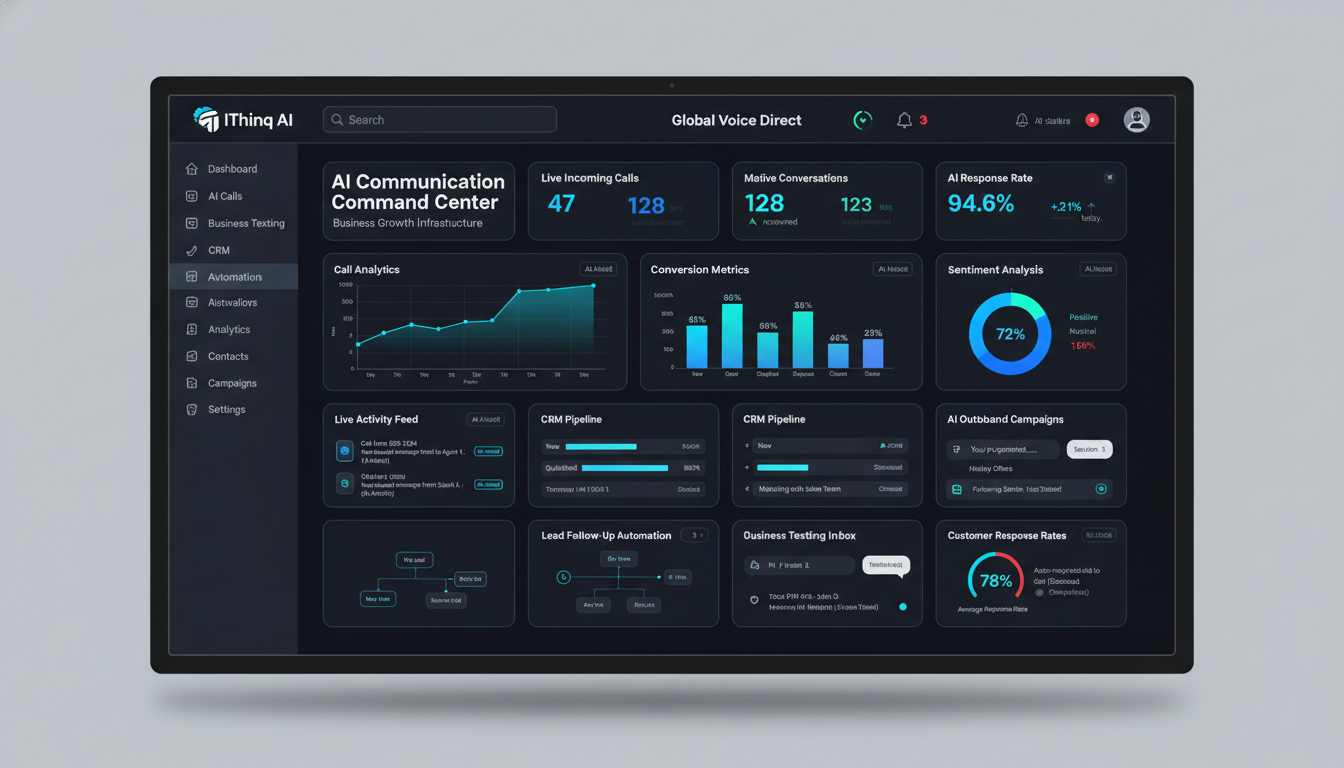
The moment a prospect becomes a customer is the most fragile point in the acquisition process. Buyer’s remorse is real. If the experience after saying yes is slow, confusing, or underwhelming — the customer begins to question their decision before they have even experienced your service.
Automated onboarding prevents that by making the first post-purchase experience immediate, professional, and reassuring. A welcome sequence that fires the moment a new client is created. Clear communication of what happens next. A professional first impression that confirms the customer made the right choice.
The best acquisition strategy in the world is undermined by a poor onboarding experience. Fix the handoff between acquisition and delivery — and the customers you acquire stay acquired.
Retention — Keep What You Worked Hard to Win
Every customer who leaves is a customer you have to replace. And replacing them costs five to seven times more than keeping them would have. Retention is not a separate strategy from acquisition — it is the completion of it.
A customer retained is acquisition ROI protected. The marketing spend, the follow-up effort, the conversion process — all of that investment compounds when the customer stays and erodes when they leave. Retention automation — post-delivery follow-up, check-in sequences, re-engagement campaigns — is the infrastructure that protects the investment acquisition makes.
Acquisition and retention are not separate departments. They are two stages of the same system. Build them as one.
Referral — Turn Customers Into Acquisition Channels
The highest-converting leads in any business are referrals. They arrive with pre-built trust, higher intent, and lower resistance to conversion. They cost almost nothing to acquire. And they close faster than any other lead source because someone they trust already vouched for you.
Most businesses get referrals occasionally, by accident, when a satisfied customer happens to mention them to someone who happens to need the service. That is not a referral system. That is a referral coincidence.
A referral system creates the conditions for referrals to happen consistently — asking at the right moment, making the process frictionless, and rewarding the behavior when it occurs. When the final stage of your acquisition framework actively generates the highest-quality leads at the lowest possible cost, the entire system compounds into a growth engine that improves with every customer you serve.
The Acquisition Problem That Was Actually an Infrastructure Problem
For a long time, I approached customer acquisition the way most founders do. When growth slowed, I increased marketing spend. When conversion rates dropped, I tested new offers. When leads went quiet, I assumed the market had changed.
I was always looking at the top of the funnel — because that is where the visible activity is. Impressions, clicks, leads. The numbers you can point to and say: look, we are doing the work.
What I was not looking at was what happened to those leads after they arrived. The follow-up gaps. The slow response times. The inconsistent communication. The places where a qualified, interested prospect simply stopped hearing from us and moved on.
When I finally audited the full acquisition process — from first contact to closed customer — the gaps were everywhere. Not dramatic failures. Quiet ones. Small delays, missed touchpoints, inconsistent experiences that collectively were draining the return on every dollar I spent bringing people in.
Fixing the infrastructure did more for my customer acquisition results than any campaign I had ever run. Not because marketing stopped mattering — but because now when marketing worked, the infrastructure was ready to convert what it generated.
Customer acquisition is not a marketing problem. It is an infrastructure problem. Fix the infrastructure first — and your marketing budget goes further than you ever thought possible.
The Customer Acquisition Audit Checklist™
Practical actions for auditing and strengthening every stage of your customer acquisition infrastructure.
Credibility
- Google your business and audit the first page of results
- Verify business information across all major directories
- Confirm your website reflects your current professional standard
- Collect and display at least five recent client testimonials
Lead Capture
- Connect all lead sources directly to your CRM automatically
- Set up instant acknowledgment on every inquiry channel
- Eliminate all manual lead logging from your current process
- Test every form and call routing to confirm no gaps exist
Speed to Lead
- Measure your current average response time to new inquiries
- Set a target of under five minutes for all new lead responses
- Deploy automation to respond instantly when team is unavailable
- Test your own inquiry process as a prospect would experience it
Follow-Up
- Build a minimum five-touch follow-up sequence for new leads
- Create separate sequences for warm, cold, and re-engaged leads
- Track follow-up completion rate as a primary business metric
- Review sequence performance monthly and optimize messaging
Conversion
- Document your conversion process from first contact to close
- Identify the stage where most leads drop out and fix it first
- Create a standard response to the three most common objections
- Measure and track your conversion rate every week
Referral
- Build an automated referral request sequence post-delivery
- Make referral submission frictionless — one click, one link
- Track referral volume monthly alongside other acquisition metrics
- Acknowledge and reward every referral promptly and personally
Customer Acquisition Framework™ Dataset
A structured reference covering each acquisition stage, its business impact, and implementation priority.
| Stage | Description | Business Impact | Priority |
|---|---|---|---|
| Credibility | Build digital trust signals before any prospect makes contact | Determines whether leads reach out in the first place | Critical |
| Lead Capture | All inquiries routed automatically into CRM with instant acknowledgment | Eliminates revenue lost to manual logging and delayed entry | Critical |
| Speed to Lead | Automated response within seconds of every new inquiry | Directly improves conversion rate — first response wins | Critical |
| Follow-Up | Multi-touch sequences converting leads over a defined buying window | Recovers majority of revenue lost to single-touch follow-up | Critical |
| Communication Infrastructure | Professional omnichannel presence with zero missed opportunities | Every touchpoint reinforces credibility and trust | Critical |
| Trust Building | Consistent social proof and credibility signals through the buying process | Closes hesitation gap and improves conversion on warm leads | High |
| Conversion | Documented process from first interest to committed customer | Consistent close rate independent of individual team performance | High |
| Onboarding | Immediate post-purchase experience that validates the buying decision | Reduces buyer’s remorse and anchors the customer relationship | High |
| Retention | Post-delivery sequences that extend customer lifetime value | Protects acquisition ROI — retaining costs less than replacing | High |
| Referral | Systematic referral requests turning customers into acquisition channels | Lowest-cost highest-converting leads in the entire acquisition system | High |
Frequently Asked Questions
Direct answers to the most common questions about customer acquisition, conversion, and building an infrastructure-first growth system.
What is a customer acquisition framework?
A structured system for converting prospects into customers — covering credibility, lead capture, speed to lead, follow-up, communication, trust, conversion, onboarding, retention, and referral as connected stages rather than isolated tactics.
How do small businesses acquire customers?
Most rely on referrals and word of mouth early on, then add marketing channels as they grow. The businesses that acquire most efficiently combine marketing with strong infrastructure — so every lead generated has the best possible chance of converting.
What is customer acquisition cost?
The total investment required to acquire one new customer — including marketing spend, time, tools, and overhead. Reducing CAC without reducing lead quality requires improving the infrastructure that converts leads, not just reducing spend.
How do I reduce my customer acquisition cost?
Improve conversion rate, response speed, and follow-up consistency before spending more on lead generation. Converting a higher percentage of existing leads costs nothing in additional marketing spend — and immediately reduces CAC.
What is the difference between customer acquisition and retention?
Acquisition brings new customers in. Retention keeps them. Both are part of the same growth system — and retention dramatically improves the ROI of acquisition by extending the lifetime value of every customer won.
How does speed to lead affect customer acquisition?
Dramatically. Leads contacted within five minutes convert at significantly higher rates than those contacted later. Automation removes the human delay entirely — responding in seconds regardless of when the inquiry arrives.
Why does communication infrastructure matter for customer acquisition?
Because every missed call, slow response, and inconsistent communication is a lost acquisition opportunity. Professional communication infrastructure ensures no lead is lost to a gap between inquiry and response.
What is the most effective customer acquisition strategy for small business?
Fix the infrastructure that converts existing leads before generating more. The most cost-effective acquisition improvement most small businesses can make is improving follow-up consistency and response speed — not increasing marketing spend.
How does credibility affect customer acquisition?
It determines whether prospects reach out in the first place. Weak credibility signals — missing reviews, unverified information, poor online presence — cause leads to self-disqualify before your follow-up system ever gets a chance to engage them.
What is an inbound customer acquisition strategy?
Attracting prospects through content, SEO, reviews, and referrals — so they find your business and initiate contact. Inbound leads typically arrive with higher intent and lower resistance to conversion than outbound leads.
What is an outbound customer acquisition strategy?
Proactively reaching out to potential customers through calls, emails, direct messages, or advertising. Outbound requires strong follow-up infrastructure to be effective — most outbound leads convert only after multiple consistent touchpoints.
How does automation improve customer acquisition?
By removing the manual gaps in follow-up, communication, and lead nurturing. Automated systems respond instantly, follow up consistently, and keep prospects engaged through the buying window — without requiring manual effort at every step.
What is a customer acquisition funnel?
The staged process a prospect moves through from first awareness to committed customer. The Customer Acquisition Framework™ builds infrastructure around every stage of that funnel to maximize conversion at each transition point.
How does a CRM help with customer acquisition?
By providing visibility into every lead and every stage of the acquisition process. A CRM ensures no lead is forgotten, tracks conversion rates at each stage, and surfaces the opportunities most at risk of going cold.
What is the biggest mistake businesses make in customer acquisition?
Spending more on marketing before fixing the infrastructure that converts what marketing generates. More leads into a broken system produces more wasted spend — not more customers.
How do I build a customer acquisition system?
Start with credibility and lead capture — the foundation. Then build speed-to-lead and follow-up automation. Then optimize communication infrastructure, trust signals, and conversion process. Finally add retention and referral systems to compound the return on every customer won.
What role does follow-up play in customer acquisition?
A critical one. Most sales happen after the fifth contact. Businesses that follow up once and move on are leaving the majority of their available revenue on the table. A structured follow-up sequence converts the leads that a single touch never would.
How does trust affect customer acquisition?
Trust is the prerequisite for conversion. A prospect who does not trust your business enough will not convert regardless of how good your offer is. Trust signals — reviews, testimonials, professional communication, verified presence — close the hesitation gap.
What is the Customer Acquisition Framework™?
A ten-stage infrastructure-first framework developed by Jonas Janvier — covering credibility, lead capture, speed to lead, follow-up, communication, trust, conversion, onboarding, retention, and referral as an integrated customer acquisition system.
How do I scale customer acquisition without scaling costs?
By improving conversion rate and retention before increasing lead volume. Automation, better follow-up, and stronger infrastructure allow the same marketing investment to produce more customers — without proportional increases in spend.
Acquisition Is Not a Marketing Problem. It Is an Infrastructure Problem.
Fix the foundation first. Build the infrastructure that converts. Then scale the marketing. That is the sequence that produces compounding returns instead of compounding costs.