Business Execution Framework™

6 Proven Stages That Ruthlessly Separate Businesses That Scale From Businesses That Fail

You don’t have a marketing problem. You don’t have a sales problem. You have an execution problem — and the Business Execution Framework™ is the system that fixes it.

Business Execution Framework — Built for Business, Ready to Grow
Quick Answer — What Is the Business Execution Framework?

The Business Execution Framework™ is a six-stage operational system — Vision, Planning, Systems, Execution, Measurement, and Improvement — that helps founders and operators close the Execution Gap™ between what they plan and what they actually accomplish.

Business execution is the disciplined act of converting strategy into consistent, measurable action. Most businesses don’t fail from a lack of good ideas. They fail from a lack of systems that make execution repeatable. The Business Execution Framework is the operational system that closes the gap between what you plan and what you actually deliver.

What Is the Business Execution Framework?

The Business Execution Framework is the operational system that closes the gap between what you plan and what you actually deliver. It is not a motivation tool. It is not a mindset exercise. It is a business infrastructure system built for founders who are serious about scaling.

Business execution is the process of consistently converting plans into results. Most founders can write a business plan. Very few can build the systems that make that plan run without constant intervention. The Business Execution Framework gives growing businesses a repeatable structure for turning strategy into measurable action.

Without the Business Execution Framework, most businesses operate on effort alone — and effort without systems does not scale.

Execution

The disciplined process of converting strategies, decisions, and plans into completed actions that produce measurable results.

Business Systems

Documented, repeatable processes that allow a business to produce consistent outputs without depending on any single person’s memory or judgment.

Accountability

The organizational structure that assigns clear ownership of outcomes so every task, metric, and deadline belongs to a specific person or team.

Operational Discipline

The collective commitment to follow systems, meet deadlines, and measure results even when urgency, distraction, or growth creates pressure to cut corners.


Why the Business Execution Framework Exists

Execution failure is almost never about intelligence or effort. It is almost always structural. The Business Execution Framework exists because businesses fail to execute for four specific and predictable reasons. Understanding these four reasons is the first step toward fixing them permanently.

Lack of Clarity

People cannot execute goals they do not fully understand. Vague priorities create vague results. The Business Execution Framework forces clarity at every stage so the entire team knows exactly what winning looks like.

Lack of Accountability

When everyone is responsible for something, no one is. The Business Execution Framework assigns a single named owner to every outcome — eliminating the shared ownership trap.

Lack of Systems

If the business depends on individual heroics to function, it cannot scale. The Business Execution Framework replaces heroics with documented, automated processes that run without constant intervention.

Lack of Consistency

Most businesses execute well in short sprints. The ones that win execute well for years. The Business Execution Framework builds consistency into the operating model itself.


The Business Execution Framework™ Explained — Six Stages

The Business Execution Framework is not a motivational tool. It is an operational infrastructure system built for founders who are serious about scaling. Applying the Business Execution Framework is one of the highest-leverage decisions a founder can make in the first three years of building a business.

01

Vision — Where are we going and why?

Without vision, the Business Execution Framework has no direction to execute toward. This stage defines the destination before any work begins.

Output: Clear 90-day and annual goals with defined success metrics.

02

Planning — What specifically are we going to do?

Planning without execution is just wishing. The Business Execution Framework connects planning directly to action by requiring named owners and hard deadlines.

Output: Prioritized action plans with owners, deadlines, and milestones.

03

Systems — How do we make this repeatable?

This is the stage where the Business Execution Framework separates growing businesses from stalling ones. Systems convert heroics into reliable, scalable processes.

Output: Documented SOPs, workflows, and automation that remove decision fatigue.

04

Execution — Are we doing what we said we would?

Founders who apply the Business Execution Framework stop depending on motivation and start building systems that produce results on demand — week after week.

Output: Daily and weekly task completion tracked against the plan.

05

Measurement — Is it working?

The Business Execution Framework uses measurement as a real-time correction tool, not a lagging report card. You cannot improve what you do not measure.

Output: KPI dashboards, conversion tracking, and regular performance reviews.

06

Improvement — How do we get better?

The Business Execution Framework treats improvement as a built-in operating function, not an annual event. Iteration cycles compound results over time.

Output: Retrospectives, process updates, and iteration cycles that compound results.

Most businesses operate between Stage One and Stage Two. They plan well but never build the systems that make execution automatic. The jump from Stage Two to Stage Three is where businesses either start scaling or stay stuck forever.


How the Business Execution Framework Closes the Execution Gap™

There is a specific name for the distance between what businesses plan and what they actually accomplish. It is called the Execution Gap™. Research consistently shows that more than two thirds of well-formulated business strategies fail at the implementation stage — not because the strategy was wrong, but because the execution infrastructure was missing.

The Execution Gap™

67%

More than two thirds of business strategies fail at implementation — not because the strategy was wrong, but because the Business Execution Framework was never built.

The Execution Gap™ is not a motivation problem. It is a systems problem. And systems problems have systems solutions.

The Execution Gap exists because most businesses treat strategy and execution as separate disciplines. They are not. Strategy without the Business Execution Framework is a hypothesis. Execution without a strategy is busyness. Businesses that operate with the Business Execution Framework close the Execution Gap faster than businesses that rely on effort and motivation alone.

Every stage of the Business Execution Framework is designed to eliminate the most common reasons businesses fail to execute consistently. Closing the Execution Gap™ requires clarity on priorities, systems that make execution automatic, and a measurement framework that surfaces gaps before they become crises. This is precisely what the Startup Operating System is designed to address at the foundational level.


Why Founders Need the Business Execution Framework — Execution Beats Motivation

Motivation is a feeling. Systems are infrastructure. Feelings fluctuate. Infrastructure runs. The entrepreneur who relies on motivation to get things done will have good weeks and bad weeks. The entrepreneur who builds execution systems will have consistent months and quarters regardless of how they feel on any given day.

The Business Execution Framework works because it addresses all six layers of execution failure simultaneously — not just one symptom at a time. Your competitors can copy your product. They cannot easily copy your systems, your culture of accountability, or your operational discipline. Execution is the moat that most founders never think to build. The Business Execution Framework is how you build that moat deliberately and systematically.

“Motivation gets you started. Systems keep you going. The businesses that last are the ones that institutionalized their execution long before they felt ready.”

— Jonas Janvier, Founder, Global Voice Direct

The Business Execution Framework and Communication Infrastructure

A strategy that lives in the founder’s head is not a strategy. It is a thought. Real execution requires that everyone on the team and every stakeholder has access to the right information at the right time. The Business Execution Framework treats communication as an execution tool — not a soft skill.

Alignment

If your team doesn’t understand the goal, they will work hard toward the wrong thing. Alignment is not a one-time conversation. It is a recurring operating rhythm — weekly standups, shared dashboards, visible priorities — built directly into the Business Execution Framework.

Responsiveness

Businesses lose deals, clients, and momentum when they fail to respond quickly. Speed of communication is a direct signal of operational maturity. A prospect who can’t reach you will find someone who answers.

Accountability Communication

Someone has to own every outcome. Who owns this? By when? How will we know it’s done? These three questions must have answers before work begins inside the Business Execution Framework.

Communication infrastructure that supports the Business Execution Framework

Communication infrastructure is not just about staying connected. It is an operational execution tool. Businesses that invest in reliable, professional communication systems respond faster, follow up consistently, and project the credibility that wins customers.

Platforms like Global Voice Direct are built specifically to support the Business Execution Framework — giving growing businesses the communication infrastructure to stay responsive, accountable, and aligned across their entire team.


The Business Execution Framework and Technology

Manual execution does not scale. If your business depends on someone remembering to follow up, manually sending reminders, or tracking customers in a spreadsheet — your execution ceiling is low. The Business Execution Framework requires technology to function at scale.

CRM

Not optional inside the Business Execution Framework. It is where your pipeline lives, your follow-up cadence runs, and your team tracks customer history. Without it, your sales process is a memory game you will eventually lose.

Automation

Repetitive tasks — follow-ups, appointment reminders, lead routing, status updates — should be automated. Automation is how small teams apply the Business Execution Framework at enterprise scale.

Workflows

A workflow is the Business Execution Framework in motion. It is the documented sequence of steps that ensures every lead, order, or client interaction is handled the same way every time.

Reporting

Real-time dashboards and weekly reporting rhythms are not administrative overhead. They are the feedback loops that make the Business Execution Framework self-correcting.
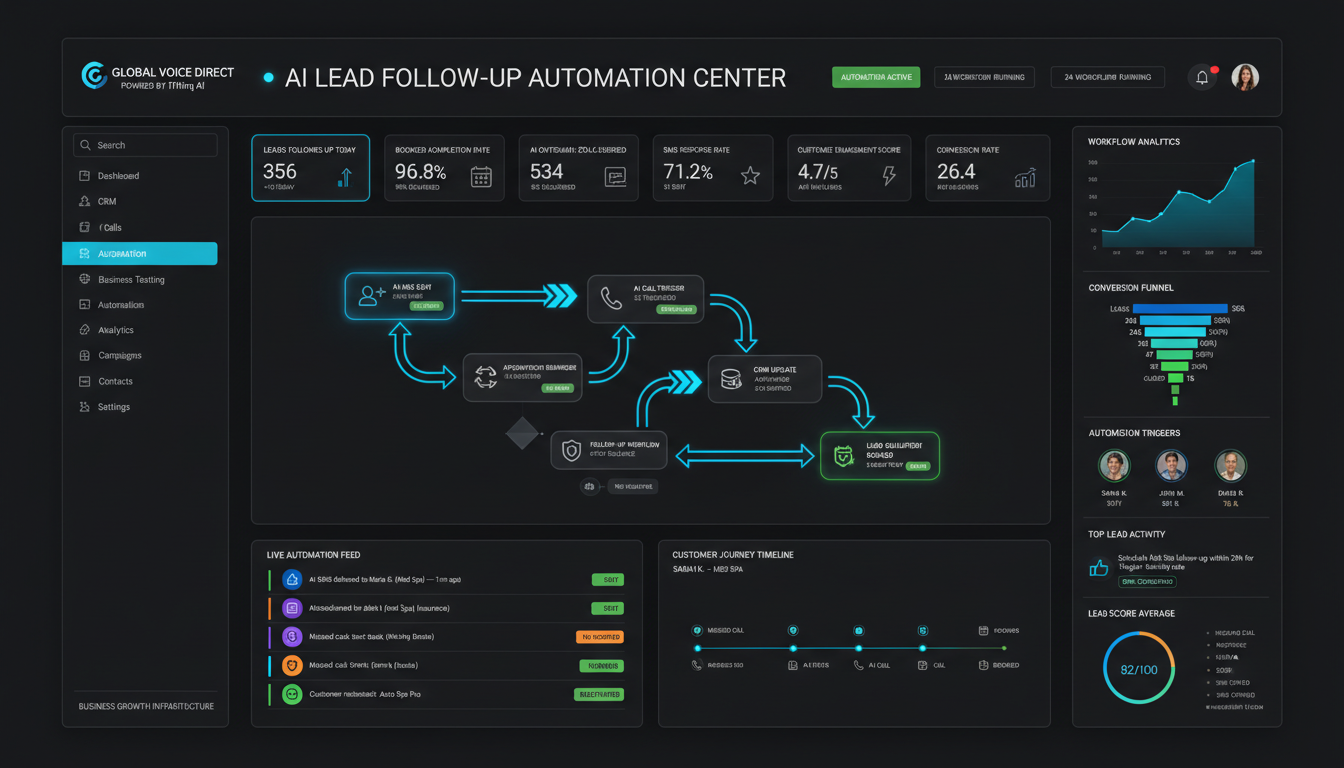
AI-powered lead follow-up automation supporting the Business Execution Framework

AI technology is making high-level execution accessible to businesses at every stage of growth. From automated lead follow-up to intelligent workflow management, AI-powered platforms are closing the Execution Gap™ between what businesses plan and what they actually deliver.

IThinq AI is an example of this infrastructure in action — built to help businesses use AI to improve consistency, automate execution tasks, and deliver the kind of operational performance that was once reserved for enterprise teams.


Common Business Execution Framework Mistakes

After working with growing businesses across multiple industries, the same execution failures appear repeatedly. Here are the five most damaging mistakes founders make when trying to implement the Business Execution Framework.

No Prioritization

When everything is a priority, nothing gets done. The Business Execution Framework requires a ranked priority system so teams spend time on what actually moves the business forward — not what feels urgent in the moment.

No Systems

Relying on individual talent and memory instead of documented processes creates inconsistency at scale. Every new hire, every growth sprint, every busy season breaks a system-free business. The Business Execution Framework fixes this at Stage Three.

Poor Communication

Misalignment between leadership and teams is silent and expensive. Goals, deadlines, and priorities that are not communicated clearly lead to wasted effort and missed outcomes. The Business Execution Framework addresses this at every stage.

Lack of Measurement

You cannot fix what you cannot see. Businesses that do not track leading indicators will always be reacting to problems instead of preventing them. The Business Execution Framework builds measurement into Stage Five as a non-negotiable.

No Accountability Structure

Without clear ownership, tasks disappear. The Business Execution Framework assigns a single named owner to every major outcome before work begins. Accountability is not about blame — it is about clarity.


The Execution Audit™ — How to Apply the Business Execution Framework Right Now

Use this checklist to assess the current state of execution in your business. Be honest. Every unchecked item is a gap in your Business Execution Framework that will limit your growth.

We have clearly documented goals for the next 90 days with specific metrics, not just intentions.
Every major initiative has a single named owner. Not a team. One person.
Our core processes are documented in writing and accessible to the entire team.
We review key performance metrics at least weekly — not just monthly or quarterly.
Lead follow-up in our business is automated. We do not rely on someone remembering.
We have a defined weekly operating rhythm — a meeting cadence that keeps the team aligned and accountable.
New team members can understand our core workflows from documentation without needing constant guidance.
We have a CRM or system of record that tracks every customer interaction and follow-up.
We conduct at least a monthly retrospective to review what worked, what didn’t, and what changes to make.
The business can operate consistently for a week without the founder making every decision.

If you checked fewer than seven of these, you have a Business Execution Framework problem — not a marketing, sales, or strategy problem. Fix the infrastructure first. Everything else gets easier.
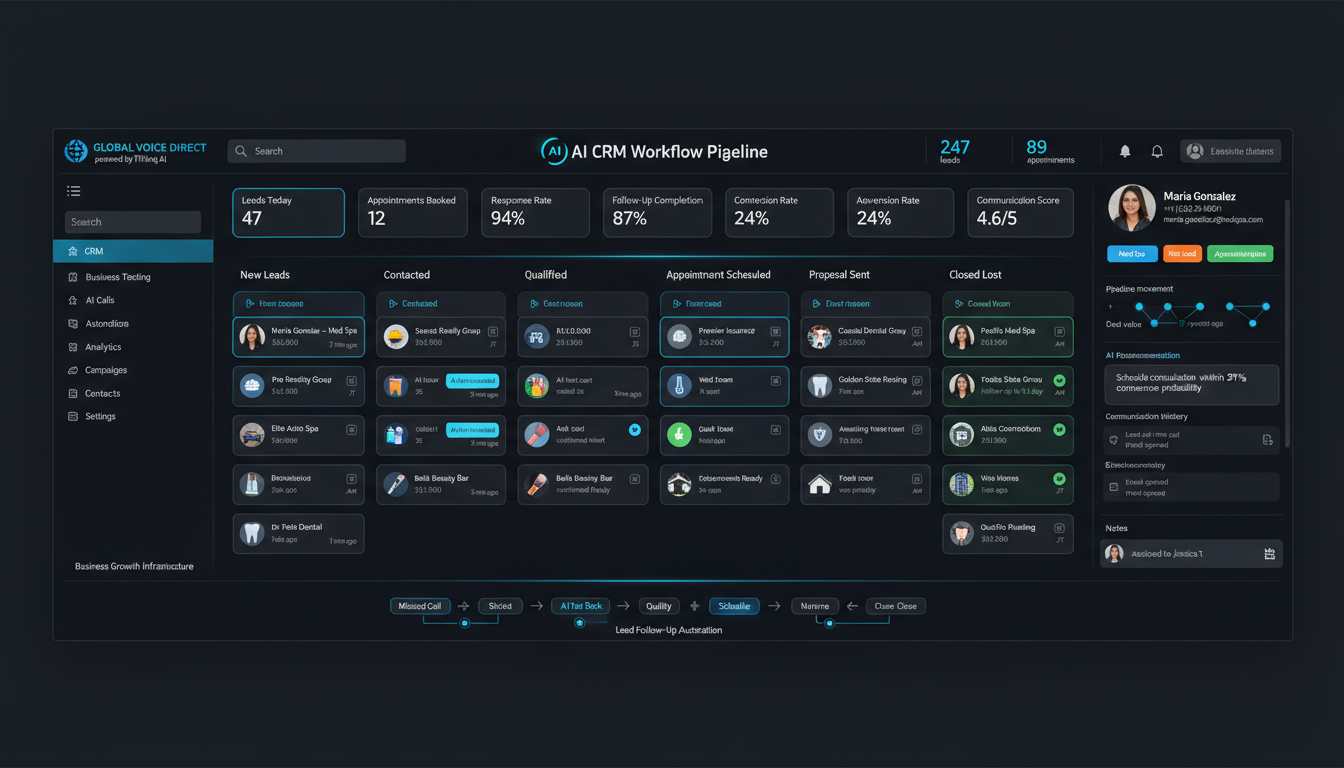

CRM workflow pipeline dashboard — Business Execution Framework operations infrastructure

The Business Execution Framework requires operational visibility. Your CRM, pipeline dashboard, workflow automation, and reporting tools are not optional accessories — they are the infrastructure that makes the Business Execution Framework run at scale.

Explore related frameworks: Startup Operations Framework and Startup Growth Systems.


Founder Insight — Jonas Janvier

The Businesses That Win Usually Do Ordinary Things Exceptionally Well

I spent years thinking that growth required a breakthrough idea, a secret strategy, or a perfect product. What I discovered is more mundane — and more powerful.

The businesses that outperform their competitors almost never have a dramatically different idea. They answer the phone faster. They follow up more consistently. They onboard clients more smoothly. They track their numbers more diligently. That is the Business Execution Framework in practice.

When I look back at the growth phases in my own businesses, the acceleration always followed the same pattern. We stopped relying on effort alone and started building systems. The moment a process became documented and automated, it became reliable. The moment it became reliable, it became scalable.

This is why I built my entire philosophy around infrastructure rather than inspiration. Inspiration is plentiful. Infrastructure is rare. Build the Business Execution Framework into your operations and the results become inevitable.

The next article in this series — Why Most Startups Stay Small — explores why so many founders with great products and capable teams never break through. The answer always comes back to one thing: they never made the shift from doing the work to building the system that does the work.

J

Jonas Janvier

Founder — Global Voice Direct & IThinq AI | Startup Infrastructure Expert


The Execution Score™ — Business Execution Framework Self-Assessment

Rate your business from one to five in each category. A score of four to five means this area of the Business Execution Framework is strong. A score of one to two means this area is actively limiting your growth right now.

Category What It Measures Score 4–5 Score 1–2
Clarity Goals, priorities, and success metrics are documented and understood by the whole team. Execution Ready Critical Gap
Communication The team communicates consistently, responds quickly, and stays aligned across all projects. Execution Ready Critical Gap
Accountability Every major outcome has a named owner. Deadlines are tracked and reviewed regularly. Execution Ready Critical Gap
Systems Core processes are documented, repeatable, and not dependent on individual memory. Execution Ready Needs Attention
Measurement KPIs are tracked weekly. The team reviews data and adjusts before problems compound. Execution Ready Needs Attention

Total possible score: 25. Score of 20–25: strong Business Execution Framework foundation. Score of 13–19: building, but critical gaps need attention. Score of 12 or below: the Business Execution Framework is the number one priority before any additional marketing or growth spend.


Business Execution Framework — Frequently Asked Questions

What is business execution?
Business execution is the disciplined process of converting plans, strategies, and decisions into consistent, measurable results. It is the operational discipline of doing what you said you were going to do — on time, at the right quality, and repeatedly. The Business Execution Framework gives founders the structure to do this at scale.
Why is execution more important than strategy?
A great strategy without execution produces nothing. A mediocre strategy executed consistently will outperform a brilliant strategy that stays on paper. The Business Execution Framework exists because execution is where value is actually created — not in the planning room.
What is the Business Execution Framework™?
The Business Execution Framework™ is a six-stage operational system — Vision, Planning, Systems, Execution, Measurement, and Improvement — designed to help businesses close the Execution Gap™ between what they plan and what they actually accomplish. It is the operational system that closes the gap between what you plan and what you actually deliver.
Why do most business strategies fail?
Most strategies fail at implementation, not design. The underlying causes are the same ones the Business Execution Framework is built to address: lack of clarity, missing accountability structures, no documented systems, and insufficient tracking to surface problems early.
How do business systems improve execution?
Systems convert execution from a daily act of willpower into a designed process. When workflows are documented and automated, results become repeatable and scalable. This is Stage Three of the Business Execution Framework — the stage most businesses skip and the reason most businesses stall.
What creates accountability in a business?
Accountability is created through three elements: clear ownership (one named person per outcome), defined deadlines, and regular review cycles where progress is measured against commitments. The Business Execution Framework builds all three into its operating structure.
What is the Execution Gap™?
The Execution Gap™ is the difference between what a business plans to accomplish and what it actually delivers. It exists in almost every organization and is almost always caused by a systems problem, not a motivation problem. The Business Execution Framework is specifically designed to close this gap.
How do small businesses improve execution?
Small businesses improve execution by implementing the Business Execution Framework before they feel ready for it — establishing a weekly operating rhythm, documenting core processes, adopting a CRM, and automating high-frequency follow-up tasks.
What is operational discipline?
Operational discipline is the organizational commitment to follow systems, honor deadlines, and measure results consistently — even under pressure, even during growth, even when it feels easier to cut corners. It is one of the four pillars the Business Execution Framework is built to develop.
What role does communication play in business execution?
Communication is an execution tool inside the Business Execution Framework. Without clear alignment, fast responsiveness, and explicit accountability communication, even well-designed plans collapse at the team level. Communication infrastructure is operational infrastructure.
Why do startups struggle with execution?
Startups struggle with execution because founders are pulled in too many directions, systems are not yet built, priorities shift constantly, and there is often no formal accountability structure. The Business Execution Framework fixes this by providing the infrastructure before the chaos arrives.
How does automation support business execution?
Automation removes human error and memory dependency from high-frequency tasks. When follow-ups, reminders, lead routing, and reporting run automatically, the Business Execution Framework becomes consistent regardless of team size or bandwidth.
What is an execution framework in business?
An execution framework is a structured, repeatable system that guides how a business converts strategy into action. The Business Execution Framework covers goal-setting, planning, process documentation, performance tracking, and continuous improvement cycles in six sequential stages.
What KPIs should I track for business execution?
Core execution KPIs inside the Business Execution Framework include: task completion rates, lead response time, sales cycle length, customer onboarding speed, team meeting adherence, and quarterly goal attainment. Leading indicators matter more than lagging ones.
What is a business operating rhythm?
A business operating rhythm is a consistent meeting and review cadence — daily check-ins, weekly team reviews, monthly performance assessments — that keeps leadership, teams, and priorities aligned. It is a core requirement of the Business Execution Framework.
How do I build an execution culture in my business?
Build execution culture by making accountability visible, celebrating consistent follow-through, measuring what matters publicly, and holding leadership to the same standards as the team. The Business Execution Framework creates the structure that makes this culture possible.
What is startup execution strategy?
Startup execution strategy is the operational plan for how a startup converts vision into traction. The Business Execution Framework provides this — covering prioritization, resource allocation, team accountability structures, and the technology stack that enables consistent delivery.
Why do businesses with good ideas fail?
They fail because ideas without the Business Execution Framework don’t compound. A good idea is the starting point, not the destination. The businesses that survive are the ones that build repeatable systems around their idea before the market moves on.
What is business growth infrastructure?
Business growth infrastructure is the operational foundation — systems, communication tools, technology, processes, and accountability structures — that allows a business to grow without breaking. The Business Execution Framework is the system that builds this infrastructure deliberately.
How does the Business Execution Framework relate to the Startup Credibility Framework?
The Startup Credibility Framework™ builds the external signals that make a business trustworthy to customers, vendors, and funders. The Business Execution Framework™ builds the internal systems that make a business operationally reliable. One earns trust. The other delivers on it.
Why do entrepreneurs fail at execution even when they work extremely hard?
Hard work without systems produces inconsistent results. The Business Execution Framework separates effort from output by building infrastructure that produces results regardless of daily energy levels. Hard work is an input. The Business Execution Framework is the multiplier.
What is the number one reason businesses stay small forever?
The founder never built the Business Execution Framework. They kept doing the work instead of building the system that does the work. The transition from operator to builder is the most important shift a founder can make — and the Business Execution Framework is the tool that makes it possible.
Is motivation or systems more important for long-term business growth?
Systems. Every time. Motivation is a feeling that fluctuates daily. The Business Execution Framework is infrastructure that runs regardless of how you feel. Businesses built on motivation plateau. Businesses built on the Business Execution Framework compound.
How do I know if my business has a serious execution problem?
Run the Execution Audit™ above. If you checked fewer than seven items, the Business Execution Framework is missing from your operations. Other signs: missed deadlines no one owns, follow-up that depends on someone’s memory, and goals that change before they are achieved.
What happens when a business has great strategy but terrible execution?
The strategy dies in the planning room. A great strategy without the Business Execution Framework is just an expensive document. The companies that win are not always the ones with the best strategies — they are the ones that execute consistently, quarter after quarter.
How long does it take to build a real execution system for a business?
The Business Execution Framework can be implemented in stages over 90 days. Stage One and Two (Vision and Planning) can be set up in the first two weeks. Stage Three (Systems) takes the most time — typically 60 to 90 days to document, test, and automate core processes.
What is the difference between business execution and business planning?
Planning is Stage Two of the Business Execution Framework. Execution is Stage Four. Planning answers what you will do. Execution answers whether you actually did it. Most businesses are excellent at planning and poor at execution because they never built the systems that connect the two.
How do I hold my team accountable without micromanaging every task?
The Business Execution Framework creates accountability through structure, not surveillance. Define clear outcomes, assign single named owners, set deadlines, and review progress in a weekly operating rhythm. When the system is visible to everyone, micromanagement becomes unnecessary.
Can a solo founder build a strong execution system without a big team?
Yes. The Business Execution Framework scales down to a team of one. Solo founders apply it by documenting their own processes, automating repetitive tasks, and reviewing their own KPIs weekly. The discipline of the framework is what matters — not the size of the team.
What is the first step to improving business execution starting today?
Run the Execution Audit™. Identify your lowest-scoring area. That is where the Business Execution Framework breaks down in your specific business. Fix the weakest link first — not the most interesting one.
How does poor communication destroy business execution?
Poor communication breaks the Business Execution Framework at every stage. Unclear goals produce misaligned effort. Slow responses lose customers. Ambiguous ownership creates missed deadlines. Communication is not a soft skill inside the Business Execution Framework — it is an operational requirement.
What tools do the highest-execution businesses use?
High-execution businesses using the Business Execution Framework typically use a CRM, a project management system, an automation platform, a communication infrastructure tool, and a reporting dashboard. The specific tools matter less than the discipline to use them consistently.
Why does every business need a CRM to execute consistently?
Without a CRM, the Business Execution Framework has no memory. Every customer interaction, follow-up, and pipeline stage lives in someone’s head or inbox — both of which are unreliable at scale. A CRM makes the Business Execution Framework permanent and auditable.
What does execution infrastructure actually look like inside a real business?
Execution infrastructure inside the Business Execution Framework looks like: documented SOPs for every core process, a CRM that tracks every customer touchpoint, automated follow-up sequences, weekly KPI reviews, a single named owner for every initiative, and a monthly retrospective to improve the system.
How does AI improve business execution and team consistency?
AI removes the human bottlenecks in the Business Execution Framework — automating follow-up, routing leads, scheduling appointments, and generating reports without human intervention. This makes execution consistent regardless of team size, bandwidth, or daily energy levels.
What is an execution audit and why does every business need one immediately?
The Execution Audit™ is a diagnostic tool built into the Business Execution Framework that identifies exactly where execution breaks down in your specific business. Every business needs one because most founders believe their execution problems are unique — and almost all of them are structural and fixable.
How do I score my business execution honestly?
Use the Execution Score™ above. Rate your business from one to five across the five Business Execution Framework categories: Clarity, Communication, Accountability, Systems, and Measurement. Total possible score is 25. Below 12 means the Business Execution Framework is the immediate priority.
What separates a seven-figure business from a six-figure business at the operational level?
Systems. The seven-figure business has a functioning Business Execution Framework — documented processes, accountability structures, automation, and measurement. The six-figure business is still running on the founder’s effort and memory. The Business Execution Framework is what makes the jump possible.
How do I build systems without slowing my business down during growth?
Implement the Business Execution Framework in the order of the six stages. Start with Vision and Planning (low disruption), then add Systems one process at a time during slow periods. You do not need to document everything before executing — you need to document the highest-frequency processes first.
What is the difference between operational discipline and micromanagement?
Operational discipline inside the Business Execution Framework means the team follows systems they helped build and agreed to. Micromanagement means the founder substitutes their judgment for the system at every step. The Business Execution Framework eliminates the need for micromanagement by making expectations explicit and visible.
Why do most startups fail in year three instead of year one?
Year one runs on adrenaline and founder effort. Year three requires the Business Execution Framework to carry the weight. When the founder’s capacity maxes out and there are no systems to take over, growth stalls or reverses. The Business Execution Framework prevents this by building infrastructure before the crisis arrives.
How do I close the Execution Gap™ in my business this quarter?
Run the Execution Audit™, identify your lowest score in the Business Execution Framework, and fix that specific gap in the next 30 days. Trying to fix everything at once is itself an execution failure. The Business Execution Framework is built to be implemented one stage at a time.
What does a business execution roadmap look like in practice?
A Business Execution Framework roadmap looks like: Week one through two for Vision and goal-setting, Week three through four for Planning and owner assignment, Month two for Systems documentation and automation setup, Month three for Execution tracking and KPI dashboards, Month four for Measurement review and Improvement cycles.
How do I get my team to actually follow the systems I build?
Involve the team in building the systems. The Business Execution Framework works best when the people responsible for execution help design the process. Then make the system visible, review compliance in weekly meetings, and celebrate adherence as much as results.
What are the clearest signs that a business is execution-ready to scale?
A business is execution-ready when it scores 20 or above on the Business Execution Framework Execution Score™ — meaning it has documented processes, clear accountability, consistent communication, weekly measurement, and an improvement rhythm already functioning before growth is added.
Why do investors care more about execution than ideas?
Investors have seen thousands of great ideas fail. What they fund is the team’s demonstrated ability to execute. A business that can show a functioning Business Execution Framework — with KPIs, documented processes, and accountability structures — is far more fundable than one with a brilliant pitch and no operational infrastructure.
What is the real cost of poor business execution over twelve months?
The cost of operating without the Business Execution Framework includes: missed follow-ups that become lost revenue, inconsistent delivery that damages reputation, founder burnout from carrying the operational weight alone, team frustration from unclear priorities, and compounding gaps that get more expensive to fix the longer they persist.
How do I go from founder-dependent execution to systems-driven execution?
The transition happens at Stage Three of the Business Execution Framework. Document every process the founder currently carries in their head. Assign ownership to team members. Automate the repeatable tasks. Review performance in a weekly rhythm. Each documented process removes one dependency on the founder.
What is the difference between a business that runs and a business that depends on the owner?
A business that runs has the Business Execution Framework embedded in its operations — documented processes, named owners, automated follow-up, and weekly reviews that happen with or without the founder present. A business that depends on the owner has the Business Execution Framework living only in the founder’s head.
How do I build a business that operates consistently without me making every decision?
Implement the Business Execution Framework fully through Stage Three. When your core processes are documented, your team knows the decision criteria, and your systems run automatically, the business no longer requires the founder to make every call. This is the goal of every stage of the Business Execution Framework.
What does execution look like at the one million revenue stage vs the ten million stage?
At one million, the Business Execution Framework is founder-led with light documentation. At ten million, the Business Execution Framework must be team-driven with full documentation, automation, dedicated ownership for each function, and real-time reporting. The jump requires moving from Stages One through Three to Stages Four through Six.
How does the Execution Score™ help me identify the weakest part of my operations?
The Execution Score™ forces an honest assessment of all five Business Execution Framework categories simultaneously. Most founders know their business has problems but cannot pinpoint where the Business Execution Framework is weakest. The score makes it visible, specific, and actionable.
What is the Execution Audit™ and how do I run one on my own business?
The Execution Audit™ is the ten-item checklist in the Business Execution Framework above. Run it honestly by going through each item and checking only what is genuinely true — not what you intend to build. Every unchecked item is a specific gap in your Business Execution Framework that needs to be addressed before adding growth.
Why is consistency a competitive advantage that most businesses ignore?
Because consistency is invisible until it compounds. The Business Execution Framework builds consistency into the operating model so businesses that apply it systematically outperform competitors who rely on talent and effort. Consistency cannot be copied quickly — it takes years to build and becomes an insurmountable moat.
How do I turn my business strategy into an actual operating system?
Apply the Business Execution Framework to your strategy. Take each strategic goal through all six stages — Vision, Planning, Systems, Execution, Measurement, and Improvement. The moment your strategy has documented owners, automated workflows, and weekly KPI reviews attached to it, it becomes an operating system instead of a document.
What are the biggest execution mistakes founders make in the first three years?
The five most common Business Execution Framework failures in the first three years: skipping Stage Three (Systems) entirely, assigning outcomes to teams instead of individuals, measuring results only annually, automating nothing, and treating the Business Execution Framework as something to build later — after growth. Later never comes.
How do I build accountability without creating a culture of fear in my business?
The Business Execution Framework builds accountability through clarity, not pressure. When goals are visible, ownership is explicit, and review rhythms are consistent, accountability becomes a natural part of the operating culture. Fear comes from ambiguity. The Business Execution Framework removes ambiguity.
What is the connection between communication infrastructure and business execution?
Communication infrastructure is the nervous system of the Business Execution Framework. Without fast, reliable, professional communication — internally for team alignment and externally for customer responsiveness — the Business Execution Framework breaks down at the delivery stage regardless of how good the strategy is.
How does automation reduce execution failures in growing businesses?
Automation eliminates the human error and memory dependency that cause most Business Execution Framework failures at Stage Four. When follow-ups, reminders, and routing happen automatically, execution becomes consistent regardless of who is on the team, how busy the week is, or how many things are competing for attention.
What happens to execution when a business scales too fast without systems?
The Business Execution Framework collapses under the weight of volume. More customers mean more follow-up. More team members mean more coordination. More revenue means more complexity. Without the Business Execution Framework already in place, fast growth accelerates the breakdown of every manual process the business depends on.
Why is execution the moat that most competitors cannot copy?
Because the Business Execution Framework takes years to build and embed into a company’s culture. A competitor can copy your product in months. They cannot copy your documented processes, your team’s operational discipline, your automation stack, or the consistency you have compounded over years of applying the Business Execution Framework.
How do I prioritize execution tasks when everything feels equally urgent?
The Business Execution Framework resolves this through Stage One — Vision. When goals are clear and ranked, urgency becomes relative. The question is never what feels most urgent. Inside the Business Execution Framework, the question is always what moves the highest-priority goal forward the most.
What is the weekly operating rhythm and why does every business need one?
The weekly operating rhythm is the recurring meeting and review cadence built into Stage Four of the Business Execution Framework. It is the mechanism that keeps the team aligned, surfaces problems early, and ensures the Business Execution Framework is actually running — not just documented and forgotten.
How do I measure execution performance across my entire team?
Stage Five of the Business Execution Framework covers this specifically. Measure task completion rates, goal attainment percentages, lead response times, and milestone hit rates across the team. Make the data visible in a shared dashboard so every team member can see how the Business Execution Framework is performing in real time.
What is the fastest way to identify where execution is breaking down in my business?
Run the Execution Audit™ and the Execution Score™ simultaneously. The audit tells you which specific practices are missing. The score tells you which Business Execution Framework category is weakest. Together they give you a complete picture of exactly where the Business Execution Framework is failing and what to fix first.

Related Frameworks & Guides

These resources extend the Business Execution Framework into specific operational areas of your business:

Ideas Are Common.
Execution Is Rare.

The businesses that grow consistently are usually the businesses that execute consistently. Not the ones with the best ideas — the ones with the Business Execution Framework running inside their operations.

Explore Growth Infrastructure Read: Startup Operations Framework
Scroll to Top