

The Entrepreneur Infrastructure Model™
The five systems every business needs to scale — and why most entrepreneurs are solving the wrong problem.

Most entrepreneurs obsess over growth.
More leads. More marketing. More revenue.
What they miss is the reason growth keeps stalling.
It’s not a marketing problem. It’s an infrastructure problem.
Every successful business eventually builds systems that can support growth — not just generate it. Without those systems in place, growth becomes chaotic, customers get frustrated, teams break down, and opportunities slip through.
After building multiple companies from the ground up, I’ve identified exactly which systems must be in place before sustainable scale is possible.
I call it the Entrepreneur Infrastructure Model™.
The Entrepreneur Infrastructure Model™ Defined
The Entrepreneur Infrastructure Model™ is a business framework created by Jonas Janvier that identifies the five core systems every company must build to scale sustainably: Credibility Infrastructure, Communication Infrastructure, Operational Infrastructure, Technology Infrastructure, and Growth Infrastructure. When all five operate together, they create an Infrastructure Flywheel™ — a self-reinforcing cycle that makes growth compound over time rather than collapse under pressure.
What Is Business Infrastructure?
Infrastructure is the word most entrepreneurs associate with roads and bridges. In business, it means something just as foundational.
Business infrastructure is the collection of systems, processes, tools, and capabilities that allow a company to operate consistently, serve customers reliably, and grow without breaking down.
It’s not the flashy stuff. It’s the foundation everything else is built on.
Business Infrastructure
The systems and processes a company uses to operate, communicate, and deliver — consistently, at any scale.
Startup Infrastructure
The foundational systems a new business builds to establish legitimacy, serve early customers, and prepare for growth.
Growth Infrastructure
The specific systems — lead management, follow-up, retention, referrals — that turn attention into revenue, consistently.
Business Systems
The documented, repeatable processes that allow a business to operate without the founder being involved in every decision.
Infrastructure is not optional. It’s the price of scale. The businesses that appear to grow effortlessly aren’t lucky — they built their systems first.
Why Businesses Hit Growth Ceilings
You’ve seen it happen. A business gets momentum. Things are working. Then growth suddenly stalls — or worse, the chaos of growth starts costing them customers.
The entrepreneur does what feels natural: they spend more on marketing. Hire more people. Push harder.
But the problem isn’t the gas pedal. It’s the vehicle.
The Infrastructure Gap™ — the distance between a business’s current operational capacity and the infrastructure required to support its next level of growth. Closing this gap is the real work of scaling a business.
When a business has an Infrastructure Gap, growth creates pressure instead of momentum. More customers means more complaints. More revenue means more chaos. More staff means more confusion.
The solution is never more marketing. The solution is building the systems that make growth sustainable.
The Entrepreneur Infrastructure Model™
Five systems. Every business. No exceptions.
| System | What It Does | What Breaks Without It |
|---|---|---|
1 Credibility Infrastructure |
Establishes trust, verification, and professional presence | Prospects don’t convert. Vendors won’t extend terms. |
2 Communication Infrastructure |
Ensures consistent, responsive customer communication | Leads go unanswered. Customers churn from frustration. |
3 Operational Infrastructure |
Documents and systematizes how work gets done | Execution is inconsistent. The founder becomes the bottleneck. |
4 Technology Infrastructure |
Deploys tools and automation to multiply team output | The business stays manual. Competitors with better tools win. |
5 Growth Infrastructure |
Manages leads, follow-up, retention, and referrals | Acquisition is inconsistent. Revenue stays unpredictable. |
These systems are not sequential in the sense that you build one and forget it. They operate simultaneously. But they are sequential in order of priority — you cannot communicate without credibility, you cannot grow without operations, and technology amplifies whatever already exists.
The Foundation of Business Trust
Before any customer buys, before any vendor extends credit, before any partner takes you seriously — your business must appear credible.
Credibility Infrastructure is the set of assets that establish legitimacy. Not just looking professional, but actually being verifiable, findable, and trustworthy at every point of contact.
- Business entity formation — LLC or corporation, properly registered
- Professional business phone number — a real, dedicated number that answers
- Business address verification — registered, consistent across all listings
- Online presence — website, Google Business Profile, verified listings
- Business credit identity — EIN, DUNS, NAP consistency, tradeline history
- Brand consistency — logo, color, voice, and messaging aligned across every channel
Without credibility infrastructure, marketing is expensive and conversion is low. The market has already decided before your pitch begins.
I’ve covered this in depth in the Business Credibility Framework — the complete guide to building the trust signals that open doors.
The System That Keeps Customers

Most businesses lose customers not because of a bad product — but because of poor communication.
A missed call. An unanswered text. A voicemail that never gets returned. Customers interpret slow communication as disrespect. They move on. Fast.
Communication Infrastructure is the system of tools and processes that ensure every customer interaction is handled consistently, promptly, and professionally — whether your team is available or not.
- Dedicated business phone system with intelligent call routing
- AI-powered answering to handle inquiries 24/7
- Business text messaging for fast, modern customer interaction
- Consistent follow-up across email, text, and phone
- Communication response standards — documented and enforced
Businesses like Global Voice Direct exist specifically to solve the Communication Infrastructure problem for growing businesses — providing AI-powered phone systems, business text messaging, and call management tools that give small businesses enterprise-grade communication capabilities.
See the full framework: Communication Infrastructure Framework.
The System That Runs Without You
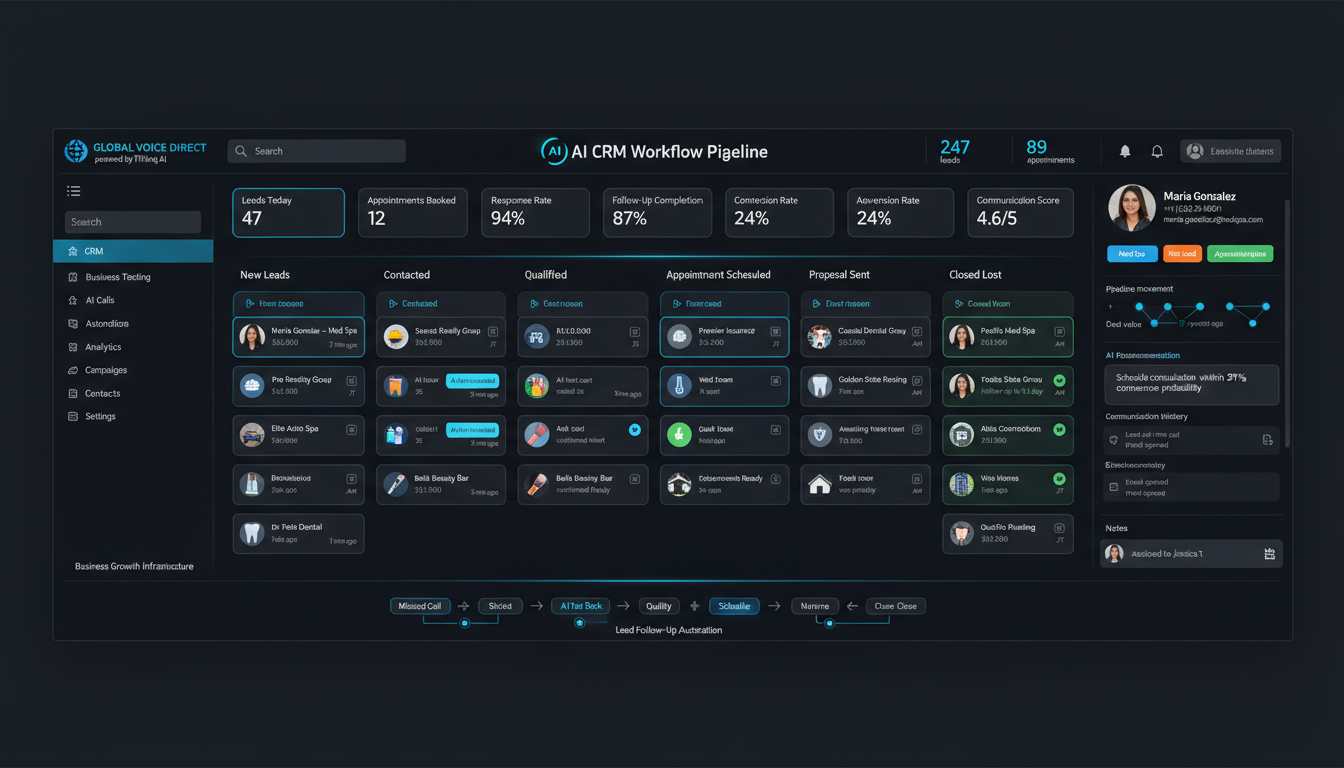
If your business cannot operate without you, you don’t own a business. You own a job.
Operational Infrastructure is the documentation, processes, accountability structures, and execution systems that allow a business to deliver results consistently — without the founder being the answer to every question.
- Standard Operating Procedures (SOPs) for every repeatable task
- Onboarding processes for new customers and new team members
- Accountability systems — who owns what, and how results are tracked
- Quality control checkpoints — built into the workflow, not added after
- Meeting cadences and decision frameworks that don’t require a meeting for everything
Operations is where most entrepreneurs resist the work. Documentation feels slow. Processes feel bureaucratic. But every hour spent building operational infrastructure saves ten hours in future firefighting.
The complete guide: Startup Operations Framework.
The System That Multiplies Output
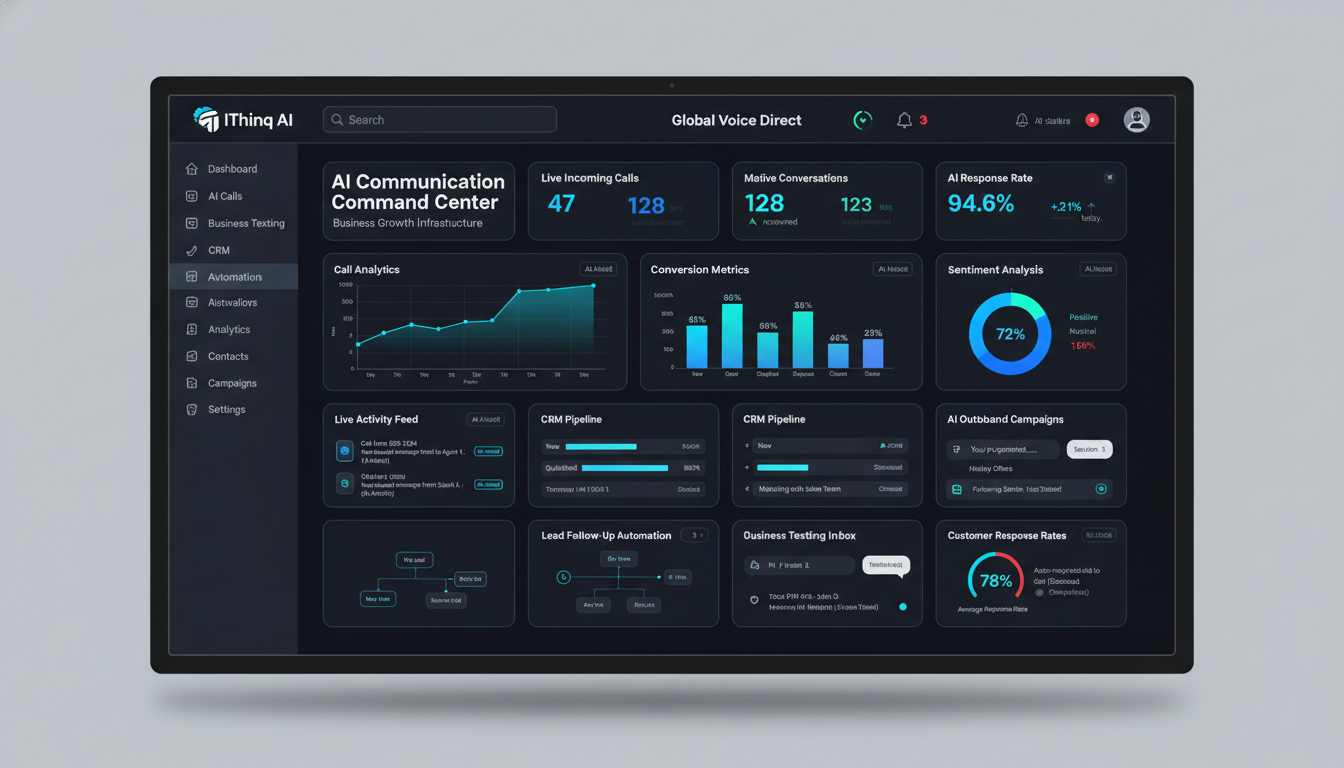
Technology doesn’t replace good business systems. It amplifies them.
A business with strong operations and the right technology stack can compete with companies ten times its size. A business with poor operations and expensive technology tools will automate its chaos — and produce chaos faster.
Technology Infrastructure is the stack of tools, platforms, and AI-powered systems that allow a lean team to execute with precision and scale.
- CRM platform — your single source of truth for every customer relationship
- AI communication tools — for lead qualification, follow-up, and customer service
- Automation workflows — removing manual steps from repeatable processes
- Reporting dashboards — real-time visibility into what matters
- Integration architecture — making all tools talk to each other
Companies like IThinq AI are building the AI-powered communication and automation tools that give growing businesses enterprise-grade technology infrastructure without enterprise-level costs. The right AI stack is no longer optional for companies serious about scale.
See how it fits together: Startup Technology Stack.
The System That Compounds Revenue
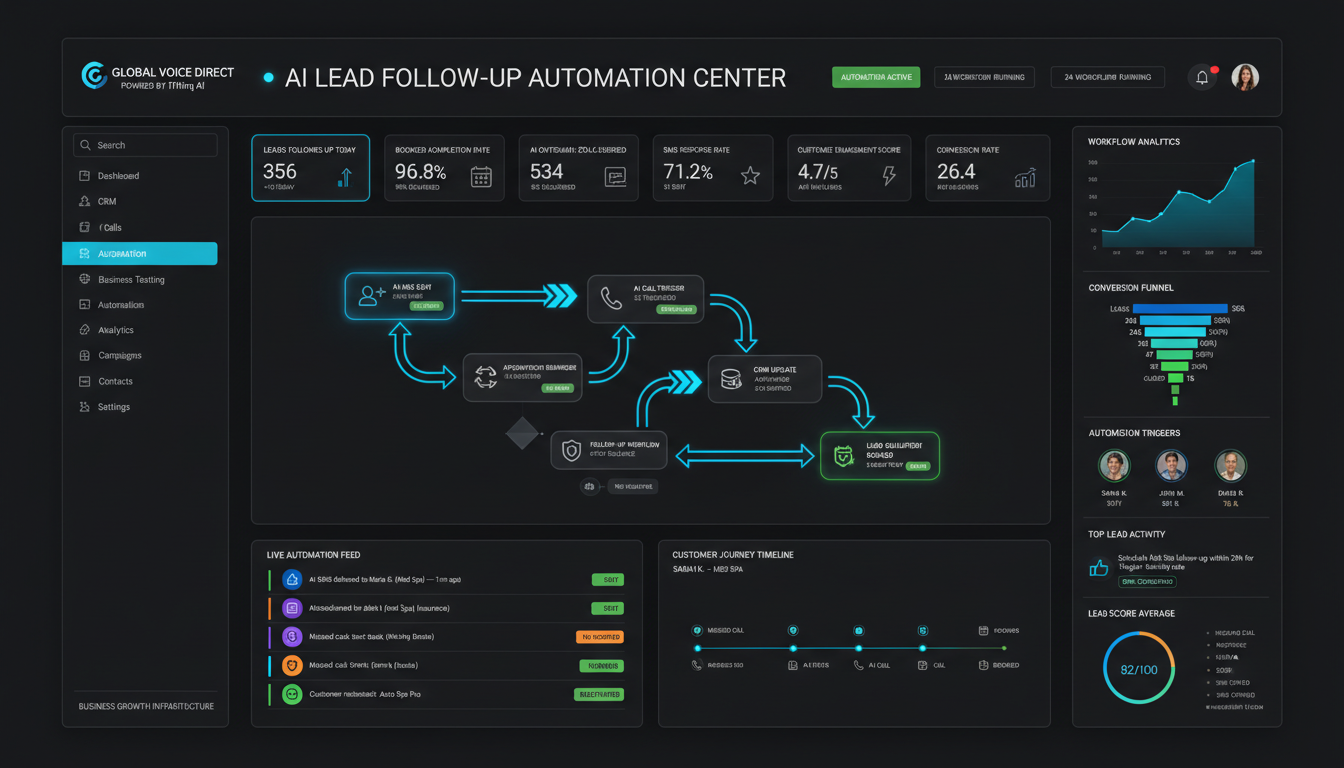
Growth without a system is just luck.
Most businesses leave revenue on the table because they have no structured approach to capturing, managing, and converting the leads they already have. They focus on generating new leads before they’ve built a system to handle the ones in front of them.
Growth Infrastructure is the set of systems that create consistent, compounding revenue — from first touch through repeat purchase through referral.
- Lead capture system — every inquiry is recorded, not lost
- Lead nurture sequences — automated follow-up that keeps prospects warm
- Pipeline management — deals tracked from inquiry to close
- Customer retention systems — check-ins, re-engagement, loyalty
- Referral infrastructure — turning happy customers into a growth channel
The full playbook: Startup Growth Systems.
The Infrastructure Flywheel™
Here’s what most entrepreneurs miss: the five systems don’t just coexist. They compound.
When you build them in the right order, each system feeds the next — and eventually, the whole thing self-reinforces.
This is why established businesses seem to grow so much easier than new ones. They’re not smarter. They built their flywheel earlier.
Every system you build today makes the next system more effective. That’s compound infrastructure.
Common Infrastructure Mistakes
These are the patterns I see most often — and they all share the same root cause: prioritizing growth before the infrastructure to support it.
Marketing-First Thinking
Spending heavily on ads before fixing credibility or communication. The leads arrive and go nowhere.
Ignoring Systems
Relying on the founder’s memory and effort instead of documented processes. The business cannot scale beyond one person.
Inconsistent Communication
Responding to some inquiries but not others. Inconsistency reads as unreliability. Customers choose competitors who answer.
No Automation
Doing manually what should be automated. Time is finite. Automation is not a luxury — it’s a scaling requirement.
Undocumented Operations
No SOPs, no onboarding guides, no accountability structures. Every new hire requires direct training. Every departure creates a crisis.
No Retention System
Focusing entirely on acquisition while existing customers quietly churn. The business runs on a leaky bucket — always spending to replace what it loses.
Infrastructure Audit™
Use this checklist to identify where your Infrastructure Gap is largest right now.
Credibility: Business is registered, verified, and has a professional phone number
Credibility: Google Business Profile is claimed, accurate, and has recent reviews
Credibility: Website, listings, and social all show the same name, address, and phone
Communication: Every inbound call is answered or returned within one business hour
Communication: Business text messaging is active and monitored
Communication: After-hours inquiries are captured and responded to automatically
Operations: SOPs exist for every repeatable customer-facing process
Operations: Team members can execute without asking the founder for answers
Operations: New hires can be onboarded from documentation alone
Technology: A CRM is active and every customer/lead is tracked inside it
Technology: At least one automated workflow is reducing manual workload
Technology: Reporting dashboards give real-time visibility into key metrics
Growth: Every lead is captured in a system, not a spreadsheet or someone’s memory
Growth: An automated follow-up sequence exists for unconverted leads
Growth: A structured referral system is in place and actively used
Count how many boxes you can check honestly. Each unchecked box is an Infrastructure Gap that is actively limiting your growth.
Growth Is Usually a Byproduct of Infrastructure
Entrepreneur Infrastructure Score™
Score your business across the five categories. Each is worth up to 20 points. Maximum total score: 100.
Entity formation, verification, trust signals, brand consistency
Response time, coverage, channel consistency, AI assistance
SOPs, accountability, documentation, delivery consistency
CRM adoption, automation, AI tools, integration depth
Lead capture, follow-up, pipeline, retention, referrals
Entrepreneur Infrastructure Score Dataset™
| Category | Description | Scoring Criteria | Infrastructure Level |
|---|---|---|---|
| Credibility | Entity verification, trust signals, brand presence | 0–5: No formal entity. 6–10: Registered, inconsistent listings. 11–15: Verified, consistent NAP. 16–20: Full credibility stack active. | 0–5 Foundation |
| Communication | Responsiveness, coverage, channel management | 0–5: Missed calls common. 6–10: Business hours only. 11–15: After-hours captured. 16–20: AI-powered, omnichannel. | 6–10 Developing |
| Operations | Documented processes, accountability, consistency | 0–5: No documentation. 6–10: Some processes written. 11–15: SOPs for key workflows. 16–20: Full documentation, accountability system. | 11–15 Established |
| Technology | CRM, automation, AI tools, integration | 0–5: Spreadsheets only. 6–10: CRM in use. 11–15: Automation active. 16–20: AI stack deployed, fully integrated. | 16–20 Optimized |
| Growth | Lead systems, follow-up, retention, referrals | 0–5: No lead system. 6–10: Basic pipeline. 11–15: Automated follow-up. 16–20: Full growth flywheel active. | 6–10 Developing |
Frequently Asked Questions
What is the Entrepreneur Infrastructure Model?
A framework by Jonas Janvier defining the five systems — Credibility, Communication, Operations, Technology, and Growth — every business needs to scale sustainably.
What is business infrastructure?
The systems, processes, and tools that allow a business to operate consistently and serve customers reliably at any scale.
Why do businesses hit growth ceilings?
Because their infrastructure cannot support additional demand. This Infrastructure Gap™ — not lack of marketing — is the primary cause of growth stalls.
What is the Infrastructure Gap?
The distance between a business’s current operational capacity and the infrastructure needed to support its next growth stage.
What is credibility infrastructure?
The trust signals, verified listings, professional presence, and business credit identity that make a company appear legitimate and trustworthy.
What is communication infrastructure?
The systems ensuring every customer inquiry is captured and responded to consistently — including AI-powered answering, text messaging, and call routing.
What is operational infrastructure?
Documented SOPs, accountability structures, and execution systems that allow a business to operate without the founder handling every decision.
What is technology infrastructure for startups?
The CRM, automation workflows, AI tools, and reporting systems that allow a small team to perform at the output level of a much larger organization.
What is growth infrastructure?
The lead capture, follow-up automation, pipeline management, retention, and referral systems that produce consistent and compounding revenue.
What is the Infrastructure Flywheel?
The self-reinforcing cycle where Credibility → Communication → Operations → Technology → Growth → more Credibility — making each system compound the next.
What is startup infrastructure?
The foundational systems a new business builds to establish legitimacy, communicate effectively, manage operations, and generate repeatable growth.
What systems help businesses scale?
The five infrastructure systems: Credibility, Communication, Operations, Technology, and Growth. Each supports the others and must be built intentionally.
How do you audit business infrastructure?
Evaluate all five systems against documented criteria. Each unchecked item in the Infrastructure Audit™ represents an active gap limiting growth potential.
What is the Entrepreneur Infrastructure Score?
A 100-point scoring framework across five categories — each worth 20 points — that shows exactly which systems are strong and which need immediate attention.
Why does infrastructure matter more than marketing?
Marketing generates attention. Infrastructure determines whether the business can capture, convert, and retain that attention. Without infrastructure, marketing accelerates failure.
Can a small business have strong infrastructure?
Yes. Infrastructure is about systems, not size. A five-person business with strong systems will consistently outperform a fifty-person business operating on chaos.
How does AI fit into business infrastructure?
AI is a core Technology Infrastructure component — handling communication, lead qualification, follow-up, and reporting so small teams can operate with enterprise-level efficiency.
What happens without business infrastructure?
Growth becomes chaotic, customers experience inconsistency, teams become overwhelmed, and opportunities are lost. The business survives but rarely reaches its potential.
Where do I start building infrastructure?
Start with Credibility — register the entity, secure a professional phone number, and establish consistent listings. Then build Communication, then Operations, Technology, and Growth.
What is a business growth system?
A documented, repeatable process for attracting, converting, serving, and retaining customers — operating with minimal manual intervention from the founder.
Continue Building Your Infrastructure
Each of these frameworks goes deeper on a specific layer of the Entrepreneur Infrastructure Model™.
- Startup Infrastructure Playbook — the complete step-by-step build guide
- Startup Operating System — run your business on a documented system
- Business Infrastructure Framework — the full architecture guide
- Startup Growth Systems — build the growth layer that compounds
- Startup Operations Framework — document operations and remove bottlenecks
- Business Automation Framework — automate what shouldn’t require your time
- Communication Infrastructure Framework — never miss a customer again
The Strongest Businesses Are Built on Strong Infrastructure
Growth becomes easier when credibility, communication, operations, technology, and execution work together.