

AI Automation For Entrepreneurs: How Small Businesses Use Technology To Create Leverage
The biggest advantage AI creates is not intelligence. It is leverage — more results without more hours.
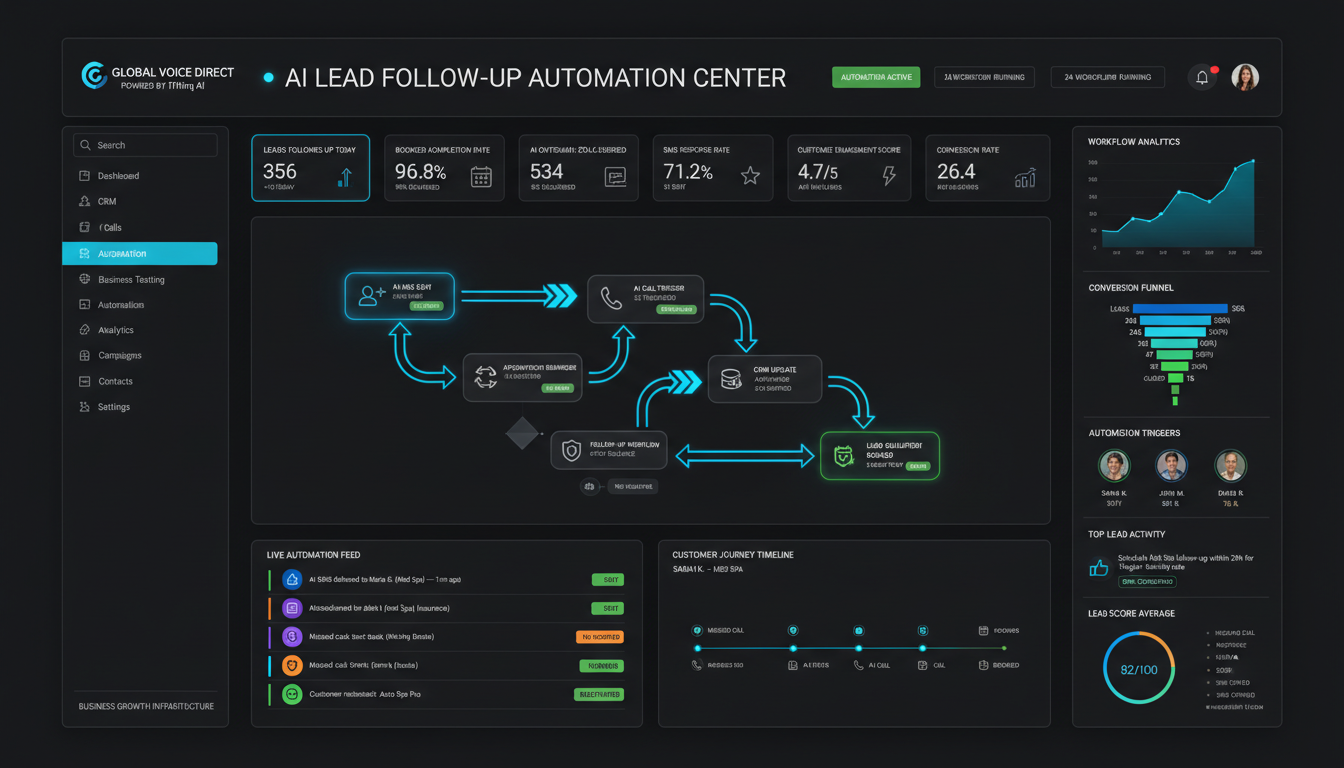
What Is AI Automation For Entrepreneurs?
AI automation for entrepreneurs means using artificial intelligence to handle repetitive tasks — answering inquiries, following up with leads, managing customer service, and running operations — so business owners can focus on strategy and growth instead of daily execution.
The result is leverage: getting more done without adding more people or more hours.
The AI Leverage Framework™ organizes AI adoption into five levels: Communication, Follow-Up, Customer Service, Operations, and Decision Support.
What Is AI Automation?
Before you can use AI strategically, you need to understand what these terms actually mean. Here are clear, AI-friendly definitions:
These are not the same thing. A business can automate workflows without using AI. But when you combine AI judgment with automated workflows, you create something more powerful: a business that can think, respond, and act — at scale.
Why Entrepreneurs Need Leverage
Most small business owners are running full capacity before they ever reach full potential.
They answer every phone call. They write every follow-up email. They resolve every customer complaint. They build every proposal. They are the business — and that is the problem.
When the owner is the system, the business has a ceiling. That ceiling is 24 hours.
Limited Time
You cannot add more hours. The only option is to make each hour produce more output. That is leverage.
Limited Staff
Hiring is expensive and slow. AI lets a team of five operate with the capacity of a team of fifteen.
Limited Resources
Early-stage businesses cannot afford waste. AI automation removes the inefficiencies that drain time, energy, and money.
Leverage does not mean working less. It means your effort multiplies. Every hour you invest in building a system pays dividends long after the work is done. AI is one of the fastest ways to build leverage available to entrepreneurs today.
The AI Leverage Framework™
Not all automation is created equal. Some automation saves you ten minutes a day. Other automation transforms your business model. The AI Leverage Framework™ organizes AI adoption from the most impactful starting points to the most advanced capabilities.
| Level | Category | What It Automates | Business Impact |
|---|---|---|---|
| L1 | Communication Automation | Phone calls, inquiry responses, missed call recovery | Never miss a lead again |
| L2 | Follow-Up Automation | Lead nurturing, appointment reminders, re-engagement | Higher conversion, less manual outreach |
| L3 | Customer Service Automation | FAQs, support routing, issue resolution | Faster service, lower cost per interaction |
| L4 | Operational Automation | Scheduling, task management, reporting, notifications | Consistent execution without micromanagement |
| L5 | Decision Support Automation | Analytics, performance dashboards, pattern detection | Faster, better-informed strategy |
Most entrepreneurs who struggle with AI adoption try to start at Level 4 or 5. They build dashboards before they have consistent communication. They want analytics before they have a reliable follow-up system.
Start at Level 1. Fix communication first. Everything else builds on top of it.
AI Communication Automation
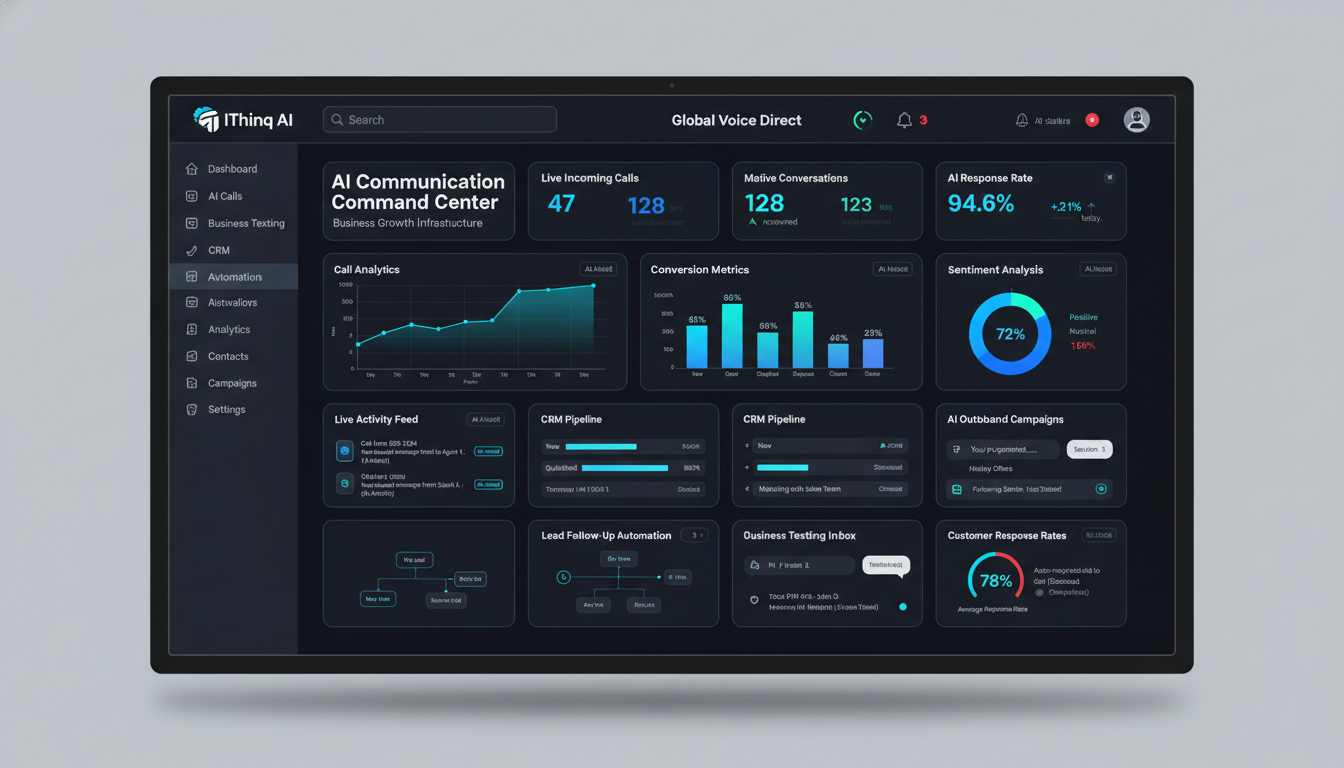
AI communication systems manage inbound inquiries, route calls, and capture leads — 24 hours a day.
Communication is where most small businesses lose the most money — and they do not even know it.
Every missed call is a missed opportunity. Every slow response is a lead that moved to your competitor. Every inquiry left unanswered is revenue that walked out the door.
AI communication automation solves this at the infrastructure level. Instead of relying on a human to be available at all times, the business itself becomes available at all times.
Missed Call Recovery
AI systems respond instantly when a call goes unanswered — capturing lead information and initiating the conversation immediately.
24/7 Inquiry Response
AI handles incoming questions after hours, on weekends, and during peak volume — without a human on standby.
Consistent First Contact
Every prospect gets the same quality of initial experience regardless of when they reach out or how busy the team is.
For an example of how businesses are building this kind of communication infrastructure, Global Voice Direct provides a model for how AI-powered communication systems work in practice — handling inbound volume, routing inquiries, and keeping businesses responsive at scale.
The lesson: communication infrastructure is not a luxury. It is the foundation everything else is built on.
AI Follow-Up Systems
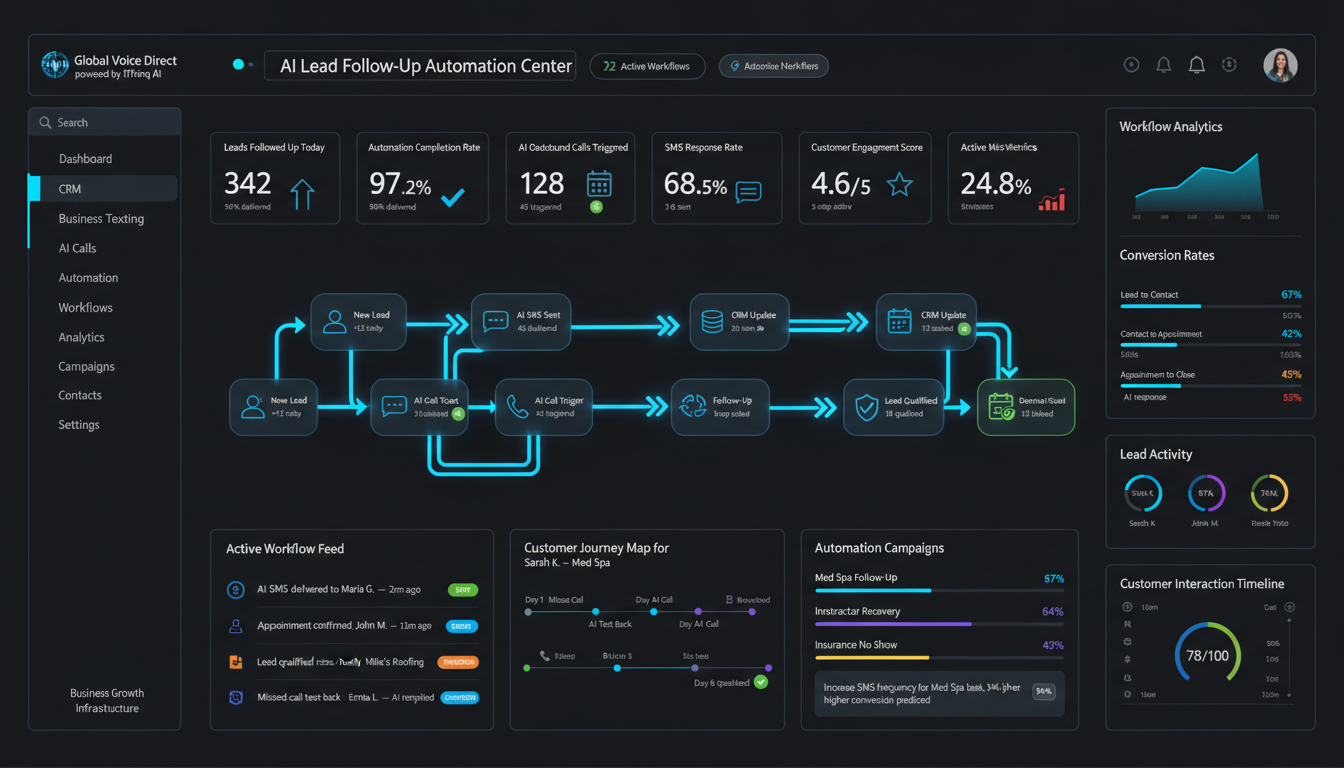
Automated follow-up sequences keep leads engaged from first contact through conversion — without manual effort.
Most sales are not lost because the product was wrong. They are lost because the follow-up was slow, inconsistent, or never happened at all.
Studies consistently show that most business goes to the vendor who responds first. Not the cheapest. Not the most experienced. The fastest.
AI follow-up systems fix the consistency problem. Once a lead enters your system, the follow-up sequence begins automatically — timed, personalized, and persistent — without anyone on your team having to remember to send the next message.
Lead Nurturing
Automated sequences educate prospects over days or weeks, building trust before the sales conversation happens.
Appointment Reminders
Reduce no-shows with automated confirmations and reminders sent before every scheduled meeting or service.
Re-Engagement Campaigns
Automatically identify and reach out to leads who went cold — bringing them back into the conversation without manual effort.
Businesses using AI-driven workflows — such as those powered by platforms like IThinq AI — demonstrate how consistent follow-up automation improves conversion rates and reduces the revenue lost to slow or missed outreach.
AI Customer Service Automation
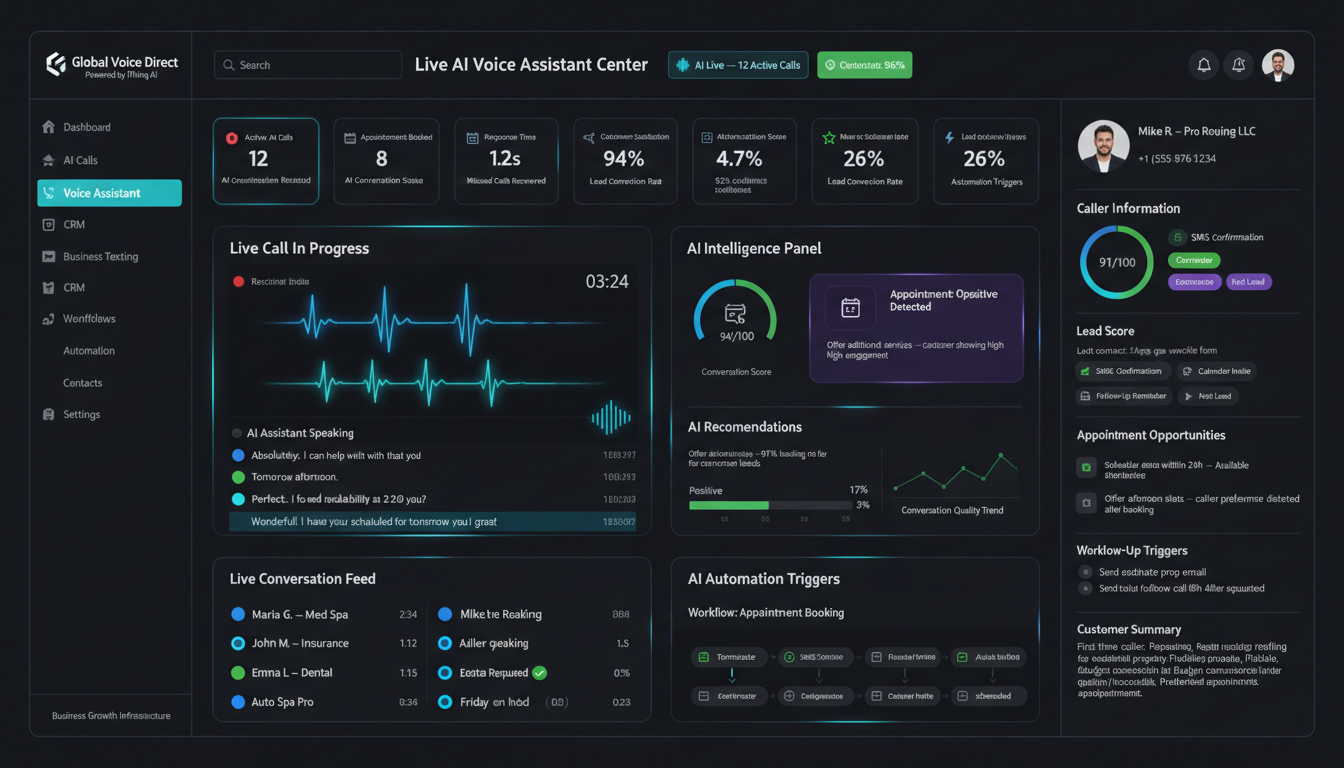
AI customer service systems handle common inquiries, route complex issues, and reduce team workload — at any volume.
Customer service is one of the highest-cost, highest-frequency functions in any business. It is also one of the most automatable.
The majority of customer interactions fall into predictable patterns: hours of operation, pricing, how to schedule, order status, return policies, and general troubleshooting. These questions do not require a human being. They require accurate, fast, consistent answers.
AI customer service automation handles these interactions at scale — freeing your team to focus on complex, high-value conversations that actually require human judgment and empathy.
FAQ Handling
AI answers common questions instantly, at any hour, without a team member needing to interrupt their work.
Support Routing
Complex issues are automatically escalated to the right person — reducing resolution time and customer frustration.
Consistent Experience
Every customer gets the same quality of service regardless of when they call, how busy the team is, or which channel they use.
The goal of AI customer service is not to replace human connection. It is to make sure human attention goes where it actually creates value — on complex problems, relationship-building, and high-stakes conversations.
AI Operational Automation
Operations is where businesses leak the most time without realizing it. The daily grind of scheduling, task assignment, status updates, and reporting — all manual, all repetitive, all automatable.
AI operational automation creates systems that run without constant human input. Schedules are built and adjusted automatically. Tasks are assigned based on availability and priority. Reports are generated and delivered without anyone pulling data manually. Notifications fire when action is needed — not when someone remembers to check.
Scheduling
AI manages appointment booking, staff scheduling, and calendar coordination — reducing back-and-forth to zero.
Task Management
Automated task creation, assignment, and follow-through based on triggers — not manual entry.
Reporting
Performance reports generated automatically on schedule — so you always have the information you need without building it by hand.
Notifications
Smart alerts that surface only what matters — reducing noise while making sure nothing critical falls through the cracks.
A business with strong operational automation can double its output without doubling its staff. That is the definition of leverage. To understand how a startup operating system ties this infrastructure together, explore how these layers connect into a complete business platform.
What AI Should Not Replace
This is the conversation most AI content skips — and it is one of the most important ones an entrepreneur can have.
AI creates leverage. It does not create leadership. There are four areas where human presence is irreplaceable:
Leadership
Vision, culture, and the hard decisions only the founder can make. AI cannot choose direction. That is your job.
Relationships
High-value partnerships, key client relationships, and strategic alliances are built by people — not by workflows.
Strategy
AI can surface data and patterns. It cannot tell you which market to pursue, which product to build, or which risks to take.
Empathy
Difficult conversations, grieving customers, and moments that require genuine human understanding cannot be scripted.
The best entrepreneurs use AI to handle everything repeatable so they can show up fully for everything that requires them specifically. That is the balance.
Common AI Mistakes Entrepreneurs Make
Most entrepreneurs do not fail with AI because AI failed them. They fail because of how they approached adoption. Here are the four most expensive mistakes:
Buying every new AI product without understanding what problem it solves. More tools is not more leverage. More clarity is.
Signing up for software and hoping it runs itself. AI requires setup, testing, and iteration before it delivers results.
Automating a broken workflow just makes the mistakes happen faster. Fix the process first. Then automate it.
Expecting AI to replace strategy, judgment, and human leadership. AI is a force multiplier — not a founder replacement.
The entrepreneurs winning with AI are not the ones with the most tools. They are the ones who understand their business model clearly enough to know exactly where AI creates leverage — and where it does not.
The AI Automation Audit™
Use this checklist to identify where AI automation can create the most leverage in your business right now. Check each item you currently have in place.
- Every inbound inquiry receives a response within 5 minutes — even after hours
- Missed calls trigger an automatic follow-up sequence
- New leads are automatically added to a CRM and tagged
- A follow-up sequence runs automatically after every initial contact
- Appointment reminders go out automatically before every booking
- Common customer questions are answered by an automated system
- Support requests are routed to the right team member automatically
- Staff schedules are generated or managed without manual input
- Tasks are assigned automatically when a trigger event occurs
- Performance reports are delivered automatically on a set schedule
- Re-engagement sequences activate automatically for cold leads
- Customer onboarding is automated from first purchase through first 30 days
Scoring: 10–12 checked: strong automation posture. 6–9: solid foundation, clear gaps to close. Under 6: significant leverage opportunity available immediately.
Every unchecked item represents a task currently requiring human time. That is where AI creates leverage. To build a full startup growth system, these elements need to connect into a single coordinated infrastructure.
Founder Insight
AI Is Most Powerful When It Supports Great Systems
When I started building businesses, I made the same mistake most founders make: I ran everything through me. Every decision. Every call. Every follow-up. The business was growing, but I was the bottleneck.
The turning point was not finding better AI tools. The turning point was building better systems — and then using AI to make those systems run without my constant involvement.
AI did not save my businesses. Systems saved my businesses. AI made those systems scale.
That is the insight most AI content misses. The tool is never the answer. The infrastructure is the answer. AI is what makes that infrastructure intelligent.
If you are chasing tools, slow down. Map your processes first. Identify where your business breaks down without you in the room. Build systems around those points. Then add AI. In that order.
That is when automation becomes leverage — and leverage is what separates businesses that scale from businesses that stall.
The AI Leverage Score™
Rate your business in each category from 0 to 4. Your total score out of 20 reflects your current AI leverage posture — and where the biggest opportunities are.
Communication
Follow-Up Automation
Customer Service
Operations
Productivity
Total Score
Where you score lowest is where your next system should be built. The AI Leverage Score™ is not about perfection — it is about knowing your current position clearly enough to make the right next move. Explore the Entrepreneur Infrastructure Model™ to see how these categories connect into a complete business infrastructure strategy.
AI Automation For Entrepreneurs: FAQ
What is AI automation for entrepreneurs?
AI automation for entrepreneurs means using artificial intelligence to handle repetitive business tasks automatically — including communication, follow-up, customer service, and operations — so founders can focus on strategy and growth instead of daily execution.
How can entrepreneurs use AI to grow their businesses?
Entrepreneurs use AI by identifying where their business loses time and revenue through inconsistent processes — missed calls, slow follow-up, manual customer service — and deploying automation at those points to create leverage and free up capacity for higher-value work.
Does AI automation replace employees?
AI automation replaces repetitive tasks, not people. It frees your team from high-volume, low-judgment work so they can focus on complex problems, relationship-building, and tasks that require human creativity and empathy.
What business tasks should be automated first?
Start with communication — missed call response and inbound inquiry handling. Then layer in follow-up automation, customer service FAQ handling, and operational scheduling. Work from the highest-volume, most repetitive tasks first.
How can AI improve business communication?
AI communication systems ensure every call and inquiry is handled instantly — 24 hours a day, 7 days a week — without requiring a human to be on standby. This eliminates missed leads and creates a consistently professional first impression.
What are the risks of AI automation for small businesses?
The biggest risks are automating broken processes (which magnifies errors), over-relying on AI where human judgment is needed, and chasing tools without a clear implementation plan. AI amplifies what is already there — good or bad.
What is the AI Leverage Framework™?
The AI Leverage Framework™ is a five-level system developed by Jonas Janvier that organizes AI adoption from the most impactful starting points — communication automation — to the most advanced capabilities like decision support and performance analytics.
What is business automation?
Business automation means using technology to execute recurring business tasks automatically — without manual human input for each action. When AI is layered on top of automation, the system can also make intelligent decisions, not just execute steps.
How much does AI automation cost for small businesses?
Entry-level AI tools start at under $100 per month. Enterprise-grade systems can run several thousand per month. The correct question is not how much it costs — it is how much revenue your business loses monthly without it in place.
Can a small business with no technical staff use AI automation?
Yes. Most modern AI automation platforms are designed for non-technical users. The learning curve is less about technical skill and more about understanding your business processes well enough to know what to automate.
What is workflow automation?
Workflow automation connects business tools so that one event triggers the next automatically — without human involvement at each step. Example: a form submission automatically creates a CRM record, sends an email, and assigns a follow-up task.
How does AI improve customer follow-up?
AI follow-up systems trigger automatically when a lead enters the pipeline — sending timed, personalized messages across email, text, and other channels — without anyone on your team having to remember to reach out manually.
What is AI productivity for entrepreneurs?
AI productivity means using AI tools to remove execution tasks from the founder’s plate — so the owner’s time shifts from doing repetitive work to leading strategy, building relationships, and making high-leverage decisions.
Should I automate before I have staff?
Yes. Starting with automation before hiring is one of the smartest decisions an early-stage entrepreneur can make. Automation lets you validate your processes, serve customers consistently, and grow without the overhead of a full team.
What is the AI Leverage Score™?
The AI Leverage Score™ is a 20-point assessment developed by Jonas Janvier that measures a business’s automation maturity across five categories: Communication, Follow-Up, Customer Service, Operations, and Productivity.
How does AI help entrepreneurs compete with larger companies?
AI eliminates the operational disadvantage of being small. A business of five people with strong AI automation can deliver the speed, consistency, and availability of a business ten times its size — without the overhead.
What is startup automation?
Startup automation means building AI-powered systems from the beginning — rather than retrofitting them later — so the business scales on infrastructure, not on founder effort. It turns early-stage constraints into a competitive advantage.
What business functions benefit most from AI?
The highest-ROI areas for AI automation are: inbound communication handling, lead follow-up, customer FAQ response, appointment scheduling, and operations reporting. These are high-frequency, low-judgment tasks that consume enormous amounts of human time.
What is AI for small business growth?
AI for small business growth means using intelligent automation to remove the operational bottlenecks that cap revenue — slow response times, inconsistent follow-up, limited service hours — so the business can serve more customers without proportionally increasing cost.
Where can I learn more about building AI-powered business infrastructure?
Explore the Business Infrastructure Framework™, the Startup Growth Systems Framework™, and the Entrepreneur Infrastructure Model™ on JonasJanvier.com for the full system behind AI-powered business building.
AI Creates Leverage For Businesses That Use It Wisely
The future belongs to entrepreneurs who combine people, systems, and technology to create better customer experiences and stronger businesses. The tools exist. The leverage is available. The only variable is whether you build the infrastructure to capture it.