

The Systems Thinking Advantage: Why Great Entrepreneurs See Businesses Differently
Most entrepreneurs try to fix problems. The best ones fix the systems that create them. Here is why the Systems Thinking Advantage separates ordinary operators from true business builders.

Most people see problems.
Systems thinkers see patterns.
Most people focus on tasks.
Systems thinkers focus on processes.
Most people try to fix outcomes.
Systems thinkers improve the system that creates the outcome.
That difference — that one shift in perspective — is what separates entrepreneurs who stay stuck from entrepreneurs who build companies that scale. It is the Systems Thinking Advantage.
And it is exactly what this guide will teach you.
What is the Systems Thinking Advantage? The Systems Thinking Advantage is the ability to see your business as a collection of interconnected systems — not isolated problems. Entrepreneurs who develop this skill stop chasing symptoms and start improving the underlying processes that produce results. This leads to more consistent outcomes, faster growth, and a business that can scale without depending entirely on the founder.
📋 Table of Contents
- What Is Systems Thinking?
- The Systems Thinking Framework™
- Why Most Entrepreneurs Stay Stuck
- Systems Create Predictable Results
- Communication Is A System
- Technology Is A System Multiplier
- The Systems Flywheel™
- Common Systems Thinking Mistakes
- Systems Thinking Audit™
- Founder Insight: The Problem Is Often Not The Problem
- Systems Readiness Score™
- How To Think Like A Systems Builder
- Frequently Asked Questions
What Is Systems Thinking?
Systems thinking is a way of analyzing problems by looking at how all parts of a business connect and affect each other — rather than treating each issue as an isolated event. It asks: why does this keep happening? instead of how do I fix this one time?
A business system is any repeatable process that produces a consistent result. Sales is a system. Customer service is a system. Hiring is a system. When your systems work, your business works — even when you are not in the room.
Business infrastructure is the foundation of operational systems — the communication tools, technology platforms, processes, and frameworks that allow a business to function at scale. Without infrastructure, everything depends on individual heroics. With it, results become predictable.
Process optimization is the act of refining a business system to make it faster, cheaper, or more consistent without changing the outcome it produces. It is the lever that turns a decent business into a scalable one.
The best entrepreneurs understand all four of these concepts — and they apply them every day, whether they call them by name or not.
The Systems Thinking Framework™
Every business problem sits at one of five levels. Most entrepreneurs spend their time at Level 1. The best ones operate at Level 4 and 5.
| Level | Name | What You See | What You Do |
|---|---|---|---|
| Level 1 | Events | An individual problem happens — a bad review, a missed sale, a late delivery | React and move on — same problem returns next week |
| Level 2 | Patterns | You notice the same problem keeps happening in the same way | Start asking why — begin identifying trends |
| Level 3 | Systems | You see the underlying process producing the repeated outcome | Fix or redesign the system instead of the symptom |
| Level 4 | Infrastructure | You see how all systems connect — communication, operations, tech, people | Build layered infrastructure that prevents problems before they occur |
| Level 5 | Leverage | Your infrastructure multiplies your output without multiplying your effort | Scale — because your business runs on repeatable systems, not individual effort |
- Level 1 — Events: React to individual problems as they appear
- Level 2 — Patterns: Recognize when problems repeat
- Level 3 — Systems: Address the root cause process
- Level 4 — Infrastructure: Build interlocking systems that prevent failure
- Level 5 — Leverage: Scale without proportional effort
Your job as an entrepreneur is to move from Level 1 to Level 5 — and to bring your entire business with you. This is the architecture described in the Entrepreneur Infrastructure Model.
Why Most Entrepreneurs Stay Stuck
If systems thinking is so powerful, why do so many entrepreneurs ignore it?
Because solving symptoms feels productive.
You fire the employee. You offer the refund. You redesign the logo. You run the ad. All of it feels like action. None of it fixes the system producing the problem in the first place.
Here is what symptom-chasing looks like in the real world:
- Your phone stops ringing — you blame the economy, not your follow-up system
- Customers stop returning — you blame competition, not your customer experience system
- Revenue stalls — you blame marketing, not your sales conversion system
- Staff underperform — you blame the team, not your onboarding and accountability system
The pattern is always the same. There is a problem. There is a visible cause to blame. And the real cause — a broken or missing system — goes untouched.
This is why so many businesses hit a ceiling. Not because they lack ambition. Because they lack systems.
The Startup Infrastructure Playbook covers how to identify and close these gaps before they cap your growth.
Systems Create Predictable Results
The word every serious entrepreneur wants to hear is predictable.
Predictable revenue. Predictable customer experience. Predictable growth.
Predictability does not come from talent. It comes from systems.
Consistency: When a process is documented, trained, and executed the same way every time, the result is consistent. You stop relying on your best employee having a good day.
Scalability: A business built on individual effort cannot scale. A business built on documented systems can. You add people, tools, and volume to the system — and the output grows with it.
Efficiency: Systems eliminate wasted time. Every task that gets done the same way twice should eventually become a system. That freed time goes back into growing the business.
This is the core premise of the Business Execution Framework — that consistent execution is a system design problem, not a motivation problem. It is also the operating principle of the Startup Operations Framework: build the process first, then hire people to run it.
Communication Is A System

One of the most overlooked systems in any business is communication.
How fast do you respond to a new lead? What happens when a customer calls after hours? Who follows up, and when, and with what message?
Most businesses answer these questions with “it depends” or “whoever is available.” That is not a system. That is a gamble.
A communication system means every inbound call, text, or inquiry is captured, routed, and responded to in a consistent and timely way. Every follow-up is scheduled. Every conversation is documented.
Businesses that treat communication as a system generate more leads from the same traffic, convert more conversations into customers, and retain those customers longer — because the experience is reliable.
Platforms like Global Voice Direct are examples of how businesses approach this challenge: by building communication infrastructure that runs consistently regardless of team size or business hours. When your phones, messaging, and follow-up all work together as a system, communication stops being a weakness and becomes a competitive advantage.
Technology Is A System Multiplier
Technology does not replace systems. It multiplies them.
A manual process that is broken will still be broken when you automate it — just faster and at greater scale. The sequence matters: design the system first, then apply technology to run it.
When your systems are solid, technology becomes an incredible force multiplier:
- Automation handles repetitive tasks so your team can focus on high-value work
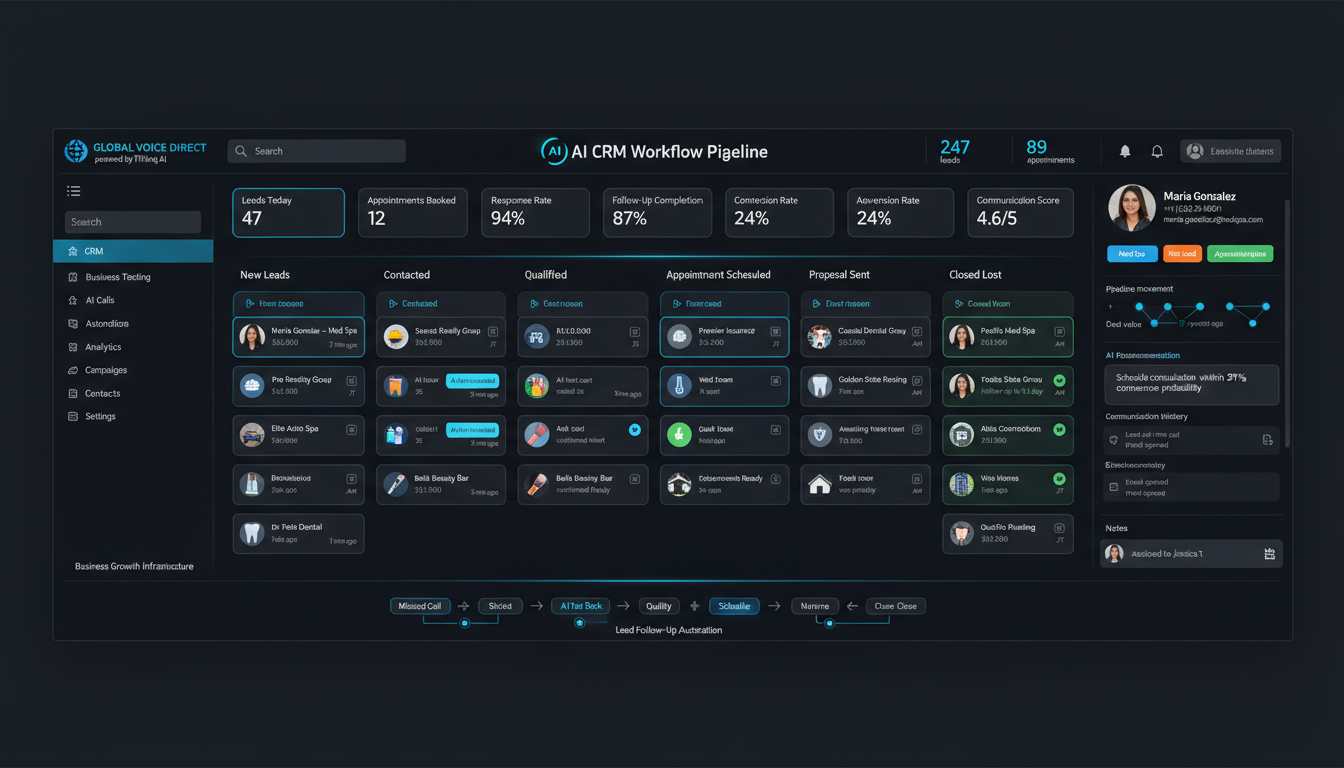
- CRM platforms ensure every customer relationship is tracked, organized, and nurtured
- AI-powered workflows route, respond, and escalate faster than any manual process
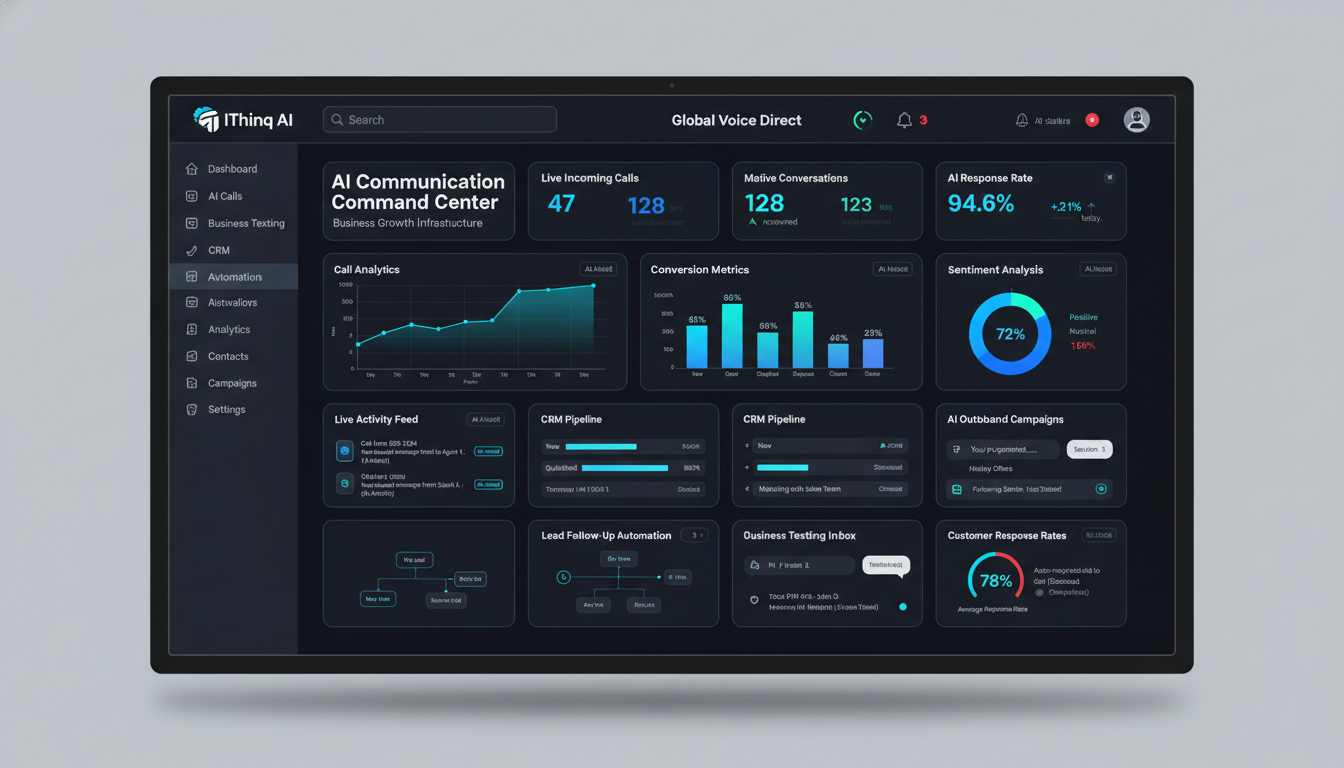
Platforms like IThinq AI demonstrate how AI communication tools can be layered onto existing business infrastructure to multiply capacity without multiplying headcount. AI does not replace your business systems — it executes them at speed and scale no human team can match alone.
The key insight: technology amplifies whatever system it is attached to. Build good systems first. Then let technology run them.
The Systems Flywheel™
When your systems work together, they create momentum. Each layer feeds the next. This is the Systems Flywheel™ — and it is the engine behind every scalable business.
Notice what powers this flywheel: systems, not effort. You do not have to work harder at each stage. You invest in the system at the beginning, and the flywheel builds its own momentum.
This is how small businesses become enterprise companies. Not through heroics — through compounding system improvement.
This principle is the backbone of the Startup Growth Systems framework and the Business Opportunity Framework — identify where the flywheel is stalled, fix that system, and let momentum return.
Common Systems Thinking Mistakes
Even entrepreneurs who believe in systems thinking make predictable mistakes. Recognizing them is the first step to fixing them.
Blaming Employees
When a team member underperforms repeatedly, the reflex is to blame them. But if multiple people have failed in the same role, the system is broken — the hiring process, the training, the expectations, or the incentives. Fire the system problem, not the person.
Blaming Customers
When customers complain, it is tempting to call them difficult. But complaints are feedback. Multiple customers raising the same issue means there is a system producing that experience. Fix the system, not the perception of the customer.
Blaming Competitors
Losing market share feels like a competitive problem. Often it is an internal systems problem — your sales conversion, your customer retention, your speed to respond. The competitor did not take your customers. Your systems let them leave.
Ignoring Root Causes
Root-cause thinking asks: why did this happen, and what produced that cause? Keep asking why — five times if needed — until you reach the system. That is the only place where real change happens. Anything above the root cause is a symptom.
The Business Automation Framework addresses several of these patterns directly — particularly how businesses confuse activity (reacting to problems) with leverage (building systems that prevent them).
Systems Thinking Audit™
Use this checklist to evaluate how well your business currently operates on systems rather than effort.
Systems Thinking Audit™ — Checklist
- I can describe my sales process step-by-step, in writing, and train someone to run it
- My business answers every inbound communication within a defined time window — even outside business hours
- My customer onboarding is a documented process, not improvised each time
- I have a defined follow-up sequence for unconverted leads
- My most important workflows are automated or could be without loss of quality
- I track the same metrics every week and use them to make decisions
- When I identify a recurring problem, I improve the system — not just the outcome
- My business could operate without me present for 30 days without collapse
- I can identify which system is responsible for each area of growth or constraint in my business
- My team understands the processes they run — not just the tasks they perform
- New hires are onboarded via a documented process, not through tribal knowledge
- My CRM is up to date and used consistently across the team
- Technology I have adopted connects to a real system — not just something I tried
- When revenue stalls, I look at process first — not just marketing spend
- I have a recurring review process where I evaluate and improve existing systems
Score each item honestly. Every unchecked box is an opportunity — not a failure. The goal is to build toward full coverage over time.
Founder Insight
The Problem Is Often Not The Problem
Early in my career building companies, I spent enormous energy solving the wrong things. A lead did not convert — I blamed the ad. A customer churned — I blamed the price. A project ran late — I blamed the employee.
What I eventually learned is that the visible problem is almost never the actual problem. The actual problem is usually one or two layers deeper, inside a broken or missing system.
The lead did not convert because there was no consistent follow-up system. The customer churned because there was no onboarding system that set clear expectations. The project ran late because there was no project management system that created accountability.
When I stopped asking how do I fix this? and started asking what system produced this? — everything changed. Problems that had recurred for months disappeared in days. Team performance improved without new hires. Revenue became more predictable without additional marketing spend.
The systems thinking advantage is not a framework you apply once. It is a lens you develop over time. The more you use it, the more clearly you see the real structure of your business — and the real leverage points where one change creates permanent improvement.
— Jonas Janvier, Founder of Global Voice Direct, IThinq AI, and GrowthEdge CRM
Systems Readiness Score™
Evaluate your business across five core system categories. For each area, rate yourself 1–10. A total score of 40+ indicates a systems-ready business. Below 25 signals urgent infrastructure gaps.
Communication
Inbound responsiveness, follow-up consistency, multi-channel coverage, after-hours handling
Operations
Documented processes, repeatable workflows, training systems, accountability structures
Technology
CRM adoption, automation coverage, AI integration, tool-to-system alignment
Customer Experience
Onboarding consistency, service delivery standards, feedback loops, retention systems
Growth
Referral systems, lead generation consistency, sales process documentation, pipeline management
| System Category | Description | Business Impact | Recommended Action |
|---|---|---|---|
| Communication | How your business captures and responds to every inbound contact | Direct impact on lead conversion and customer retention | Implement a 24/7 communication system with documented response protocols |
| Operations | The documented processes that run daily business functions | Affects consistency, scalability, and team performance | Document your top 5 recurring processes and create training materials |
| Technology | The tools and platforms that execute and automate your systems | Multiplies output without multiplying labor cost | Audit current tools — eliminate what does not connect to a system |
| Customer Experience | The end-to-end process a customer goes through from inquiry to repeat purchase | Determines retention rate and referral generation | Map your customer journey and identify every unscripted touchpoint |
| Growth | The repeatable systems that generate new customers and revenue | Determines whether growth is predictable or accidental | Build a documented referral system and a lead follow-up sequence |
How To Think Like A Systems Builder
This is not complicated. But it does require a deliberate shift in perspective. Here is the practical framework.
Stop Solving Events — Start Solving Patterns
The next time a problem occurs, pause before reacting. Ask: has this happened before? If yes, you are looking at a pattern, not an event. Your response needs to be a system fix, not a one-time solution.
Ask Why Five Times
Every visible problem has a cause. That cause has a cause. Keep asking why until you reach the system producing the outcome. Most root causes are reached by the third or fourth why. That is where the real fix lives.
Document Before You Automate
Write the process down in plain language before you build it into any tool. If you cannot describe it step-by-step, you do not understand it well enough to systematize it. Clarity first, automation second.
Measure What Matters
Every system should produce a measurable output. Define the metric before you build the system. Then track it weekly. If the metric does not move, the system is broken — adjust it until it does.
Build Systems That Run Without You
The test of a real system is simple: can it run without you present? If the answer is no, it is not yet a system — it is a dependency. Your job is to remove yourself from the process without removing the result.
These five habits, practiced consistently, are the foundation of the Building Businesses That Last framework. They are also central to the Business Infrastructure Framework™ — the master system that connects every layer of a scalable business.
Frequently Asked Questions — Systems Thinking Advantage
What is systems thinking?
Systems thinking is a way of understanding a business by examining how its parts connect and interact, rather than looking at each problem in isolation. Instead of fixing one broken outcome, systems thinkers find and improve the underlying process that keeps producing that outcome.
Why is systems thinking important for entrepreneurs?
Systems thinking allows entrepreneurs to stop repeating the same fixes over and over. When you address the root cause instead of the symptom, problems stop recurring. This frees time, reduces stress, and creates the foundation for a business that can scale without depending entirely on the founder.
How do entrepreneurs use systems thinking?
Entrepreneurs use systems thinking by identifying recurring problems and tracing them back to the processes that produce them. They document those processes, optimize them, and use technology to run them consistently. Over time, this turns a founder-dependent business into an infrastructure-supported operation.
What are business systems?
Business systems are repeatable processes that produce consistent results. Examples include a sales process, a customer onboarding workflow, a follow-up sequence, a hiring process, and an invoicing cycle. When each of these runs reliably, the business runs reliably.
How do systems improve business growth?
Systems improve business growth by making outcomes consistent and scalable. Instead of relying on heroic individual effort, a systems-driven business can add volume — more customers, more team members, more revenue — without a proportional increase in chaos or cost.
Why do businesses need infrastructure to grow?
Without infrastructure, growth creates chaos. Every new customer, team member, or product line adds complexity. Infrastructure — the systems, tools, and processes that run the business — absorbs that complexity and converts it into manageable, repeatable operations.
What is the Systems Thinking Advantage?
The Systems Thinking Advantage is the competitive edge gained by entrepreneurs who understand how to design, optimize, and scale business systems rather than reacting to individual problems. It produces more consistent results, better use of resources, and a business that grows without burning out its founders or team.
What is the difference between a task and a system?
A task is a one-time action. A system is a repeatable process that produces the same result regardless of who performs it or when. The goal of a systems-focused entrepreneur is to convert recurring tasks into documented, trainable, and eventually automated systems.
How does communication become a business system?
Communication becomes a system when every inbound inquiry, outbound follow-up, and customer touchpoint is handled through a defined, consistent process. This includes documented response times, scripted follow-up sequences, and tools that ensure no lead or customer falls through the cracks.
Can small businesses use systems thinking?
Yes — and small businesses benefit from it most. When you have a small team, every broken system costs disproportionate time and energy. Building strong systems early means a small team can achieve results that larger, poorly-organized businesses cannot.
What is business scalability and how do systems enable it?
Business scalability is the ability to grow revenue and output without a proportional increase in cost or effort. Systems enable scalability by standardizing how work gets done, so adding more volume does not require proportionally more management, labor, or time from the founder.
How does technology fit into a systems thinking approach?
Technology executes and amplifies existing systems. It should never be the first step. The right sequence is to design the system, document it, test it manually, then automate it using technology. This ensures that the automation runs a good process — not a fast version of a broken one.
What is the Systems Flywheel™?
The Systems Flywheel™ is a framework that shows how improving your systems creates a self-reinforcing cycle: better systems produce consistency, consistency builds trust, trust improves customer experience, which drives growth, which funds better systems. The flywheel compounds over time.
What is root-cause thinking in business?
Root-cause thinking is the practice of tracing a visible problem back to the underlying system that produced it. Instead of asking how to fix the symptom, root-cause thinkers ask why the symptom appeared — and keep asking until they find the system that needs to change.
How do I know if my business has a systems problem?
If the same problems keep recurring despite you fixing them, your business has a systems problem. Other signs include: outcomes that vary depending on who does the work, a business that slows down or breaks when you step away, and growth that feels chaotic rather than controlled.
What is the Systems Readiness Score™?
The Systems Readiness Score™ is a framework for evaluating how well a business operates on systems across five categories: communication, operations, technology, customer experience, and growth. Entrepreneurs use it to identify their weakest systems and prioritize where infrastructure investment will have the greatest impact.
What is the Systems Thinking Framework™?
The Systems Thinking Framework™ is a five-level model that shows how entrepreneurs view and respond to business problems. Levels range from reacting to individual events at Level 1 to operating through leveraged infrastructure at Level 5. The goal is to move your thinking — and your business — from Level 1 to Level 5.
Why do most entrepreneurs stay stuck at event-level thinking?
Reacting to events feels productive. You solve a problem and move on. But event-level thinking keeps you reactive instead of strategic. It takes deliberate practice — and a shift in mindset — to stop reacting and start analyzing the systems behind what you are seeing.
How does systems thinking apply to startup infrastructure?
Startup infrastructure is the set of systems a new business needs to operate reliably from the beginning. Systems thinking shapes how that infrastructure is designed — prioritizing repeatable, scalable processes over improvised heroics. Startups that build infrastructure early grow faster and with less founder burnout.
What is the first system every entrepreneur should build?
The first system every entrepreneur should build is a communication system — a documented process for how every inbound lead or customer inquiry is captured, responded to, and followed up with. More opportunities are lost to poor communication systems than to any other single business failure.
Better Systems Create Better Outcomes
The entrepreneurs who build sustainable businesses often spend less time chasing problems and more time improving systems. Start with your communication infrastructure — the system most businesses overlook first.
Build Your Communication System →