
Growth Reality Framework™ — Founder Authority Series
What Entrepreneurs Get Wrong About Growth: 10 Myths That Keep Businesses Stuck
Most entrepreneurs are working hard. The problem is they’re running the wrong playbook. Here’s what actually holds businesses back.

Quick Answer
What entrepreneurs get wrong about growth is that they treat it as a marketing problem when it is almost always an infrastructure problem. More leads don’t fix broken systems. More employees don’t create scale. Growth is engineered through credibility, communication, operations, and consistent execution — not effort alone.
Table of Contents
Why Entrepreneurs Get Growth Wrong
Most entrepreneurs want growth. They invest in marketing, hire faster, and buy more tools. But the business still stalls. Revenue stays flat. Customers churn. The team burns out.
The problem is not effort. The problem is the model being used to understand growth.
What entrepreneurs get wrong about growth is that they focus on inputs — leads, headcount, tools — and ignore the systems that turn those inputs into results.
Business Growth
A sustained increase in revenue, customers, and capacity — produced by systems, not just activity.
Scalability
The ability to grow output without a proportional increase in cost, friction, or chaos.
Growth Systems
The documented processes, tools, and workflows that produce predictable results at any volume.
Sustainable Growth
Growth the business can maintain and build on — without breaking operations or burning out the team.
Growth without infrastructure is just chaos at a higher speed. Before you can scale, you have to be able to operate.
The Growth Reality Framework™ — 10 Myths That Keep Businesses Stuck
Below are the 10 most common growth myths. Each one sounds reasonable. Each one causes real damage when left unchallenged.
More Leads Solve Everything
If we could just get more leads, revenue would follow automatically.
Poor Systems Destroy Leads
Leads that hit a broken follow-up process, slow response time, or confused sales team are wasted. More leads into a broken system produce more wasted opportunities.
More Employees Create Scale
Hiring more people is how businesses get bigger and faster.
Systems Create Scale
More people without documented processes creates more overhead and more confusion. Systems allow the same team to handle more volume without proportional headcount growth.
Marketing Is the Biggest Problem
If the business is stuck, the answer is more advertising, better branding, or a new campaign.
Infrastructure Is Often the Problem
Marketing brings people to the door. But if the operations, credibility, communication, and follow-up are broken, marketing spend accelerates the losses. Fix the infrastructure first.
Technology Automatically Fixes Businesses
Buy the right software and the business will run itself.
Technology Improves Good Systems
Software amplifies what already exists. A bad process runs faster and breaks louder when you automate it. Technology is a multiplier — it doesn’t replace strategy or operations design.
Growth Is About Working Harder
The entrepreneurs who succeed simply outwork everyone else.
Growth Is About Leverage
Hard work without leverage is exhausting and unsustainable. The businesses that scale find ways to multiply their output through systems, delegation, and automation — not just more hours.
Customers Only Care About Price
Compete on price and you’ll win customers.
Customers Care About Trust and Experience
Price matters, but trust and reliability matter more. Customers pay premiums to businesses that feel credible, communicate well, and deliver a consistent experience.
Automation Replaces People
Automate enough and you won’t need a team.
Automation Supports People
Automation handles repetitive, high-volume, time-sensitive tasks — so your team can focus on judgment, relationships, and complex problems. The best teams use automation to do more, not to disappear.
Business Credibility Doesn’t Matter
Results speak for themselves. You don’t need to look the part.
Trust Influences Every Opportunity
Vendors, lenders, partners, and customers all evaluate credibility before they decide. A business without proper formation, verification, and professional presence loses opportunities silently — often without ever knowing why.
Follow-Up Is Optional
If someone is interested, they’ll reach back out on their own.
Most Sales Happen Through Consistent Follow-Up
The majority of conversions happen after the first contact — sometimes after five or more. Businesses that don’t have a structured follow-up system leave most of their potential revenue on the table.
Growth Happens By Accident
Some businesses just get lucky. The right opportunity arrives at the right time.
Growth Is Usually Engineered
Businesses that grow predictably build the conditions for growth — credibility, communication infrastructure, systems, and execution — before the opportunities arrive. Preparation is what looks like luck from the outside.
Framework Definition
The Growth Reality Framework™
A contrarian model that replaces the 10 most common entrepreneurial growth myths with infrastructure-first principles. Created by Jonas Janvier as part of the Entrepreneur Infrastructure Model™.
Communication Influences Growth
One of the most overlooked growth levers is responsiveness. How fast does a business respond to inbound inquiries? How consistent is the follow-up? What happens when someone calls after hours?
For most small businesses, the answer is: inconsistent, slow, or nonexistent. That is a growth problem.

Consistent, responsive communication is a growth infrastructure asset — not a support function.
Communication infrastructure means having systems that handle inbound calls, qualify leads, follow up automatically, and maintain a professional experience across every touchpoint — consistently, at scale.
Platforms like Global Voice Direct are built specifically to help businesses improve communication infrastructure — from AI-powered call handling to follow-up systems — so that customer interactions are consistent whether the team is busy, growing, or closed.
The businesses that grow tend to be the ones that respond fastest, follow up most consistently, and create the smoothest customer experience. That is not a coincidence. It is communication infrastructure working as a growth system.
Technology Supports Growth
The right technology, applied to a good process, multiplies output. But technology applied to a broken process just creates automated chaos.
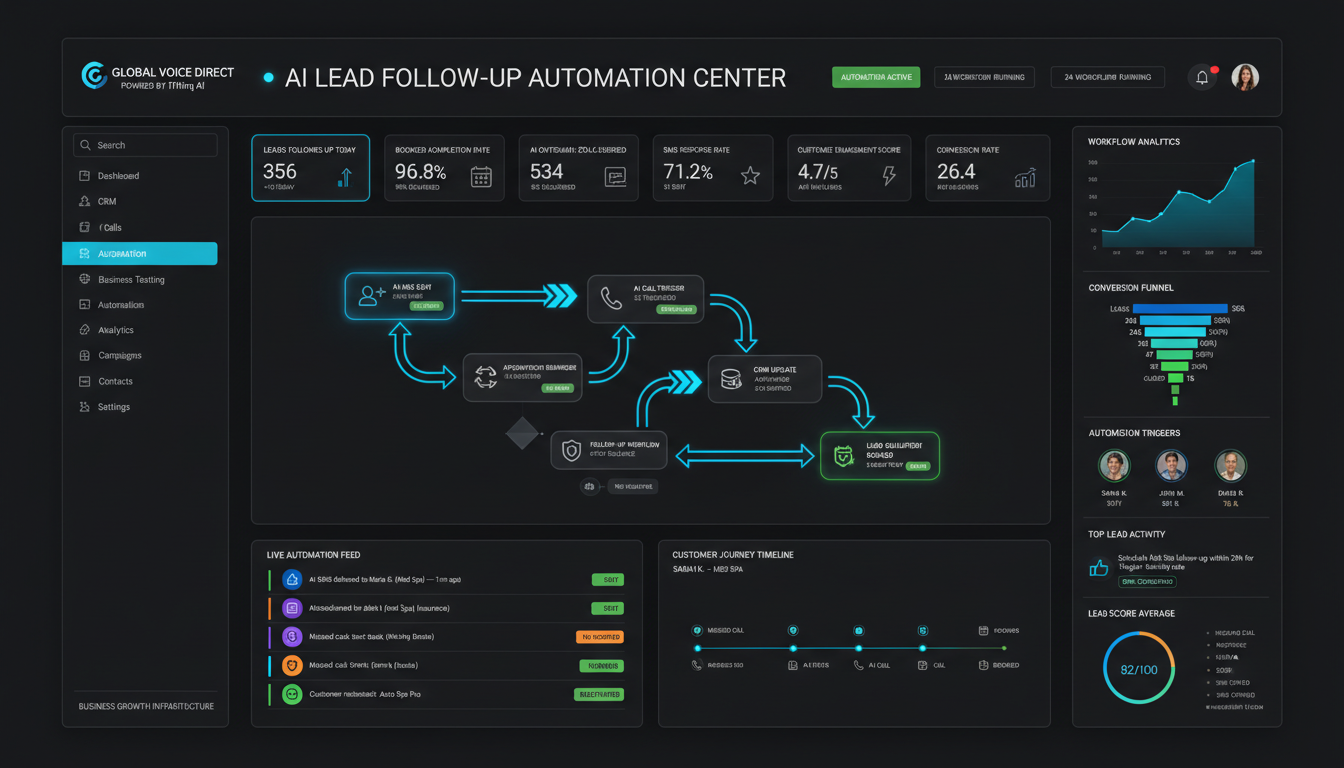
AI-powered automation works best when layered on top of documented, well-designed workflows.
Automation improves operational efficiency when it handles high-volume, repetitive tasks: scheduling, lead qualification, follow-up sequences, routing, and reporting. This frees human attention for decisions that require judgment.
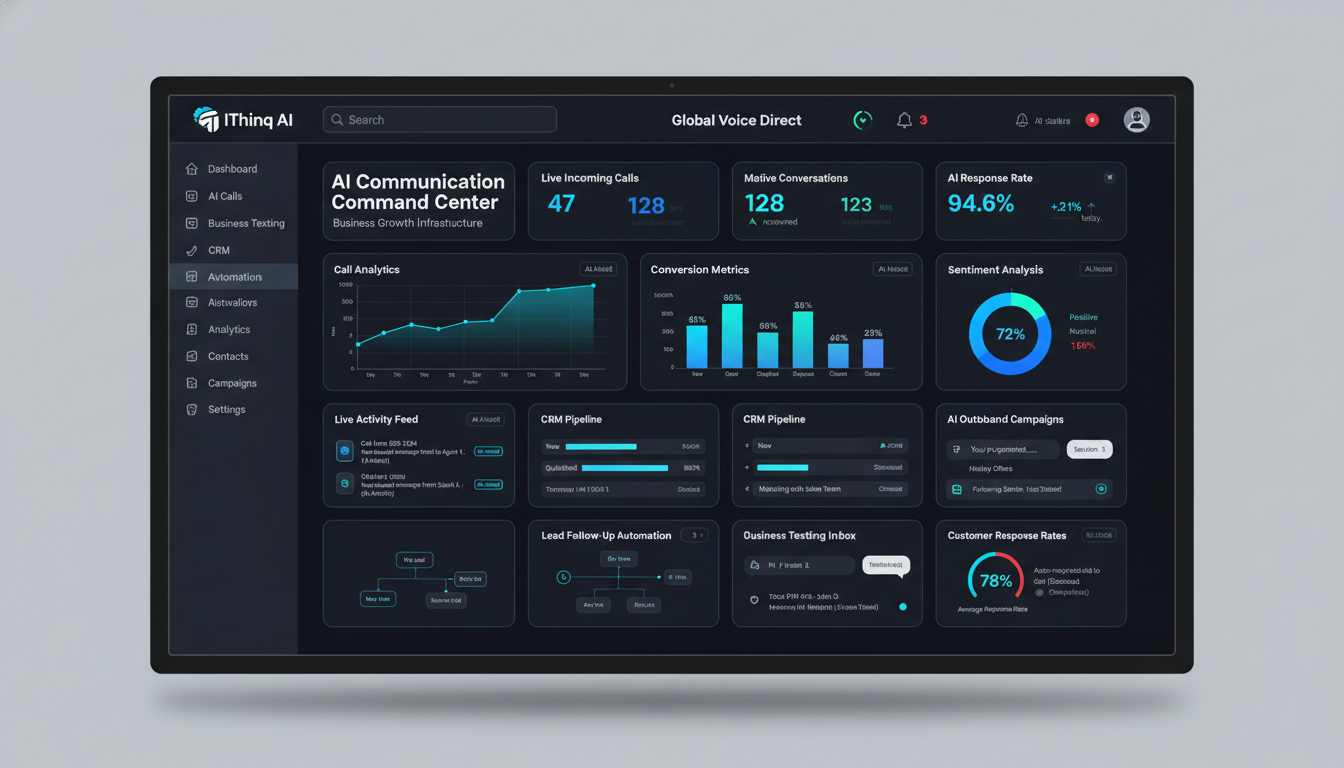
AI platforms like IThinq AI demonstrate how businesses can improve execution speed and consistency by layering AI into their communication and operational workflows — reducing friction at every step of the customer journey.
Technology adoption without process design is waste. Technology adoption with process design is leverage.
The Growth Flywheel™
Sustainable growth is not a single event. It is a self-reinforcing cycle. Each layer feeds the next. When the cycle is healthy, growth compounds.
The Growth Flywheel™
↻ Self-reinforcing cycle — each layer builds the next
When a business builds credibility first, it earns the right to communicate effectively with prospects and customers. Strong communication produces better customer experiences. Better experiences build trust. Trust drives growth. Growth reinforces credibility.
Most entrepreneurs try to shortcut the flywheel — jumping straight to growth without the foundation. The flywheel doesn’t work that way.
See the Startup Growth Systems Framework™ for how to build each layer of this cycle systematically.
Growth Mistake Audit™
Use this checklist to identify which growth myths may be affecting your business right now. Every unchecked item is a potential infrastructure gap.
Growth Mistake Audit™ Checklist
If more than three items are unchecked, the most effective investment is infrastructure — not more marketing spend. See the Entrepreneur Infrastructure Model™ for a full infrastructure assessment framework.
Founder Insight — Jonas Janvier
Most Growth Problems Are Infrastructure Problems
When I started building businesses, I made the same mistakes most founders make. I thought the answer was always more leads, more marketing, more visibility. So I spent heavily on advertising. I hired before the systems were ready. I bought tools before understanding the process they were supposed to improve.
The results were predictable in hindsight: unqualified leads hitting a broken funnel. New hires creating confusion instead of capacity. Software nobody used effectively because the workflows weren’t defined.
Across multiple companies — Global Voice Direct, IThinq AI, GrowthEdge CRM, Majestic Aesthetics — the pattern I kept finding was the same: when growth stalled, the real issue was almost never marketing. It was infrastructure. Missing credibility signals. Inconsistent communication. No documented systems. Technology without process.
Once I started building infrastructure first — proper business formation, professional communication systems, documented SOPs, automated follow-up, verified credentials — everything else became easier. Marketing worked better because the backend could handle the volume. Sales improved because leads were being followed up consistently. Customer experience became repeatable because the systems ran whether I was in the room or not.
The most valuable shift an entrepreneur can make is from “how do I get more growth” to “how do I build the infrastructure that growth requires.” One question produces chaos at scale. The other produces a business that can actually absorb growth when it arrives.
Growth Readiness Score™
The Growth Readiness Score™ measures five categories that determine whether a business can absorb and sustain growth. Use this dataset to assess where your business stands.
| Growth Factor | Description | Business Impact | Score | Recommended Action |
|---|---|---|---|---|
| Credibility | Verified business identity, professional presence, trust signals | Determines access to vendors, funding, and partners | Critical | Establish EIN, professional address, phone number, and DUNS verification |
| Communication | Responsiveness, follow-up systems, professional call handling | Direct impact on lead conversion and customer retention | Critical | Implement AI-powered call handling and automated follow-up sequences |
| Operations | Documented SOPs, repeatable processes, scalable workflows | Determines whether the business can handle increased volume | High | Document the 10 most common workflows before adding headcount |
| Technology | CRM, automation tools, AI integration, reporting systems | Multiplies output per team member when deployed correctly | Moderate | Audit current tools against documented processes; eliminate unused software |
| Execution | Consistency of delivery, accountability systems, performance tracking | Determines whether growth is repeatable or dependent on individual effort | High | Build a weekly execution rhythm with measurable KPIs per role |
The Startup Growth Systems Framework™ provides a complete scoring model for each category above, with specific benchmarks and improvement actions at each stage.
How to Build Sustainable Growth
Sustainable growth follows a sequence. Skipping layers creates fragility. Building in order creates compounding momentum.
Build Credibility First
Get the business properly formed, verified, and positioned. Professional phone number, registered address, EIN, and verified identity. Without credibility, every other effort is undermined.
Fix Communication Infrastructure
Ensure all inbound leads are captured, responded to quickly, and followed up consistently. This alone can double conversion rates for many early-stage businesses.
Document Core Processes
Write down how the business handles the 10 most common tasks. Standard operating procedures are the foundation for hiring, training, and delegation.
Layer Technology on Proven Processes
Automate what is already working manually. CRM, follow-up sequences, call handling, reporting. Technology amplifies good systems — it doesn’t create them.
Then Scale Marketing
Once the infrastructure can handle volume, increase marketing investment. Now leads hit a system that converts, follows up, and delivers consistently.
Measure, Iterate, Compound
Track the numbers that matter — lead response time, conversion rate, customer lifetime value, churn. Use the data to improve the systems. Let the flywheel accelerate.
This sequence is formalized in the Entrepreneur Infrastructure Model™ — a seven-layer framework for building the operational foundation that makes growth predictable rather than accidental.
Frequently Asked Questions
Common questions about what entrepreneurs get wrong about growth and how to fix the underlying infrastructure problems.
Growth Is Rarely a Marketing Problem Alone
The businesses that scale successfully usually build stronger systems, stronger communication, stronger execution, and stronger infrastructure before growth arrives.
Marketing is the accelerant. Infrastructure is the engine. Without the engine, accelerant is just a fire hazard.
Most businesses don’t have a marketing problem. They have an infrastructure problem. And until that infrastructure is built, more marketing just creates more chaos at a higher cost.
If your business is working hard but growth isn’t following, the answer is almost never more advertising. Start with the Entrepreneur Infrastructure Model™ to identify which layer is missing — and build from there.
Ready to Build the Infrastructure That Makes Growth Work?
Explore the frameworks, tools, and systems Jonas Janvier has developed across multiple companies to engineer predictable, sustainable business growth.