
Why I Built Global Voice Direct
When most people hear the words “business phone system,” they think about technology.
I don’t.
I think about missed opportunities. Customers who never got a call back. Leads that disappeared. Businesses that worked hard to generate demand but lacked the systems needed to manage it.
That realization eventually led me to build Global Voice Direct.
The Problem I Kept Seeing
I’ve worked with a lot of small business owners. Consultants. Contractors. Clinics. Service providers. And almost all of them share a version of the same problem, even when they don’t have the words for it yet.
They’re running ads. They’re posting content. They’re networking. They’re doing the work. But somewhere between “someone expressed interest” and “that person became a customer,” the ball gets dropped.
A lead calls during lunch and nobody picks up. A follow-up email gets buried. A customer asks a simple question on a Saturday afternoon and waits three days for an answer. By the time the business responds, the customer has already gone somewhere else.
That’s not a marketing failure. That’s a systems failure.
The businesses that were struggling weren’t failing to attract attention. They were failing to capture it.
I saw missed calls. I saw inconsistent communication. I saw follow-up that happened days too late. I saw disconnected systems — a phone number here, a CRM no one updated there, a voicemail full of messages no one had listened to. All of it added up to real revenue walking out the door.
Most Businesses Don’t Have a Marketing Problem
This became a core belief of mine over years of observing how businesses actually operate versus how they think they operate.
Most businesses don’t have a marketing problem. They have an infrastructure problem.
Marketing gets all the attention because it’s visible. You can see an ad. You can track a click. You can measure an impression. Infrastructure is invisible until something breaks — and by the time it breaks, you’ve already lost the customer.
Communication is infrastructure. Follow-up is infrastructure. The systems you use to respond to inquiries, manage customer relationships, and present your business to the world — those are infrastructure decisions. And most small businesses make those decisions by accident, not by design.
When I started thinking about what kind of business I wanted to build, I kept coming back to this gap. Not “how do we help businesses market better” but “how do we help businesses operate better.” That’s a different question. It leads to different answers.

The Hidden Cost of Poor Communication
Most business owners know they’re losing leads. They just don’t know how much, or exactly where.
Think about a landscaping company that spends $800 a month on Google Ads. Every click costs them money. Every visitor who fills out a contact form is a potential customer. Now imagine that 40% of those inquiries go unanswered for more than 24 hours because the owner is on a job site all day. How much of that $800 just evaporated?
Or think about a medspa that books most of its appointments by phone. A potential patient calls, gets voicemail, leaves a message, and then books an appointment at the competitor down the road before the first business calls back. That lost booking might be worth $500 to $1,500. It happens three or four times a week.
The math is brutal once you start doing it. Lost leads. Frustrated customers. Slow response times. Operational chaos that compounds over time. These aren’t dramatic failures. They’re slow bleeds. And they’re almost always invisible until someone forces the business to look at them directly.
That’s what I wanted to fix. Not with a complicated enterprise solution. With something practical, accessible, and designed for how small businesses actually work.
Why Communication Infrastructure Matters
The connected systems — phone, messaging, automation, AI, and CRM — that support customer relationships, team collaboration, and sustainable business growth.
When I use the phrase Communication Infrastructure™, I’m not talking about buying a phone. I’m talking about designing the entire layer of your business that connects you to the outside world.
That includes how you answer calls when no one is available. How you follow up with leads automatically. How your team communicates internally. How customers experience your brand the very first time they reach out. How you maintain consistent professional presence whether you have two employees or twenty.
These systems don’t generate excitement the way a marketing campaign does. But they quietly determine whether your business captures value or lets it slip away. They’re the difference between a business that looks good from the outside and a business that actually performs.
This is the core of what the Business Infrastructure Framework teaches — infrastructure comes before tactics. Always.
Technology Changed the Rules
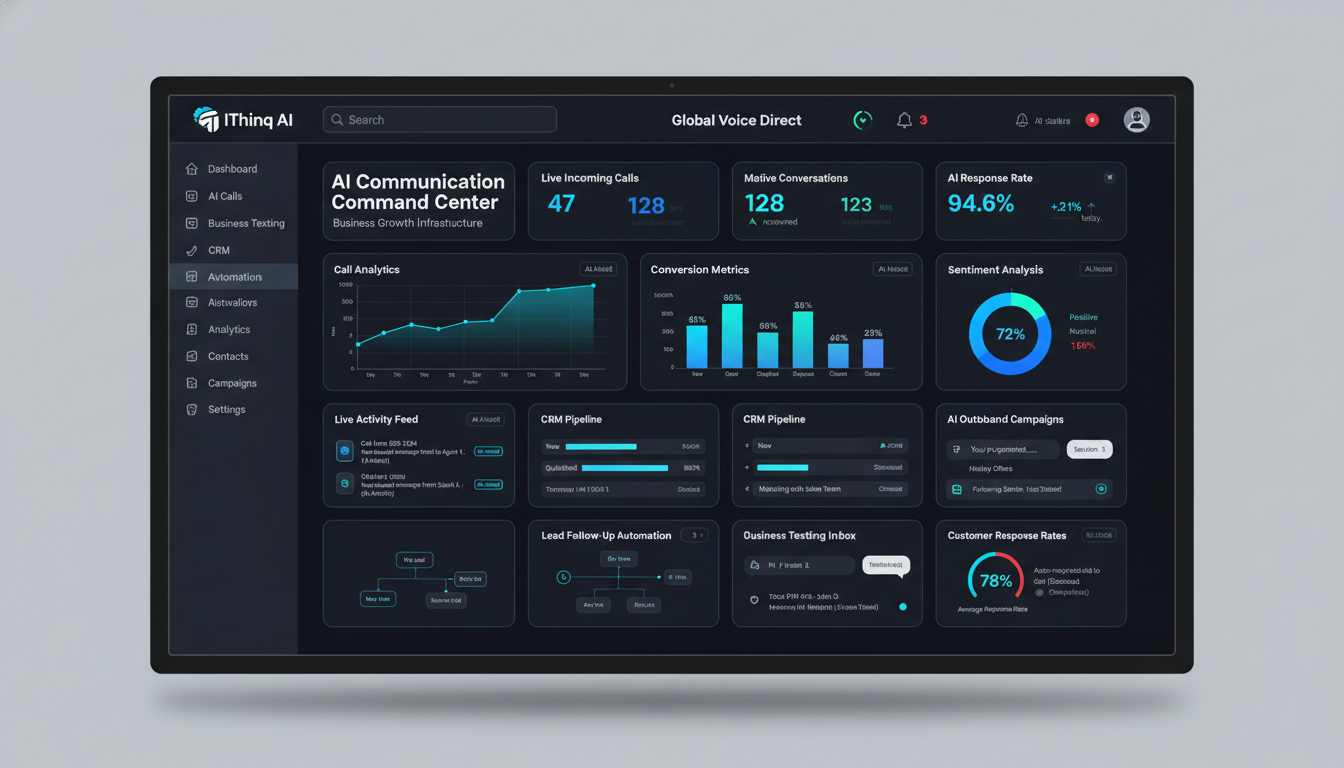
For most of business history, communication infrastructure was expensive. A professional phone system with multiple lines, auto-attendants, call routing, and voicemail required serious hardware investment. It was the kind of thing that only mid-size companies and larger could afford to set up properly.
Cloud technology changed that equation entirely.
When voice communication moved to the cloud, the cost structure collapsed. Suddenly a solopreneur or a five-person business could have the same kind of professional phone system that a 200-person company uses — without buying hardware, hiring a telecom specialist, or signing a three-year contract with a carrier.
Automation platforms, CRM tools, and workflow software followed the same path. The barriers that once made professional infrastructure the exclusive domain of large businesses disappeared. The playing field leveled in a way that most small business owners still haven’t fully taken advantage of.
That shift was part of what made me believe there was a real opportunity in this space. Not to build another phone company — there are plenty of those — but to help businesses understand what these tools actually make possible and build the systems to use them effectively.
The Evolution Toward AI
As cloud communication matured, customer expectations shifted with it.
People stopped tolerating slow response times. They stopped waiting until Monday morning to get answers they wanted on Sunday afternoon. They started expecting businesses to be available, responsive, and helpful on their timeline — not the business’s timeline.
For small businesses without large teams, that expectation created a serious challenge. You can’t have a human available 24 hours a day without significant labor costs. But you also can’t afford to miss the customer who’s ready to buy at 10 PM on a Friday.
That’s where AI changed the equation again.
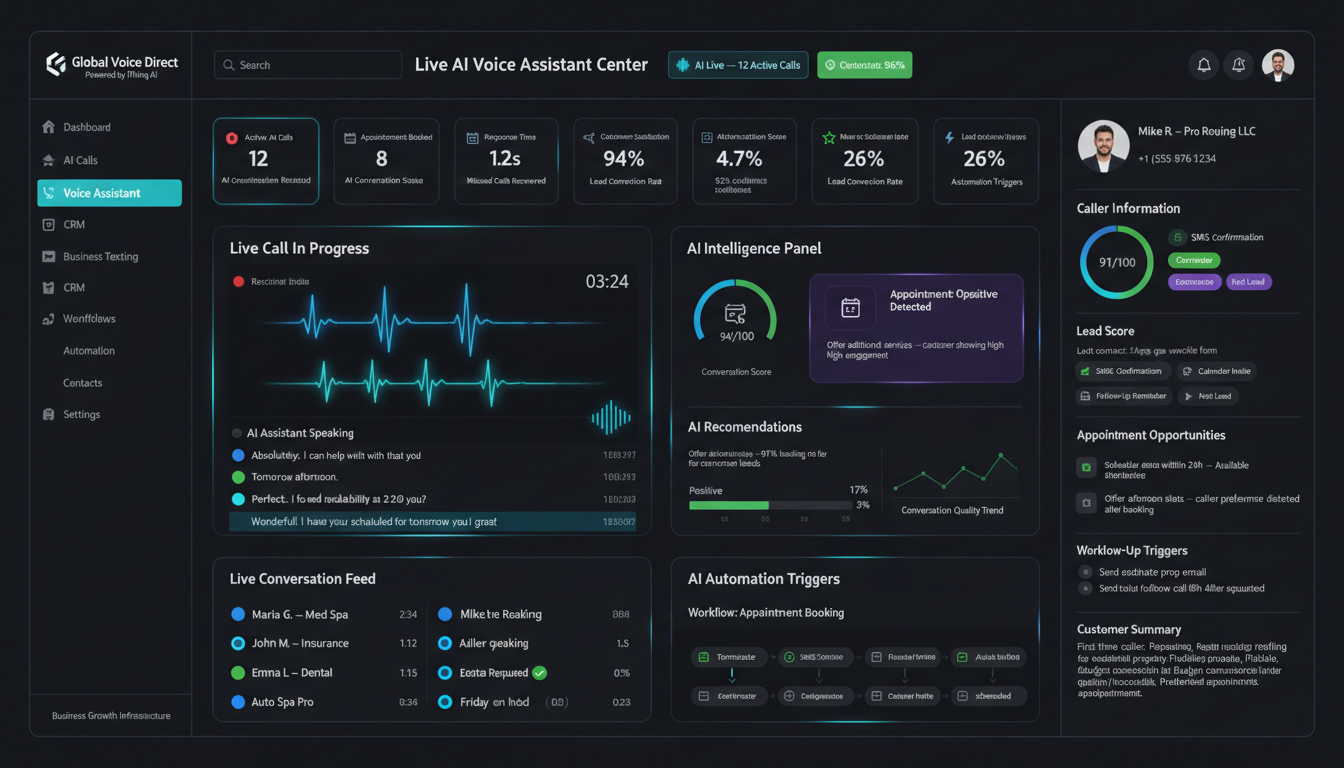
When I started exploring how AI could fit into the communication infrastructure we were building, I wasn’t thinking about replacing human relationships. I was thinking about extending availability. Handling the repetitive questions that don’t need a human. Routing calls intelligently. Following up with leads at the right moment automatically.
The AI technology that powers Global Voice Direct is built through IThinq AI — a separate entity I developed specifically to handle the intelligence layer of communication systems. The goal was always to make AI feel like a natural part of doing business, not a gimmick layered on top of an outdated system.
For a deeper look at how AI is reshaping what’s possible for growing businesses, the Startup Infrastructure Playbook covers the topic in detail.
The Idea Behind Global Voice Direct
The goal was never to become another phone company.
There are hundreds of phone companies. You can get a business line from Verizon, AT&T, Google, RingCentral, and a dozen other providers. Price competition in that space is fierce. Feature differentiation is minimal. It’s a commodity market.
What was missing wasn’t another phone option. What was missing was a company that thought about business communication as part of a larger operational system — and helped businesses build that system the right way.
Global Voice Direct was built to be that company. The phone service is part of it. The AI receptionist is part of it. The business credibility stack — the things that make a business look and feel established — is part of it. They all connect. They’re all designed to work together as an integrated layer of business infrastructure, not a collection of separate tools.
The framing I keep coming back to is this: we’re not selling you a phone. We’re helping you build the communication foundation your business needs to grow.
Why Existing Phone Numbers Matter
One thing I learned early on — something that took me a while to fully appreciate — is how much trust a phone number carries.
A business that’s been operating for five years has given that number to customers, printed it on business cards, listed it in directories, and built it into their marketing. Customers recognize it. They’ve called it before. Some of them have it saved in their phone.
Asking that business to switch phone numbers isn’t a small ask. It means potentially losing years of built-up recognition and trust. For a lot of businesses, that number is the first point of contact their best customers know.
The ability to add AI-powered capabilities — automated answering, intelligent routing, 24/7 availability — to an existing business phone number without disrupting established customer relationships.
AI Communication Continuity™ means you don’t have to abandon what you’ve built to access better technology. You keep the number. You add the intelligence. The upgrade is invisible to your customers — except that they start getting better service. That principle shaped a significant part of how we designed Global Voice Direct’s technical architecture.
What Entrepreneurs Get Wrong About Growth
I’ve watched a lot of entrepreneurs chase growth the wrong way. I’ve done it myself at various points.
The pattern usually looks like this: business isn’t growing fast enough, so the entrepreneur starts looking for tactics. New social media strategies. Better ads. More content. Different offers. Each new tactic gets tried, generates some results, then stops working or gets abandoned. The cycle repeats.
What almost never gets examined is the infrastructure underneath. Can the business actually handle more customers if the tactics work? What happens when ten new leads come in this week — is there a system to respond to all of them? What happens when a campaign drives a spike in calls — is there capacity to answer them?
When infrastructure is weak, growth creates chaos instead of momentum. You add customers but also add operational stress. You fill your schedule but lose the ability to deliver consistently. You scale revenue but also scale problems.
The Communication Infrastructure Framework exists because I wanted to give entrepreneurs a structured way to think about this — to evaluate whether their systems are actually ready to support growth before they go looking for more of it.
The Future of Business Communication
I spend a lot of time thinking about where business communication is going, because where it’s going shapes what we need to build today.
The short version: it’s going toward speed, availability, personalization, and intelligence — and the businesses that build those capabilities into their infrastructure now will have a significant advantage over those that wait.
AI will handle more of the routine communication that currently takes up enormous amounts of human time. Not because it’s cheaper than hiring, though it often is, but because it can be consistently available in a way no human team can match. It doesn’t take vacations. It doesn’t have bad days. It responds at 2 AM the same way it responds at 2 PM.
That doesn’t mean human relationships in business go away. They don’t. But the nature of where humans add value shifts. The repetitive, transactional layer gets automated. The complex, relational layer — the conversations that require judgment, empathy, and genuine problem-solving — stays human.
Building for that future means designing your communication infrastructure now with that evolution in mind. The Startup Growth Systems framework covers how to do that systematically.
Lessons Learned Building Businesses
- 01 Infrastructure before tactics. Systems determine whether your tactics work. Build the foundation first, then add the marketing. It works better in that order every time.
- 02 Consistency compounds. A business that responds to every inquiry within ten minutes, every day, will outperform a business with better products but slower follow-up. Boring consistency beats brilliant inconsistency.
- 03 The customer experience starts before you realize it does. The moment someone calls your business for the first time — or visits your website, or sees your listing in a directory — they’re already forming an opinion. Your infrastructure shapes that opinion before you’ve said a word.
- 04 Technology is a multiplier, not a replacement for thinking. The best tech in the world won’t fix a broken process. But the right technology, applied to a well-designed process, can transform what a small team is capable of.
- 05 Most growth problems are actually operations problems. When growth slows, most business owners look outward for solutions. The real answer is usually internal — a system that’s breaking under pressure, a gap in follow-up, a process that doesn’t scale.
- 06 Execution is where strategy lives or dies. You can have the right idea. You can understand the problem clearly. None of it matters if the systems aren’t in place to execute consistently. Build for execution, not just strategy.

The Real Product Was Never the Phone System
People sometimes ask what Global Voice Direct sells. The technical answer is business phone service, AI communication tools, and credibility infrastructure. But that’s not what I think we’re actually building.
The real product is better communication. The real product is stronger business infrastructure. The real product is helping businesses that are working hard to grow have the systems in place to actually capture the value they’re creating.
A phone number is just the starting point. What matters is everything that happens when someone calls that number — and everything that happens after.
That’s what Global Voice Direct is about. That’s why I built it.
Jonas Janvier
Jonas Janvier is a founder, inventor, and systems architect based in Lake Worth, Florida. He builds business growth infrastructure through Global Voice Direct, IThinq AI, and GrowthEdge CRM — with a focus on communication systems, startup credibility, and operational infrastructure for growing businesses.
Frequently Asked Questions
Related Frameworks & Resources
Great Businesses Are Built On Strong Foundations
Communication, systems, and infrastructure often matter more than most entrepreneurs realize. The businesses that get this right early build advantages that compound over time.
Explore Global Voice Direct Read the Framework