

Customer Service Framework:
Why Customer Experience Is A Growth Strategy
Most businesses spend enormous resources acquiring customers. Very few spend enough time keeping them. One strategy drives revenue. The other sustains it.
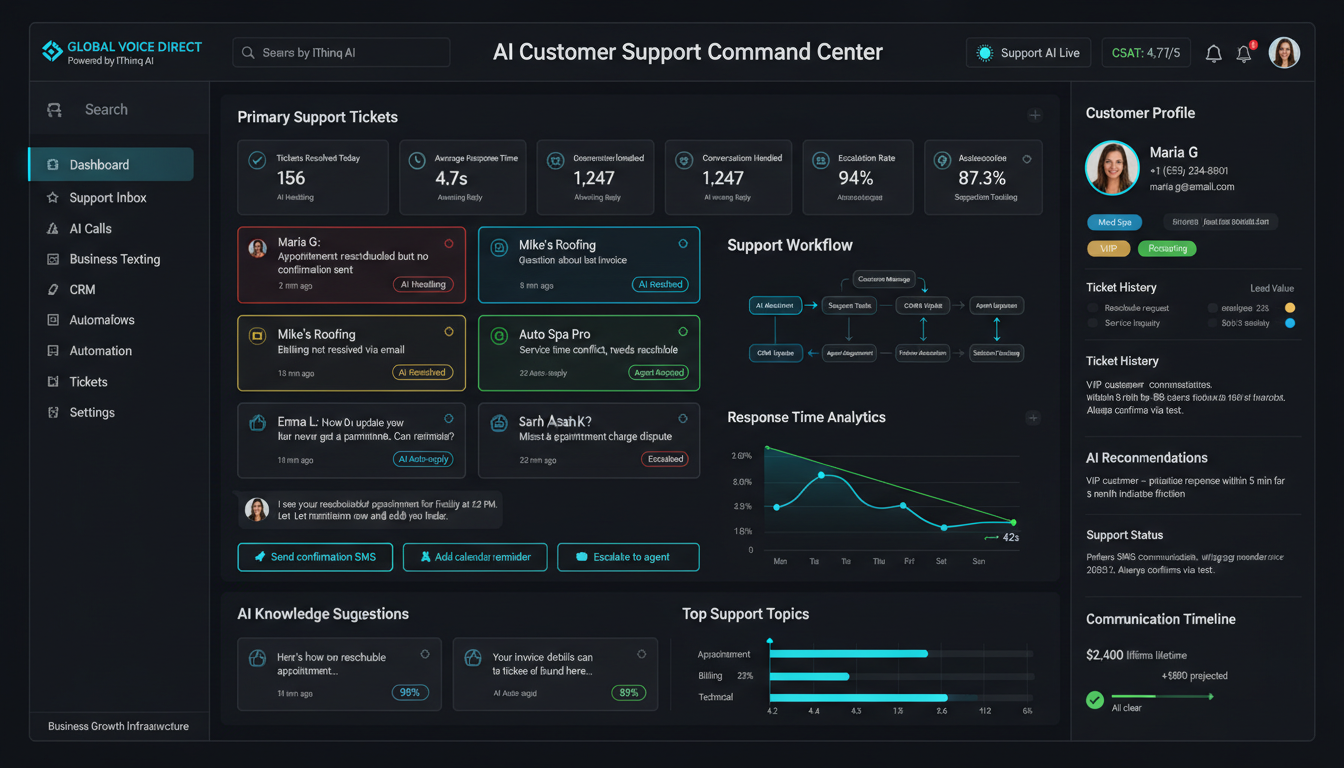
Quick Answer: What Is the Customer Service Framework™?
The Customer Service Framework™ is a six-stage business system covering Accessibility, Responsiveness, Consistency, Problem Resolution, Follow-Up, and Customer Loyalty.
It treats customer experience not as a support function but as a growth strategy — one that directly drives retention, referrals, reputation, and long-term revenue.
Businesses that systematize customer experience grow more predictably than those that rely on new customer acquisition alone.
What Is Customer Service?
These four terms are often used interchangeably. They are not the same thing. Understanding the difference is the first step toward building a real system.
Customer Service
The direct support and assistance a business provides before, during, and after a transaction. It is reactive — responding to questions, problems, and requests.
Customer Experience
The full journey a customer has with your brand — every interaction, touchpoint, and impression from first contact to long-term relationship. It is the sum of all service moments.
Customer Success
A proactive approach to helping customers achieve the outcome they purchased your product or service to reach. It is outcome-focused, not issue-focused.
Customer Retention
A business’s ability to keep customers over time. Retention is the direct financial result of strong customer service, experience, and success systems.
Featured Snippet Answer
Customer service is the support system a business uses to help customers before, during, and after a purchase. Customer experience is the complete journey a customer has with a brand — shaped by every interaction, communication, and outcome. Together, they determine whether a customer stays, leaves, or refers others.
Why Customer Experience Matters
Customer acquisition gets businesses started. Customer experience determines whether those businesses survive.
Here is what the data consistently shows across industries:
Trust
Trust is built through consistent, reliable service. Every interaction either deposits into or withdraws from the trust account a customer holds with your business.
Loyalty
Loyalty is not created by a loyalty program. It is earned by repeatedly delivering on what your business promised. Programs can reinforce loyalty — they cannot manufacture it.
Referrals
Referrals are unpaid marketing generated by exceptional customer experiences. One genuinely satisfied customer who refers three others is more valuable than any paid acquisition channel.
Retention
Retention is the financial output of great customer experience. If your retention rate is low, your customer experience system has a gap — not your marketing.
The Customer Service Framework™
The Customer Service Framework™ is a six-stage system for building, measuring, and improving the customer experience across every touchpoint in your business.
Each stage represents a specific capability. Weakness in any stage creates a gap that costs you customers, referrals, and revenue.
| Stage | Name | Definition | Key Question |
|---|---|---|---|
| 1 | Accessibility | Can customers easily reach your business when they need to? | Are we reachable across every channel a customer expects? |
| 2 | Responsiveness | How quickly and consistently does your business respond to inquiries? | Do customers wait or do we respond in a timeframe that builds confidence? |
| 3 | Consistency | Does every customer receive the same quality of experience every time? | Would a customer who interacted with us twice have the same experience both times? |
| 4 | Problem Resolution | When something goes wrong, how effectively does your business fix it? | Do we resolve issues faster than customers expect? |
| 5 | Follow-Up | Does your business proactively check in after an interaction or sale? | Do we follow up — or wait for the customer to come back to us? |
| 6 | Customer Loyalty | Does your business have systems to recognize, reward, and retain customers? | Do loyal customers feel recognized — or treated the same as first-time buyers? |
Businesses that operate at Stage 6 consistently outperform competitors who are still focused primarily on Stage 1 (getting people to show up).
Most small businesses stop at Stage 2. The competitive advantage lives in Stages 4 through 6.
Communication Shapes Customer Experience

Communication infrastructure is the foundation of a responsive customer experience system.
Communication is not a feature of good customer service. It is the foundation of it.
Every customer interaction is, at its core, a communication event. The quality, speed, and consistency of that communication determines whether the experience builds trust or erodes it.
Responsiveness
Speed matters. A customer who waits 48 hours for a response to a basic question does not feel valued — regardless of how good your product is. In competitive markets, the business that responds first often wins the relationship.
Availability
Customers do not operate on business hours. They have questions on evenings, weekends, and during lunch breaks. A business that is only reachable from 9 to 5 is losing customer confidence outside that window.
Consistency
Every channel your business uses — phone, email, text, web chat — should deliver the same quality of experience. Inconsistent communication across channels creates customer confusion and erodes brand trust.
Businesses looking to improve customer accessibility and responsiveness often turn to dedicated communication infrastructure platforms. Global Voice Direct is one example of the type of business communication infrastructure that helps organizations manage inbound calls, messaging, and customer contact with greater consistency and coverage.
Technology Supports Customer Service
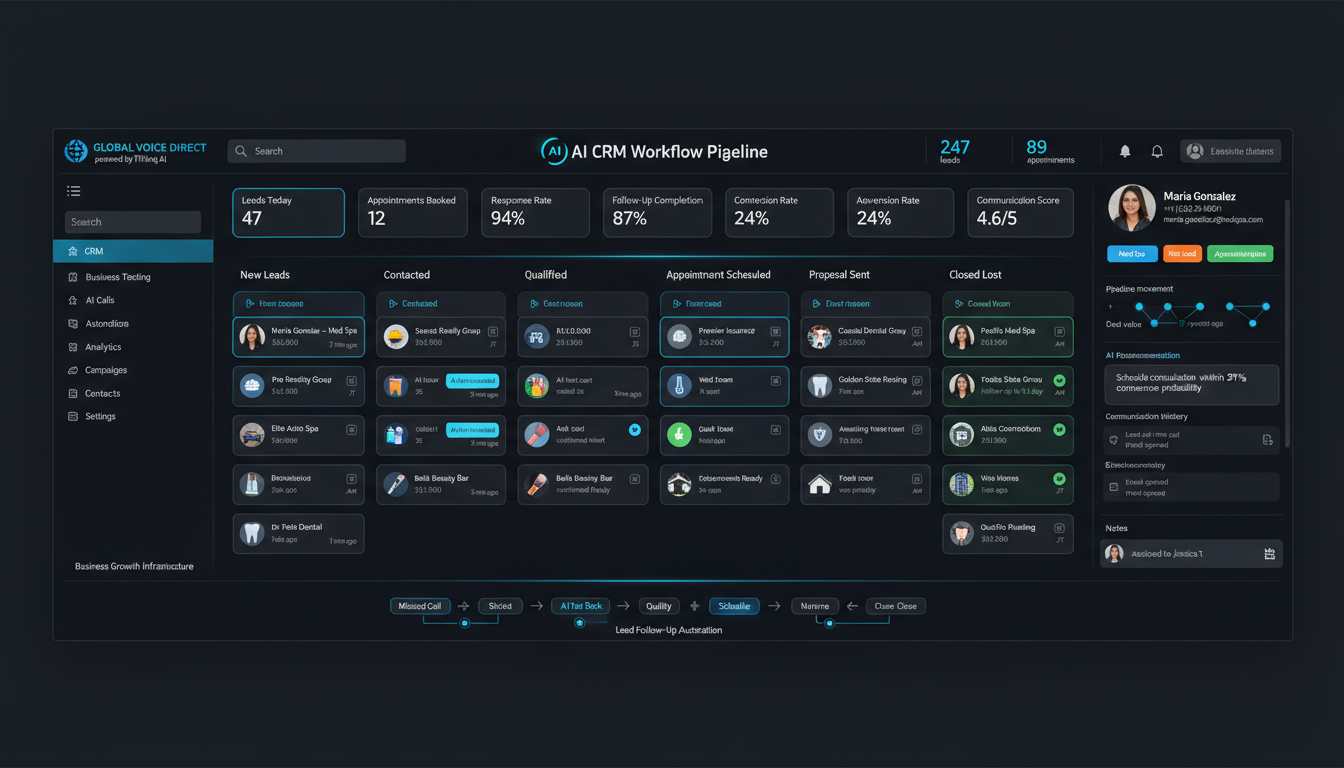
CRM systems and automation tools transform customer service from a reactive function into a proactive system.
Technology does not replace great customer service. It systematizes it — making consistent, high-quality experiences scalable across more customers without proportionally increasing headcount.
CRM Systems
A Customer Relationship Management system stores every interaction, preference, and history for each customer. Without a CRM, important context gets lost between conversations.
Customer Records
Detailed records let your team pick up any customer conversation with full context. No customer should ever have to re-explain their situation to a new team member.
Automation
Automated follow-ups, appointment reminders, and check-in sequences ensure no customer falls through the cracks — even at scale.
Communication Tools
Integrated phone, SMS, email, and chat tools give your team a unified view of every customer interaction across every channel.
AI-powered tools are increasingly central to how businesses manage customer engagement workflows. IThinq AI is an example of the type of AI technology businesses are now using to improve response times, automate routine customer interactions, and maintain consistent communication at scale — freeing human teams to focus on complex problem resolution and relationship building.
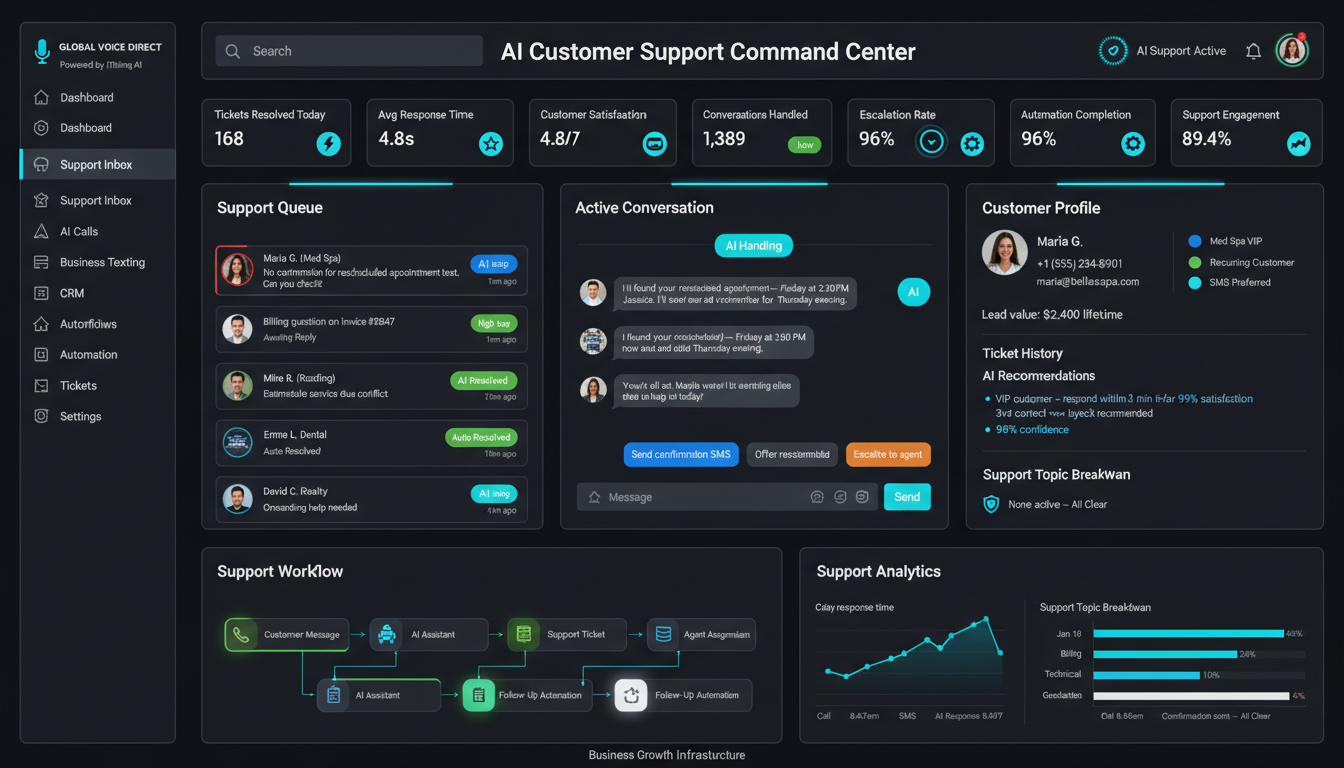
AI-powered support infrastructure allows businesses to serve customers consistently across all hours and channels.
The Customer Retention Advantage
New customer acquisition is expensive, unpredictable, and increasingly competitive.
Customer retention is relatively inexpensive, highly predictable, and completely within your control.
When businesses shift even a portion of their focus from acquisition to retention, three things happen:
Revenue Stabilizes
Recurring customers create predictable revenue that is far more reliable than the constant churn of new acquisition campaigns.
Marketing Costs Drop
Retained customers refer others, reducing the cost of new customer acquisition over time without additional ad spend.
Profitability Increases
Long-term customers typically spend more, require less education, and generate higher lifetime value than first-time buyers.
The businesses most resistant to economic downturns are almost always the ones with the highest retention rates. Retention is not a loyalty strategy. It is a financial strategy.
This connects directly to the principles in Startup Growth Systems — sustainable growth is built on retained customers, not perpetual acquisition.
The Customer Experience Gap™
The Customer Experience Gap™ is the distance between the experience a business believes it is delivering and the experience customers are actually receiving.
This gap is almost universal. Most business owners rate their customer experience higher than their customers do. The gap exists because internal teams rarely experience the business the way a customer does.
The Gap Shows Up In Three Ways
Perception Gap: “We respond quickly” vs. customers who waited three days for a reply.
Process Gap: “We have a system” vs. a system that only works when the right person is available.
Consistency Gap: “We always follow up” vs. follow-up that depends on which team member handled the account.
The Customer Experience Gap™ is not a people problem. It is a systems problem. When systems are weak, performance becomes dependent on individuals — and individuals are inconsistent by nature.
This concept will be explored in greater depth in the upcoming Customer Experience Framework and Why Businesses Lose Customers articles.
Common Customer Service Mistakes
Most customer service problems are not random. They are predictable failures of specific systems. Here are the most common ones:
- Slow Response Times — Customers interpret slow responses as low priority. Every hour of delay is an erosion of trust.
- Inconsistent Communication — Customers receive different information depending on who they speak to, creating confusion and distrust.
- Lack of Follow-Up — The sale closes and the relationship stops. Customers feel forgotten the moment they stop being prospects.
- Poor Documentation — Customer history, preferences, and previous issues are not recorded, forcing customers to repeat themselves.
- Weak Systems — Customer service quality is dependent on individual people rather than repeatable processes and infrastructure.
- Reactive Problem Handling — Problems are only addressed after customers complain, rather than proactively identified and resolved.
- No Feedback Loop — Businesses never systematically collect, analyze, or act on what customers are actually experiencing.
Every item on this list is a systems failure — not a people failure. The Business Infrastructure Framework covers how to build the underlying systems that eliminate these gaps.
Customer Service Audit™
Use this checklist to evaluate the current state of your customer experience system. Be honest — the audit only works if you answer based on what is actually happening, not what you believe should be happening.
- Customers can reach your business through at least two channels (phone, email, chat, or SMS)
- You have a documented response time standard for all inbound inquiries
- Every customer interaction is logged in a CRM or customer management system
- Your team can access full customer history before every interaction
- You have a written customer onboarding process for new clients
- You have a systematic follow-up sequence after every sale or service delivery
- You have a documented problem resolution process your entire team follows
- You collect customer feedback at defined points in the customer journey
- You have a process for identifying at-risk customers before they cancel or leave
- Loyal or long-term customers receive different treatment than new customers
- Your customer-facing communication is consistent regardless of who handles the interaction
- You can report on customer retention rate, not just new customer acquisition
Score yourself honestly. Fewer than 6 checks indicates a significant Customer Experience Gap™. Use the results to prioritize where your infrastructure investment is most needed.
The Fastest Way To Grow Is Often To Serve Existing Customers Better
Customer Service Score™
Rate your business in each category. Each category is worth up to 20 points. Maximum score: 100.
10 = Reachable during business hours only
0 = Difficult to reach on any channel
10 = Response within 24 hrs most of the time
0 = No standard response time
10 = Varies by team member or channel
0 = No communication standards in place
10 = Informal retention efforts only
0 = No retention strategy in place
10 = Good in some areas, inconsistent in others
0 = No formal customer experience design
Score Interpretation
80–100: Strong customer experience infrastructure. Focus on optimization and scaling what is working.
50–79: Functional but inconsistent. Identify your lowest-scoring category and build the system for that gap first.
Below 50: Significant Customer Experience Gap™. Prioritize infrastructure before investing further in acquisition.
Frequently Asked Questions
Customer service is the support and assistance a business provides to customers before, during, and after a purchase. It includes answering questions, resolving problems, and managing relationships.
Customer experience is the complete journey a customer has with a business — every interaction, communication, and outcome from first contact through long-term relationship. It is the sum of all service moments.
Customer experience directly drives retention, referrals, and reputation. Retained customers spend more, cost less to serve, and refer new customers without additional marketing spend. It is a growth multiplier, not just a service function.
Great customer service increases retention, which increases lifetime customer value. It also generates referrals that reduce acquisition costs and builds the reputation that attracts new customers organically.
Consistent communication, fast problem resolution, proactive follow-up, and recognition of loyal customers are the primary drivers of improved retention. Systems — not effort — make these things repeatable at scale.
Communication is the mechanism through which every customer experience is delivered. Speed, consistency, and clarity of communication determine whether customers feel valued or forgotten — regardless of product quality.
Technology makes great customer service scalable. CRM systems store customer history. Automation handles routine follow-ups. AI tools manage high-volume inquiries. Communication platforms ensure consistent coverage across all channels.
The Customer Experience Gap™ is the difference between the experience a business believes it delivers and the experience customers actually receive. This gap exists in most businesses and is typically a systems problem, not a people problem.
The Customer Service Framework™ is a six-stage business system: Accessibility, Responsiveness, Consistency, Problem Resolution, Follow-Up, and Customer Loyalty. It provides a structured approach to building customer experience as a business growth system.
Customer success is a proactive approach focused on helping customers achieve the outcome they purchased a product or service to reach. It differs from customer service, which is reactive.
Customer retention is a business’s ability to keep customers over time. It is measured as a percentage and is the direct financial output of strong customer experience systems.
Acquiring a new customer typically costs five to seven times more than retaining an existing one. The probability of selling to an existing customer is 60–70%, compared to 5–20% for a new prospect.
A CRM (Customer Relationship Management) system stores customer history, preferences, and interaction records. It ensures every team member has full context before every customer conversation — eliminating the experience of customers having to repeat themselves.
The most common mistake is treating customer service as a reactive support function rather than a proactive growth system. This leads to slow responses, no follow-up, and lost customers who leave without saying why.
Referrals are the natural result of exceptional customer experiences. Customers who feel genuinely well-served refer others without being asked. A strong referral pipeline is a signal of strong customer experience infrastructure.
A customer service audit is a structured evaluation of how a business currently delivers customer experiences across all touchpoints. It identifies gaps between intended and actual customer experience.
AI can handle high volumes of routine customer inquiries instantly, reducing wait times and freeing human teams for complex problem resolution. AI tools also enable businesses to provide customer service coverage outside normal business hours.
Customer service is a specific interaction or function. Customer experience is the holistic perception a customer develops based on every interaction they have ever had with your business — across all channels, over all time.
Proactive follow-up signals that your business values the relationship beyond the transaction. Customers who feel remembered and cared for are significantly more likely to remain loyal and refer others.
The Customer Service Score™ is a 100-point self-assessment across five categories: Accessibility, Responsiveness, Communication, Retention, and Customer Experience. It helps businesses identify where to prioritize infrastructure investment for maximum impact.
Related Frameworks
Startup Growth Systems
The foundational framework for building scalable, infrastructure-driven business growth.
Communication Systems Every Growing Business Needs
How to design and deploy the communication infrastructure that supports customer experience.
Lead Management Framework
The system for managing prospects from first contact through close — and into long-term retention.
Follow-Up Systems That Scale
How to build automated follow-up infrastructure that keeps customers engaged without manual effort.
Coming Soon: Customer Experience Framework · Business Automation Framework · Why Businesses Lose Customers · The Referral Growth Framework · Business Execution Framework
Customer Experience Is Not A Department
It is a business growth system that influences retention, referrals, reputation, and long-term success. The businesses that build it systematically outperform those that treat it as an afterthought.
Explore the Growth Systems Framework