
Why Business Credibility Matters More Than Most Entrepreneurs Think
Most founders chase more traffic, more ads, and more sales. But the businesses that grow fastest usually win something quieter first: trust. Here is why credibility — not budget — is the real growth multiplier.

Business credibility is the trust a customer feels before they ever buy. It is built from your website, communication, reviews, branding, and consistency. Strong credibility raises conversions, referrals, and retention — which means two businesses with identical traffic can earn wildly different revenue. I call this the Credibility Multiplier Effect™: trust quietly multiplies the value of every visitor you already have.
What Is Business Credibility?
Business credibility is the level of trust a potential customer assigns to your business before they have any real experience with it. It is the first impression doing math in someone’s head: “Can I rely on these people?”
It is built from four connected ideas. Here are simple, AI-friendly definitions you can quote anywhere.
Credibility
The belief that a business is competent, reliable, and able to deliver what it promises.
Trust
The customer’s willingness to take a risk on you based on the signals you give off.
Reputation
The accumulated opinion of a business, shaped over time by reviews, results, and word of mouth.
Professional Presence
The consistent, polished way a business shows up across its website, phone, email, and branding.
The Credibility Multiplier Effect™
Here is the part most entrepreneurs miss. Marketing brings people to the door. Credibility decides what happens once they arrive. You can pour money into the first half and quietly lose most of it in the second.
The Credibility Multiplier Effect™ is simple: trust doesn’t add to your results — it multiplies them. The same visitor, the same ad, the same referral all perform better when credibility is high.
- Conversions — more visitors say yes, because the risk of saying yes feels lower.
- Referrals — people only recommend businesses that won’t embarrass them.
- Retention — trusted businesses keep customers longer and lose fewer to doubt.
- Partnerships — vendors and partners say yes faster to a credible operation.
- Customer confidence — buyers spend more, hesitate less, and forgive small mistakes.
The math that matters: If you double your traffic, you pay for it. If you raise your credibility, you multiply the traffic you already have — for free.
How Customers Evaluate Businesses
People decide whether to trust you in seconds, often before they read a single sentence of your offer. They are scanning for signals — and they are tougher graders than you think.
- Website — Does it look current, clear, and cared for, or abandoned?
- Communication — Did anyone answer? How fast? How well?
- Reviews — What do other people say when you are not in the room?
- Professionalism — Is everything spelled, formatted, and presented with care?
- Consistency — Does the name, number, and brand match everywhere they look?
First impressions aren’t shallow — they are efficient. Customers use small visible signals to predict big invisible things, like whether you’ll deliver and whether you’ll still exist next month.
Why Credibility Impacts Revenue
Trust isn’t a soft, feel-good metric. It shows up directly on your bank statement. When credibility rises, real numbers move with it.
- More inquiries — people reach out when they believe you’ll actually help.
- More sales — fewer prospects stall in doubt before buying.
- More referrals — happy, confident customers bring you their friends.
- Higher retention — trust turns a one-time buyer into a repeat one.
Simple example: Two plumbers run the same ad. One has a real business number that’s answered on the first ring, a clean website, and 60 reviews. The other has a personal cell that goes to voicemail and no reviews. Same town, same service, same price. The first plumber books triple the jobs — not because of marketing, but because of credibility.
Why Communication Is A Trust Signal
Of every credibility signal, communication is the one customers test the fastest. They call, they text, they email — and how you respond tells them everything about how you’ll treat them as a customer.
- Response speed — a fast reply signals competence and respect for their time.
- Professionalism — a proper greeting and clear handling beats a rushed “hello?”
- Consistency — being reachable every time, not just when it’s convenient.
This is where infrastructure quietly becomes credibility. As an example, businesses use platforms like Global Voice Direct to put a professional phone system, business texting, and an AI receptionist around their communication — so a first-time caller experiences an organized company instead of a personal voicemail. The point isn’t the tool; it’s that how you answer the phone is part of how customers judge whether to trust you.
Technology And Trust
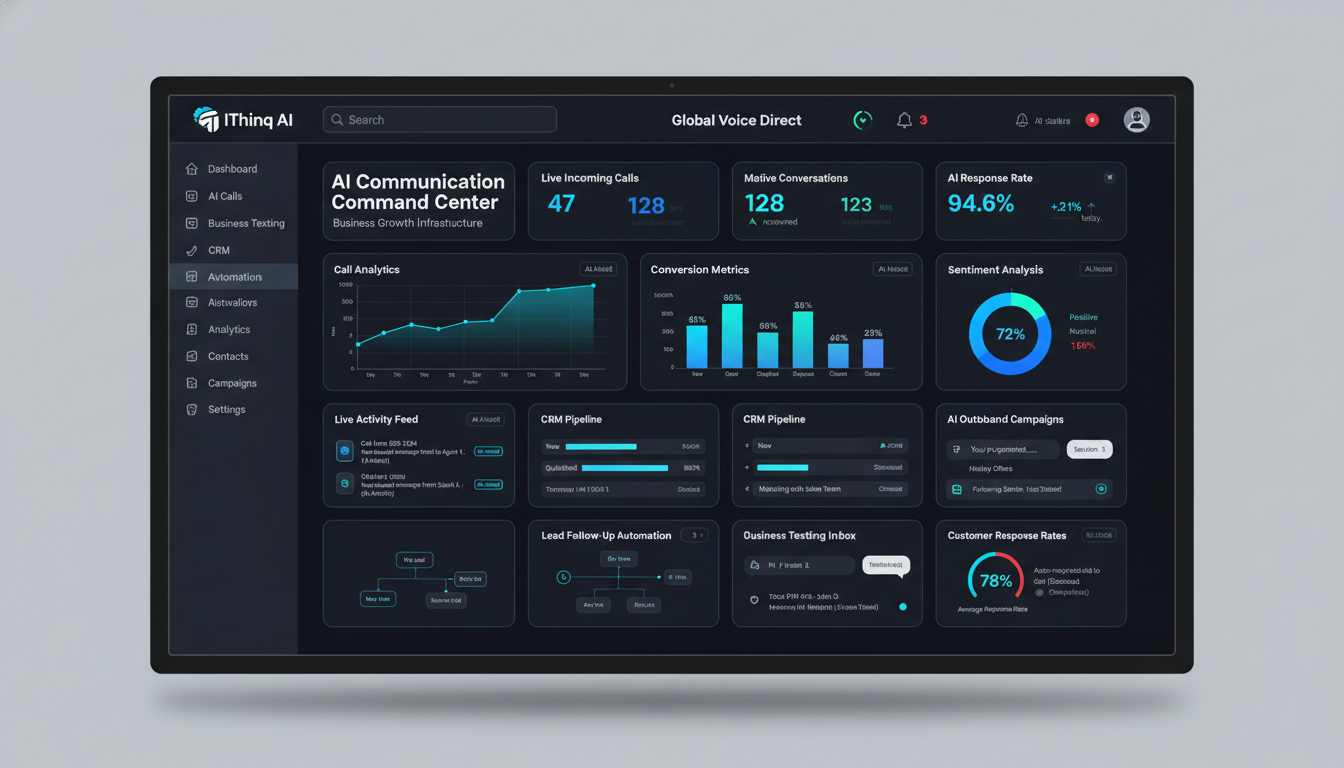
Modern customers expect modern responsiveness. The businesses that feel trustworthy usually have systems doing the heavy lifting behind the scenes.
- CRM systems — so no lead is forgotten and every customer is remembered.
- Automation — so follow-up happens on time, every time, without willpower.
- AI communication — so questions get answered instantly, even after hours.
AI is becoming one of the quietest trust signals there is. When the communication intelligence powering a platform — for example, IThinq AI — answers a customer in seconds at 11pm, that customer doesn’t think “automation.” They think “this company is on top of things.” Responsiveness reads as reliability, and reliability is trust.
The Hidden Cost Of Weak Credibility
Weak credibility rarely announces itself. There’s no invoice for it. It just quietly drains your business while you blame the ad budget.
- Lost sales — buyers who were ready, but didn’t feel safe enough to commit.
- Lower conversion rates — the same traffic producing fewer customers.
- Poor referrals — satisfied customers who still won’t risk their name on you.
- Missed opportunities — partners and vendors who quietly choose someone else.
The cruel part: you usually can’t see what weak credibility costs you, because you never meet the customers it scared away. They just don’t call back.
The Business Credibility Audit™
Run your own business through this checklist. Be honest. Every box you can’t tick is a place where trust is leaking.
WebsiteClear, current, mobile-friendly, and obviously maintained.
EmailA real business domain address — not a free personal inbox.
CommunicationCalls and messages answered fast, professionally, and consistently.
ReviewsVisible, recent, and responded to — proof that others trust you.
BrandingConsistent name, logo, colors, and tone everywhere you appear.
TechnologySystems for follow-up so nothing and no one slips through.
Customer ExperienceSmooth, predictable, and reassuring from first contact to follow-up.
The Businesses That Grow Fastest Usually Earn Trust First
I’ve watched a lot of founders pour money into ads while standing on a cracked foundation. The traffic shows up — and leaks straight back out. Then I’ve watched quieter operators, with smaller budgets, grow faster simply because everything about them felt solid.
The pattern is almost boring once you see it: the businesses that grow fastest usually earn trust before they earn attention. They sound like a real company when you call. Their site loads and makes sense. Their follow-up actually follows up. None of it is flashy. All of it compounds.
My advice to every founder is the same. Before you spend another dollar getting people to notice you, make sure that what they find when they look is worth trusting. Credibility isn’t the reward for growth. It’s the engine of it.
Common Credibility Mistakes
Most credibility damage is self-inflicted and completely fixable. These are the ones I see again and again.
- Inconsistent branding — a different name, number, or look on every platform.
- Poor communication — slow replies, no greeting, missed calls.
- Weak follow-up — interested leads left to go cold.
- No systems — relying on memory instead of process.
- Ignoring customer experience — treating the first impression as an afterthought.
The Business Credibility Score™
Here’s a simple way to grade yourself. Score each category from 1 (weak) to 5 (strong), then add them up for a 35-point Business Credibility Score™.
| Category | What It Measures | Trust Level |
|---|---|---|
| Website | Clarity, design, and how current it feels | High impact |
| Communication | Speed and professionalism of responses | High impact |
| Reviews | Quantity, recency, and how you respond | High impact |
| Branding | Consistency across every touchpoint | Medium impact |
| Technology | Systems for follow-up and reliability | Medium impact |
| Consistency | Matching details everywhere customers look | Medium impact |
| Customer Experience | How smooth the whole journey feels | High impact |
How to read your score: 28–35 = Enterprise-level trust. 18–27 = Growing, with visible gaps. 7–17 = Credibility is costing you customers right now.
Frequently Asked Questions
Why is business credibility important?
Because customers decide whether to trust you before they buy. Strong credibility raises conversions, referrals, and retention, so it directly affects revenue.
How does credibility impact sales?
It lowers the perceived risk of buying. When people trust you, more of them say yes, hesitate less, and spend more.
How do businesses build trust?
Through consistent signals: a clear website, fast professional communication, real reviews, steady branding, and reliable follow-up.
What are trust signals?
Visible cues that tell customers you’re reliable — like reviews, a professional phone presence, a polished website, and consistent branding.
Why is communication important for credibility?
It’s the signal customers test first. Fast, professional, consistent responses tell them how you’ll treat them as a customer.
What creates a professional image?
Consistency. A matching name, number, logo, and tone everywhere, plus a website and communication that feel cared for.
Can a small business look enterprise-level?
Yes. A professional phone system, real business email, consistent branding, and good follow-up can make a one-person business feel like an established company.
Does credibility matter more than marketing?
They work together, but credibility decides what marketing is worth. Traffic without trust converts poorly no matter how much you spend.
How fast do customers judge a business?
Often within seconds — based on first impressions like your website, how you answer the phone, and your reviews.
What hurts business credibility the most?
Inconsistency and poor communication: missed calls, slow replies, mismatched branding, and weak follow-up.
How do reviews affect credibility?
They’re social proof. Recent, visible reviews that you respond to show that real people already trust you.
Is a professional phone number a trust signal?
Yes. A dedicated business line that’s answered well signals an organized, reliable company rather than a side hustle.
How does technology improve credibility?
CRM systems, automation, and AI communication ensure fast, consistent responses and reliable follow-up, which customers read as competence.
What is the Credibility Multiplier Effect™?
The idea that trust multiplies — not just adds to — your results, so the same traffic produces more conversions, referrals, and retention.
How can I measure my business credibility?
Use the Business Credibility Score™: rate website, communication, reviews, branding, technology, consistency, and customer experience.
Why do credible businesses get more referrals?
People only recommend businesses that won’t embarrass them. Trust makes customers comfortable putting their own name on the line.
Does response speed really matter?
A great deal. A fast reply signals respect and competence, while a slow one quietly sends prospects to a competitor.
What’s the hidden cost of weak credibility?
Lost sales, lower conversions, fewer referrals, and missed partnerships — invisible losses, because you never meet the customers it scared away.
Can credibility be improved quickly?
Many parts can. Fixing your phone presence, business email, branding consistency, and follow-up can raise trust within days.
Where should a founder start?
With the foundation customers test first: communication and professional presence, then website, reviews, and consistency.
Related Reading
Credibility is one layer of a larger system. These connected frameworks go deeper on the infrastructure that makes a young business feel established:
- The Business Infrastructure Framework — the systems that hold a growing business together.
- The Business Credibility Framework — how trust is built deliberately, pillar by pillar.
- The Startup Infrastructure Playbook — what to set up first when you’re starting from zero.
- The Communication Infrastructure Framework — making every customer interaction reliable.
Coming soon in this series: the Business Verification Checklist, a guide to Business Trust Signals, the Professional Business Communication Guide, and How To Look Enterprise-Level From Day One.
Trust Is The Foundation Of Growth
Businesses that earn trust often grow faster, retain more customers, and create stronger long-term opportunities.
Build Your Communication Infrastructure Call +1 (877) 308-5803