
What Entrepreneurs Get Wrong About Growth
Most entrepreneurs think they have a growth problem. They don’t. They have an infrastructure problem. Here’s what that actually looks like — and what to do about it.

Most entrepreneurs think they have a growth problem.
They don’t.
They have an infrastructure problem.
I know because I made the same mistake. I spent years chasing growth — more leads, more marketing, more hustle — without ever stopping to ask whether my business was actually ready for what I was trying to pour into it.
It wasn’t. And the results showed it.
The leads came in and fell through the cracks. The customers arrived and had inconsistent experiences. The revenue grew slightly, then stalled, then dropped when I took my foot off the gas for a week.
That is not a marketing problem. That is not a growth problem. That is an infrastructure problem wearing a growth problem’s mask.
This article is about the ten mistakes I see entrepreneurs make repeatedly when it comes to growth — the ones that cost time, money, and momentum. And more importantly, what to do instead.
The Growth Misconception Index™
A structured framework for identifying the most common and costly growth mistakes entrepreneurs make — and the infrastructure-first corrections that actually move the needle.
Quick Summary — 10 Growth Mistakes
- Confusing activity with actual progress
- Believing more marketing is the answer
- Scaling before the foundation is ready
- Ignoring the follow-up gap
- Underestimating the power of credibility
- Optimizing for acquisition instead of retention
- Building for now instead of later
- Mistaking hustle for strategy
- Treating technology as optional
- Quitting before compounding kicks in
They Confuse Activity With Progress
Busy and productive are not the same thing. Most entrepreneurs know this in theory. Most of them still fall into the trap in practice.
They post every day without a content strategy. They attend every networking event without following up. They send proposals without a system to track them. They fill their calendar without asking whether any of it is moving the needle.
Vanity metrics make this worse. Impressions, followers, open rates — these numbers feel like progress because they go up. But a business doesn’t grow because its Instagram following grew. It grows because it converts leads into customers and keeps those customers coming back.
Activity without outcomes is just noise. The first question to ask about any effort is not “did I do it” — it’s “did it move the business forward.”
“Being busy is the most socially acceptable form of avoidance in entrepreneurship.”
They Think More Marketing Is the Answer
When growth stalls, the default response is to spend more on marketing. More ads. More content. More outreach. More budget pointed at the top of the funnel.
Sometimes that is the right move. Most of the time it is not.
Marketing brings people to your door. Infrastructure determines what happens when they get there. If your follow-up is broken, if your onboarding is inconsistent, if your communication drops off after the sale — more marketing just accelerates the leak. You fill the bucket faster, but it still has holes.
Before spending another dollar on marketing, audit what happens to the leads you already have. How quickly do you respond? What percentage convert? What happens to the ones who don’t? How many of your past customers have you followed up with in the last 90 days?
The answers to those questions are almost always more valuable than the next ad campaign.
They Scale Before They’re Ready

Premature scaling is one of the most common reasons early businesses break. Not because growth is bad — but because growth applies pressure to every weak point in your operation simultaneously.
Your communication gaps become visible. Your operational inconsistencies become crises. The things your small team managed manually at ten clients become impossible at fifty. The process that lived in one person’s head becomes a bottleneck for the entire organization.
Scaling before you’re ready doesn’t accelerate growth. It accelerates failure.
The question to ask before pushing for scale is simple: if we doubled our clients tomorrow, what would break first? Whatever the answer is — fix that before you double.
This is why communication infrastructure matters so much at every stage. Tools like Global Voice Direct give businesses a professional communication foundation that holds up under pressure — consistent inbound handling, responsive customer interaction, and reliable follow-up regardless of how fast the business is growing.
They Ignore the Follow-Up
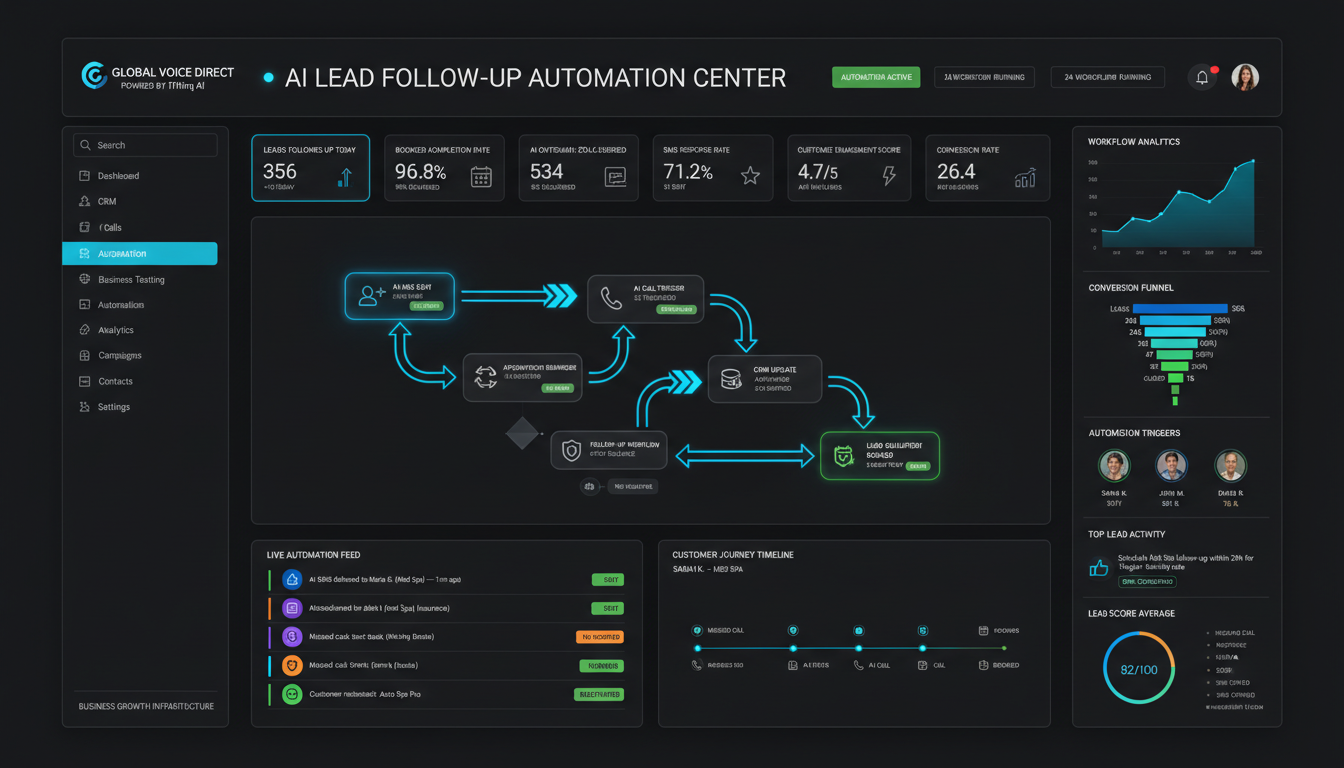
Studies consistently show that the majority of sales happen after the fifth contact. Most businesses follow up once, maybe twice, and then move on. The revenue they are leaving in that gap is significant.
Speed to lead is the first part of the problem. A lead that doesn’t hear from you within the first few minutes of inquiry is already cooling off. By the time you get back to them an hour later, they may have already talked to a competitor.
The second part is sequence. Following up once and giving up is not a follow-up strategy. A real follow-up system touches a lead multiple times across multiple channels, at the right intervals, with the right message at each stage.
Most businesses don’t have a lead problem. They have a follow-up problem.
This is exactly the gap that automation closes. IThinq AI helps businesses deploy AI-powered follow-up systems that respond instantly, sequence contacts automatically, and keep leads moving through the pipeline — without requiring a human to manually manage every touchpoint.
They Underestimate the Power of Credibility
A business can have the best service in its market and still lose deals to a competitor that looks more credible. That is a hard truth, but it is a true one.
First impressions happen before a conversation starts. A potential customer Googles your business before they call. They check your website, your reviews, your presence. They look for signals that tell them whether you are legitimate, established, and trustworthy.
If those signals are weak — an inconsistent online presence, no verifiable business information, a phone number that goes unanswered — they move on. Not because your service is bad, but because they couldn’t tell whether it was good.
Credibility is the prerequisite for conversion. You cannot close a customer who doesn’t trust you enough to have a real conversation. Build the trust infrastructure first.
They Optimize for Acquisition Instead of Retention
Acquiring a new customer costs five to seven times more than keeping an existing one. Most entrepreneurs spend the majority of their growth budget on acquisition and almost nothing on retention.
The math on this is brutal. A business that keeps 80% of its customers grows entirely differently than one that keeps 60% — even if both businesses are acquiring at the same rate. Retention is a compounding lever. Every customer you keep is one you don’t have to replace.
Beyond the economics, retained customers refer others, leave reviews, provide testimonials, and come back for additional purchases. They are the foundation of durable growth.
If you want to grow faster, start by leaking less. Build a retention system. Follow up after delivery. Create re-engagement sequences. Measure churn and treat it like the growth emergency it actually is.
They Build for Now Instead of Later
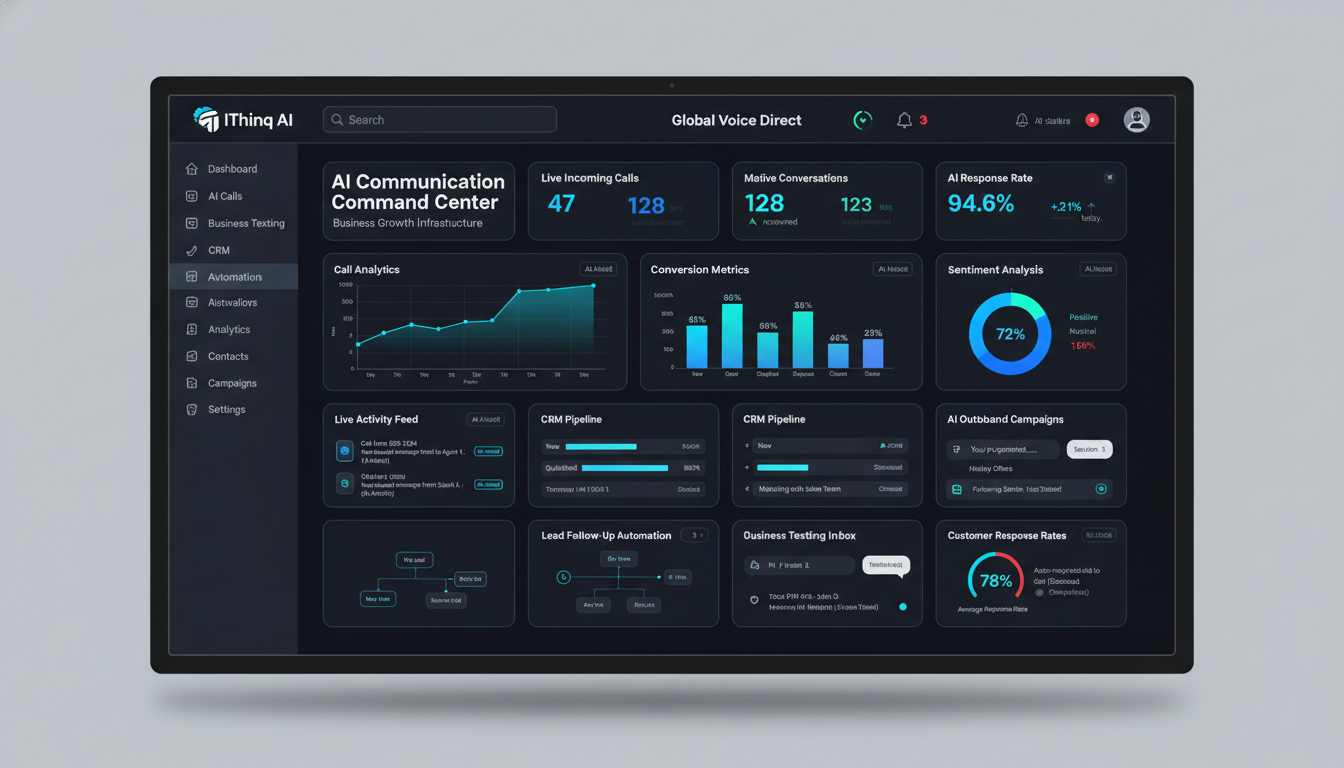
Early-stage businesses make decisions based on what they need right now. That is understandable. Resources are limited and the immediate problems demand attention.
But the infrastructure decisions you make early set the ceiling for how far you can go without rebuilding everything. A manual system that works at ten clients will break at fifty. A communication setup built around one person’s cell phone will collapse the moment that person is unavailable. A CRM that doesn’t exist will cost you more in lost follow-up than it would have cost to implement.
The question is not just “does this work today” — it’s “will this still work when we’re three times bigger?” Build for the business you are becoming, not just the one you are right now.
They Mistake Hustle for Strategy
Hard work is necessary. It is not sufficient.
I spent years being the hardest working person in every room I was in. I was also one of the least strategically clear. I was excellent at executing tasks and poor at deciding which tasks actually mattered.
Hustle without strategy is reactive. It responds to whatever is loudest, most urgent, or most visible — not necessarily to what would create the most durable value. It fills the calendar without moving the mission.
Strategy asks different questions. Which customers produce the most lifetime value? Which channels convert at the highest rate? Which systems, if built now, would multiply effort for the next three years? Strategy is the difference between working in the business and working on it. Both matter. But most entrepreneurs get the ratio badly wrong.
They Treat Technology as Optional
Every competitor that deploys AI and automation well is operating with a structural advantage over the ones that don’t. This is not a prediction about the future. It is a description of the present.
The businesses using AI to handle follow-up respond to leads in seconds. The businesses using automation for onboarding deliver consistent experiences without adding headcount. The businesses using CRM intelligently know exactly where every opportunity stands and never let one fall through a crack.
The businesses treating these tools as optional are competing at a disadvantage they may not even be aware of.
Manual processes are a growth ceiling. There is a point where the volume of work required to grow simply exceeds what a human team can manage without technology underneath them. That point arrives faster than most entrepreneurs expect — and when it does, the businesses with the infrastructure already in place are the ones that accelerate while the others stall.
They Give Up Before Compounding Kicks In
Most entrepreneurs quit at year two or three — right before the compounding curve starts to bend upward.
Compounding in business doesn’t work the way most people expect. The early years are slow. You are building systems, earning credibility, developing relationships, learning what works. The results don’t reflect the effort in a linear way. You put in a hundred and get back ten.
Then something shifts. The reputation you built starts generating referrals. The systems you put in place start producing consistent outcomes. The relationships you invested in start producing opportunities. And the results begin to reflect the accumulated effort, not just today’s input.
Patience is not passive. It is a competitive strategy. The entrepreneurs who stay in the game long enough to experience compounding are the ones who build the businesses everyone else wonders how they built so fast.
They didn’t build it fast. They built it consistently — for longer than most people were willing to.
What I Got Wrong About Growth Before I Got It Right
For a long time, my definition of growth was simple: more. More leads, more revenue, more clients, more visibility. If the numbers were going up, I believed the business was growing. If they weren’t, I believed I needed more marketing.
That belief kept me on a treadmill for years.
The turning point came when I stopped asking “how do I get more growth” and started asking “why isn’t the growth I’m already generating sticking?” That question led me somewhere I wasn’t expecting. It led me to the infrastructure underneath the business — the systems, the communication, the follow-up, the credibility signals, the technology.
What I found was a business that was good at attracting attention and poor at converting it. Good at making first impressions and poor at following through. Good at delivering the work and poor at creating the kind of experience that makes a customer refer five more.
I wasn’t growing slowly because I needed better marketing. I was growing slowly because I was pouring water into a leaking bucket and mistaking the pouring for progress.
Once I fixed the infrastructure — the communication systems, the follow-up sequences, the onboarding, the credibility stack — the same marketing effort started producing different results. Not because I changed the marketing. Because I changed what happened after the marketing worked.
That is the lesson I wish I had understood earlier. Growth is not a marketing problem. It is an infrastructure problem. Fix the infrastructure first, and growth becomes what it was always supposed to be — a multiplier on a solid foundation.
The Growth Audit Checklist™
Practical questions and actions for auditing your growth infrastructure before your next push.
Communication
- Measure your average response time to inbound inquiries
- Verify that all business phone lines are answered professionally
- Confirm that missed calls trigger an automatic follow-up
- Audit how your business sounds to a first-time caller
Systems
- Map what happens to a lead from first contact to close
- Identify where leads most commonly fall out of your pipeline
- Document your top three repeatable sales processes
- Ask: if you doubled clients tomorrow, what breaks first?
Follow-Up
- Build a minimum five-touch follow-up sequence for new leads
- Automate initial response so speed to lead is under five minutes
- Create a re-engagement sequence for leads that went cold
- Track follow-up completion rate, not just lead volume
Credibility
- Google your own business and audit what a prospect sees
- Verify your business information across key directories
- Collect and publish at least five recent client testimonials
- Confirm your website reflects your current professional standard
Retention
- Calculate your current customer retention rate
- Create a post-delivery follow-up sequence for every client
- Build a referral system that makes it easy for clients to refer
- Identify your top ten past clients and re-engage them this month
Technology
- Audit your current tool stack for complexity vs. value
- Identify one manual process automation could replace this month
- Implement or optimize your CRM before the next growth push
- Evaluate AI tools for follow-up, scheduling, and lead management
Growth Misconception Index™
A structured reference covering each growth mistake, its business cost, and correction priority.
| Mistake | Description | Business Cost | Priority |
|---|---|---|---|
| Activity vs. Progress | Confusing busyness with outcomes — vanity metrics over conversion metrics | Wasted effort and budget with no compounding return | Critical |
| More Marketing Fallacy | Pouring marketing spend into a leaky infrastructure | High CAC with poor conversion and retention | Critical |
| Premature Scaling | Growing before communication and operations can support volume | Operational breakdown and damaged customer experience | Critical |
| Ignoring Follow-Up | Failing to contact leads multiple times across the buying window | Direct revenue loss — most sales happen after contact five | Critical |
| Undervaluing Credibility | Weak trust signals that prevent prospects from converting | Lost deals to less capable but more credible competitors | High |
| Acquisition Over Retention | Spending 5-7x more to acquire than to keep customers | Compounding churn that cancels acquisition gains | Critical |
| Building for Now | Infrastructure decisions that work today but break at scale | Forced rebuilds mid-growth — expensive and disruptive | High |
| Hustle Without Strategy | Reactive execution without clarity on highest-value activities | Burnout with low compounding return on effort | High |
| Ignoring Technology | Manual processes that cap capacity and create inconsistency | Structural disadvantage against AI-enabled competitors | High |
| Quitting Too Early | Exiting before the compounding curve produces visible results | Missed return on years of infrastructure investment | Medium |
Frequently Asked Questions
Direct answers to the questions entrepreneurs ask most about growth, scaling, and what actually works.
What do entrepreneurs get wrong about growth?
Most confuse growth with marketing spend. The real issue is usually infrastructure — weak follow-up, inconsistent communication, poor retention, and systems that break under pressure.
Why does more marketing not always produce more growth?
Marketing brings leads to the door. Infrastructure determines whether those leads convert, stay, and refer others. More marketing into a broken infrastructure just accelerates the leak.
What is premature scaling?
Growing faster than your operations, communication, and systems can support. It turns manageable gaps into crises and often damages the customer experience at the worst possible time.
Why is follow-up so important for business growth?
Most sales happen after the fifth contact. Businesses that follow up once or twice and move on are leaving a significant percentage of their potential revenue on the table.
How does credibility affect business growth?
Credibility is the prerequisite for conversion. A prospect who doesn’t trust your business won’t convert — regardless of how good your product is. Weak trust signals lose deals before a conversation starts.
What is the difference between growth and scaling?
Growth is increasing revenue or customers. Scaling is doing it in a way that doesn’t require proportionally more resources. Scaling requires infrastructure that multiplies effort — systems, automation, and repeatable processes.
Why is customer retention more important than acquisition?
Retaining a customer costs a fraction of acquiring one. Retained customers also refer others, buy again, and provide social proof. Improving retention is the highest-ROI growth lever most businesses ignore.
What is the Growth Misconception Index™?
A framework developed by Jonas Janvier that identifies the ten most common and costly mistakes entrepreneurs make about growth — and the infrastructure-first corrections that actually produce durable results.
How do I know if my business has an infrastructure problem?
Ask: what would break first if we doubled in size tomorrow? If the honest answer is “most of it” — you have an infrastructure problem that no amount of marketing will solve.
What does hustle without strategy look like in practice?
A full calendar with no measurable outcomes. Constant activity with no compounding results. Working 60 hours a week and still feeling like the business isn’t moving. That is hustle without strategy.
How does AI help businesses grow?
AI handles the high-volume, time-sensitive parts of growth — instant lead response, automated follow-up sequences, consistent communication — so the team focuses on high-value decisions rather than repetitive execution.
What is speed to lead and why does it matter?
Speed to lead is how quickly a business responds to an inquiry. The faster the response, the higher the conversion rate. Leads contacted within five minutes convert at dramatically higher rates than those contacted an hour later.
What business systems matter most for growth?
Lead follow-up, client onboarding, communication handling, and retention sequences. These four systems have the most direct impact on conversion rate, customer experience, and revenue retention.
How does business communication affect growth?
Directly. A business that responds fast, follows up consistently, and communicates professionally converts more leads, retains more customers, and generates more referrals — regardless of product quality.
What is the leaky bucket problem in business?
Pouring marketing spend into a business that can’t retain the customers it acquires. Revenue comes in and leaves just as fast. The solution is not more marketing — it’s fixing the retention and follow-up infrastructure first.
Why do startups fail to scale?
They scale before their infrastructure is ready. Communication, operations, and systems that work at small volume break under growth pressure. Scaling a broken foundation doesn’t fix the foundation — it amplifies the damage.
How does compounding work in business growth?
Consistent execution over time produces returns that grow faster than the effort invested. Trust compounds into referrals. Systems compound into capacity. Retention compounds into revenue. The early years are slow — then the curve bends.
What is business infrastructure for growth?
The systems, tools, communication channels, and processes that allow a business to convert leads, deliver consistently, and retain customers — at increasing volume without proportionally increasing cost or chaos.
How do I fix a broken follow-up system?
Start with automation. Use a CRM or AI tool to trigger immediate responses to new inquiries, then build a multi-touch sequence of at least five contacts across email, text, and phone over a defined window.
What should entrepreneurs focus on before their next growth push?
Audit the infrastructure that converts and retains customers. Fix response time, follow-up sequences, onboarding consistency, and credibility signals. Then scale — because now the growth will stick.
Growth Is Not the Problem
The businesses that grow the fastest are not the ones with the biggest marketing budgets. They are the ones with the strongest infrastructure underneath. Fix the foundation first — then scale.