
AI Receptionist Statistics 2026
The latest data, trends, and insights on AI receptionists — covering missed calls, customer response times, lead conversion, after-hours answering, texting behavior, and the real cost of an unanswered phone for small businesses.
25+ source-attributed statistics · Free to cite with a link back to this page
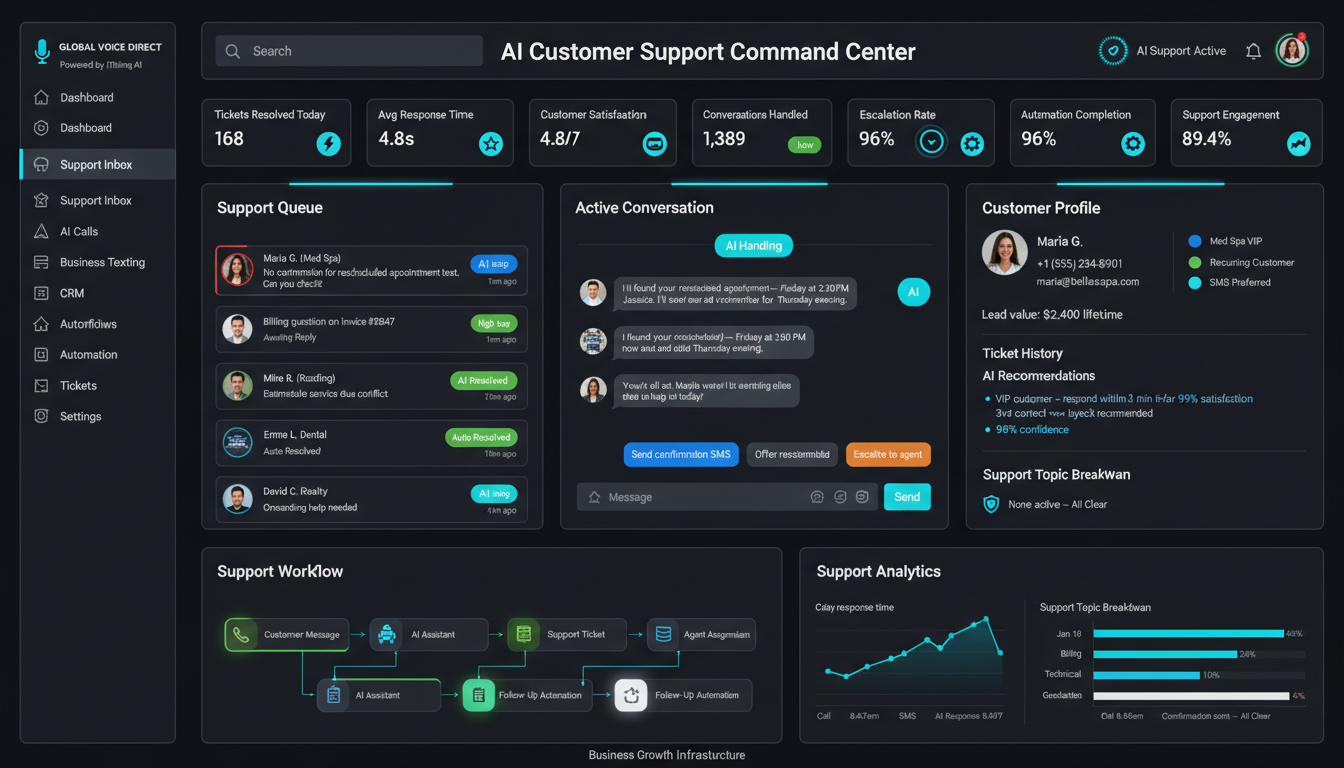
Key AI Receptionist Statistics
Every statistic below is attributed to its primary or originating source. Figures span missed calls, response time, lead conversion, customer expectations, AI adoption, and after-hours answering — the metrics that decide whether a phone call becomes a customer.
Only 37.8% of incoming calls to small businesses are answered by a live person — meaning roughly 6 in 10 callers never reach a human.
85% of callers who reach voicemail will never call back — a single unanswered ring is usually a permanent loss.
75% of callers who hit voicemail don’t leave a message at all, so the lead vanishes with no trace to follow up.
The average small business loses roughly $126,000 per year in revenue from missed calls, per compiled industry data.
Invoca research puts the average value of a single missed customer call at about $1,200 in lost potential business.
Phone calls convert at 10–15× the rate of web-form leads, making each missed call far costlier than a missed click.
Businesses are 100× more likely to connect with a lead when responding within 5 minutes versus 30 minutes.
Leads contacted within 5 minutes are 21× more likely to be qualified than those contacted after 30 minutes.
78% of customers buy from the first business that responds to their inquiry — speed often beats price or pitch.
Only 7% of companies respond to a form submission within 5 minutes — leaving a wide gap for faster competitors.
The average B2B lead response time is roughly 42 hours — long after most buyers have already moved on.
The odds of qualifying a lead drop about 400% when response time slips from 5 minutes to 10 minutes.
77% of customers now expect to reach someone immediately when they contact a company.
82% of buyers expect an immediate response to a sales or marketing question.
62% of callers who can’t reach a business simply contact a competitor instead.
80% of businesses plan to integrate AI voice technology into customer service by 2026.
The voice AI agents market is projected to grow from $2.4B in 2024 to $47.5B by 2034 — a ~34.8% CAGR.
Gartner forecasts conversational AI will cut contact-center labor costs by $80B globally in 2026.
91% of customer service and support leaders report executive pressure to implement AI.
Gartner projects conversational AI will automate ~70% of enterprise customer-support interactions by end of 2027.
The global AI customer-service market is projected to reach $15.12B in 2026, on the way to $117B+ by 2034.
Roughly 40% of inbound business calls arrive outside normal business hours — when most lines go to voicemail.
Modern AI phone agents resolve around 73% of inbound calls without human intervention in benchmarked deployments.
42% of small businesses report losing $500 or more every month directly from missed calls.
Why Response Time Matters
Speed is the single highest-leverage variable in turning an inbound call into a customer — ahead of pitch, price, or brand.
The pattern across every major study is consistent: the faster a business responds, the higher the chance of conversion. The landmark MIT and Harvard Business Review research found that contacting a lead within five minutes makes a business 100× more likely to connect and 21× more likely to qualify that lead than waiting just 30 minutes.
The drop-off is steep and unforgiving. Qualification odds fall by roughly 400% when response time slips from five minutes to ten. Yet only about 7% of companies actually respond inside that five-minute window, and the average B2B response time stretches to around 42 hours. That gap is the opportunity: when 78% of customers buy from whoever responds first, being the business that answers instantly is often the entire competitive advantage.
This is precisely the problem an AI receptionist is built to solve. It answers on the first ring, every time, with no queue and no voicemail — closing the gap between a customer’s moment of intent and a business’s response to effectively zero.
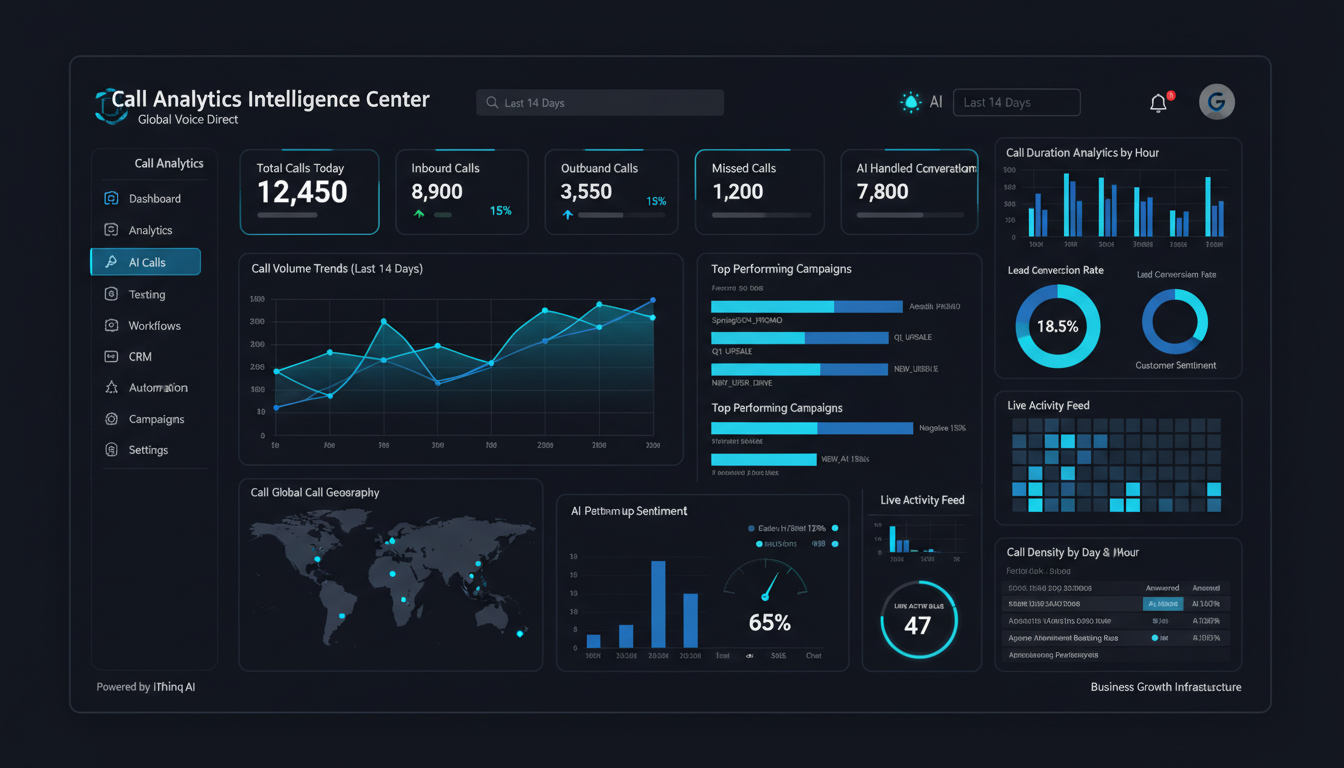
Small Business Communication Statistics
These AI receptionist statistics on channel behavior show how customers actually want to reach businesses — a decisive shift toward text and instant, two-way conversation, while the phone remains the highest-intent channel of all.
Text (46%) has overtaken phone (43%) as a preferred way to contact a business “always or most of the time.”
89% of consumers have signed up to receive texts from a business — up from 66% just five years ago.
87% of consumers read business texts within 15 minutes of receiving them.
71% of consumers want the ability to text a business back, not just receive one-way messages.
54% of consumers are comfortable with automated text assistants, with another 25% open depending on the experience.
31% of consumers now prefer texting a customer-service rep over both phone and email — texting overtook email in 2025.
AI Receptionist Trends for 2026
These AI receptionist statistics point to a clear shift: the category has moved from message-taking to task completion. The defining changes shaping AI receptionists this year:
Conversational voice AI goes mainstream
Voice AI has crossed from early-adopter novelty into operational necessity. With 80% of businesses planning AI voice integration into customer service by 2026 and 91% of support leaders under executive pressure to adopt AI, the question for most owners is no longer whether to deploy but where. Full automation now handles high-volume, low-complexity calls — appointment scheduling, account queries, order status — while humans take nuance.
From answering to completing tasks
In 2026, AI receptionists do more than capture messages. They book appointments, qualify leads, answer FAQs, send SMS follow-ups, and resolve routine issues end-to-end during the call — with benchmarked deployments resolving around 73% of inbound calls without a human in the loop.
Appointment scheduling & CRM integration
The value of an AI receptionist now lives in what happens after “hello.” Direct CRM and calendar integration means a captured call becomes a booked appointment and a structured contact record automatically, instead of a sticky note someone has to act on later.
AI on existing business numbers
The most practical 2026 shift is the move away from rip-and-replace. Rather than forcing a new number, new platform, and a porting migration, the emerging model layers AI onto the phone number a business already uses — removing the single biggest barrier to adoption.
The Rise of AI on Existing Business Numbers
The biggest friction in AI receptionist adoption isn’t the AI — it’s the migration around it. Most platforms require a business to take on a new number, learn a new system, and port away from the line customers already know. That overhead is exactly why so many owners delay, even while the data says every unanswered call is costing them.
Global Voice Direct takes the opposite approach: keep the number, add the AI.
The traditional way
The Global Voice Direct way
The result is the data-backed advantage of an AI receptionist — instant response, 24/7 coverage, every call captured — without the disruption that keeps most small businesses on voicemail. Global Voice Direct positions this as business growth infrastructure: the communication layer a company keeps as it scales, built on IThinq AI.
Hear the AI answer a real call
Try the AI receptionist live and see how instant response, 24/7 coverage, and task completion sound on your existing number.
About this data: The AI receptionist statistics on this page are compiled from third-party industry research and are attributed to their originating or publishing sources via the linked citations. Figures reflect the cited studies at their time of publication and may vary by industry, sample, and methodology. Global Voice Direct is a communication infrastructure platform and is not a guarantor of specific business outcomes; individual results depend on factors outside any single tool. This page is provided for informational purposes and is free to cite with attribution and a link back to this page.