

Communication Infrastructure Framework
Every missed call is a missed customer. Every slow response costs real revenue. Communication infrastructure is not a nice-to-have — it is the foundation that every other business system depends on.

Most small businesses treat communication as an afterthought. They answer calls when they are available. They respond to messages when they remember. They follow up when it is convenient.
That approach costs them customers every single day — and most of them never see it happening. The lead that called and got voicemail. The prospect who texted and waited too long. The customer who sent an email and received a reply three days later.
Each one of those interactions is a data point in the prospect’s evaluation of whether your business is worth working with. Communication is not just how you talk to customers. It is how customers decide whether you are a business they can trust.
The Communication Infrastructure Framework™ is built to fix this at the foundation level — not with a better script or a communication training, but with the systems, tools, and processes that make professional, responsive, consistent communication the default — not the exception.
The Communication Infrastructure Framework™
A ten-layer system for building professional business communication infrastructure — covering inbound handling, response speed, multi-channel presence, follow-up, AI-powered automation, consistency, credibility, and long-term communication excellence.
Quick Summary — The Communication Infrastructure Framework™
- Layer 1 — Inbound Handling: every call answered professionally
- Layer 2 — Response Speed: reply within minutes, not hours
- Layer 3 — Multi-Channel Presence: phone, text, email — all covered
- Layer 4 — Missed Call Recovery: no opportunity lost to voicemail
- Layer 5 — AI Receptionist: professional handling at any hour
- Layer 6 — Follow-Up Communication: consistent touchpoints that convert
- Layer 7 — Business Text Messaging: meet customers where they are
- Layer 8 — Communication Consistency: same standard every interaction
- Layer 9 — Communication Credibility: signals that build trust at scale
- Layer 10 — Communication Automation: the system that runs without you
Inbound Handling — Every Call Answered Professionally
The phone call is still one of the highest-intent actions a prospect can take. When someone calls your business, they have already moved past casual interest. They want a response, a conversation, or an answer — and they want it now.
What they experience in that first moment of contact sets the tone for everything that follows. A professional greeting, an efficient routing to the right person or information, and a responsive experience — these create an immediate first impression that signals this business is ready, competent, and worth working with.
A missed call, a long hold, or an unprofessional voicemail creates the opposite impression — before a single word about your service has been exchanged.
“The phone is still the highest-intent communication channel a prospect uses. Answer it like you mean it.”
Response Speed — Reply Within Minutes, Not Hours
Response time is one of the most measurable and most impactful variables in business communication. The research is consistent: leads contacted within five minutes of inquiry convert at dramatically higher rates than those contacted an hour later. And the gap widens with every hour that passes.
Speed communicates more than information. It communicates that this business pays attention. That it values the prospect’s time. That it is organized, responsive, and ready to engage. Those are the exact signals that hesitant prospects need to feel confident moving forward.
Slow response is not just an operational problem. It is a trust problem. And trust problems cost sales — quietly, consistently, in ways that rarely show up in a marketing report.
Building response speed into the infrastructure means automating the first contact so it fires immediately — regardless of what the team is doing and regardless of what time the inquiry arrives.
Multi-Channel Presence — Phone, Text, Email, All Covered

Prospects do not all communicate the same way. Some call. Some text. Some email. Some reach out through a web form. Some prefer to start with a quick message before committing to a call.
A business that is only reachable through one channel is a business that is invisible to a significant portion of its potential customers. Multi-channel presence means being available and responsive on the channels your prospects actually use — with a consistent professional standard across all of them.
This does not mean being everywhere equally. It means being present on the channels that matter most for your market and ensuring that every channel is monitored, responded to promptly, and managed with the same professionalism your business operates at in person.
Multi-channel communication is not about volume. It is about removing barriers between your business and the people who want to reach it.
Missed Call Recovery — No Opportunity Lost to Voicemail
A missed call is not a dead end. It is a window — a brief one — in which the right response can recover the opportunity before it disappears.
Missed call text-back automation fires the moment a call goes unanswered — sending an immediate text that acknowledges the missed call, invites the caller to share what they need, and begins the follow-up process before they dial the next number on their list.
The conversion rate on a call that never got answered is, by definition, zero. The conversion rate on a missed call followed by an immediate professional text-back is significantly higher than zero — because the prospect knows their call was registered and a response is on the way.
Missed call recovery is one of the highest-ROI communication improvements a small business can make. The window is short. Automation is the only way to consistently operate inside it.
Global Voice Direct delivers missed call text-back automation as part of its communication infrastructure stack — ensuring every missed call triggers an immediate professional response that keeps the opportunity alive.
AI Receptionist — Professional Handling at Any Hour
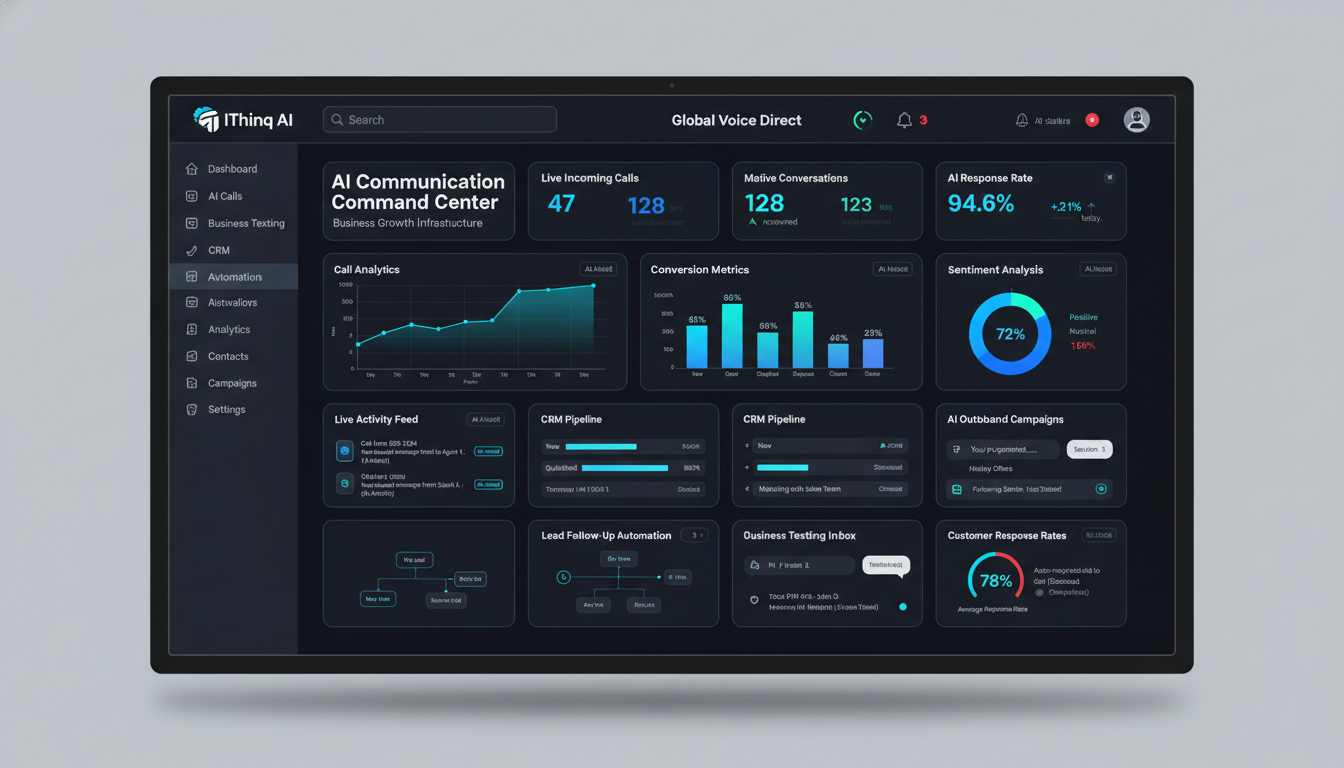
A human receptionist works business hours. An AI receptionist works every hour — weekdays, weekends, holidays, and the middle of the night when a prospect is researching options and decides to call.
An AI receptionist answers every call with a professional greeting, captures the caller’s information and inquiry, routes to the appropriate person or department when available, and initiates a follow-up sequence when not. The caller experiences a professional interaction. The business captures an opportunity that would otherwise have been lost to timing.
Beyond availability, AI receptionists provide consistency. Every caller gets the same professional experience — not a tired team member at the end of a long day, not a rushed greeting when someone is in the middle of another call. Consistent professionalism at every interaction is what builds the communication credibility that compounds into reputation over time.
An AI receptionist is not a replacement for human relationship. It is the infrastructure that ensures every relationship has a professional beginning.
IThinq AI powers AI-driven business communication systems that handle inbound inquiries intelligently — capturing, routing, and following up with the speed and consistency that manual processes cannot replicate.
Follow-Up Communication — Consistent Touchpoints That Convert
Most businesses treat follow-up as a sales function — something that happens when the team has time and remembers to do it. The reality is that follow-up is a communication function, and like all communication functions, it produces the best results when it is systematized rather than improvised.
A structured follow-up communication sequence defines the message, the channel, the timing, and the frequency of every touchpoint from first contact through conversion. It ensures that every prospect receives the same quality of follow-up — not just the ones whose follow-up happened to land on a good day for the team.
Follow-up consistency is follow-up that converts. Not because any single message is uniquely powerful — but because the accumulated effect of consistent, professional touchpoints over time builds the familiarity and trust that eventually produces a yes.
Business Text Messaging — Meet Customers Where They Are
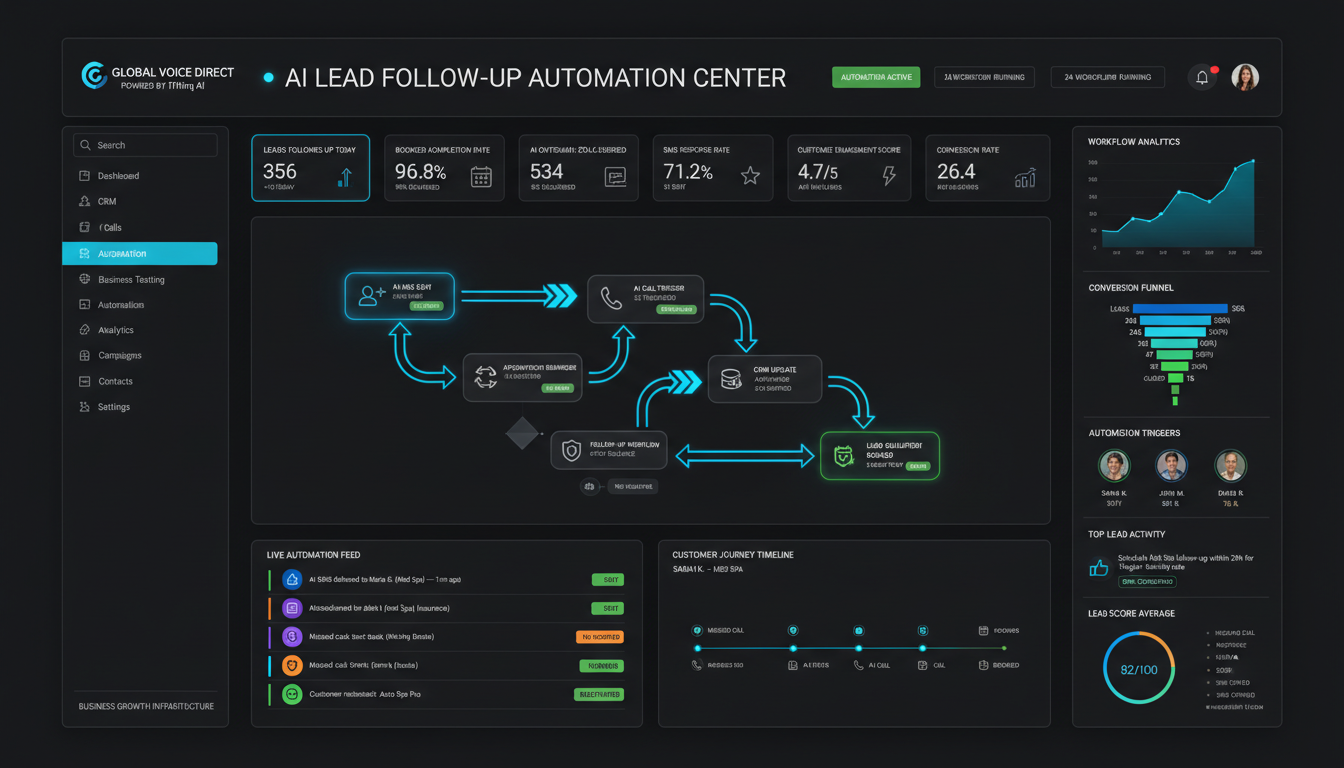
Text messages have open rates that no other communication channel can match. They are read quickly, responded to more readily than email, and feel more personal than a form letter. For many prospects, a text message is the most natural and least friction-filled way to have an initial conversation with a business.
Business text messaging gives your business a professional, dedicated number for two-way SMS communication — separate from personal phones, manageable through a business platform, and integrated with your follow-up and CRM systems so every text conversation is captured, tracked, and followed up appropriately.
The businesses that add text messaging to their communication infrastructure do not just gain another channel. They gain access to the preferences of a significant portion of their potential customers who would have preferred to text from the beginning — if the option had existed.
Meeting customers on their preferred channel is one of the most direct and underutilized ways to improve communication response rates.
Communication Consistency — Same Standard Every Single Interaction
Inconsistent communication is one of the most damaging and least visible problems in small business. The customer who had a great experience the first time and a mediocre experience the second time does not necessarily complain — they simply do not refer anyone and quietly reconsider working with you again.
Consistency requires systems. Not scripts — systems. Defined processes for how each channel is managed. Clear standards for response time across every platform. Templates that maintain professional tone without removing the human element. Training that ensures every team member communicates at the same standard.
Consistency is what turns a good communication experience into a credibility signal. One great interaction is memorable. Consistent great interactions build a reputation. And reputation is the communication infrastructure that works even when you are not actively communicating.
Communication Credibility — Signals That Build Trust at Scale
Every communication interaction your business has is either adding to or subtracting from its credibility. A fast response adds. A slow one subtracts. A professional greeting adds. An unprofessional one subtracts. A consistent follow-up builds trust. A disappeared follow-up erodes it.
Communication credibility is the accumulated result of thousands of small interactions over time. It is what makes prospects comfortable calling without overthinking it. It is what makes customers comfortable referring without being asked. It is what makes the business feel established, reliable, and worth trusting with real money.
You cannot buy communication credibility. You cannot manufacture it in a single campaign. You can only build it — consistently, professionally, over time. The infrastructure you put in place today is the credibility you will have compounded in three years.
Communication Automation — The System That Runs Without You
The final layer of the Communication Infrastructure Framework™ is the one that makes all of the others sustainable at scale. Manual communication — no matter how professional — has a ceiling. A team can only answer so many calls, send so many follow-ups, and maintain so many conversations simultaneously before the standard starts to slip.
Communication automation removes that ceiling. AI receptionists handle inbound calls. Missed call text-back fires automatically. Follow-up sequences run on schedule. CRM triggers send the right message at the right time. The communication infrastructure runs continuously — at a standard that does not vary with team size, energy, or availability.
Automation does not make business communication less human. It makes it more consistent. And consistent professional communication, delivered automatically to every prospect and customer at the right moment, is what scales the trust-building process from a personal effort to a business system.
This is the entire mission of what I have built with Global Voice Direct and IThinq AI — not just better tools for communication, but the infrastructure that makes excellent communication the default standard for every business that adopts it.
Why I Built a Business Around Communication Infrastructure
Early in my entrepreneurial journey, I watched businesses lose deals they should have won — not because their product was inferior, not because their price was wrong, but because the way they communicated created doubt where there should have been confidence.
The missed calls that never got returned. The follow-ups that arrived four days after the prospect had already made a decision. The professional first impression that dissolved into silence once the initial conversation ended. I saw it repeatedly, across industries, across business sizes, across markets.
And I saw something else too. The businesses that communicated well — consistently, professionally, responsively — won a disproportionate share of the available opportunity. Not because they were necessarily better at what they did. But because they were better at making prospects feel like they had found the right answer.
That is what professional communication does. It is not just information transfer. It is confidence building. Trust creation. Relationship maintenance. And it happens in hundreds of small interactions over time — each one either reinforcing or undermining the overall impression of the business.
Global Voice Direct was built to give small businesses the communication infrastructure that used to be available only to larger organizations. AI receptionists, professional phone systems, business text messaging, missed call recovery, omnichannel presence — all of it designed to make excellent communication the standard, not the exception.
Communication is not a soft skill in business. It is a hard infrastructure problem. And when you solve it at the infrastructure level, the results are not marginal — they are transformative.
The Communication Infrastructure Audit Checklist™
Practical actions for auditing and building every layer of your business communication infrastructure.
Inbound and Speed
- Audit how your business handles every inbound call right now
- Measure your average response time across all channels this week
- Set a target response time and build automation to achieve it
- Test your own business as a prospect and note every gap you find
Multi-Channel
- Identify every channel your prospects use to reach businesses like yours
- Ensure your business is present and monitored on each of those channels
- Replace personal cell numbers with a dedicated business line
- Activate business text messaging on your primary business number
Missed Call Recovery
- Activate missed call text-back on every business phone number
- Build a follow-up sequence that triggers from every missed call
- Test your missed call experience as a caller would receive it
- Track missed call recovery rate as a communication metric
AI and Automation
- Evaluate AI receptionist options for your business phone system
- Build automated follow-up sequences for every communication channel
- Connect communication platforms to your CRM for unified tracking
- Automate the communication touchpoints that currently depend on memory
Consistency
- Define response time standards for every channel and enforce them
- Create templates that maintain professional tone without removing personality
- Ensure every team member communicates at the same professional standard
- Audit communication consistency monthly — spot-check real interactions
Credibility
- Assess whether your current communication reflects your professional standard
- Identify the three communication gaps most visible to prospects
- Build the infrastructure to close those gaps before the next lead arrives
- Treat communication credibility as a business metric — track it quarterly
Communication Infrastructure Framework™ Dataset
A structured reference covering each communication infrastructure layer, its business impact, and implementation priority.
| Layer | Description | Business Impact | Priority |
|---|---|---|---|
| Inbound Handling | Every call answered professionally with correct routing | First impression quality determines whether the conversation continues | Critical |
| Response Speed | Automated first contact within minutes of every inquiry | Direct conversion rate improvement — speed signals reliability | Critical |
| Multi-Channel Presence | Professional and monitored across phone, text, and email | Removes barriers between business and its full prospect pool | Critical |
| Missed Call Recovery | Automatic text-back on every unanswered call | Recovers opportunities that would otherwise be permanently lost | Critical |
| AI Receptionist | Professional inbound handling at every hour without team dependency | 24/7 professional presence — no missed opportunity from timing | High |
| Follow-Up Communication | Structured multi-touch sequences converting leads over time | Consistent follow-up converts leads that single touches never would | Critical |
| Business Text Messaging | Two-way SMS on a dedicated professional business number | Highest open-rate channel — reaches prospects on their preferred medium | High |
| Communication Consistency | Same professional standard across every interaction and channel | Builds reputation through accumulated consistent experiences | High |
| Communication Credibility | Trust signals built through responsive, professional communication over time | Compounding credibility advantage that cannot be quickly replicated | High |
| Communication Automation | All layers running systematically without manual effort at every step | Scales professional communication beyond what any team can manage manually | Critical |
Frequently Asked Questions
Direct answers to the most common questions about business communication infrastructure, AI receptionists, and building the communication foundation that converts.
What is communication infrastructure for business?
The systems, tools, and processes that ensure every prospect and customer interaction is handled professionally, consistently, and at speed — regardless of team size, time of day, or channel of communication.
Why does business communication matter for growth?
Because every communication interaction either builds or erodes trust. Responsive, professional communication converts more leads, retains more customers, and generates more referrals than inconsistent communication — regardless of product quality.
What is an AI receptionist for small business?
An AI-powered system that answers every inbound call professionally, captures caller information, routes inquiries correctly, and initiates follow-up sequences — available 24/7 at a fraction of the cost of a human receptionist.
How does missed call text back work?
When a call goes unanswered, an automated text message fires immediately to the caller — acknowledging the missed call, inviting them to share their inquiry, and beginning the follow-up process before they move on to a competitor.
What is omnichannel business communication?
Being present and responsive across every channel prospects use — phone, text, email, web chat — with a consistent professional standard on each one. Omnichannel communication removes barriers between the business and its full prospect pool.
How does communication affect customer acquisition?
Directly and measurably. Response speed, follow-up consistency, and professional tone all directly impact whether leads convert. Poor communication loses deals before the product or price is ever evaluated.
What is a professional phone system for small business?
A dedicated business phone infrastructure — separate from personal phones — with professional greetings, call routing, voicemail management, text messaging capability, and integration with CRM and follow-up systems.
How does communication infrastructure improve conversion rates?
By closing the gaps where leads are lost to slow response, missed calls, and inconsistent follow-up. A business that responds in minutes and follows up consistently converts a meaningfully higher percentage of the leads it generates.
What is business text messaging?
Two-way SMS communication on a dedicated business number — allowing prospects and customers to text the business directly, with all conversations captured, tracked, and integrated into the follow-up and CRM systems.
How do I build a communication system for my business?
Start with a professional phone system and missed call text-back. Add business text messaging and multi-channel monitoring. Build automated follow-up sequences. Deploy an AI receptionist for after-hours handling. Connect everything to your CRM.
What is the Communication Infrastructure Framework™?
A ten-layer system developed by Jonas Janvier for building professional business communication infrastructure — covering inbound handling, response speed, multi-channel presence, missed call recovery, AI receptionist, follow-up, text messaging, consistency, credibility, and automation.
Why do small businesses lose customers to poor communication?
Because communication gaps create doubt. A missed call, a slow response, or an inconsistent experience signals unreliability — and prospects under evaluation will choose the business that made them feel most confident, not necessarily the one with the best service.
How does communication automation work?
Communication automation connects tools — AI receptionists, missed call text-back, follow-up sequences, CRM triggers — into a system that handles communication touchpoints automatically at the right time, on the right channel, without manual effort at every step.
What is the difference between a phone system and communication infrastructure?
A phone system is a single component. Communication infrastructure is the full stack — phone, text, email, AI receptionist, follow-up automation, CRM integration, and consistency systems — working together as a single professional communication operation.
How does communication build business credibility?
Through accumulated consistent experiences. Every fast response, every professional interaction, every reliable follow-up adds to the credibility account. Over time, that account pays dividends in referrals, retention, and premium pricing power.
What communication tools does a small business need?
At minimum: a dedicated business phone number, missed call text-back, business text messaging, an automated follow-up system, and CRM integration. These five form the core communication infrastructure that every growth-focused business needs.
How does response time affect business growth?
Significantly. The faster a business responds to inquiries, the higher its conversion rate. Speed signals reliability and professionalism. Slow response signals the opposite — and prospects under evaluation use every signal available to make their decision.
What is inbound communication management?
The system for handling every inbound inquiry — calls, texts, emails, form submissions — professionally, at speed, and with a defined process for routing, capturing, and following up on each one.
How does communication infrastructure support lead management?
Communication infrastructure is the layer that ensures every lead receives a professional response and consistent follow-up. Without it, the best lead management system in the world produces inconsistent results because the communication that drives it is unreliable.
What is the cost of poor business communication?
Significant and largely invisible. Missed calls that go unrecovered, leads that went cold from slow follow-up, customers who did not refer because the experience was inconsistent — these costs never appear on a marketing report but compound into meaningful lost revenue over time.
Communication Is Not a Soft Skill. It Is a Hard Infrastructure Problem.
Every missed call, every slow response, and every inconsistent interaction is costing you customers you never knew you lost. Build the communication infrastructure that makes professional responsiveness the default — and watch what happens to conversion.