

Business Automation Framework
Most businesses automate too late. By the time they start, the missed follow-ups have already cost revenue and the manual habits are deeply embedded. Here is the framework for doing it right — from the beginning.

Most businesses automate too late.
They wait until they are overwhelmed before they build the systems that should have been in place from the beginning. By then, the manual habits are deeply embedded, the missed follow-ups have already cost real revenue, and the effort of rebuilding while still operating at full speed feels close to impossible.
I have made this mistake myself. And I have watched enough businesses go through the same cycle to know it is not a coincidence — it is a pattern. Founders are so focused on doing the work that they never stop to build the systems that do the work for them.
The businesses that grow the fastest are not the ones that work hardest. They are the ones that automate earliest. They build systems that run without them, so their effort goes toward the decisions and relationships that actually require a human — not the repetitive execution that doesn’t.
This framework is the order in which to build those systems. Not all at once — but in the sequence that produces the most compounding return on every layer you complete.
The Business Automation Stack™
A ten-layer automation framework built for small businesses and startups — covering every stage from lead capture to retention, in the sequence that produces the most compounding operational advantage.
Quick Summary — The Business Automation Stack™
- Layer 1 — Lead Capture: every inquiry captured automatically
- Layer 2 — Follow-Up: multi-touch sequences that never miss
- Layer 3 — Communication: AI receptionists and missed call recovery
- Layer 4 — Onboarding: consistent client experience every time
- Layer 5 — Scheduling: self-service booking and reminders
- Layer 6 — Pipeline: automatic stage progression and deal alerts
- Layer 7 — Reputation: automated review requests and routing
- Layer 8 — Retention: post-delivery follow-up and win-back sequences
- Layer 9 — Reporting: automated dashboards and performance alerts
- Layer 10 — Compounding: all layers working together as one system
Lead Capture Automation
Every lead that enters your business manually is a lead at risk. If someone has to remember to log it, copy it from an email, or add it to a spreadsheet — there is a gap between the inquiry and the follow-up. And gaps cost money.
Lead capture automation closes that gap entirely. Every form submission, every inbound call, every chat inquiry, every text message — all of it flows automatically into your CRM without anyone having to touch it manually. The lead is logged, tagged, and queued for the next action before a human has even seen it.
The secondary benefit is the instant acknowledgment. An automated response that fires within seconds of an inquiry — confirming receipt, setting expectations, and beginning the relationship — changes the first impression dramatically. The prospect feels seen. The business feels professional. And the follow-up sequence begins before a competitor even knows the lead exists.
Lead capture automation is Layer 1 because everything else in the stack depends on it. You cannot follow up on leads that aren’t captured. You cannot nurture contacts that don’t exist in your system. Build this layer first and build it completely.
“A lead that enters your business manually is a lead that depends on memory. Memory is not a system.”
Follow-Up Automation
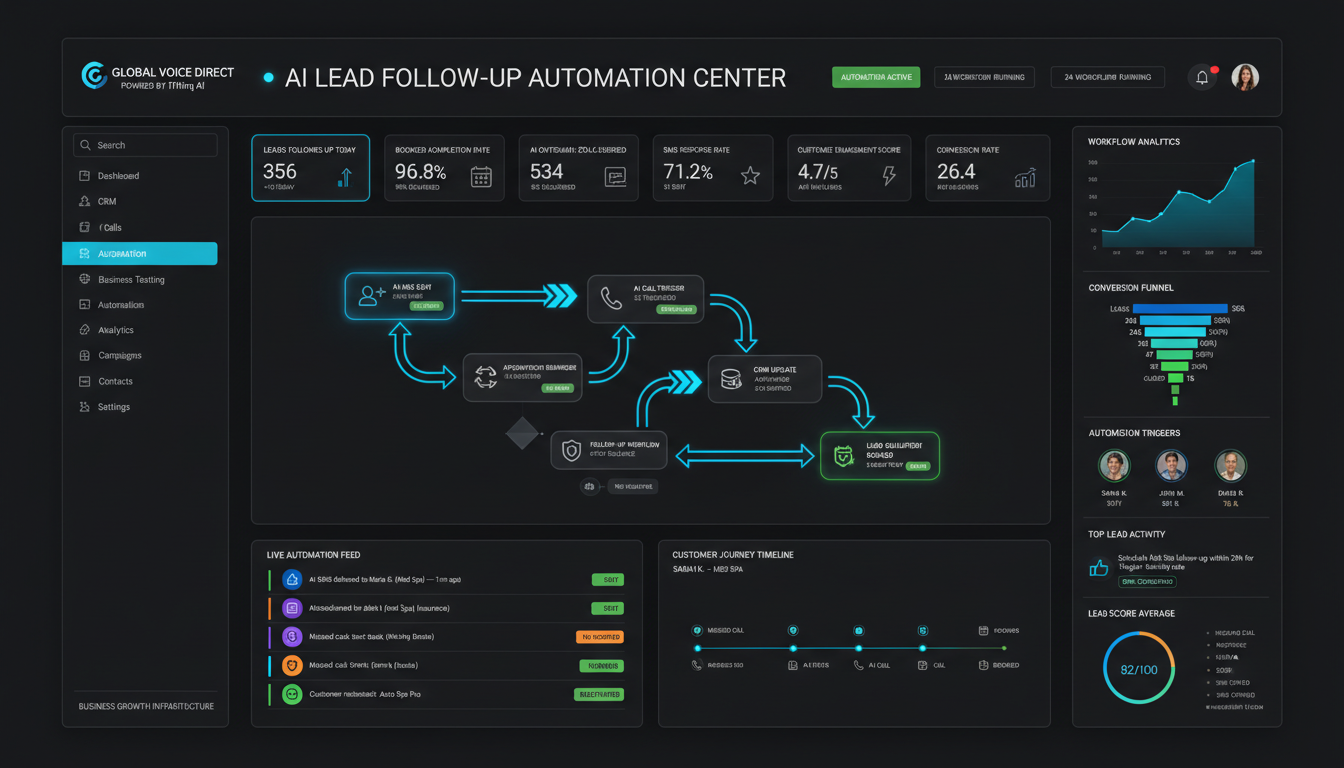
Speed to lead is the single most measurable variable in lead conversion. A business that responds in five minutes converts leads at a dramatically higher rate than one that responds in an hour — and one that responds in seconds converts at a higher rate still.
Most businesses cannot respond in seconds manually. That is not a criticism — it is a reality. Founders are busy. Team members are in meetings. Calls come in after hours. The window between inquiry and response is where most revenue gets lost, and it is not because anyone failed to try. It is because the system was not built to respond without them.
Follow-up automation removes that dependency entirely. The sequence fires the moment a lead enters the system — an immediate acknowledgment, a follow-up the next day, another three days later, and a final touch a week after that. Each message is targeted to where the lead is in the process. The human steps in when there is genuine interest to close. The system handles everything before that point.
Most businesses don’t have a lead problem. They have a follow-up problem. This is the layer that fixes it — and it is the one that produces the most immediate visible impact on conversion rate when it is deployed correctly.
This is the core of what IThinq AI delivers — AI-powered follow-up infrastructure that responds instantly, sequences automatically, and keeps every lead moving through the pipeline without requiring manual management at every step.
Communication Automation
A missed call is a missed opportunity. Not sometimes — every time. The prospect who called and got voicemail is already forming a negative impression of your responsiveness. If they called a competitor next and that competitor answered, the deal may already be over before you call back.
Communication automation addresses this at the infrastructure level. An AI receptionist that answers every call professionally, captures the caller’s information, and triggers an immediate text follow-up to a missed call — these are not luxury features. They are the baseline of professional communication for any business serious about conversion.
Omnichannel presence matters here too. A business that can be reached by phone, text, and email — and that responds on all three channels quickly and consistently — signals reliability at every touchpoint. That reliability is a trust signal. And trust signals compound into credibility over time.
This is exactly what Global Voice Direct was built to provide — professional communication infrastructure that ensures every inbound interaction is handled with consistency, speed, and professionalism regardless of team size or time of day.
Communication automation does not replace the human relationship. It protects it — by ensuring no opportunity is lost before that relationship has a chance to form.
Client Onboarding Automation
The onboarding experience sets the tone for everything that follows. A client who is confused, under-informed, or left waiting after signing is already forming a negative impression — before you have even delivered anything.
Automated onboarding solves this by making the experience consistent, immediate, and thorough regardless of who on your team handled the sale. The moment a new client is created in your system, the onboarding sequence begins — a welcome message, document delivery, expectation-setting communication, introductions, and a clear outline of next steps. Every new client gets the same professional experience. Nobody falls through the cracks because someone forgot to send the welcome email.
Consistency is the foundation of trust. A client who experiences a smooth, professional onboarding process immediately feels validated in their decision to work with you. That validation is what turns a new client into a long-term one — and eventually into a referral source.
Automated onboarding is also a scalability enabler. When onboarding requires manual effort, it becomes a bottleneck at scale. Automation removes that ceiling and allows the business to onboard ten new clients in the same week as one — without any degradation in the experience.
Appointment and Scheduling Automation
Scheduling back-and-forth is one of the most avoidable time drains in small business. Two people exchanging messages to find a mutual time is a manual process that has been solvable by automation for years. And yet most small businesses still do it manually.
Self-service booking removes the friction entirely. A prospect or client selects a time that works for them from a live calendar. A confirmation goes out automatically. A reminder fires 24 hours before. Another reminder fires an hour before. No-show rates drop. Show-up rates rise. And the founder’s calendar fills without anyone on the team spending time on scheduling logistics.
The downstream benefits compound quickly. Every appointment that was previously lost to scheduling friction is now captured. Every no-show that cost revenue is now reduced by reminder automation. The time saved on back-and-forth coordination goes back into the work that actually moves the business forward.
Pipeline and CRM Automation
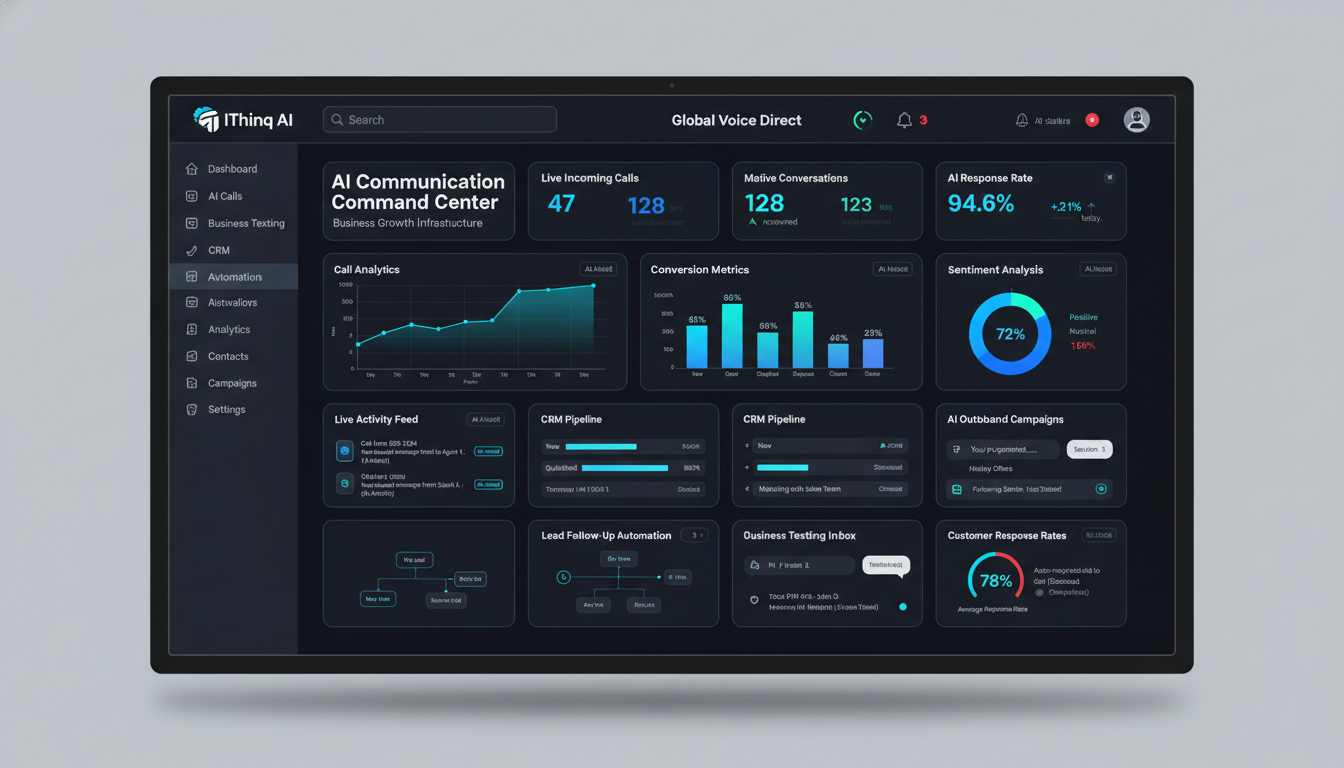
A CRM that requires manual updates is a CRM that will not get updated. The data becomes stale, the pipeline becomes unreliable, and the visibility that a CRM is supposed to provide disappears behind the friction of maintaining it.
Pipeline automation solves this by tying stage progression to actions rather than manual entries. A lead that books a call automatically moves to the qualified stage. A proposal that gets opened triggers a follow-up task. A deal that has not moved in seven days triggers an alert. The pipeline reflects what is actually happening — automatically — without anyone having to remember to update it.
The result is a business that always knows where every opportunity stands. Which deals need attention. Which leads are going cold. Which clients are due for follow-up. Visibility is the prerequisite for good decisions, and CRM automation is how you maintain visibility without adding administrative overhead.
Review and Reputation Automation
Reviews are the most powerful trust signal a small business has — and most businesses collect them inconsistently because they rely on someone remembering to ask. The clients who would leave a five-star review today are the ones most likely to forget about it by next week. The window is short and the habit is rare.
Review automation closes that window by requesting reviews at the right moment — immediately after a positive experience, when the sentiment is highest and the motivation to reciprocate is strongest. The request goes out automatically, routed to the platform that matters most for that client, with a direct link that removes every possible friction from the process.
The compounding effect of consistent review collection is significant. A business that collects two reviews per month consistently has 24 new reviews in a year. Over three years, that is a credibility gap between them and the competitor who collects reviews when someone remembers to ask that cannot be closed quickly.
Reputation is built in small, consistent moments. Automation is what makes consistency possible at scale.
Retention and Re-Engagement Automation
Most businesses put all their automation effort into acquiring new clients and almost none into keeping the ones they already have. This is the most expensive ratio possible. Retention is cheaper, faster, and more profitable than acquisition — and it is the layer of automation that most directly improves lifetime value.
Post-delivery follow-up sequences check in after the work is complete, invite feedback, and plant the seed for the next engagement. Win-back sequences reach out to past clients who have gone quiet — a check-in message, a value-add piece of content, an offer relevant to where they are now. Anniversary triggers fire on the date a client first signed, creating a touchpoint that feels personal even though it was fully automated.
Referral request automation is part of this layer too. The best time to ask for a referral is immediately after a client has expressed satisfaction — and automation can identify that moment and send the request without anyone having to remember to do it.
Retention automation turns one-time clients into long-term ones. And long-term clients are the foundation of a business that does not need to constantly fill a leaking bucket.
Reporting and Visibility Automation
The data that tells you how your business is actually performing exists somewhere in your systems right now. The question is whether it surfaces automatically or whether someone has to dig for it manually every time a decision needs to be made.
Reporting automation brings the most important numbers to you on a schedule — weekly pipeline summaries, conversion rate tracking, follow-up completion rates, revenue by source, lead volume by channel. The dashboards update automatically. The alerts fire when something goes off track. The weekly summary arrives on Monday morning before you have opened another window.
The business benefit is not just convenience. It is the quality of decisions that improves when they are made from current data rather than memory and assumption. A founder who knows their exact conversion rate, their average time to close, and which lead sources produce the highest lifetime value makes fundamentally different decisions than one who is guessing. Reporting automation is what creates that clarity without adding hours of manual work.
The Automation Compounding Effect
Each layer of the Business Automation Stack™ produces value independently. But the real power of the framework is not in any single layer — it is in what happens when all ten are running together as a single integrated system.
Lead capture feeds the follow-up sequence. Follow-up converts leads into booked appointments. Scheduling automation fills the calendar. Onboarding automation delivers a consistent experience. Pipeline automation maintains visibility. Reputation automation builds credibility. Retention automation extends lifetime value. Reporting automation improves every decision that touches all of the above.
Each layer multiplies the effectiveness of every other layer. The compounding effect is not linear — it is exponential. A business with all ten layers running is not ten times better than a business with one. It is structurally different in a way that cannot be replicated by working harder or spending more on marketing.
This is what it means to build business infrastructure instead of chasing business tactics. Tactics produce one-time results. Infrastructure produces compounding returns. And the Business Automation Stack™ is the infrastructure that makes every other effort in the business more effective — automatically, consistently, and without your direct involvement in every step.
The Day I Stopped Doing It Manually
I remember the exact moment I realized how much I had been losing to manual processes.
I had been running my follow-up by memory for longer than I should have. I thought I was on top of it. I had a mental list, I checked in with leads when I thought of them, I sent the occasional check-in email when the timing felt right. It felt like a system because it was intentional.
Then I actually looked at the numbers.
I pulled up my CRM and looked at every lead that had come in over the previous six months. I counted how many had received a follow-up within 24 hours. I counted how many had received more than two contacts. I counted how many had simply gone cold because they slipped my attention during a busy week.
The number was worse than I expected. Significantly worse. And the revenue represented by those dropped leads — conservatively calculated — was enough to make me stop what I was doing and spend the next two days building the follow-up automation that should have existed from the beginning.
That was the shift. Not from bad to good — but from good intentions to actual systems. From memory to automation. From hoping leads got followed up on to knowing they did.
The impact was immediate and measurable. Conversion rate went up within the first 30 days. Not because I was working harder — because the system was working consistently. Every lead got touched. Every follow-up happened on schedule. Every cold lead got a re-engagement sequence without anyone on the team having to remember to send it.
Automation did not replace the human judgment in my business. It protected the revenue that was leaking while my judgment was focused somewhere else. That is the shift I want every founder to make — not someday, but now, before the cost of delay compounds any further.
The Automation Implementation Checklist™
Practical actions for building each layer of the Business Automation Stack™ inside your business.
Lead Capture
- Connect all lead sources directly to your CRM automatically
- Set up instant acknowledgment messages for every inquiry channel
- Eliminate all manual lead logging from your current process
- Verify every form, call, and chat routes correctly into the pipeline
Follow-Up
- Build a minimum five-touch automated follow-up sequence
- Set response time target to under five minutes for new leads
- Create separate sequences for warm leads and cold leads
- Review follow-up completion rate weekly — not monthly
Communication
- Deploy an AI receptionist for all inbound calls
- Activate missed call text-back on every business number
- Enable two-way business text messaging for lead and client communication
- Audit your average response time across all channels this week
Onboarding
- Map your current onboarding process from signed to delivered
- Automate the welcome sequence that fires when a client is created
- Build document delivery and expectation-setting into the sequence
- Test the onboarding experience as a new client would receive it
Scheduling
- Implement self-service booking linked to your live calendar
- Set up automated confirmation messages for every booking
- Activate 24-hour and 1-hour reminder sequences for all appointments
- Measure no-show rate before and after implementation
Pipeline
- Tie pipeline stage progression to actions, not manual updates
- Set stale deal alerts for any opportunity inactive over seven days
- Build task triggers for key pipeline events and transitions
- Review pipeline health every Monday with automated summary data
Reputation
- Build an automated review request that fires after delivery
- Route requests to the platform most important for your business
- Set a goal of at least two new reviews per month from automation
- Track review volume as a business metric alongside revenue
Retention
- Build a post-delivery follow-up sequence for every client
- Create a win-back sequence for clients inactive over 90 days
- Set up a referral request that fires after a positive interaction
- Automate a client anniversary touchpoint for long-term relationships
Reporting
- Identify the five metrics that most directly reflect business health
- Build an automated weekly summary delivered every Monday morning
- Set pipeline health alerts for stalls, drops, or anomalies
- Review one data-driven insight per week and act on it
Stack Audit
- List every tool currently in use and evaluate its automation capability
- Identify gaps between layers that require manual bridging
- Eliminate tools that add complexity without adding automation value
- Map the full stack integration to confirm all layers connect cleanly
Business Automation Stack™ Dataset
A structured reference covering each automation layer, its business impact, and implementation priority.
| Automation Layer | Description | Business Impact | Priority |
|---|---|---|---|
| Lead Capture | All inquiries flow automatically into CRM with instant acknowledgment | Eliminates revenue lost to manual logging gaps and delayed responses | Critical |
| Follow-Up Sequences | Multi-touch automated nurture from first contact to conversion | Direct conversion rate improvement — most sales happen after contact five | Critical |
| Communication | AI receptionist, missed call recovery, omnichannel response automation | Zero missed opportunities from unanswered calls or delayed responses | Critical |
| Client Onboarding | Automated welcome, document delivery, and expectation-setting sequences | Consistent first impression that validates the client’s decision to buy | High |
| Scheduling | Self-service booking with automated confirmations and reminders | Reduced no-shows and eliminated scheduling friction for prospects | High |
| Pipeline and CRM | Action-triggered stage progression and stale deal alerts | Real-time pipeline visibility without manual update overhead | Critical |
| Review and Reputation | Timed review requests routed to highest-impact platforms | Compounding credibility advantage over businesses collecting manually | High |
| Retention and Re-Engagement | Post-delivery follow-up, win-back sequences, referral requests | Higher lifetime value and referral volume from existing client base | High |
| Reporting and Visibility | Automated dashboards, weekly summaries, and pipeline health alerts | Data-driven decisions without manual reporting overhead | Medium |
| Automation Compounding | All ten layers integrated as a single operational system | Exponential advantage — each layer multiplies the effectiveness of all others | Critical |
Frequently Asked Questions
Direct answers to the most common questions about business automation, what to build first, and how automation produces compounding returns.
What is business automation?
Using technology to handle repetitive, time-sensitive business tasks — follow-up, communication, onboarding, scheduling, reporting — without requiring manual effort at every step.
How do I automate my business?
Start with lead capture and follow-up — the layers that produce the most immediate revenue impact. Then build communication, onboarding, and pipeline automation before moving to reputation, retention, and reporting.
What should I automate first?
Lead capture and follow-up. Every day without automated follow-up is a day where leads are going cold and revenue is leaking. Fix the highest-cost gap first — then build the remaining layers in sequence.
How does automation help small businesses?
By removing the manual execution ceiling. Automation handles the consistent, high-volume work so the team can focus on high-value decisions — allowing a small team to operate with the output and consistency of a much larger one.
What is a business automation framework?
A structured approach to building automation in a specific sequence — so each layer compounds the effectiveness of the ones before it. The Business Automation Stack™ is Jonas Janvier’s ten-layer framework for small business automation.
What tools do I need to automate my business?
At minimum: a CRM, an AI-powered follow-up system, a communication platform with automation capability, and a scheduling tool. These four cover the highest-impact layers and form the foundation for everything else.
What is the Business Automation Stack™?
A ten-layer automation framework developed by Jonas Janvier — covering lead capture, follow-up, communication, onboarding, scheduling, pipeline, reputation, retention, reporting, and the compounding effect of all layers running together.
How does follow-up automation improve conversion rates?
By ensuring every lead receives consistent, timely contact across multiple touchpoints. Most sales happen after the fifth contact — automation ensures those contacts happen on schedule without anyone having to manually track and send each one.
What is lead capture automation?
A system that routes every inbound inquiry — form submissions, calls, texts, chats — directly into a CRM automatically, with an instant acknowledgment response, eliminating manual logging and the gaps it creates.
How does client onboarding automation work?
When a new client is created in the system, an automated sequence fires — delivering welcome messages, documents, expectation-setting communication, and next steps — consistently, for every client, without manual effort.
What is CRM automation for small business?
Connecting pipeline stage progression, task triggers, and deal alerts to actions rather than manual updates — so the CRM always reflects what is actually happening without requiring someone to remember to update it.
How does review automation help businesses?
By requesting reviews at the optimal moment — immediately after a positive experience — when sentiment is highest and the client is most motivated to leave feedback. Consistent automated requests compound into a significant credibility advantage over time.
What is retention automation?
Automated sequences that maintain relationships with existing clients — post-delivery follow-up, win-back campaigns for inactive clients, referral requests, and anniversary touchpoints — turning one-time clients into long-term ones.
How does scheduling automation reduce no-shows?
By sending automated confirmation and reminder messages at 24 hours and 1 hour before the appointment. Studies consistently show that reminder sequences reduce no-show rates significantly compared to booking alone.
What is the automation compounding effect?
When all ten automation layers run as an integrated system, each one multiplies the effectiveness of the others. The result is not additive — it is exponential. A fully automated business operates at a fundamentally different level than one with isolated automations.
How does automation improve business reporting?
By surfacing key metrics automatically — weekly pipeline summaries, conversion rates, follow-up completion, revenue by source — without requiring someone to manually pull and compile data before every decision.
Can a small business automate without a large team?
Yes — that is exactly the point. Automation allows a solo founder or small team to operate with the output and consistency of a much larger organization. The right tools remove the dependency on headcount for high-volume repetitive work.
What is missed call text-back automation?
A system that sends an automatic text message to any caller whose call was not answered — acknowledging the missed call, inviting them to reply, and beginning the follow-up sequence before they call a competitor.
How long does it take to build business automation?
The first layer — lead capture and follow-up — can be deployed in a single day with the right tools. The full ten-layer stack can be built over 30 to 90 days, starting with the highest-impact layers and adding complexity as each one runs reliably.
What is the ROI of business automation?
The most immediate ROI comes from follow-up automation — recovered leads that previously fell through gaps. Over time, the cumulative ROI includes higher conversion rates, lower churn, more reviews, reduced no-shows, and faster decision-making from better data.
Automation Is Not a Luxury. It Is the Infrastructure.
Every layer of automation you build today is a system that runs tomorrow — without your direct involvement. That is how small businesses create the capacity to grow without burning out.