

Communication Systems Every Growing Business Needs
Most businesses don’t have a sales problem. They have a communication problem. Here is the framework that fixes it before it caps your growth.
Communication systems are the connected tools and workflows a business uses to handle inbound calls, outbound outreach, customer service, internal coordination, and follow-up. Growing companies typically need six of them working together: inbound, outbound, customer service, internal team, follow-up, and automated communication. When these run on shared infrastructure instead of scattered apps and personal phones, leads stop slipping, response times drop, and the customer experience stays consistent as headcount and volume rise.
I’ve built and operated several businesses, and I keep watching the same thing happen.
A company gets traction. Leads come in. The team is excited. Then growth slows for a reason nobody can quite name.
It’s almost never the product. It’s almost never the marketing. It’s communication.
Calls go unanswered. Leads go cold. Customers wait too long for a reply. Two team members give the same customer two different answers. The follow-up that would have closed the deal never happens because nobody owned it.
Growth doesn’t break loudly. It quietly stops scaling because the way information moves through the business can’t keep up with the volume.
That’s why I built the Communication Systems Framework™ — a simple way to see every communication channel your business depends on, find the ones that are leaking, and fix them in the right order. Let’s walk through it.

What Are Communication Systems?
Think of communication systems the way you’d think of plumbing in a building. You don’t see the pipes, but everything depends on them working. Here’s how the pieces break down.
Communication Systems
The connected set of tools and workflows a business uses to send, receive, route, and follow up on every message — calls, texts, emails, and chats — across customers and team members.
Communication Infrastructure
The underlying foundation — phone numbers, messaging, call routing, and CRM connections — that makes communication reliable, trackable, and able to scale as volume grows.
Customer Communication
Every interaction between your business and the people it serves: inbound questions, outbound outreach, support requests, appointment reminders, and follow-up.
Internal Communication
How information moves inside the company — between teammates, departments, and locations — so everyone acts on the same accurate, up-to-date information.
The key word in all of these is connected. A phone line by itself isn’t a system. A CRM by itself isn’t a system. A system is what you get when those tools talk to each other, so a missed call becomes a text, a text becomes a logged lead, and a logged lead becomes a scheduled follow-up — without anyone remembering to do it manually.
Why Communication Becomes A Bottleneck
Early on, communication is easy. One or two people answer everything. Everyone knows what’s happening because there’s barely anything happening.
Then you grow. And the same setup that worked at 10 customers quietly fails at 100.
Missed opportunities. A plumbing company gets a call during a job. Nobody answers. The caller doesn’t leave a voicemail — they call the next plumber on Google. That lead is gone, and the business never even knew it existed.
Slow response times. A med spa gets an inquiry on Instagram at 7 p.m. The front desk sees it at 10 a.m. the next morning. By then the customer booked somewhere else. Speed is the offer.
Inconsistent experiences. One team member tells a customer pricing is “$200.” Another says “$250.” The customer feels the business is disorganized — because, in that moment, it is.
Poor follow-up. A property manager promises to “circle back” on a maintenance request. Three people assume someone else owns it. Nobody does. The tenant escalates.
None of these are people problems. They’re system problems. And system problems get worse — not better — as you scale.
The Communication Systems Framework™
Every growing business runs on six communication systems. Most companies have built two or three by accident and ignored the rest. Here’s the full set.
Inbound Communication
How you capture every call, text, and message coming in — so nothing reaches a dead end. This means answered calls, missed-call text-back, and a single place where inbound activity is logged. The goal: a prospect can always reach you, and you can always see who tried.
Outbound Communication
How you reach prospects and customers on purpose — sales calls, texts, quotes, and check-ins. A real outbound system gives your team a professional business number, tracked conversations, and the ability to follow a sequence instead of relying on memory.
Customer Service Communication
How existing customers get help fast and consistently. This is where you handle support requests, route them to the right person, and keep a history so customers don’t have to repeat themselves. Good service communication turns one sale into a relationship.
Internal Team Communication
How your people stay aligned. When a customer’s information lives in one shared place — not in one employee’s phone or head — anyone can pick up the thread. This is what kills the “two different answers” problem.
Follow-Up Communication
The most neglected system, and often the most profitable. Most leads don’t say no — they go quiet. A follow-up system makes sure every lead, quote, and open request gets a structured second, third, and fourth touch instead of being forgotten.
Automated Communication
The layer that runs the routine touches without human effort: appointment reminders, missed-call text-backs, review requests, and follow-up sequences. Automation doesn’t replace your team — it removes the work that humans forget to do under pressure.
You don’t need to build all six on day one. You need to know which ones you have, which are leaking, and which one to fix next. That’s the whole point of seeing them as a connected framework instead of a pile of apps.
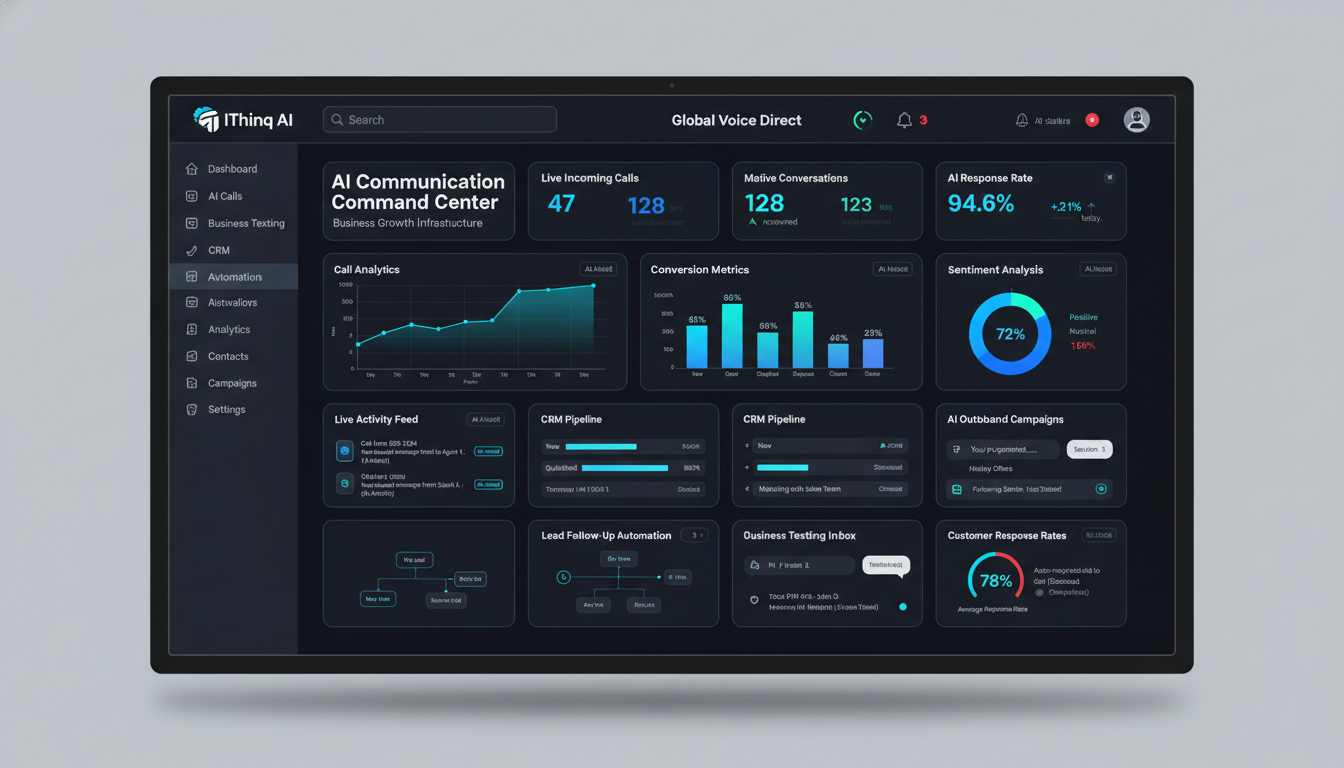
The Cost Of Poor Communication
Poor communication doesn’t show up as a line item, which is exactly why it’s so dangerous. It hides inside numbers you already accept as “normal.”
Lost Leads
A missed call is often a missed customer. If 1 in 5 calls goes unanswered and each customer is worth $500, the math gets painful fast — and it’s invisible because you never see the leads you lost.
Missed Appointments
No reminder system means no-shows. Every empty slot is revenue you’d already earned on paper, gone because a text never went out.
Frustrated Customers
Slow replies and repeated questions wear customers down. They don’t always complain. They just don’t come back, and they tell others.
Operational Inefficiency
When information lives in scattered places, your team spends hours hunting for context, re-asking customers, and fixing avoidable mistakes.
Why Communication Infrastructure Matters
You can’t run six communication systems on a personal cell phone and a shared inbox. At some point you need infrastructure — the foundation underneath the systems.
That foundation usually includes a few core pieces:
A business phone system that gives your team professional numbers, voicemail, and call handling separate from personal lines. Messaging so customers can text the same number they call. Call routing so the right call reaches the right person — or department — instead of bouncing around. And customer communication workflows that connect all of it to a record of who said what, when.
This is the layer most growing businesses skip. They add tools one at a time, end up with five disconnected apps, and wonder why nothing talks to anything. The fix is to centralize the foundation first.
As an example of how this looks in practice, platforms like Global Voice Direct bring business phone numbers, texting, call routing, and CRM-connected workflows into a single communication infrastructure — so a growing team isn’t stitching together separate services to do what should be one connected system. The principle matters more than the brand: pick infrastructure that connects, not infrastructure that fragments.
How AI Is Changing Communication
For most of business history, responsiveness was capped by how many humans you could afford to keep on the phone. AI changed that ceiling.
AI-assisted communication can answer common questions, capture caller details, and route requests at any hour — so a 2 a.m. inquiry doesn’t sit until morning. Automated follow-up means every lead gets a timely, consistent sequence instead of depending on whoever happened to remember. Customer engagement stays warm because reminders, confirmations, and check-ins go out reliably. And intelligent workflows decide what happens next based on what the customer actually did.
The shift is simple but huge: small businesses can now deliver the responsiveness that used to require a large team. The IThinq AI technology that powers communication infrastructure like this is one example of businesses using AI to improve responsiveness — answering and following up faster than a person can, while keeping the human team focused on the conversations that actually need them.
AI doesn’t replace good communication systems. It supercharges the ones you’ve already built.
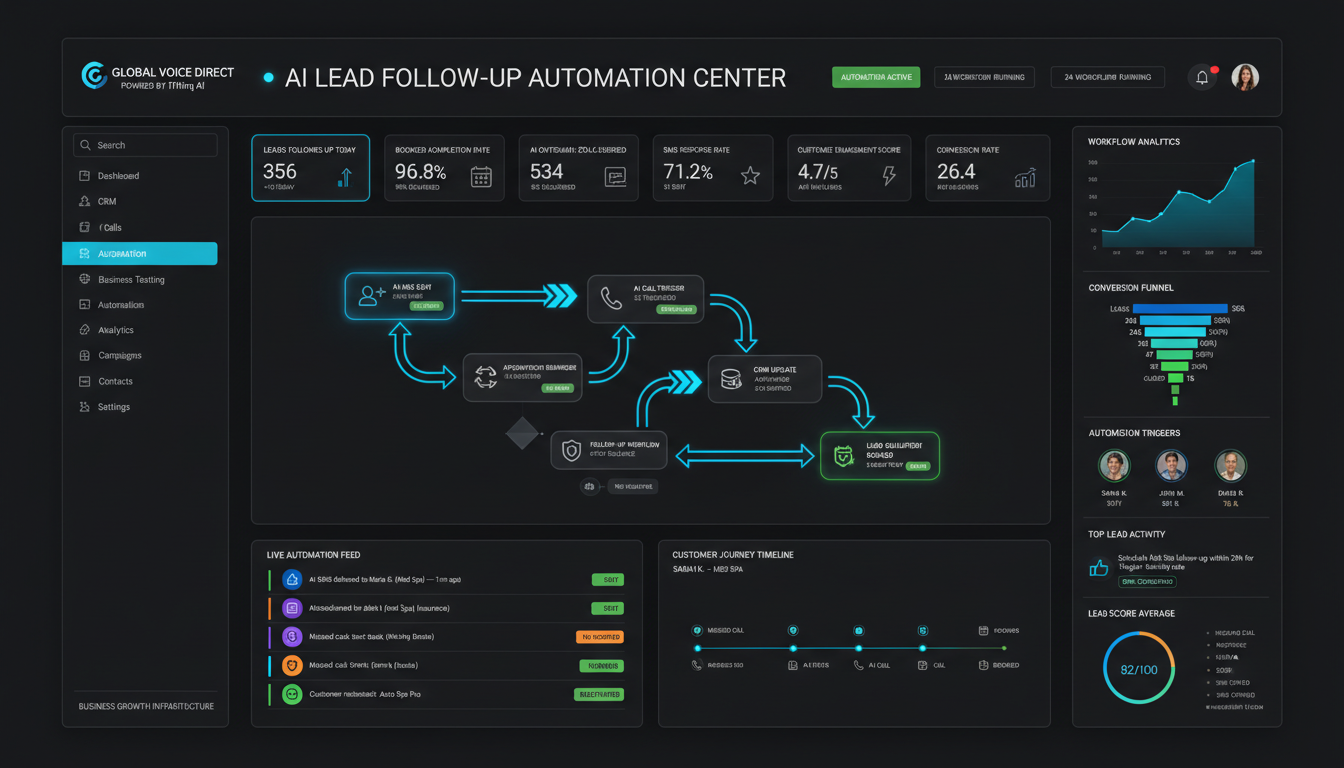
The Communication Stack™
If the six systems are what you run, the Communication Stack™ is the set of tools that powers them. Six layers, each doing one job, all connected.
The stack only works when the layers connect. A CRM that doesn’t see your calls is half-blind. Automation with no analytics is guessing. Build the stack so each layer feeds the next.
Common Communication Mistakes
Almost every business I’ve seen struggle with growth is making at least two of these. The good news: each one is fixable.
- Relying on personal phones. When customer relationships live on an employee’s cell, you lose them the day that employee does.
- Inconsistent responses. No shared record means every team member improvises, and customers notice the mismatch.
- No CRM. Without one place to track contacts, every interaction starts from zero and history disappears.
- No follow-up process. Leads that go quiet stay quiet, because nobody owns the second touch.
- No automation. Reminders, confirmations, and follow-ups depend on memory — and memory fails under load.
Communication Audit Checklist™
Run your business through this list. Every box you can’t check honestly is a place where growth is leaking. Be brutal — that’s where the value is.
- Every inbound call is answered or gets an automatic text-back within minutes.
- Customers can text the same number they call.
- You have a business phone system separate from personal phones.
- Every lead is logged in one shared place, not in someone’s head.
- Your team can see a customer’s full history before replying.
- New leads get a defined follow-up sequence, not a one-off attempt.
- Appointments trigger automatic reminders.
- Missed calls trigger an automatic response.
- You can see which channels bring in the most customers.
- Nothing breaks when one team member is out sick.
Most Businesses Grow Until Communication Breaks
“You can have the best product on the market, and still lose to a competitor who simply answers the phone.”
I’ve watched this play out across every business I’ve built. The early growth comes from hustle — answering everything personally, remembering every customer, chasing every lead. It works, until it doesn’t.
The moment volume outgrows the founder’s memory, communication becomes the bottleneck. Calls slip. Follow-ups vanish. The customer experience that felt personal at 20 customers feels chaotic at 200. And the founder usually blames sales or marketing, because that’s where the symptoms show up.
But it’s an infrastructure problem. Most businesses don’t have a marketing problem — they have an infrastructure problem. The companies that break through their growth ceiling are almost never the ones with the flashiest ads. They’re the ones who built communication systems early, so that growth made them better, not messier.
If you fix communication before it breaks, scaling feels like momentum. If you wait until it breaks, scaling feels like firefighting. Build the systems first.
Communication Readiness Score™
Score your business 1–5 in each category, then add them up for a total out of 25. This turns a vague feeling into a number you can actually act on.
| Category | What It Measures | 1 = Weak | 5 = Strong |
|---|---|---|---|
| Responsiveness | Speed of first reply to any inbound contact | Hours or days | Minutes, every time |
| Consistency | Whether every customer gets the same accurate answer | Depends who answers | Standard across the team |
| Automation | How many routine touches run without humans | All manual | Reminders & follow-up automated |
| Customer Experience | How smooth it feels to deal with you | Disjointed | Seamless & personal |
| Team Communication | Whether information is shared, not siloed | Lives in people’s heads | One shared source of truth |
Communication is actively costing you customers. Start with inbound and follow-up.
The basics work but leak under pressure. Add CRM and automation next.
You’re scaling safely. Layer in AI and analytics to pull ahead.
Communication is an advantage, not a liability. Now growth makes you stronger.
Related Infrastructure Reading
Coming next: AI Tools Every Entrepreneur Should Know, AI Automation For Entrepreneurs, The Future Of AI Communication, the Startup Operations Framework, and Startup Growth Systems — each building on the communication foundation above.
Frequently Asked Questions
What are communication systems?
Communication systems are the connected tools and workflows a business uses to send, receive, route, and follow up on calls, texts, emails, and chats — across both customers and team members.
Why is communication important for business growth?
Because growth multiplies communication volume. Setups that work at low volume quietly fail at scale, causing missed leads, slow replies, and inconsistent service that cap how big a business can get.
How do communication systems support growth?
They make sure no lead is missed, every customer gets a fast and consistent response, and routine follow-up happens automatically — so adding customers makes the business stronger instead of messier.
What communication tools should businesses use?
At minimum: a business phone system, text messaging, a CRM, automation, and analytics. AI is increasingly part of the stack for instant answers and follow-up. The key is connecting them, not just owning them.
How can AI improve communication?
AI can answer common questions any hour, capture caller details, route requests, and run follow-up sequences automatically — giving small teams the responsiveness that used to require large staffs.
What is communication infrastructure?
It’s the foundation underneath your communication systems: phone numbers, messaging, call routing, and CRM connections that make communication reliable, trackable, and able to scale.
What’s the difference between a tool and a system?
A tool does one job on its own. A system is what you get when tools connect — so a missed call becomes a text, a text becomes a logged lead, and a lead becomes a scheduled follow-up automatically.
Why are missed calls so costly?
Most callers won’t leave a voicemail — they call the next business instead. A missed call is often a lost customer you never even knew existed, which makes the cost invisible but real.
Do small businesses really need a CRM?
Yes. Without one shared place to track contacts and history, every interaction starts from zero, customers repeat themselves, and relationships disappear when employees leave.
What is follow-up communication?
It’s the structured second, third, and fourth touch with leads and customers. Most leads go quiet rather than saying no, so a follow-up system recovers revenue that one-off attempts leave on the table.
Can I run communication on personal phones?
You can early on, but it’s risky. Customer relationships tied to a personal phone walk out the door when that person does, and there’s no shared record for the rest of the team.
What is the Communication Stack™?
It’s the six connected layers that power your systems: phone, text messaging, CRM, automation, AI, and analytics — each doing one job and feeding the next.
How fast should a business respond to leads?
As fast as possible — ideally within minutes. Speed of response is often the deciding factor between winning and losing a lead, especially against competitors who reply slower.
What is automated communication?
It’s the routine messaging that runs without human effort: appointment reminders, missed-call text-backs, review requests, and follow-up sequences that would otherwise depend on someone remembering.
How do I know if communication is my bottleneck?
Run the Communication Audit Checklist™ above. Each box you can’t honestly check is a leak. If growth has stalled without a clear sales or product reason, communication is the likely cause.
Does AI replace my team?
No. AI removes the routine work humans forget under pressure — instant answers and follow-up — so your team can focus on the conversations that genuinely need a person.
What is internal team communication?
It’s how information moves inside your company so everyone acts on the same accurate, current details. Shared records prevent the common problem of two team members giving one customer two different answers.
Which communication system should I build first?
Usually inbound and follow-up, because that’s where most revenue leaks. Make sure every inbound contact is captured, then ensure every lead gets a structured follow-up before adding other layers.
How does communication infrastructure scale?
By centralizing the foundation — numbers, messaging, routing, and CRM connections — so adding team members or volume doesn’t require stitching together new disconnected tools each time.
What is the Communication Readiness Score™?
It’s a simple framework scoring your business 1–5 across responsiveness, consistency, automation, customer experience, and team communication, for a total out of 25 that shows how growth-ready your communication is.
Growth Requires Better Communication
The businesses that communicate consistently often create better customer experiences, stronger relationships, and more growth opportunities. Build the systems before they break.