

Startup Infrastructure · Systems Thinking
The Startup Operations Framework: The Systems That Keep Businesses Running
Most businesses don’t fail because they run out of customers. They fail because they can’t handle the customers they already have. This is the operating system that fixes that.
Quick Answer
A startup operations framework is a connected set of systems — for managing leads, onboarding customers, communicating, tracking tasks, documenting work, automating routine steps, and measuring performance — that lets a business grow without breaking. Strong operations turn growth from a source of chaos into a repeatable process.

Section 1
What Are Business Operations?
I’ve started and run several businesses. Every single one taught me the same lesson: the work of getting a customer is loud and exciting, but the work of keeping that customer happy is quiet, repetitive, and where most companies quietly fall apart.
That quiet work is called operations. Here’s how the core pieces fit together.
The day-to-day activities a business performs to deliver its product or service — answering customers, fulfilling orders, following up on leads, and getting work done on time.
The underlying tools, systems, and connections that make operations possible — the phone line, the CRM, the shared documents, and the automations that move information between them.
A repeatable way of doing a task so it produces the same result every time, no matter who does it. A system means the business doesn’t depend on one person remembering everything.
The specific, ordered steps inside a system. “When a lead comes in, reply within five minutes, log it in the CRM, and book a call” is a process.
Section 2
Why Operations Matter
Think about a coffee shop. One barista can make a great cup. But what happens when the line goes out the door? Without a system — who takes orders, who makes drinks, who calls names — the same shop that delighted ten customers will disappoint a hundred.
Good operations give a business four things:
Section 3 · The Core Model
The Startup Operations Framework
After building infrastructure for multiple companies, I kept seeing the same seven systems show up in every business that scaled smoothly — and the same ones missing in every business drowning in chaos. These are the seven pillars.
Lead Management
Every inquiry captured, tracked, and answered fast. Leads that fall through cracks are revenue you already paid to earn.
Customer Onboarding
A clear, repeatable first experience so new customers know what happens next and never feel forgotten.
Communication Systems
One reliable way to reach the business — calls, texts, messages — all in one place, never scattered across personal phones.
Task Management
Work assigned, visible, and accountable. Everyone knows who owns what and when it’s due.
Documentation
Written processes so the business runs on systems, not on one person’s memory. This is what lets you hire and delegate.
Automation
Routine, repetitive steps handled by software — follow-ups, reminders, confirmations — so people focus on judgment work.
Performance Tracking
Simple numbers that tell you what’s working: response times, conversion, completed tasks. You can’t improve what you don’t measure.
Section 4
The Cost Of Poor Operations
Weak operations rarely announce themselves. They leak slowly, and by the time a founder notices, the damage is already done.
- Missed opportunities. A lead emails on Tuesday and hears back on Friday — by then they’ve hired someone else.
- Poor customer experiences. Requests get forgotten, follow-ups never happen, and good customers quietly leave.
- Team confusion. Nobody’s sure who’s responsible, so things either get done twice or not at all.
- Slow growth. The founder becomes the bottleneck, working harder while the business stalls.
Section 5
Communication Is An Operational System
People treat communication like a feature. It isn’t. It’s the connective tissue of the entire business. A lead that can’t reach you doesn’t convert. A customer who can’t get an answer doesn’t stay. A team that can’t see who said what makes mistakes.
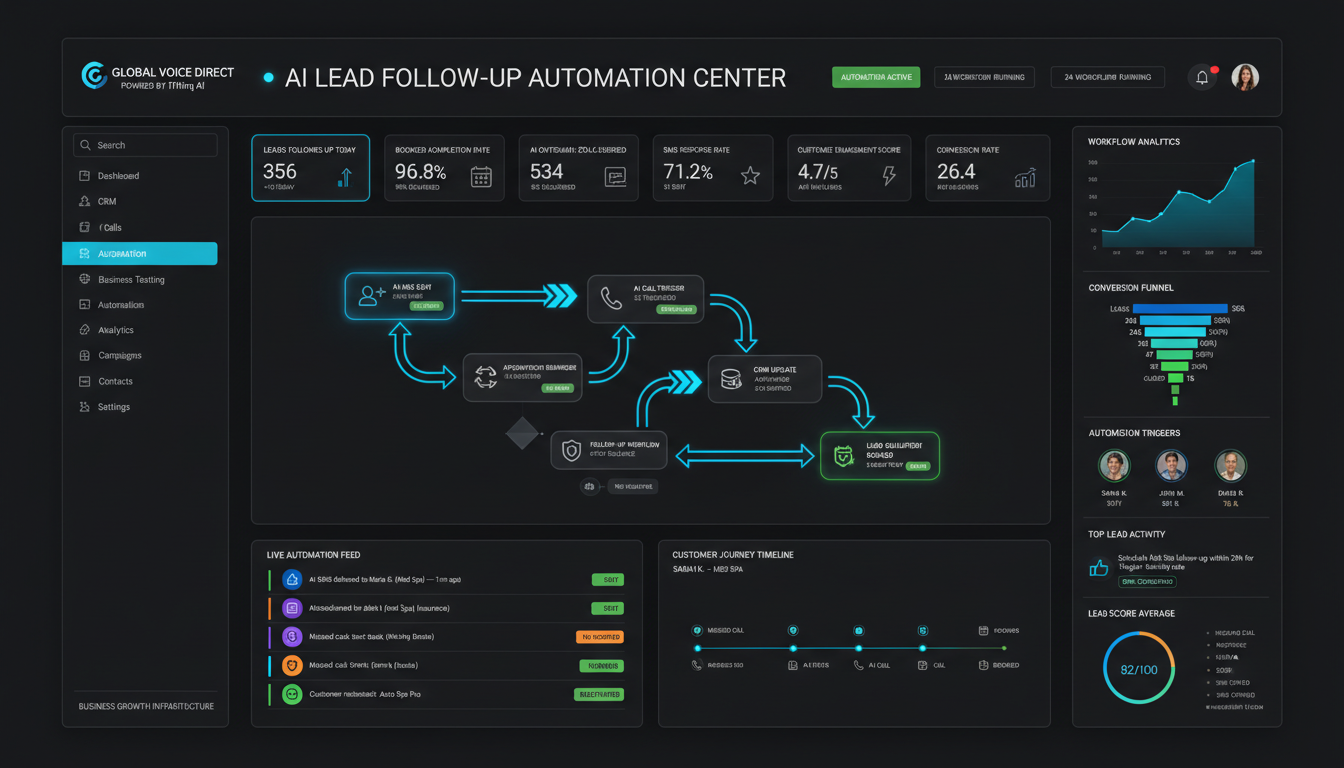
When communication lives on personal cell phones and scattered inboxes, every other system suffers. That’s why mature businesses centralize it — one number, one record, one place where calls, texts, and messages live together. Platforms like Global Voice Direct exist as an example of how businesses pull their communication and customer interactions into a single operational layer instead of leaving them spread across devices and apps.

Section 6
Technology Supports Operations
Technology doesn’t replace operations — it scales them. A good system run by hand still works; the same system run with the right tools works faster and breaks less. Four categories do most of the heavy lifting:
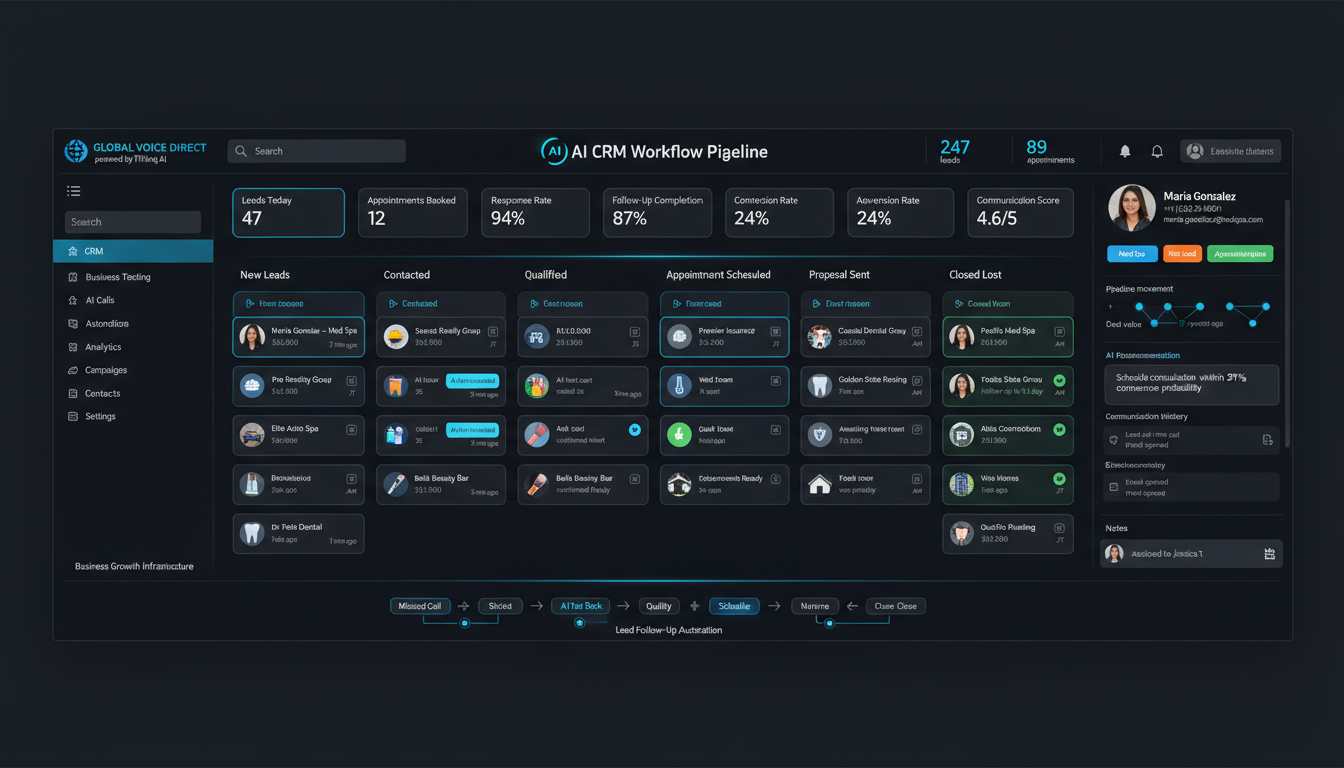
AI has become especially useful for the repetitive end of operations. IThinq AI is one example of businesses using artificial intelligence to automate repetitive communication and follow-up tasks — answering routine questions and keeping conversations moving so the human team can focus on the work that actually needs a human.
Section 7
The Startup Operations Stack
The seven pillars describe what to build. The stack describes the actual layers that make it run. Think of it as the operating system underneath the business.
Section 8
Common Operational Mistakes
Almost every operational failure I’ve seen traces back to one of these five gaps:
- No documented processes. The business only works when one specific person is in the room.
- No CRM. Customer details live in someone’s head, a notebook, and three different phones.
- No communication system. Calls and texts scatter across personal devices with no shared record.
- No accountability. When everyone owns a task, no one does.
- Relying on memory. Memory doesn’t scale. Systems do.
Section 9
Operations Audit Checklist
Run your business against this list. Every box you can’t check honestly is a place growth will eventually break.
- Lead capture: Every inquiry is logged the moment it arrives.
- Response time: You know how fast leads get a reply — and it’s fast.
- Onboarding: New customers follow a repeatable first-week path.
- Central communication: Calls and texts live in one business system, not personal phones.
- CRM in use: Every contact and conversation has a single record.
- Written processes: Core tasks are documented well enough to hand off.
- Automation: At least your follow-ups and reminders run automatically.
- Ownership: Every recurring task has one named owner.
- Reporting: You review a few key numbers on a set schedule.
- Backup: The business runs for a week if you step away.
Section 10 · Founder Insight
Most Businesses Outgrow Their Systems Before They Outgrow Their Market
Section 11 · Self-Assessment
The Operations Readiness Score
Score your business from 0 to 20 across these five categories. Each is worth up to 4 points: 0 if it doesn’t exist, 2 if it’s informal, 4 if it’s systemized and documented.
Keep Building
Related Frameworks
Coming next in this series: the Startup Growth Systems guide, the Business Automation Framework, the Lead Management Framework, the Customer Acquisition Framework, and Follow-Up Systems That Scale.
Section 12
Frequently Asked Questions
What is a startup operations framework?
It’s a connected set of systems — covering leads, onboarding, communication, tasks, documentation, automation, and performance — that lets a business handle growth without breaking down.
Why are operations important for a small business?
Operations create consistency and scalability. Without them, growth overwhelms the team, customers get dropped, and the founder becomes the bottleneck.
How do systems help businesses grow?
Systems make results repeatable. They let work happen the same way every time regardless of who does it, so the business can take on more volume without more chaos.
What operational processes should every business have?
At minimum: lead capture, customer onboarding, centralized communication, task tracking, written documentation, basic automation, and simple performance reporting.
How does automation improve operations?
It handles repetitive steps — follow-ups, reminders, confirmations — automatically and reliably, freeing people to focus on work that needs human judgment.
What causes operational bottlenecks?
Usually a single point of dependency: one person, one inbox, or one undocumented process that everything has to pass through.
What is the difference between a system and a process?
A system is the overall repeatable way of handling something. A process is the specific ordered steps inside it.
Do I need a CRM for good operations?
For anything beyond a handful of customers, yes. A CRM gives every contact and conversation a single record so nothing lives only in someone’s memory.
Why is communication considered an operational system?
Communication touches every part of a business — sales, service, and team coordination. When it’s scattered across personal phones, every other system suffers.
What is operational infrastructure?
The underlying tools and connections that make daily operations possible: the phone system, CRM, shared documents, and automations that link them together.
How do I know if my operations are ready to scale?
Use a readiness check across communication, process management, documentation, automation, and reporting. Gaps in any of those are where scaling will break first.
What’s the most common operational mistake founders make?
Relying on memory. It feels efficient early on, but memory doesn’t scale and it can’t be handed off to a team.
Can a business grow without good operations?
It can grow briefly, but the growth tends to create more problems than profit until the systems catch up.
How does documentation help a business?
It turns knowledge into something transferable, so you can delegate and hire without the quality dropping.
What role does AI play in operations?
AI is well suited to the repetitive end of operations — answering routine questions and handling follow-up — so the human team can focus on higher-value work.
How many systems does a small business really need?
Start with the seven pillars, but build them in order of pain. Fix whatever is dropping customers first, then layer in the rest.
What is performance tracking in operations?
Watching a few key numbers — response time, conversion, completed tasks — so you can see what’s working and improve it deliberately.
Should I document processes before or after hiring?
Before. Documentation is what makes a new hire productive quickly instead of depending on you to explain everything.
What does it mean to centralize communication?
Bringing calls, texts, and messages into one business system with a shared record, instead of leaving them spread across personal devices and apps.
Where should a founder start improving operations?
With an honest audit. Score your current systems, find the weakest pillar, and fix the one that’s actively costing you customers right now.
The Bottom Line
Great Businesses Run On Great Systems
The stronger your operations, the easier it becomes to grow without chaos. Build the infrastructure first, and growth stops being something you survive — it becomes something you can plan.