

Startup Growth Systems
The framework behind sustainable business growth — built on systems, not luck, hustle, or constant firefighting.

Startup growth systems are the repeatable processes a business uses to acquire customers, manage leads, sell, communicate, and operate — without depending on one founder doing everything by hand. Companies that scale build these systems before they need them, so growth strengthens the business instead of breaking it.
Most entrepreneurs think growth comes from more marketing, more ads, and more sales.
Those things help. But growth alone is not enough.
I’ve watched plenty of businesses grow fast — and then watch that same growth crush them. Leads pile up and nobody follows up. Calls get missed. The team is busy all day and still falls behind. The business didn’t have a marketing problem. It had an infrastructure problem.
The businesses that scale successfully do something different. They build systems before they need them. When more customers show up, the systems carry the weight — not the founder’s willpower.
That’s what this guide is about. It introduces The Startup Growth Systems Framework™: the seven systems every growing business needs, how they fit together, and how to score where you stand right now.
What Are Growth Systems?
A growth system is a repeatable process that produces the same result without depending on memory, mood, or heroics. When a system runs, the outcome happens whether the founder is in the room or not.
Growth Systems
Repeatable processes that reliably move a customer from first contact to loyal buyer — so results don’t depend on luck or constant effort.
Business Growth Infrastructure
The connected stack of tools and processes — communication, CRM, automation — that lets a business handle more volume without breaking.
Startup Growth Framework
A structured map of the core systems a young company needs, and the order to build them in, so growth compounds instead of stalling.
Sustainable Growth
Growth that the business can actually absorb — where each new customer is served as well as the first, because the systems scale with demand.
Why Most Businesses Struggle To Scale
Scaling rarely fails because of a bad product. It fails because the systems underneath can’t carry more weight. Here’s where it breaks most often:
Inconsistent lead generation. Some months are flooded, some are dry. There’s no predictable engine — just whatever happened to work last time.
Poor follow-up. A roofing company gets 40 quote requests and only calls back 12 of them. The other 28 buy from someone who answered. The leads were there. The system wasn’t.
Weak operations. Every job runs a little differently because the process lives in one person’s head. Quality swings. Mistakes repeat.
Communication bottlenecks. Calls, texts, and messages scatter across personal phones and inboxes. Things slip through the cracks because no one owns the flow.
No systems at all. The business runs on the founder’s energy. Growth just means the founder works more hours — until there are no hours left.
The Startup Growth Systems Framework™
Seven systems. Each one solves a specific failure point above. Built together, they turn growth from a threat into a flywheel.
Customer Acquisition
A predictable engine that brings new prospects in every week — through referrals, partnerships, content, and advertising.
Lead Management
Every lead captured, tracked, and worked through a pipeline — so nothing gets forgotten or lost.
Sales Process
A consistent path from interested prospect to paying customer that anyone on the team can follow.
Customer Experience
A repeatable way of delivering, so the hundredth customer is served as well as the first.
Communication Infrastructure
One reliable system for calls, texts, and messages — so responsiveness scales instead of slipping.
Automation
Repetitive work handled by software — reminders, follow-ups, routing — freeing humans for high-value work.
Measurement & Optimization
Clear numbers on what’s working, so you improve the system instead of guessing at tactics.
Customer Acquisition Systems
Growth starts with predictable lead flow. Not a viral month followed by silence — a steady stream you can count on. The goal is to remove the question, “Where’s the next customer coming from?”
Most durable businesses run more than one channel so they’re never dependent on a single source:
Referrals. The highest-trust leads you can get. Systematize them with a clear ask and a simple reward, instead of hoping they happen.
Partnerships. Other businesses that serve your customer before or after you do. One good partner can send leads for years.
Content. Pages and posts that answer the questions your buyers are already searching — earning attention long after they’re published.
Advertising. The fastest lever once the rest of your systems can actually convert what comes in. Ads pour fuel on a fire; they don’t start one.
These ideas go deeper in a future Customer Acquisition Framework built on this same systems thinking.
Lead Management Systems
Most businesses don’t lose deals because they’re bad at selling. They lose deals because they never follow up. The lead came in, got buried, and went cold.
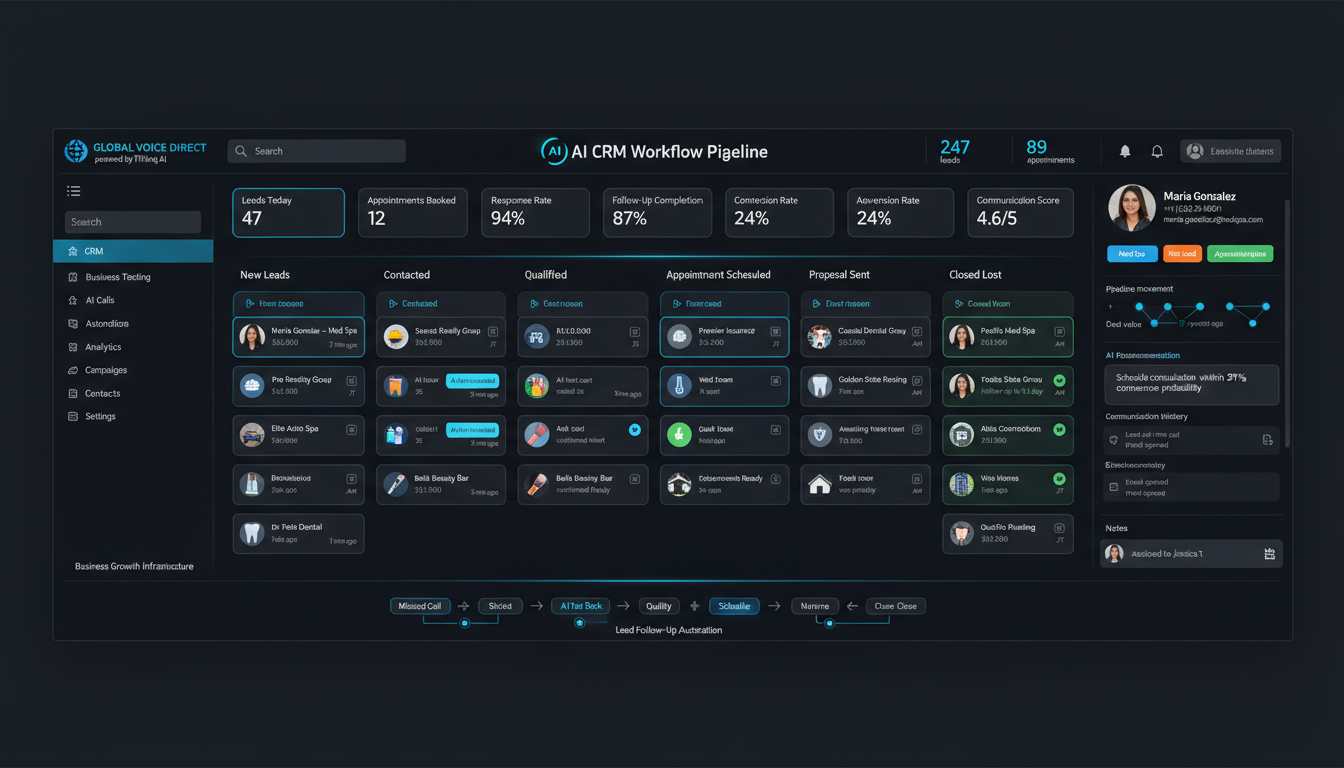
A lead management system fixes that with three pieces:
A CRM so every lead lives in one place, not scattered across texts and sticky notes. Lead tracking so you know the source, the status, and the next step for each one. And pipeline management so you can see exactly where each opportunity sits and what’s stalling.
The payoff is simple: leads stop falling through the cracks, and your existing traffic starts producing more revenue without spending a dollar more on marketing. A future Lead Management Framework and a companion guide on follow-up systems that scale will expand on this.
Communication Systems Drive Growth
Communication is one of the most overlooked growth systems — and one of the most expensive when it’s broken. A missed call is a missed customer. A slow reply is a lost sale to whoever answered first.

The fix is to centralize communication so it stops depending on personal phones and individual memory. When calls, texts, and messages flow through one system, responsiveness becomes something you can measure and improve — not something you hope for.
As an example of how businesses centralize this layer, platforms like Global Voice Direct bring business calling, texting, and customer communication into a single infrastructure, which makes consistent responsiveness far easier to sustain as volume grows. The broader pattern is covered in communication systems every growing business needs.
Automation Creates Leverage
Businesses grow faster when repetitive work stops requiring a human. Every reminder sent automatically, every lead routed instantly, every follow-up that fires on its own is time your team gets back for the work that actually needs a person.
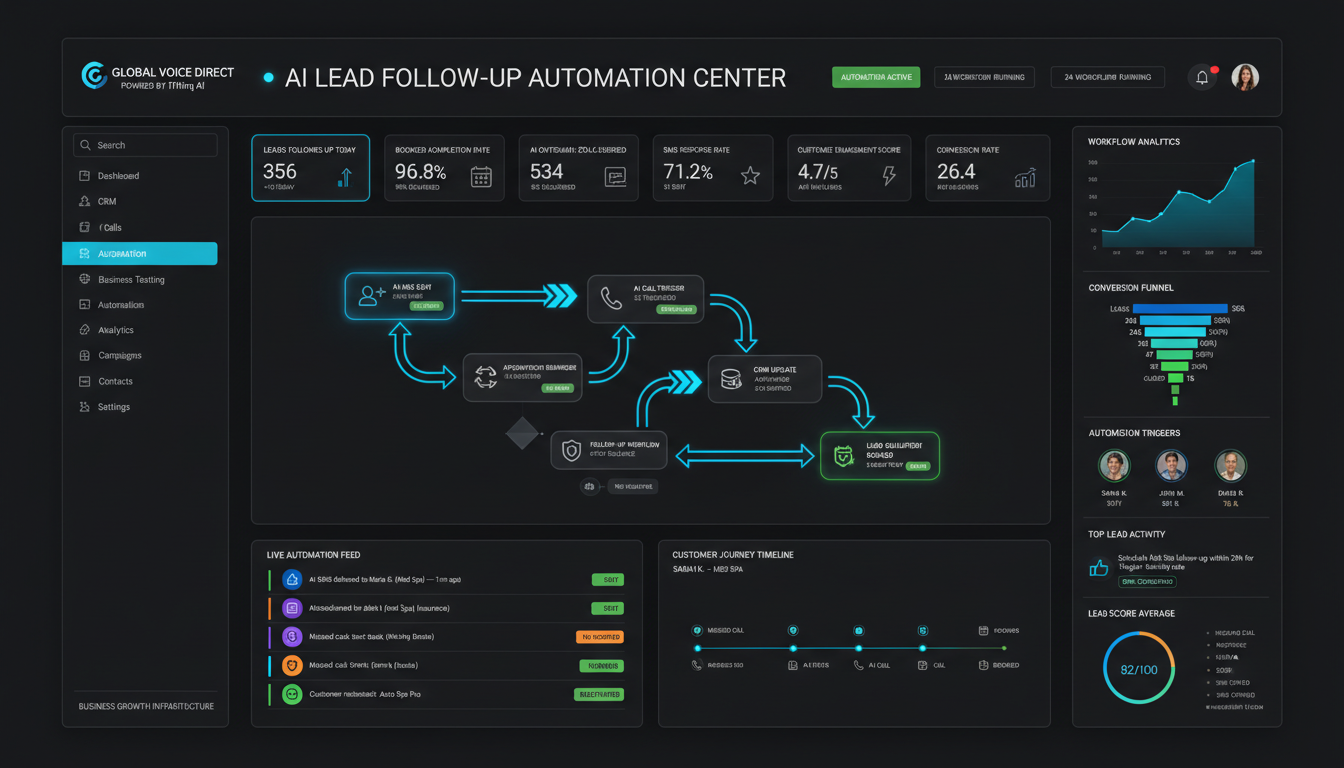
Automation isn’t about replacing people. It’s about removing the bottlenecks that keep people from doing their best work. The repetitive 80% gets handled automatically so your team can focus on the 20% that wins customers.
As an example, AI-driven systems like IThinq AI show how businesses use automation to handle customer communication and routine operations at scale — answering, routing, and following up consistently so nothing waits on someone being available. These ideas will expand in a future Business Automation Framework.
The Growth Stack™
The seven systems run on a connected set of tools. This is the practical stack that makes them work day to day.
Communication
Calls, texts, and messages in one reliable system.
CRM
Every lead and customer tracked in one place.
Automation
Repetitive work handled without manual effort.
Documentation
Processes written down so anyone can run them.
Analytics
Clear numbers on what’s working and what isn’t.
Accountability
Clear owners for every system and result.

Common Growth Mistakes
Chasing tactics. Jumping from one shiny channel to the next instead of building systems that compound.
Ignoring systems. Treating process as bureaucracy until the day everything breaks at once.
Poor follow-up. Spending to generate leads, then letting most of them go cold from silence.
Weak communication. Missed calls and slow replies quietly handing customers to faster competitors.
No measurement. Making decisions on gut feel because the numbers were never tracked.
Growth Readiness Audit™
Check the boxes you can honestly say yes to today. The empty ones are your next build.
- I have at least two reliable channels bringing in new leads every month.
- Every lead is captured in one system — none live only on a personal phone.
- We follow up with every lead on a defined schedule, not when someone remembers.
- Our sales process is written down and anyone on the team could run it.
- Calls and texts flow through one business communication system.
- We answer or return nearly every customer inquiry quickly.
- Routine follow-ups and reminders are automated, not manual.
- Our delivery process is consistent from one customer to the next.
- We track the numbers that show what’s actually driving growth.
- The business could run for a week without the founder doing every task.
Growth Without Systems Creates Chaos
Early on, I believed the answer to every plateau was more — more marketing, more leads, more effort. So I’d push harder, the phone would ring more, and within weeks the whole thing would feel like it was coming apart at the seams. Leads went unanswered. Customers waited. I was busier than ever and the business felt more fragile, not stronger.
The lesson took me too long to learn: growth doesn’t fix a weak business — it exposes it. Every crack you’ve been getting away with gets wider the moment volume goes up. The businesses I’ve seen scale cleanly weren’t the ones with the best marketing. They were the ones whose systems were ready before the growth arrived.
That’s why I think about it the same way every time now. Most businesses don’t have a marketing problem. They have an infrastructure problem. Build the systems first, and growth becomes something your business can hold.
Startup Growth Score™
Rate each category from 0 to 20 based on how well-built that system is. Add them for a total out of 100, then find your level below.
| Category | What It Measures | Score |
|---|---|---|
| Lead Generation | Predictable, multi-channel flow of new prospects. | 0–20 |
| Sales | A consistent, documented path from prospect to customer. | 0–20 |
| Communication | Centralized, responsive calls, texts, and messaging. | 0–20 |
| Automation | Repetitive work handled without manual effort. | 0–20 |
| Operations | Consistent delivery and processes that don’t depend on the founder. | 0–20 |
Fragile
Running on hustle. Growth will break it.
Building
Some systems exist; gaps still cost you.
Scalable
Systems carry the load. Growth compounds.
Engineered
Infrastructure-led. Growth is repeatable.
Related Frameworks
Frequently Asked Questions
What are growth systems?
Why do businesses struggle to scale?
How do growth systems work?
What systems should every startup have?
How does automation support growth?
What role does communication play in growth?
What is the Startup Growth Systems Framework™?
Is growth the same as scaling?
Do I need systems if I’m a small startup?
What is business growth infrastructure?
Why is follow-up so important?
What is a CRM and do I need one?
How do I know which system to build first?
Can systems replace good marketing?
What is The Growth Stack™?
How do I measure growth readiness?
What is the most overlooked growth system?
Does automation mean replacing my team?
How long does it take to build growth systems?
What happens if I grow without systems?
Build Systems That Grow With Your Business
Sustainable growth happens when strong systems support every stage of the customer journey — not when the founder works one more late night.