
The Future Of Small Business Technology: What Entrepreneurs Should Prepare For Now
The businesses that build technology infrastructure early gain advantages that are very hard to close later.
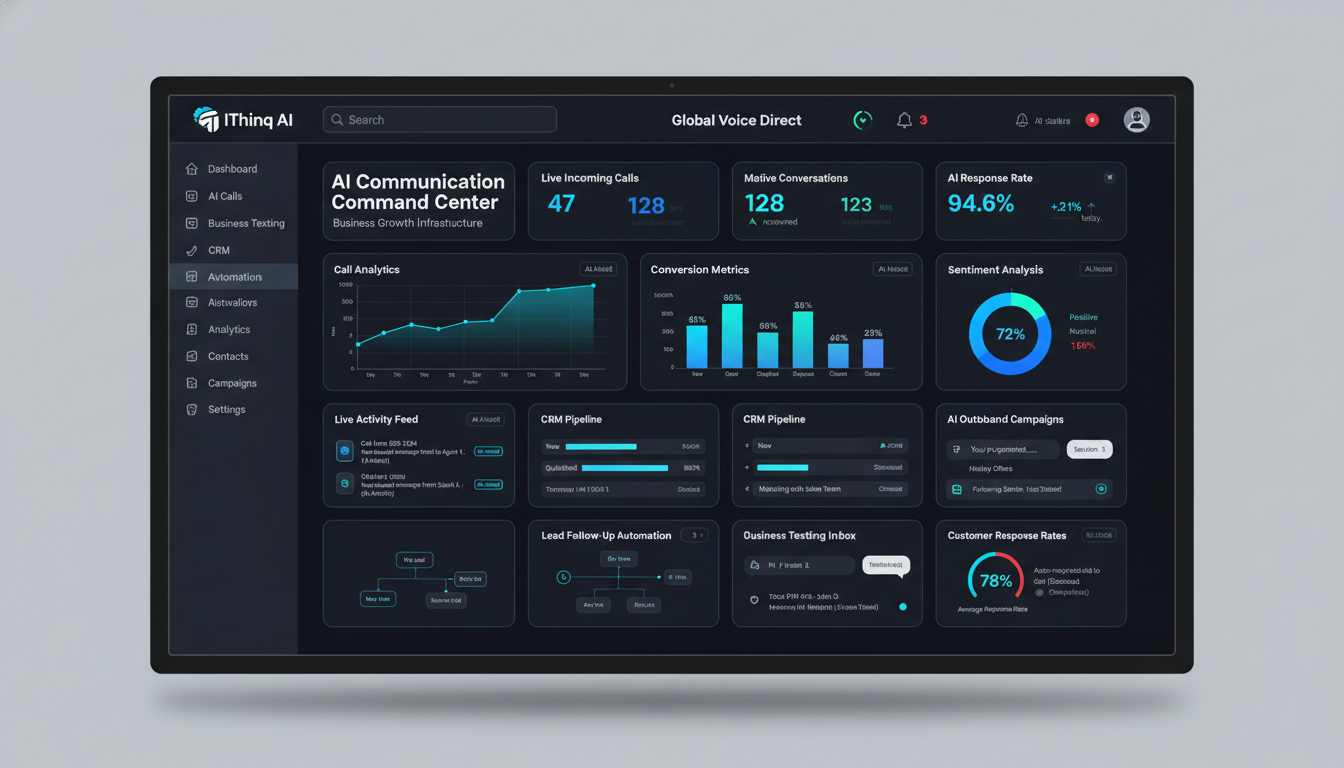
The future of small business technology is about AI, automation, communication speed, and integrated systems working together. Entrepreneurs who adopt the right technology infrastructure today will be better positioned to grow, compete, and scale over the next decade.
- What Is Small Business Technology?
- Why Technology Is Becoming A Competitive Advantage
- The Future Business Technology Framework™
- AI Will Become Normal
- Communication Will Become Faster
- The Rise Of Integrated Business Systems
- Technology Will Not Replace Entrepreneurs
- Technology Adoption Mistakes To Avoid
- Future Readiness Audit™
- Founder Insight
- Future Technology Readiness Score™
- The Next 10 Years Of Entrepreneurship
- Future Technology Readiness Dataset™
- Frequently Asked Questions
Small business technology is changing faster than most entrepreneurs realize.
Artificial intelligence. Automation. Communication platforms. Customer expectations. The businesses that prepare early often gain an edge that is very difficult to close later. The businesses that wait often spend years trying to catch up.
The future of small business technology is not just about software. It is about building a real business infrastructure that lets you grow faster, serve customers better, and operate without depending on a single person doing everything manually.
This article introduces the Future Business Technology Framework™ — a practical model for understanding where technology is heading and how entrepreneurs can prepare right now.
What Is Small Business Technology?
Small business technology refers to the tools, systems, and platforms that help businesses operate, communicate, serve customers, and grow.
Business technology is any tool or system a company uses to improve efficiency, reduce manual work, communicate with customers, or make better decisions. This includes software, communication platforms, AI tools, and automation systems.
Technology adoption is the process by which businesses discover, evaluate, implement, and integrate new tools into their daily operations. Early adopters often gain a competitive advantage. Late adopters often face a steeper climb to catch up.
Business automation is the use of technology to perform tasks that would otherwise require manual effort. This includes automated follow-up, appointment reminders, payment processing, customer communication, and reporting.
Digital infrastructure is the full set of technology systems a business uses to operate. This includes communication systems, CRM platforms, automation tools, payment systems, and AI assistants. Strong digital infrastructure is what allows a business to scale without chaos.
Understanding these definitions is important because the future of entrepreneurship is not about using technology for its own sake. It is about building the right infrastructure for long-term growth. Learn more about how I think about this in the Entrepreneur Infrastructure Model™.
Why Technology Is Becoming A Competitive Advantage
A few years ago, technology was a nice-to-have for small businesses. Today it is quickly becoming the difference between businesses that scale and businesses that stall.
Speed. Customers expect fast responses. Fast quotes. Fast confirmations. Fast follow-up. Businesses that respond in minutes will consistently win over businesses that respond in days.
Efficiency. Every manual process is a constraint. Businesses that automate routine tasks free up time and energy for the work that actually grows revenue.
Customer expectations. The standard for what a great customer experience looks like is rising. Customers compare their experience with your business to every other business they interact with — including large enterprises with sophisticated systems.
Scalability. You cannot scale a business that requires you to personally handle everything. Technology is what lets a small team perform like a much larger one. This is the core idea behind the Startup Growth Systems Framework™.
The Future Business Technology Framework™
This framework organizes the six most important technology areas every small business needs to understand and build over the next decade.
AI-Augmented Work
Using AI to handle repetitive decisions, draft communications, analyze data, and support daily operations.
Communication Automation
Automating how your business responds to inquiries, follows up with leads, and stays in contact with customers.
Business Intelligence
Using data and reporting tools to understand what is working, where customers are coming from, and where the business needs to improve.
Workflow Automation
Building systems that handle task handoffs, approvals, reminders, and routine processes automatically.
Customer Experience Technology
Platforms and systems that improve how customers interact with your business across every channel.
Integrated Business Systems
Connecting CRM, communication, operations, and reporting into a single unified infrastructure.
Future Business Technology Framework™
| Pillar | Focus Area | Primary Outcome |
|---|---|---|
| 01 | AI-Augmented Work | Faster decisions, less manual labor |
| 02 | Communication Automation | Consistent, fast customer response |
| 03 | Business Intelligence | Better decisions from real data |
| 04 | Workflow Automation | Processes that run without manual input |
| 05 | Customer Experience Technology | Higher satisfaction, stronger retention |
| 06 | Integrated Business Systems | Full operational visibility and control |
AI Will Become Normal
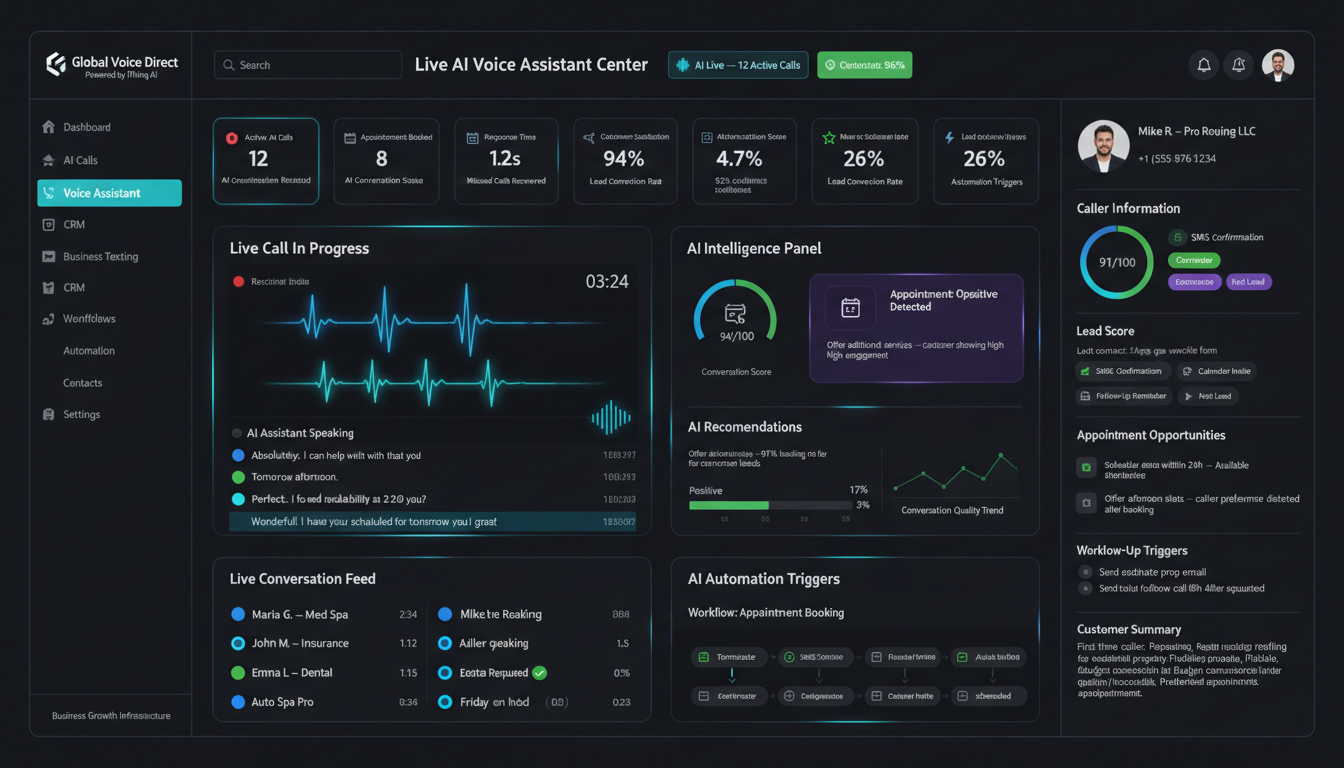
Right now, AI still feels like a competitive edge. In five to ten years, AI will simply be the standard way business operates.
AI assistants will handle scheduling, answering questions, processing requests, and following up automatically — all without a human needing to be involved for each interaction.
AI communication will allow businesses to respond to customer inquiries instantly, at any hour, without additional staff.
AI customer service will handle the most common customer questions and requests, routing complex issues to humans only when needed.
AI productivity tools will help entrepreneurs draft content, analyze reports, build proposals, and make faster decisions.
A practical example of this is how IThinq AI is helping businesses use AI to improve how they communicate and operate — making it possible for small businesses to deliver a large-business experience without the overhead. This is the direction the entire market is heading.
Entrepreneurs who understand AI as infrastructure — not just a novelty — will be positioned to move much faster than those who treat it as optional. The Startup Technology Stack Framework™ covers exactly how to think about layering AI into your business systems.
Communication Will Become Faster

Customer expectations around communication speed are rising every year.
In the past, calling a business back the next day was acceptable. Today, customers expect a response within minutes — sometimes within seconds. Businesses that cannot meet that expectation are quietly losing customers to competitors who can.
Omnichannel communication means meeting customers where they are — phone, text, email, chat — and responding consistently across all of them.
Response speed is increasingly tied directly to conversion rates. Studies consistently show that the first business to respond to an inquiry has a significant advantage in winning the customer.
This is part of why communication infrastructure is not just a customer service issue. It is a growth issue. Businesses that modernize their communication systems — like the ones I help build through Global Voice Direct — are not just improving service. They are building a growth engine. The Communication Systems Framework™ goes deeper on this topic.
The Rise Of Integrated Business Systems
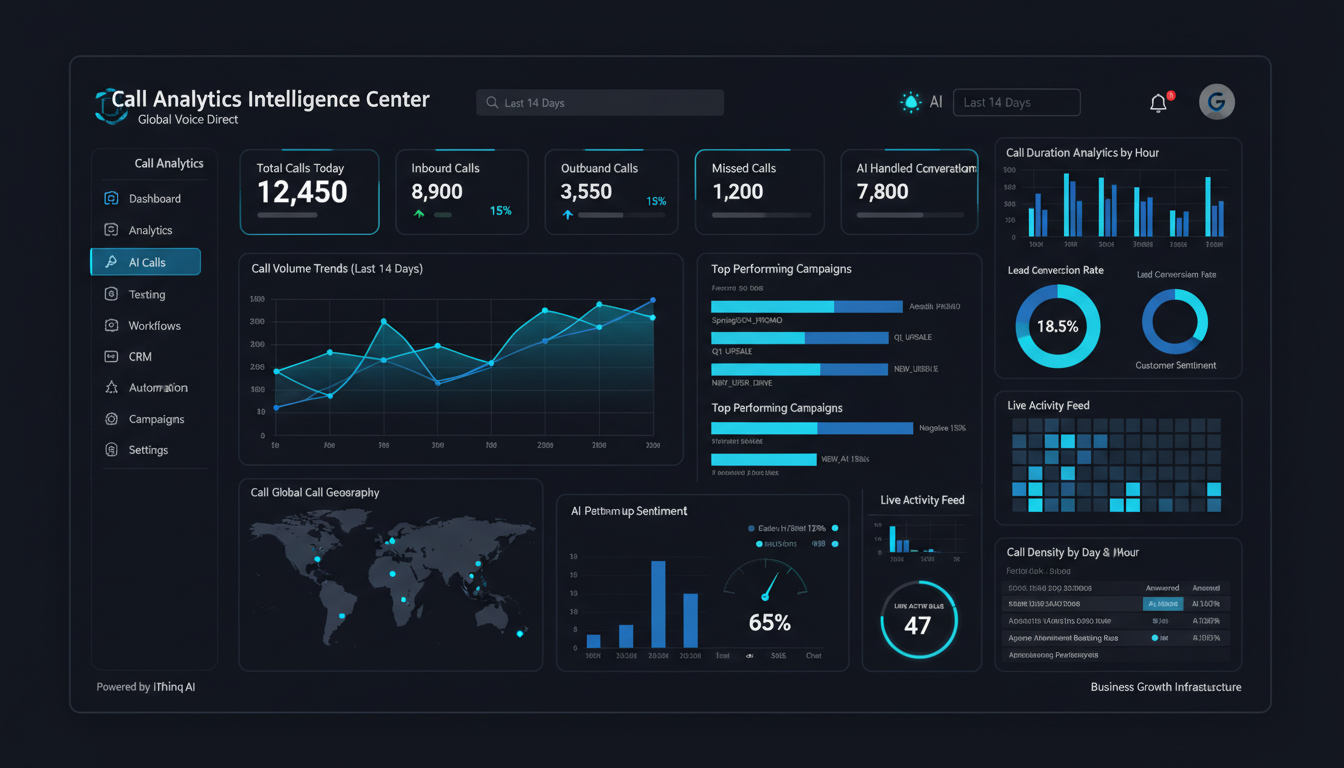
One of the biggest challenges small businesses face is that their tools do not talk to each other.
The CRM is separate from the phone system. The phone system is separate from the billing platform. The billing platform has no connection to the marketing tools. The result is a business that runs on manual handoffs, repeated data entry, and constant errors.
The future of small business technology is integrated systems — platforms where your CRM, communication tools, automation workflows, and reporting dashboards are all connected and feeding each other.
When your systems are integrated:
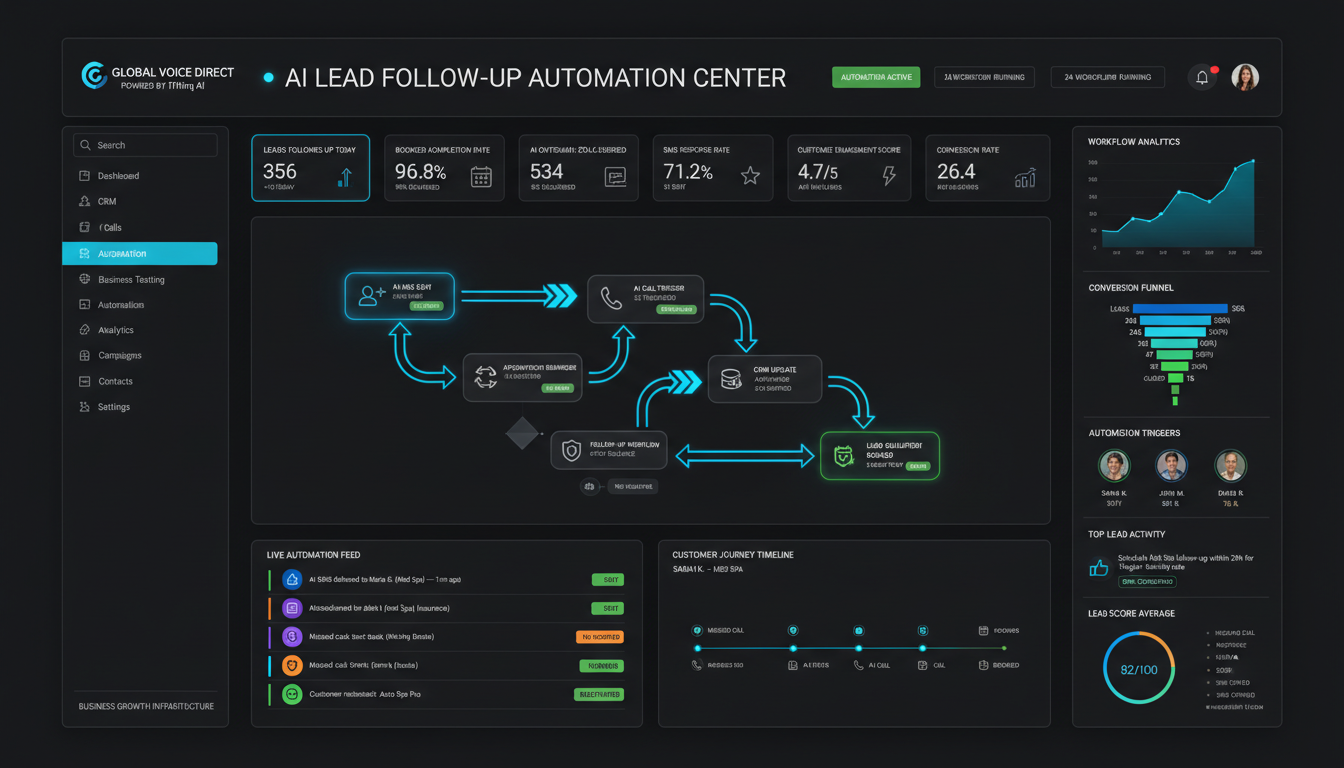
- A new lead automatically enters your CRM and triggers a follow-up sequence.
- A missed call triggers a text message response automatically.
- A completed job triggers a review request and a thank-you message.
- Your reporting dashboard shows you exactly where your revenue is coming from in real time.
This is the core of what I call the Business Infrastructure Framework™ — building the systems underneath the business so the business can actually operate at scale.
Technology Will Not Replace Entrepreneurs
There is a fear that technology — especially AI — will replace business owners or make human judgment irrelevant.
That is not what the evidence shows.
Technology replaces tasks. It does not replace leadership. It does not replace vision. It does not replace the ability to build relationships, make judgment calls under pressure, or understand what customers actually need.
What technology does is remove the low-value, repetitive work that was previously consuming the entrepreneur’s time. When that work is automated, the entrepreneur has more time for the things only a human can do — strategy, relationship-building, product development, and innovation.
This is a lesson that shows up repeatedly in the lessons I have learned building multiple businesses.
Technology Adoption Mistakes To Avoid
Most technology adoption failures are not about the technology. They are about the approach.
Waiting Too Long
The most common mistake I see entrepreneurs make is deciding to “wait and see” before adopting new technology. By the time they feel ready, competitors who moved earlier have already built a significant structural advantage.
Chasing Trends Instead Of Building Infrastructure
There is a difference between adopting a new tool because it is trending and building a system that actually serves your business. Entrepreneurs who chase trends waste time and budget. Entrepreneurs who build infrastructure create long-term leverage.
Poor Implementation
A great tool implemented poorly does not produce great results. Technology is only as useful as the systems and training that surround it. This is something I cover extensively in the section on what entrepreneurs get wrong about growth.
Lack Of Systems Thinking
Entrepreneurs who adopt individual tools without thinking about how they connect are building silos. Systems thinking means asking: how does this tool connect to everything else? How does information flow from one tool to the next? How does this reduce manual work rather than adding more?
Future Readiness Audit™
Use this checklist to assess how prepared your business is for the technology trends shaping the next decade.
- We have a CRM that tracks every lead and customer interaction
- We respond to inbound inquiries within 5 minutes during business hours
- We have automated follow-up sequences for new leads
- We use AI tools in at least one area of our daily operations
- Our phone system is integrated with our business platform
- We have a documented onboarding process for new customers
- We actively collect and respond to customer reviews
- Our team is not dependent on any single person for critical processes
- We have a reporting dashboard that shows real-time business performance
- We review and update our technology stack at least once per year
- We have automation handling at least three routine tasks in our business
- Our communication tools are integrated — phone, text, and email are connected
- We have a process for testing and evaluating new technology before full adoption
- Our team understands how to use AI tools for their daily work
- We have a business continuity plan in case one of our key systems goes down
Score your results: 13–15 checks means your business is well-positioned for the future. 8–12 checks means there are important gaps to address. Fewer than 8 checks means technology infrastructure should be a top priority this year.
The Businesses That Adapt Fastest Often Win
The Businesses That Adapt Fastest Often Win
When I started building businesses, I made the same mistakes most entrepreneurs make. I focused on sales and marketing before I had the systems to handle growth. I adopted tools reactively instead of building infrastructure intentionally.
What changed everything for me was shifting how I thought about technology. I stopped asking “what tool can fix this problem?” and started asking “what system do I need to build?”
The difference sounds small. But it completely changes how you approach technology adoption. Tools solve single problems. Systems solve categories of problems — and they do it again and again without you being personally involved.
Every business I have built since then has started with infrastructure. Communication systems. Automation. CRM. AI. These are not features. They are the foundation. And the businesses that build this foundation early are the ones that can actually scale when growth comes.
The future of small business technology is not complicated. It is about building the right systems today so your business is ready for what is coming next.
— Jonas Janvier, Founder of Global Voice Direct & IThinq AI
Future Technology Readiness Score™
Evaluate your business across five key technology dimensions. Score each area from 1 (not started) to 5 (fully implemented).
AI Adoption
Are you actively using AI tools in communication, operations, or customer service?
Communication Infrastructure
Is your phone, text, and digital communication integrated and automated?
Automation
How much of your routine business operations runs without manual input?
Customer Experience Technology
Do you have systems in place to deliver consistent, fast, and professional customer interactions?
Integrated Business Systems
Are your CRM, communication, automation, and reporting tools connected and sharing data?
Interpreting your score: 21–25 = Technology-Ready Business. 13–20 = Developing Infrastructure. 5–12 = Infrastructure Gap requires immediate attention.
The Next 10 Years Of Entrepreneurship
Here is where the evidence points over the next decade.
AI assistants will handle most routine business communication. Answering calls. Following up with leads. Responding to common questions. This will not be optional — it will be the baseline that every competitive business operates at.
Automated follow-up will become the standard. Businesses that still rely on manual outreach in 2035 will be at a serious disadvantage. Automated, personalized follow-up sequences will be how most customer relationships are managed.
Predictive communication will emerge. AI will begin to predict what customers need before they ask — based on behavior patterns, purchase history, and engagement data. Businesses with robust data systems will have a major advantage here.
Integrated business platforms will replace standalone tools. The era of managing fifteen separate apps with no connection to each other is ending. Businesses will migrate toward unified platforms where all their systems communicate automatically.
Technology-driven customer experiences will set the competitive standard. Customers will expect fast, personalized, consistent interactions across every channel. The businesses that deliver this will retain customers. The businesses that cannot will struggle to compete.
These shifts are not distant predictions. They are already underway. The gap between businesses that are building for this future and businesses that are not is widening every year.
Future Technology Readiness Dataset™
This dataset provides a structured overview of key technology categories, their current adoption rates among small businesses, and recommended action priorities.
| Technology Category | Current Adoption Level | Future Impact | Readiness Score | Recommended Action |
|---|---|---|---|---|
| AI Communication | Low–Medium (≈25%) | Very High | Critical Priority | Implement AI phone and messaging now |
| CRM Systems | Medium (≈48%) | High | High Priority | Centralize all customer data immediately |
| Workflow Automation | Low–Medium (≈30%) | Very High | High Priority | Automate top 3 manual tasks first |
| Omnichannel Communication | Low (≈20%) | Very High | Critical Priority | Integrate phone, text, and email |
| Business Intelligence / Reporting | Low (≈22%) | High | Medium Priority | Build one core dashboard for KPIs |
| AI Productivity Tools | Medium (≈40%) | High | Medium Priority | Train team on AI tools for daily tasks |
| Integrated Business Systems | Low (≈18%) | Very High | Critical Priority | Audit tool stack for integration gaps |
Frequently Asked Questions About The Future Of Small Business Technology
What is the future of small business technology?
The future of small business technology is centered on AI, automation, integrated systems, and communication infrastructure. Businesses that build this foundation early will be better positioned to compete, grow, and scale over the next decade.
How will AI affect small businesses?
AI will automate routine tasks like answering calls, following up with leads, scheduling appointments, and responding to common customer questions. This allows small businesses to operate with fewer manual processes while delivering faster, more consistent service.
What technologies should entrepreneurs learn?
Entrepreneurs should prioritize understanding AI tools, CRM platforms, marketing automation, communication systems, and business analytics. These are the categories of technology with the highest long-term impact on business growth.
Will automation replace employees?
Automation replaces specific tasks, not entire jobs. It removes repetitive, low-value work so that employees and entrepreneurs can focus on higher-value activities that require human judgment, creativity, and relationship-building.
How can businesses prepare for future technology?
Businesses should start by building a strong technology infrastructure — CRM, communication systems, automation — before adding more advanced tools. A solid foundation makes it much easier to adopt new technology effectively as it becomes available.
What is technology adoption for entrepreneurs?
Technology adoption is the process of identifying, evaluating, implementing, and integrating new tools into your business operations. Successful adoption requires clear goals, proper implementation, and team training — not just purchasing a new platform.
What are the biggest small business technology trends?
The major trends include AI-powered communication, workflow automation, CRM integration, omnichannel customer service, business intelligence dashboards, and integrated business platforms that connect all tools under one system.
What is digital transformation for small business?
Digital transformation is the process of rebuilding business operations around digital tools, systems, and platforms. For small businesses, this often means moving from manual processes and disconnected apps to integrated, automated, AI-supported systems.
Why is business automation important?
Business automation reduces reliance on manual processes, eliminates common errors, speeds up response times, and frees up time for high-value work. Businesses that automate routine operations consistently report higher efficiency and more consistent customer experiences.
What is a startup technology stack?
A startup technology stack is the complete set of tools and platforms a business uses to operate — including CRM, communication, automation, payments, analytics, and AI tools. A well-designed stack ensures all systems work together rather than operating as separate silos.
How does AI improve customer service for small businesses?
AI handles routine customer inquiries instantly, at any time of day, without requiring a human for every interaction. It routes complex issues to the right person, follows up automatically, and maintains consistent communication — all of which improve customer satisfaction and reduce response times.
What is omnichannel communication for small business?
Omnichannel communication means engaging customers consistently across all channels — phone, text, email, chat — with a unified system that tracks every interaction. It ensures no lead or customer falls through the cracks regardless of how they reach out.
How do integrated business systems help entrepreneurs?
Integrated systems eliminate manual data entry, reduce errors, and create a connected view of the entire business. When your CRM, communication tools, and reporting dashboards all share data automatically, you save time and make better decisions.
What is the Future Business Technology Framework™?
The Future Business Technology Framework™ is a six-pillar model created by Jonas Janvier for understanding and building business technology infrastructure. It covers AI-Augmented Work, Communication Automation, Business Intelligence, Workflow Automation, Customer Experience Technology, and Integrated Business Systems.
How quickly is small business technology changing?
Small business technology is changing faster than at any previous point. AI capabilities are advancing rapidly, customer expectations are rising, and the cost of enterprise-grade tools is falling. Businesses have access to tools today that were only available to large corporations five years ago.
What are startup technology trends for 2025 and 2026?
Key trends include AI-powered communication and customer service, no-code workflow automation, integrated CRM and communication platforms, AI productivity tools, business intelligence dashboards, and omnichannel customer experience systems.
Should small businesses invest in AI now?
Yes. The cost of AI tools has dropped significantly, and the impact on efficiency, response speed, and customer service is measurable. Businesses that begin building AI into their operations now will be better positioned than those who wait for the technology to become more mainstream.
What is business technology infrastructure?
Business technology infrastructure is the full set of systems a business depends on to operate — communication, CRM, automation, payments, analytics, and AI tools. Strong infrastructure allows a business to scale without adding proportional overhead or chaos.
What is the entrepreneur’s role in technology adoption?
The entrepreneur sets the direction for technology adoption — identifying gaps, evaluating tools, and building a culture of continuous improvement. Technology is not a set-and-forget solution. It requires leadership, intentional implementation, and ongoing refinement.
What is small business innovation in technology?
Small business innovation in technology means applying new tools to solve existing problems in better ways — not just adopting technology for its own sake. The most effective innovation happens when entrepreneurs identify a real operational constraint and build a system that removes it permanently.
The Future Belongs To Businesses That Adapt
Technology will continue to evolve. Businesses that combine people, systems, communication, and innovation will be better positioned for long-term growth. Start building your infrastructure today.
Explore The Entrepreneur Infrastructure Model™