

My Entrepreneur Journey
Nobody starts out knowing how to build a business. You figure it out along the way. Sometimes through wins. More often through mistakes. This is my story — the real one.

Nobody starts out knowing how to build a business.
You figure it out along the way. Sometimes through wins. More often through mistakes. And sometimes through hard, expensive lessons that take years to fully understand.
My entrepreneur journey has not been a straight line. It has been a series of decisions — some good, many costly, all of them educational. It has been built on curiosity, stubbornness, and a deep belief that most problems businesses face are solvable if you are willing to look at them clearly and build better systems around them.
This is that story. Not the polished version. The real one.
The Founder Origin Framework™
A narrative lens for understanding how a founder’s early experiences shape their business philosophy, the companies they build, and the frameworks they create to solve the problems they’ve lived through.
Key Milestones at a Glance
- Entrepreneurial mindset formed early — built instead of waited
- First businesses taught more than any classroom ever could
- Discovered that infrastructure beats marketing every time
- Built Global Voice Direct around communication infrastructure
- Developed IThinq AI to bring automation to everyday businesses
- Created the Startup Credibility Framework™ from lived experience
- Built GrowthEdge CRM to close the systems gap for small businesses
- Still building — the journey is not finished
Where It Started
The entrepreneurial mindset does not come from a business school course or a motivational video. For most people who actually build things, it comes from somewhere deeper. A dissatisfaction with waiting. A belief that problems can be solved if someone is willing to actually try.
That was where it started for me. Not with a grand plan or a fully formed idea — but with a simple, stubborn refusal to accept that the only path forward was to work for someone else’s vision.
I wanted to build something. I did not know exactly what yet. But the instinct was there before the opportunity was — and that instinct is what matters most in the beginning.
Most people wait until they are ready. Entrepreneurs start and figure it out on the way. Looking back, that willingness to move before I had all the answers was the most important decision I made early on. It was also the source of most of my early mistakes.
“The entrepreneurial instinct is not knowing how to build a business. It is being unwilling to stop trying until you figure it out.”
The First Real Business Lessons
The first businesses I built taught me things that no book had prepared me for. Not because the books were wrong — but because experience operates at a different level of resolution. You can understand a concept intellectually and still be completely unprepared for what it feels like when it happens to you in real time.
I learned what it felt like to pour effort into something and watch it underperform. I learned the difference between a business idea and a business model. I learned that customers don’t care how hard you worked — they care about what you delivered and how it made them feel.
I learned that enthusiasm is not a strategy. That relationships matter more than most founders admit. That cash flow is not the same as profit. And that the gap between what you think is happening inside your business and what is actually happening is almost always wider than you believe.
Early businesses are expensive classrooms. The tuition comes out of your time, your money, and sometimes your confidence. But the education is irreplaceable — and it compounds in ways that cannot be manufactured any other way.
The Infrastructure Revelation

There was a specific moment — not dramatic from the outside, but significant from the inside — when the way I saw business problems changed completely.
I was looking at a business that was doing everything right on the surface. Good product. Active marketing. Genuine effort from the team. And yet the growth was inconsistent, the customer experience was uneven, and revenue kept plateauing in ways that more marketing spend couldn’t fix.
I started digging into what was actually happening beneath the surface. What I found was not a marketing problem. It was an infrastructure problem. The communication was inconsistent. The follow-up was unreliable. The systems that were supposed to convert interest into revenue were full of gaps that nobody had thought to address because they were invisible during normal operations.
That insight — most businesses don’t have a marketing problem, they have an infrastructure problem — became the lens through which I have seen every business challenge since. It changed what I build, how I think about growth, and what problems I believe are actually worth solving.
It also became the foundation for everything I have built since. Starting with Global Voice Direct.
Building Global Voice Direct
Once I understood the infrastructure problem clearly, the solution became obvious. Businesses needed a professional communication foundation that didn’t require a large team, didn’t break under volume, and didn’t create inconsistent experiences depending on who happened to pick up the phone that day.
Global Voice Direct was built to solve that problem directly. Not as a phone company. As a communication infrastructure company. There is a meaningful difference between the two — and that difference is what drove every decision we made in building it.
The goal was never to sell phone lines. The goal was to give businesses the communication infrastructure that makes everything else work — the professional presence, the consistent responsiveness, the follow-up capability, and the credibility that comes from showing up reliably every time a customer or prospect reaches out.
Communication is the first impression, the ongoing relationship, and the lasting memory all at once. Build it well and everything downstream works better. Build it poorly and no amount of marketing will compensate for what gets lost in the gap.
Discovering the Power of AI
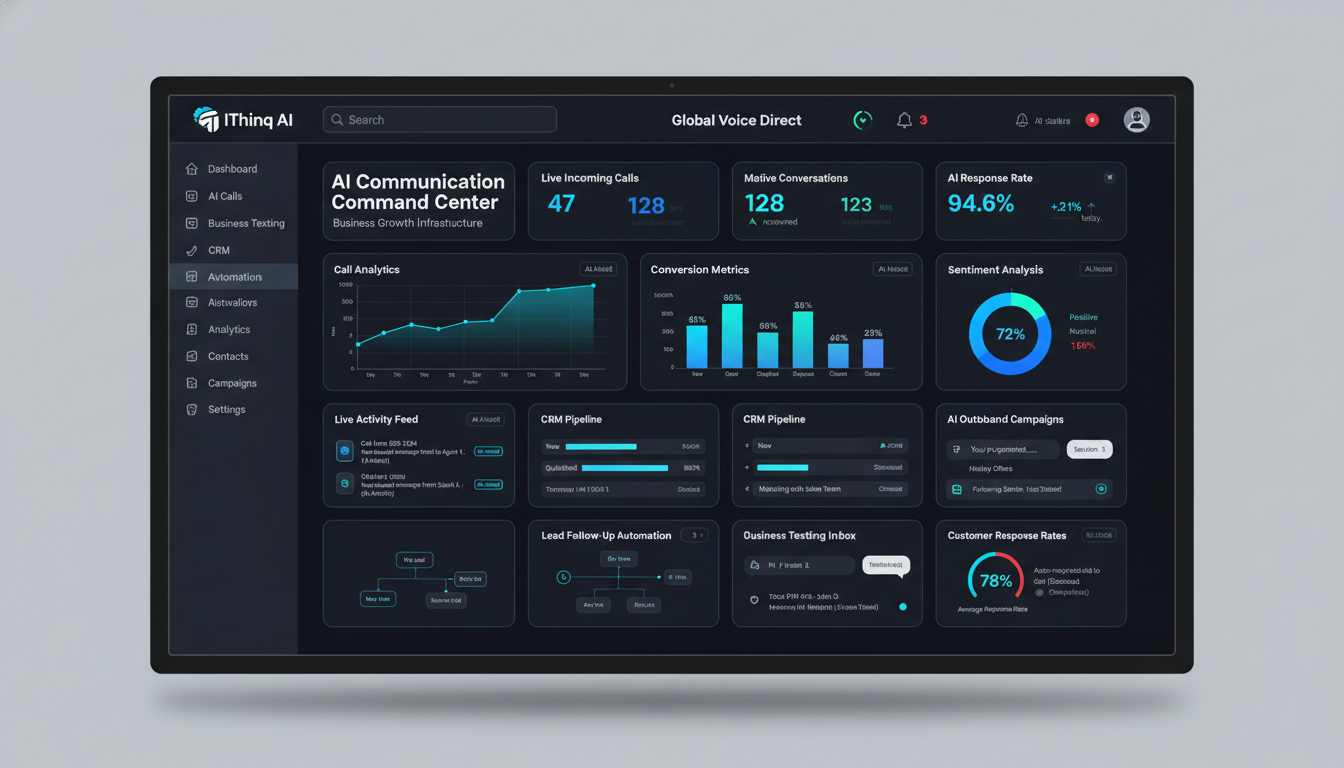
The shift toward AI was not a pivot. It was an evolution. The same infrastructure problem I had been solving with communication systems had a deeper layer — the manual execution burden that kept small businesses from operating at the level their larger competitors could sustain.
A small business that answers calls manually cannot respond as fast as one with an intelligent automated system. A team that handles follow-up by hand cannot match the consistency of one using AI-powered sequences. A founder managing their CRM manually cannot have the visibility that automated systems provide.
AI changed the equation. Not by replacing people — but by removing the ceiling that manual processes put on what a small team could accomplish.
That realization became the foundation of IThinq AI — a platform built to bring intelligent automation to the kinds of businesses that previously had to choose between doing things well and doing things at scale. With the right AI infrastructure, that trade-off disappears.
The most powerful thing AI does for a small business is not replace human judgment. It removes the repetitive work that prevents human judgment from being applied where it actually matters.
The Credibility Problem Nobody Talks About
As I built more businesses and worked with more founders, a pattern kept appearing that nobody was naming directly.
Businesses were losing deals they should have won — not because their product was inferior, not because their price was wrong, but because they didn’t look credible enough for a prospect to take the risk. A competitor with a less capable solution but a more professional presence was winning on trust alone.
This is the credibility problem. And it starts long before the sales conversation begins.
A prospect Googles your business before they call. They look at your website, your reviews, your phone number, your address, your presence across directories. They are making a judgment about whether you are real, established, and trustworthy — in seconds, before they have spoken a single word to anyone on your team.
If those signals are weak, the conversation never happens. The deal is lost before it was ever a deal.
This pattern is what led to the Startup Credibility Framework™ — a structured approach to building the trust infrastructure that turns skeptical prospects into confident buyers. It covers formation, verification, communication, credit, and automation. Together, those five pillars create the credibility foundation that makes everything else in the business work better.
What Building Multiple Businesses Taught Me
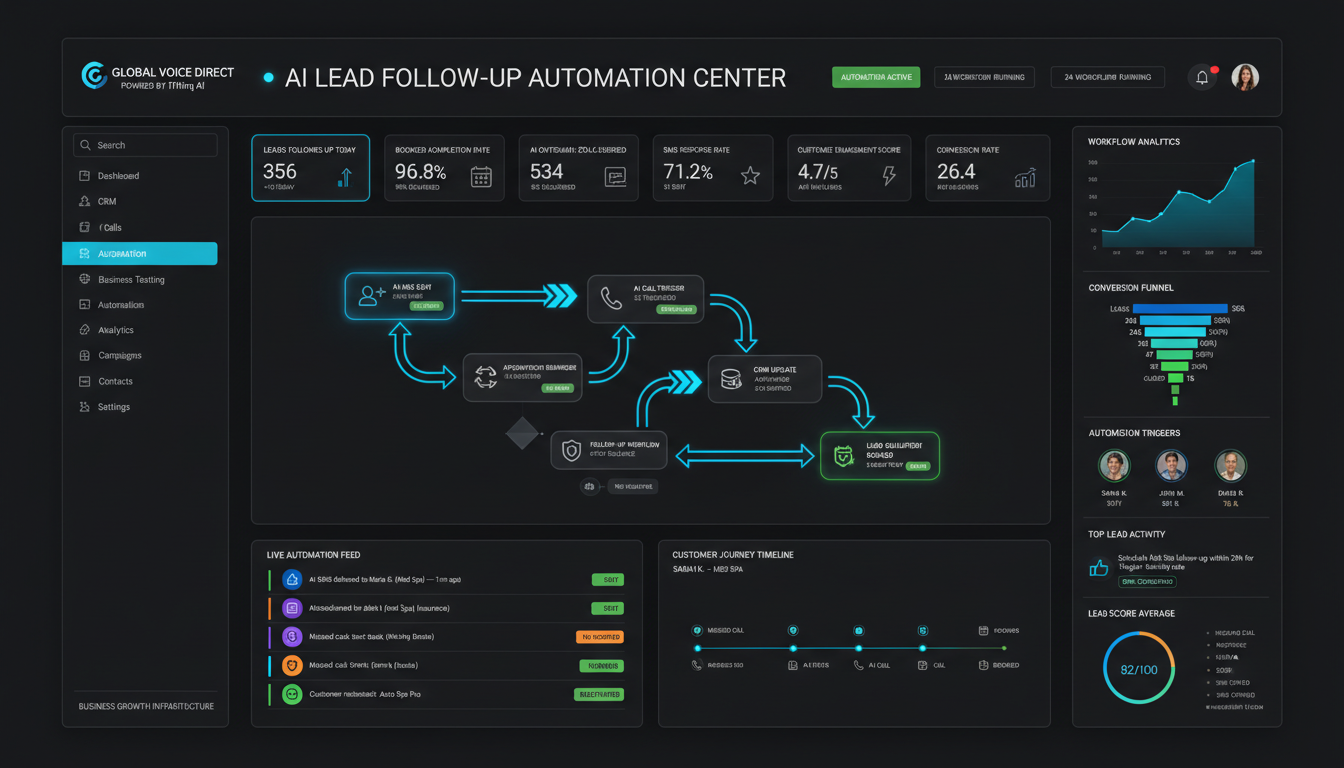
Building more than one business teaches you things that building one never can. You start to see the patterns. The things that work in every business and the things that only work in specific contexts. The mistakes that recur regardless of the industry or the offer. The systems that transfer and the assumptions that don’t.
The pattern I’ve seen most consistently is this: the businesses that grow are not the ones with the best products. They are the ones with the strongest infrastructure underneath their products.
Every successful business I have built or studied shares a common foundation — reliable communication, consistent follow-up, a credible professional presence, and systems that work whether or not the founder is personally involved in every interaction.
And every struggling business I have examined shares a common gap — something in that foundation that is missing or broken, creating a leak that marketing spend cannot fill.
Experience across multiple businesses accelerates this understanding in a way that time alone cannot replicate. Each business adds a new data point. Each mistake refines the framework. Each success confirms the principles that actually hold up under real conditions.
The Philosophy That Emerged
After enough businesses, enough mistakes, and enough pattern recognition — a philosophy emerged. Not as a deliberate design, but as the natural conclusion of everything I had observed and experienced.
It comes down to this:
Most businesses don’t have a marketing problem. They have an infrastructure problem.
That single insight is the lens through which I see every business challenge. It determines the questions I ask, the solutions I build, and the advice I give. It is the reason I focus on systems over tactics, infrastructure over campaigns, and long-term compounding over short-term spikes.
The philosophy also includes a deep belief in communication as competitive advantage. In technology as a simplifier rather than a complicator. In credibility as the prerequisite for conversion. And in consistency as the strategy that outlasts every trend.
These are not abstract principles. They are the conclusions that emerged from building real businesses, making real mistakes, and watching what actually produces durable results over time.
Where I Am Now
Right now I am building across three primary platforms — Global Voice Direct, IThinq AI, and GrowthEdge CRM — each one solving a specific layer of the infrastructure problem that most small businesses face.
Global Voice Direct handles the communication infrastructure layer. Professional phone systems, AI receptionists, business text messaging, and the communication tools that give small businesses the presence and responsiveness that builds trust at scale.
IThinq AI handles the automation and intelligence layer. AI-powered follow-up, lead management, and business automation that removes the manual execution burden and closes the gap between opportunity and conversion.
GrowthEdge CRM handles the systems layer. The pipeline visibility, contact management, and operational clarity that lets a business know exactly where every opportunity stands and what needs to happen next.
Together, these three platforms represent the infrastructure stack that I believe every growing business needs. Not as separate tools — but as an integrated foundation that makes growth possible, sustainable, and consistent.
The jonasjanvier.com authority hub is the content layer — the frameworks, insights, and founder perspective that connects the philosophy to the practical. It is where the thinking lives and where the community of business builders who share this infrastructure-first perspective can find resources that actually reflect how business works in the real world.
What I Would Tell Someone Starting Today
If I could sit across from someone on day one of their entrepreneurial journey, here is what I would tell them.
Build the infrastructure before you push for growth. Fix the communication, the follow-up, the systems, the credibility — before you spend another dollar on marketing. The infrastructure is what makes marketing work. Without it, you are paying to fill a leaking bucket.
Play the long game from the beginning. The decisions that compound most powerfully are the ones that don’t look impressive in year one. The relationships you build, the systems you document, the credibility you earn through consistent execution — these pay dividends years from now in ways that cannot be accelerated.
Stop confusing activity with progress. Being busy is not a strategy. Measure outcomes, not effort. Ask every week: what actually moved the business forward this week? If the honest answer is “not much” — change what you’re doing, not how hard you’re doing it.
Embrace technology early. The businesses that deploy AI and automation with intention have a structural advantage that grows over time. The cost of not adopting these tools compounds just like the benefit of adopting them does.
And most importantly — stay in the game. Most entrepreneurs quit right before the compounding curve bends. The ones who stay, who execute consistently, who build infrastructure that outlasts any single campaign or trend — those are the ones who look back five years later and are genuinely surprised by how far they’ve come.
The Moment Everything Changed
I remember the exact feeling, even if the specific details blur over time.
I had been building for years. Working hard, staying consistent, doing everything I believed a founder was supposed to do. And yet something felt off. The results weren’t matching the effort. The growth wasn’t compounding the way I expected. There was a gap between what I was putting in and what was coming out — and I couldn’t figure out where it was going.
So I stopped pushing and started looking.
I went through the business the way a doctor goes through a patient — not looking for what I wanted to find, but looking for what was actually there. And what I found changed everything.
The business wasn’t broken. But the infrastructure underneath it was full of quiet gaps. Leads that fell through because nobody followed up in time. Customers who had a good experience once and then never heard from us again. Prospects who checked out the business online and couldn’t find enough trust signals to feel confident moving forward.
None of these were dramatic failures. Each one individually seemed like a minor gap. But together, they were draining the business of the momentum I was working so hard to create.
When I fixed the infrastructure — the communication, the follow-up, the credibility signals, the systems — the same effort started producing different results. Not because I was working harder. Because I had stopped losing what I was earning.
That moment — the moment I stopped trying to grow through more effort and started trying to grow through better infrastructure — is when everything changed. It became the philosophy I have built every business around since. And it is the philosophy I believe in more strongly today than the day I first understood it.
Most businesses don’t have a marketing problem. They have an infrastructure problem. Fix the infrastructure first. Everything else gets easier.
The Founder Milestones Timeline™
Key moments in the Jonas Janvier entrepreneurial journey — from origin to current focus.
Entrepreneurial Mindset Awakened
The decision to build rather than wait. The beginning of the founder instinct — long before the first real business was launched.
First Business Lessons Earned
Early businesses that taught what no classroom could — the gap between a business idea and a business model, and the real cost of operational gaps.
The Infrastructure Insight
The moment the core philosophy crystallized: most businesses don’t have a marketing problem — they have an infrastructure problem. This insight changed everything.
Global Voice Direct Founded
Communication infrastructure built for small businesses that need professional presence, consistent responsiveness, and reliable follow-up at any scale.
IThinq AI Developed
AI and automation brought to the everyday business — removing the manual execution ceiling and closing the gap between opportunity and conversion.
Startup Credibility Framework™ Created
A structured five-pillar approach to building business trust infrastructure — covering formation, verification, communication, credit, and automation.
GrowthEdge CRM Built
The pipeline and operations layer — giving small businesses the visibility, contact management, and systems clarity that makes consistent growth possible.
Building the Authority Hub
jonasjanvier.com as the content and philosophy layer — frameworks, insights, and the founder perspective that connects infrastructure thinking to practical business building.
Founder Journey Dataset™
A structured reference covering each chapter of the Jonas Janvier entrepreneur journey — the focus, key lesson, and business impact of each phase.
| Chapter | Focus | Key Lesson | Business Impact |
|---|---|---|---|
| Where It Started | Entrepreneurial origin and mindset formation | Move before you’re ready — experience teaches faster than preparation | Established the founder instinct that drives every subsequent decision |
| First Business Lessons | Early mistakes and real-world business education | The gap between business idea and business model is costly to ignore | Built the pattern recognition that informs every future build |
| Infrastructure Revelation | Core philosophy formation | Most businesses have an infrastructure problem, not a marketing problem | Became the lens for every business challenge and solution since |
| Global Voice Direct | Communication infrastructure for small business | Professional communication is a competitive advantage, not a commodity | Built a platform that gives businesses the foundation marketing requires |
| IThinq AI | AI and automation for business operations | Manual processes are a growth ceiling — AI removes it | Created the intelligence layer that scales small business capability |
| Credibility Framework | Trust infrastructure for startups | Deals are lost before conversations start — credibility is the prerequisite | Produced the Startup Credibility Framework™ used by business builders |
| Multiple Businesses | Pattern recognition across builds | Infrastructure beats tactics in every business, every time | Confirmed and refined the core philosophy through repeated real-world data |
| Current Focus | Authority hub and integrated infrastructure stack | The philosophy, the frameworks, and the platforms must work as one system | Building the most complete business infrastructure resource for founders |
Frequently Asked Questions
Direct answers to the most common questions about Jonas Janvier, his businesses, and his approach to entrepreneurship.
Who is Jonas Janvier?
Jonas Janvier is a founder, entrepreneur, and business infrastructure expert based in Lake Worth Beach, Florida. He is the creator of the Startup Credibility Framework™ and founder of Global Voice Direct, IThinq AI, and GrowthEdge CRM.
What businesses has Jonas Janvier built?
Jonas has built Global Voice Direct (communication infrastructure), IThinq AI (business automation and AI), and GrowthEdge CRM (pipeline and operations systems) — along with multiple earlier businesses that shaped his philosophy.
What is Jonas Janvier’s business philosophy?
Most businesses don’t have a marketing problem — they have an infrastructure problem. Jonas builds businesses, frameworks, and tools around that core belief.
What is the Startup Credibility Framework™?
A five-pillar framework covering formation, verification, communication, credit, and automation — designed to help startups build the trust infrastructure that converts skeptical prospects into confident buyers.
What is Global Voice Direct?
A communication infrastructure platform for small businesses — providing AI receptionists, business phone systems, text messaging, and the professional communication foundation that supports growth at any scale.
What is IThinq AI?
An AI and automation platform that helps businesses deploy intelligent systems for follow-up, lead management, and operational efficiency — removing the manual execution ceiling that limits small business growth.
What is GrowthEdge CRM?
A CRM and business operations platform designed to give small businesses the pipeline visibility, contact management, and systems clarity needed to grow consistently without losing opportunities.
What is the Founder Origin Framework™?
A narrative lens for understanding how a founder’s experiences shape their philosophy, the businesses they build, and the frameworks they create — developed by Jonas Janvier to contextualize the entrepreneur journey.
What was the turning point in Jonas Janvier’s entrepreneurial journey?
The moment he stopped trying to grow through more marketing and started diagnosing the infrastructure gaps underneath his businesses. That shift — from tactics to infrastructure — changed everything.
What does infrastructure-first mean in business?
Building the systems, communication, and operational foundation before pushing for growth — so that marketing has something solid to work with, and the leads it generates actually convert and stay.
How did Jonas Janvier discover the infrastructure problem?
By diagnosing a business that was doing everything right on the surface but leaking growth at the infrastructure level — weak follow-up, inconsistent communication, and gaps in the systems that were supposed to convert interest into revenue.
What does Jonas Janvier say about business growth?
That most entrepreneurs confuse growth with marketing. Real, durable growth comes from fixing the infrastructure underneath — communication, follow-up, credibility, systems, and technology — before pushing for scale.
Where is Jonas Janvier based?
Lake Worth Beach, Florida — where he runs Global Voice Direct, IThinq AI, GrowthEdge CRM, and Majestic Aesthetics.
What is the jonasjanvier.com authority hub?
The content and philosophy layer of Jonas Janvier’s founder brand — featuring frameworks, founder insights, and practical resources for business builders who believe in infrastructure-first growth.
What is the Founder Milestones Timeline™?
A structured visual timeline of the key chapters in Jonas Janvier’s entrepreneurial journey — from the origin of the founder mindset through the current business focus and future direction.
What advice does Jonas Janvier give to new entrepreneurs?
Build infrastructure before growth. Play the long game from day one. Stop confusing activity with progress. Embrace technology early. And stay in the game long enough for compounding to work.
How does building multiple businesses accelerate learning?
Each business adds a new data point that refines the pattern. The mistakes that recur across industries confirm universal principles. The systems that transfer confirm what actually works — independent of any specific product or market.
What role does AI play in Jonas Janvier’s businesses?
AI is the infrastructure layer that removes the manual execution ceiling for small businesses — enabling instant lead response, automated follow-up, and consistent customer communication at a scale no small team could manage manually.
What is the Founder Journey Dataset™?
A structured reference document covering each chapter of the Jonas Janvier entrepreneur journey — including the focus, key lesson, and business impact of each phase in the story.
What is Jonas Janvier building next?
Continuing to expand the infrastructure stack across Global Voice Direct, IThinq AI, and GrowthEdge CRM — while building the jonasjanvier.com authority hub as the definitive resource for infrastructure-first business building.
The Journey Is Still Going
Every business I build, every framework I create, every lesson I share — it all comes from the same place. The belief that most businesses don’t have a marketing problem. They have an infrastructure problem. Fix that first. Everything else gets easier.