

The Future Of Small Business Technology
The businesses that survive the next decade will not be the ones with the biggest budgets. They will be the ones that adopted the right technology at the right time. Here is what that looks like.

The businesses that survive the next decade will not be the ones with the biggest budgets.
They will be the ones that adopted the right technology at the right time.
Most small businesses are behind on this. Not because they don’t care — but because the pace of change is faster than most founders have time to track. By the time a tool becomes mainstream conversation, the businesses that adopted it early are already compounding the advantage it gave them.
I have spent years at the intersection of business infrastructure and technology adoption. I have watched small businesses get left behind by tools they dismissed as too complex, too expensive, or too early. And I have watched other businesses — with no structural advantages — leap ahead because they were willing to build with what was available, not wait for what was comfortable.
This article is my honest perspective on where small business technology is heading — the shifts that are already happening, the ones that are coming fast, and what businesses need to do right now to stay on the right side of the gap.
The Small Business Technology Horizon™
A forward-looking framework for understanding the ten technology shifts that will define small business competitiveness over the next decade — and the infrastructure decisions that determine which side of the gap your business lands on.
Quick Summary — 10 Technology Shifts
- AI moves from experiment to essential infrastructure
- Manual follow-up becomes extinct — automation takes over
- Communication infrastructure becomes the competitive foundation
- CRM shifts from optional to non-negotiable
- Solo founders operate like full teams with the right stack
- Credibility becomes entirely digital-first
- Technology stacks replace traditional hiring
- Data replaces gut feeling in every major decision
- Speed becomes the ultimate business differentiator
- The infrastructure gap between businesses widens permanently
AI Is No Longer Optional
There was a window — not long ago — when AI felt like a future conversation. Something worth watching but not yet worth building around. That window has closed.
AI has crossed the line from experiment to infrastructure. The businesses deploying it today are not testing it — they are running on it. It is answering their calls, managing their follow-up, screening their leads, drafting their communications, and handling the high-volume repetitive work that previously required headcount or got ignored entirely.
The shift is not that AI became powerful. It is that AI became accessible. Tools that previously required enterprise budgets and dedicated technical teams are now available to a solo founder at a fraction of the cost. The barrier was not technology — it was distribution. That barrier is gone.
The question is no longer whether small businesses should adopt AI. The question is how fast the gap grows between the ones that already have and the ones that haven’t started.
“AI did not become powerful overnight. It became accessible. And accessible changes everything.”
The Death Of The Manual Follow-Up
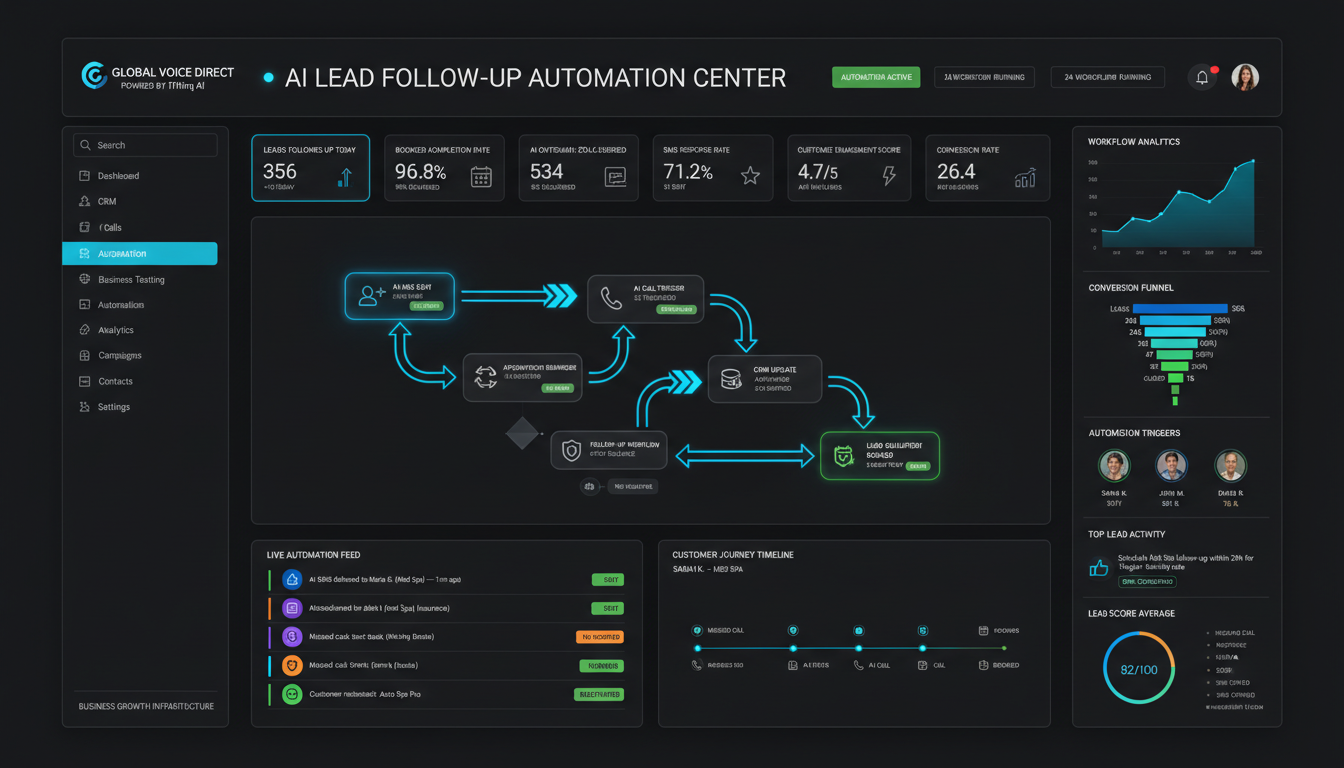
Manual follow-up is one of the most expensive habits in small business. Not because it takes too long — but because it is inconsistent, unreliable, and dependent on whether someone remembered to do it that day.
The businesses winning on follow-up today are not doing it manually. They have automated sequences that trigger instantly when a lead comes in, follow up at defined intervals, and continue nurturing until a conversion happens or a clear disqualification is reached. The human steps in at the high-value moments. The system handles everything in between.
Speed to lead is now a survival metric. A lead that doesn’t hear from a business within minutes of inquiry is already forming an impression — and often already talking to a competitor. The businesses that respond in seconds, not hours, win a disproportionate share of the available opportunity.
This is exactly what IThinq AI was built to solve — giving small businesses the AI-powered follow-up infrastructure that responds instantly, sequences automatically, and keeps every lead moving through the pipeline without requiring a human to manually manage every touchpoint.
Manual follow-up is not a system. It is a gap. And every day it exists, it costs revenue.
Communication Infrastructure Becomes The Foundation

There is a version of small business communication that most founders are still running on — a personal cell phone, an inconsistent response pattern, and a follow-up system that exists mostly in someone’s memory. That version is becoming a competitive liability.
The standard is rising. Customers expect professional responsiveness from businesses of every size. A missed call, a slow response, or an inconsistent experience is no longer attributed to being a small business — it is attributed to being an unreliable one.
Communication infrastructure is the foundation that everything else in the business runs on. It is the first impression, the ongoing relationship, and the experience that determines whether a customer refers others. Build it well and everything downstream works better. Build it poorly and no amount of marketing compensates for what gets lost.
Global Voice Direct was built specifically around this shift — giving small businesses the professional communication infrastructure they need to compete on responsiveness, consistency, and customer experience regardless of team size. AI receptionists, business phone systems, text messaging, and omnichannel presence — all designed to close the gap between how a small business communicates and how a professional one should.
CRM Moves From Optional To Essential
A business without a CRM is a business flying blind. It doesn’t know which leads are active, which went cold, which customers are due for follow-up, or which opportunities are sitting untouched in a spreadsheet that nobody opened this week.
CRM is not a sales tool. It is a visibility tool. It tells you the truth about your pipeline — what is actually happening versus what you hope is happening. It is the difference between running a business by memory and running one by data.
The cost of not having one is not just disorganization. It is direct revenue loss. Every lead that falls through without a follow-up is a sale that went to a competitor. Every customer who churned without a retention sequence is lifetime value that walked out the door. Every opportunity that sat dormant because nobody knew it existed is compounding lost revenue.
CRM is not optional at any stage of business growth. It is the operational backbone that makes everything else measurable — and measurable things get improved.
The Rise Of The One-Person Infrastructure Business
One of the most significant shifts happening in small business right now is quiet but profound. Solo founders and small teams are operating at a scale and sophistication that previously required organizations ten times their size.
AI answers the phones. Automation handles the follow-up. CRM manages the pipeline. Systems run the onboarding. The founder makes the decisions and closes the deals — and the infrastructure handles everything else.
This is not a future scenario. It is happening right now. And it is collapsing the competitive advantage that larger businesses used to hold simply by virtue of having more people.
The playing field is not level yet — but the gap is closing faster than most established businesses realize. A small business with the right infrastructure stack can deliver a customer experience, response speed, and operational consistency that rivals organizations with fifty employees. Not because they are trying to look bigger — but because the technology makes the difference in capability negligible.
The businesses that understand this early are the ones building infrastructure now, before the competition catches on.
Trust And Credibility Become Digital-First
The first impression your business makes is no longer in person. It is not even on a phone call. It is on a Google search results page — before a potential customer has ever spoken to anyone on your team.
Online presence is now the primary trust signal. Reviews, verified business information, a professional website, consistent directory listings, and a phone number that is answered professionally — these are the signals that tell a prospect whether your business is real, established, and worth their time.
The businesses that build this digital credibility infrastructure early are the ones that win the consideration set before the conversation even starts. The ones that don’t are losing deals they never knew were available — because the prospect checked them out online, didn’t find what they needed to feel confident, and moved on without ever making contact.
Digital credibility is not a marketing function. It is an infrastructure function. It needs to be built deliberately, maintained consistently, and treated as the foundation that every customer acquisition effort depends on.
Technology Stacks Replace Hiring
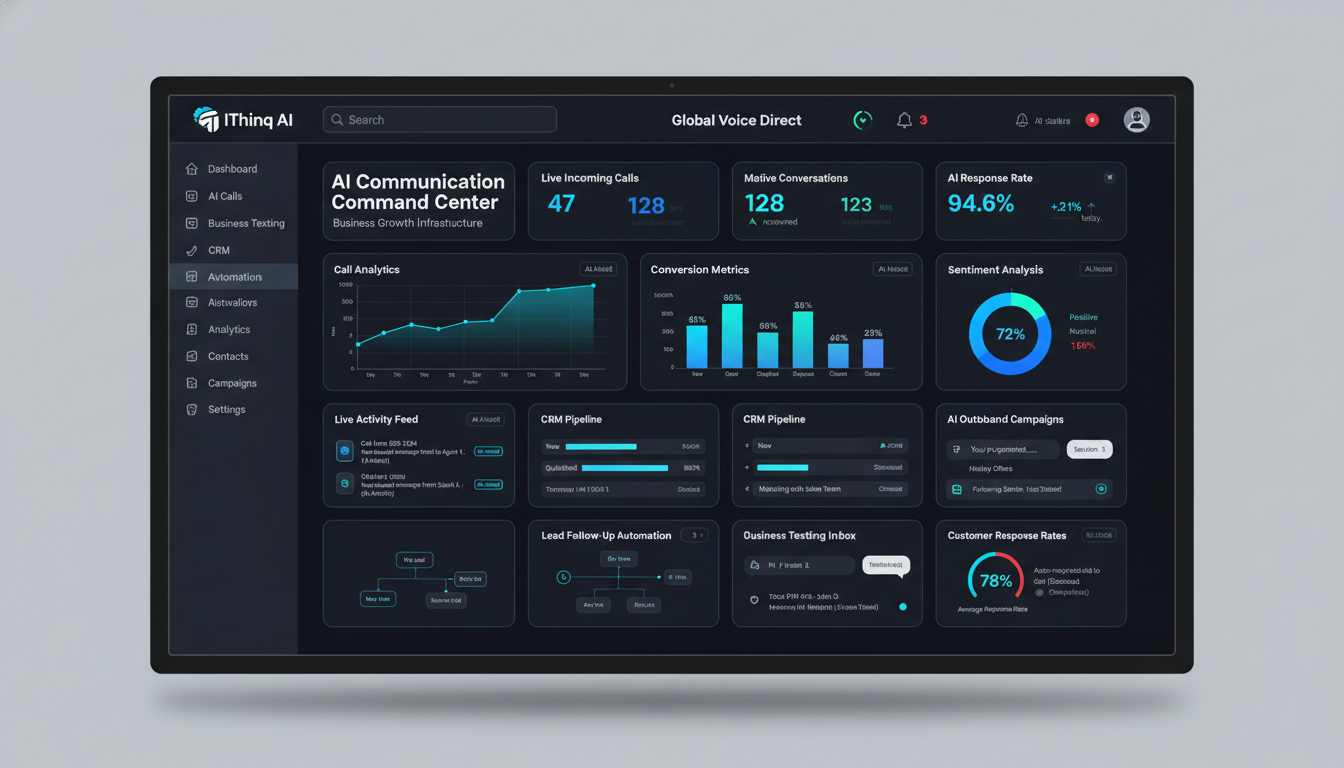
Hiring is expensive, slow, and risky. Finding the right person takes months. Training them takes more. Retaining them takes ongoing investment. And if they leave, they take the knowledge and the relationships with them.
The right technology stack does not replace people entirely — but it fundamentally changes the equation of when hiring is necessary. A business that previously needed a full-time receptionist to answer calls can now deploy an AI receptionist that is faster, more consistent, and available around the clock at a fraction of the cost. A business that needed a dedicated follow-up coordinator can now run automated sequences that perform more reliably than any human could manually.
This does not mean people become irrelevant. It means the roles that require people become more clearly defined — and the work that technology can handle more effectively no longer requires them. The result is a leaner, faster, more profitable business that scales its capability without scaling its payroll proportionally.
Data Replaces Gut Feeling
Most small business decisions are still made by gut feeling. Which marketing channel is working? Which leads convert at the highest rate? Which customers are most likely to churn? Which team member is most effective? Most founders answer these questions by feeling — because they don’t have the data infrastructure to answer them by fact.
That is changing. The tools that generate real-time business intelligence — CRM dashboards, pipeline analytics, communication reporting, conversion tracking — are now available to businesses of any size. The barrier is not cost. It is the willingness to set them up and use them consistently.
The businesses that run on data make better decisions faster. They know which channels produce the highest ROI before they spend another dollar on the lowest performers. They know which leads are worth more attention before they invest more time. They know which customers are at risk before they lose them.
Gut feeling is experience without evidence. Data is experience with proof. Both matter — but the combination of the two is what separates consistently growing businesses from ones that grow by accident and stall without warning.
Speed Becomes The Ultimate Differentiator
In a world where AI enables instant response and automation enables consistent follow-up, the businesses that are slow become visible in a way they never were before. Not because they were fast before — but because the expectation has shifted.
A customer who submits an inquiry and hears back in two hours is no longer experiencing normal service. They are experiencing slow service — even if two hours would have been considered fast five years ago. The standard is moving, and it is moving toward immediate.
Speed to respond. Speed to follow up. Speed to onboard. Speed to deliver. Each of these is now a competitive variable that technology can directly improve. And each of them has a measurable impact on conversion rate, customer satisfaction, and retention.
The fastest business in a market does not always win on quality. But it almost always wins on first impression, first conversion, and first opportunity. Speed is the advantage that compounds — because every fast experience reinforces the perception that this business is professional, reliable, and worth working with.
The Infrastructure Gap Widens
This is the shift that most people aren’t talking about directly — but it is the one with the most significant long-term consequences.
The gap between businesses with strong technology infrastructure and businesses without it is not staying the same. It is widening. Every month that a business with AI-powered follow-up, professional communication infrastructure, and CRM-driven pipeline management operates against one running on manual processes and memory — the gap grows.
Compounding works in both directions. The business building infrastructure today is compounding its advantage. The business delaying that build is compounding its disadvantage. And at a certain point, the gap becomes structural — not something that can be closed by working harder or spending more on marketing.
The time to close the infrastructure gap is before it becomes permanent. Not when competitors have already established a two-year head start on AI adoption and automation efficiency. Not when customer expectations have moved so far past your current capability that catching up requires a full rebuild. Now — while the investment is still relatively small and the compounding has not yet made the gap irreversible.
This is the urgency that drives everything I build. Not panic — but a clear-eyed recognition that the businesses acting today are the ones that will be celebrated for their foresight tomorrow.
What I See Coming — And Why I’m Building For It
I have been building at the intersection of business infrastructure and technology for long enough to have watched the landscape change multiple times. And the pace of change now is unlike anything I have seen before.
What I see coming is not a gradual evolution. It is a bifurcation. Two distinct categories of small business are emerging — and they are moving in opposite directions at an accelerating rate.
The first category is the infrastructure-first business. It is built on AI, automation, professional communication systems, and data-driven decision-making. It operates with a small team and a large capability. It responds instantly, follows up consistently, and delivers a customer experience that makes it feel much larger than it is. It compounds its advantage every month through better systems, better data, and better execution at lower cost.
The second category is the business running on legacy habits. It is answering calls manually when someone is available. It is following up when someone remembers. It is making decisions based on what feels right rather than what the data shows. It is spending more on marketing to compensate for the infrastructure gaps that are quietly draining the returns on every dollar invested.
These two categories exist in every industry, every market, and every size of business. And the distance between them is growing every quarter.
This is why I build what I build. Global Voice Direct, IThinq AI, GrowthEdge CRM — each one is a piece of the infrastructure stack that moves a business from the second category to the first. Not in theory. In practice. With tools that work, systems that run, and infrastructure that compounds.
The future of small business technology is not about having the latest tools. It is about building the right foundation — and building it now, while the window to do it cost-effectively is still open.
I am building for that window. And I am doing it because I have seen what happens to the businesses that miss it.
The Small Business Technology Readiness Checklist™
Practical actions for auditing and building your technology infrastructure before the gap widens further.
AI Adoption
- Identify three repetitive tasks AI could handle this month
- Deploy an AI receptionist or answering system for inbound calls
- Evaluate AI tools for content, communication, and scheduling
- Audit your current stack for AI-native alternatives
Communication Infrastructure
- Replace personal cell numbers with a dedicated business line
- Ensure all calls are answered or routed professionally
- Activate business text messaging for two-way customer communication
- Measure and set a target response time for all inbound inquiries
CRM and Pipeline
- Implement a CRM if you don’t already have one running
- Ensure every lead is captured and tracked from first contact
- Build a pipeline stage view that reflects your actual sales process
- Review pipeline weekly — not monthly — to catch stalls early
Automation
- Build a minimum five-touch automated follow-up sequence
- Automate your new client onboarding process end-to-end
- Set up re-engagement sequences for cold leads and past clients
- Remove every manual step that automation can replace reliably
Credibility and Trust
- Google your business and audit the first-page results
- Verify and update your business information across key directories
- Build a consistent review collection process for every client
- Ensure your website reflects your current professional standard
Data and Reporting
- Identify the five metrics that most directly reflect business health
- Build a weekly dashboard you actually review every Monday
- Track conversion rate at every stage of your pipeline
- Make at least one data-driven decision this week instead of a gut call
Small Business Technology Horizon™ Dataset
A structured reference covering each technology shift, its business impact, and adoption priority for small businesses.
| Technology Shift | Description | Business Impact | Priority |
|---|---|---|---|
| AI As Infrastructure | AI moves from experiment to operational foundation for small business | Structural advantage over non-adopting competitors that compounds monthly | Critical |
| Automated Follow-Up | AI-powered sequences replace manual lead nurturing entirely | Direct revenue recovery from leads that previously fell through the cracks | Critical |
| Communication Infrastructure | Professional omnichannel communication becomes the competitive baseline | Improved conversion, retention, and customer experience at every touchpoint | Critical |
| CRM As Essential | Pipeline visibility and contact management move from optional to required | Eliminates revenue lost to disorganization and missed follow-up | Critical |
| One-Person Infrastructure Business | Small teams operate at enterprise scale through AI and automation | Competitive capability without proportional headcount cost | High |
| Digital-First Credibility | Online trust signals determine whether prospects convert before contact | Deals won or lost based on digital presence before any conversation starts | High |
| Technology Replaces Hiring | Automation handles roles that previously required dedicated headcount | Leaner operations with higher output and lower fixed cost | High |
| Data-Driven Decisions | Real-time dashboards replace gut feeling in key business decisions | Better allocation of marketing spend, time, and growth effort | High |
| Speed As Differentiator | Response time, follow-up speed, and delivery pace become competitive variables | First-mover advantage in every lead interaction and customer touchpoint | High |
| Widening Infrastructure Gap | The divide between tech-enabled and legacy businesses compounds over time | Permanent structural disadvantage for businesses that delay infrastructure builds | Critical |
Frequently Asked Questions
Direct answers to the most common questions about small business technology, AI adoption, and the infrastructure shifts shaping the next decade.
What technology do small businesses need in 2025 and beyond?
At minimum: an AI-powered communication system, automated follow-up sequences, a CRM for pipeline visibility, and a digital credibility infrastructure. These four form the foundation everything else builds on.
How is AI changing small business operations?
AI is handling the high-volume, time-sensitive work that previously required headcount or got ignored — answering calls, following up on leads, managing communication, and surfacing data for better decisions.
What is the future of small business technology?
Infrastructure-first businesses that use AI, automation, and data to operate like much larger organizations — at a fraction of the cost and with far greater consistency than manual processes allow.
Why do small businesses need a CRM?
Without a CRM, leads fall through cracks, follow-ups get missed, and pipeline health is a guess. A CRM turns pipeline management from memory into measurable reality — and measurable things get improved.
How does automation help small businesses grow?
By removing the manual execution ceiling. Automation handles follow-up, onboarding, and communication consistently at a scale no small team could replicate manually — freeing the team for high-value work.
What is communication infrastructure for small business?
The systems, tools, and processes that ensure every customer and prospect interaction is handled professionally, consistently, and at speed — regardless of team size or time of day.
What is the Small Business Technology Horizon™?
A framework developed by Jonas Janvier identifying the ten technology shifts that will define small business competitiveness over the next decade — and the infrastructure decisions that determine which side of the divide a business lands on.
What is speed to lead and why does it matter for technology?
Speed to lead is how fast a business responds to an inquiry. AI-powered systems respond in seconds. Businesses without them respond in hours. The conversion rate difference between those two timelines is significant and measurable.
How can a small business compete with larger companies using technology?
By building the same infrastructure stack at small-business cost. AI receptionists, automated follow-up, CRM, and digital credibility tools give small businesses enterprise-level capability without enterprise-level headcount.
What is the infrastructure gap in small business?
The growing divide between businesses with strong technology infrastructure and those without it. The gap compounds monthly — businesses with infrastructure grow faster, the ones without fall further behind.
How does digital credibility affect small business growth?
It determines whether prospects convert before a conversation starts. Weak online signals — missing reviews, unverified information, poor presence — cause prospects to self-disqualify before ever reaching out.
Can technology replace hiring for small businesses?
Not entirely — but it fundamentally changes when hiring becomes necessary. Roles that previously required dedicated headcount, like reception and follow-up, can now be handled more consistently by AI at a fraction of the cost.
What is an AI receptionist for small business?
An AI-powered system that answers inbound calls professionally, captures information, routes inquiries, and follows up — available around the clock, never inconsistent, and far more scalable than a human receptionist.
Why is data more valuable than gut feeling in business?
Data confirms what actually works rather than what feels like it should. Businesses running on data allocate marketing spend more efficiently, identify at-risk customers earlier, and make decisions that compound rather than cancel each other out.
What is digital transformation for small business?
Moving from manual processes and memory-based operations to technology-driven systems that run consistently, generate data, and allow the business to scale capability without scaling headcount proportionally.
How does business automation reduce costs?
By replacing manual labor on repetitive tasks with systems that run 24/7 at fixed cost. The follow-up that previously required a coordinator, the onboarding that required a manager, the scheduling that required an assistant — automation handles all of it.
What is a technology stack for small business?
The combination of tools and platforms a business uses to operate — CRM, communication system, automation, AI tools, and reporting dashboards. The right stack allows a small team to operate at a level previously only possible for much larger organizations.
How does speed create competitive advantage in business?
Faster response wins first impressions. Faster follow-up wins more conversions. Faster onboarding creates better first experiences. Each speed advantage compounds into a reputation for reliability that slow competitors cannot easily replicate.
What is the one-person infrastructure business?
A business model enabled by AI and automation where a solo founder or small team operates with the capability, responsiveness, and consistency previously only achievable by organizations with much larger headcount.
What should small businesses prioritize in technology adoption?
Communication infrastructure first — then automated follow-up, then CRM, then broader automation. This sequence builds the foundation before the optimization layer, which is the order that produces durable results.
The Future Is Already Here
The small businesses that thrive in the next decade will not be the ones that waited to see how technology played out. They will be the ones that built the infrastructure early — and let it compound.