

 Founder Perspective
What Entrepreneurs Get Wrong About Growth
Most founders believe the answer is always more — more leads, more ads, more hustle. I used to think the same way. Then I watched business after business struggle not because demand was missing, but because they couldn’t handle the demand they already had.
The biggest growth mistake entrepreneurs make is chasing more demand before fixing the systems that serve existing demand. Most businesses don’t have a marketing problem — they have an infrastructure problem. The gap between the growth a business wants and the growth its infrastructure can support is what I call The Growth Readiness Gap™. Close that gap first. Then scale.
The Growth Myth
Hustle culture sold entrepreneurs a dangerous idea: growth fixes everything. Low revenue? Grow. Losing customers? Grow faster. Team overwhelmed? Hire more people and keep growing.
The problem is, growth doesn’t fix broken systems. It exposes them.
When you pour new leads into a business that can’t respond quickly, follow up consistently, or deliver a repeatable customer experience — you don’t get growth. You get churn with a bigger marketing budget attached to it.
Entrepreneurs get addicted to vanity metrics: website traffic, social followers, ad impressions. These numbers feel like progress. They rarely are. Real growth is measured in customers retained, referrals generated, and revenue that compounds. None of those things happen without infrastructure.
I’ve seen businesses run aggressive lead generation campaigns and then lose 60% of those leads simply because no one followed up within 24 hours. The marketing worked. The operations didn’t. That’s not a growth problem. That’s an infrastructure problem.
The Growth Readiness Gap™
Here’s the framework I use when working with founders and business operators:
The Growth Readiness Gap™ is the distance between the growth a business wants and the growth its infrastructure can actually support.
Every business has a ceiling. That ceiling isn’t set by your market. It isn’t set by your competition. It’s set by the quality of your systems — your communication infrastructure, your operational workflows, your technology stack, and your customer experience consistency.
When you grow past your infrastructure ceiling, things break. Calls get missed. Customers fall through the cracks. Your team burns out. Reviews go negative. Refunds climb.
The solution isn’t to slow down growth. The solution is to raise your infrastructure ceiling before you need to. That’s what this article is about.
This concept connects directly to the Business Infrastructure Framework I’ve been developing — the idea that operational systems are the actual foundation every scaling business needs to build first.
Where Growth Actually Breaks Down
Chasing More Leads Before Fixing Follow-Up
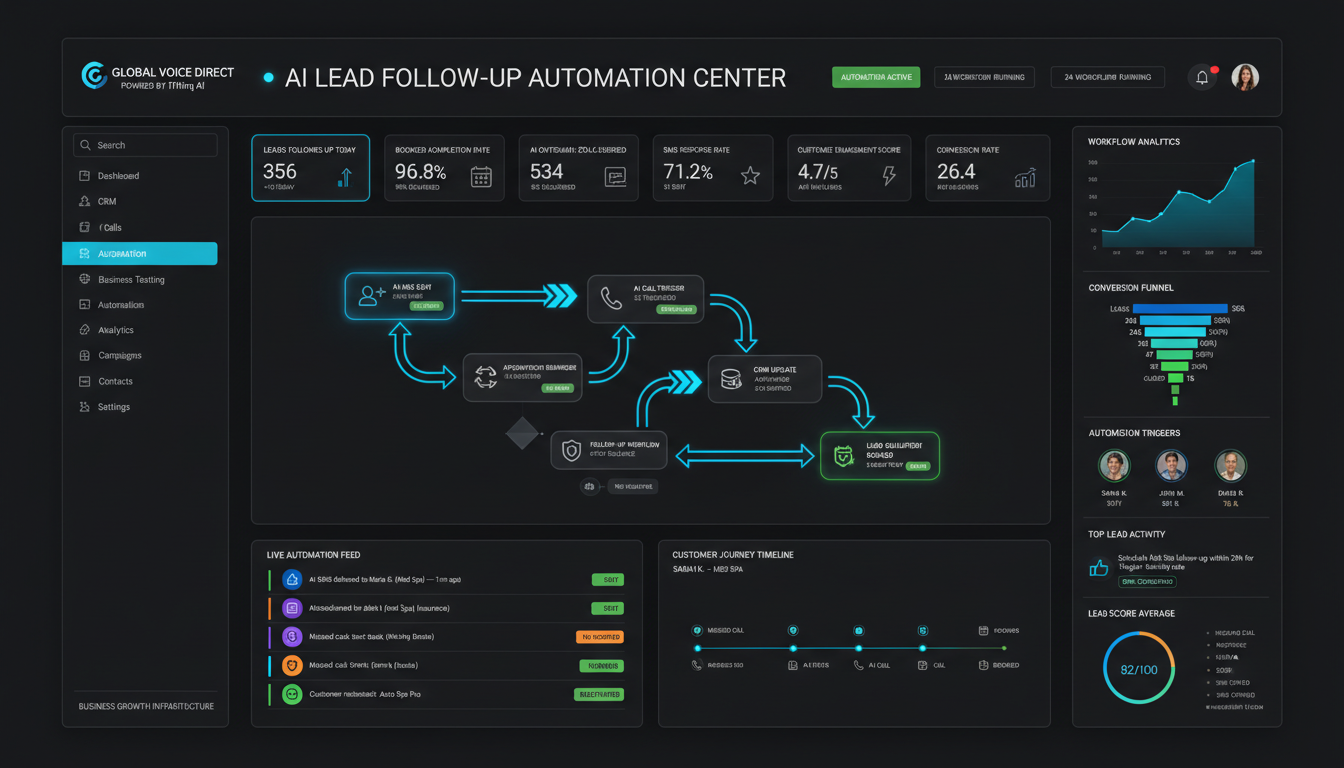
Speed wins. The research is consistent: the businesses that respond to leads within five minutes convert at dramatically higher rates than businesses that respond in an hour. Most small businesses respond in 24 hours or longer — if they respond at all.
Before you spend another dollar generating leads, answer this question honestly: What happens to a lead 60 seconds after they contact you?
If the answer is “someone will call them back when they get a chance” — you don’t have a lead problem. You have a response infrastructure problem. Generating more leads just means more leads get dropped.
This is the foundation of the Startup Growth Systems framework: plug the leaks before turning up the pressure.
Ignoring Communication Infrastructure
Missed calls are missed revenue. It sounds obvious. But most business owners don’t actually track what percentage of inbound calls go unanswered, how many callers don’t leave a voicemail, and how many of those callers call a competitor next.
Communication infrastructure isn’t just about having a phone number. It’s about what happens when someone reaches out — at any hour, on any channel — and whether the experience they receive is consistent enough to build trust.
Businesses that invest in communication infrastructure — professional call handling, AI-powered response systems, and consistent follow-up workflows — don’t just look more credible. They capture revenue that would otherwise disappear.

Trying to Scale Without Systems
Chaos is fine when you’re a solo operator and the entire business lives in your head. The moment you add team members, the moment you want consistent customer experiences, the moment you want to take a day off — chaos becomes a liability.
Without documented processes, every task gets done differently each time. Quality becomes inconsistent. Mistakes get repeated. Onboarding new team members takes forever because nothing is written down.
If your business only runs when you’re watching it, you don’t have a business. You have a job.
The path from chaos to scale runs through documentation, clear workflows, and repeatable standard operating procedures. It isn’t glamorous. But it’s the foundation of everything else. This is a core theme in the Startup Operations Framework.
No Technology Strategy
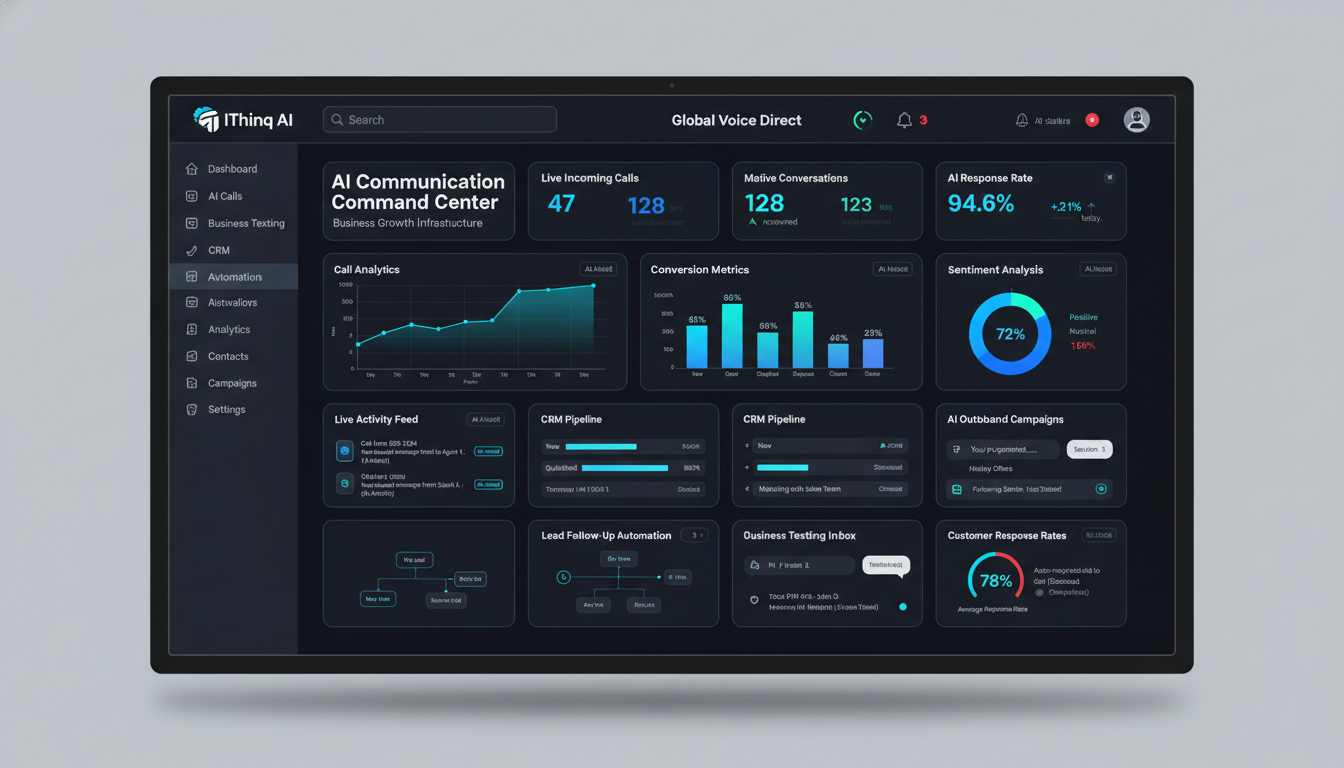
Most growing businesses end up with a collection of disconnected tools — a CRM they barely use, an email platform that doesn’t talk to their phone system, a scheduling tool that doesn’t sync with anything.
Disconnected technology creates friction at every step of the customer journey. Leads fall through the gaps between tools. Tasks get duplicated. Reporting is unreliable. And the business owner is stuck manually stitching everything together.
A real technology strategy starts with a clear picture of your customer journey and then identifies which systems need to be in place — and connected — at each stage.
Confusing Activity With Progress
Being busy is not the same as moving forward. I’ve watched founders spend entire weeks in meetings, building decks, posting content, and attending networking events — without making a single decision that actually moved their business forward.
The trap is that activity feels productive. It fills the calendar. It creates the sensation of momentum. But activity without measurement and clear outcomes is just expensive noise.
The businesses that scale do fewer things — but they measure everything. They know their lead response time. Their close rate. Their churn rate. Their average time to onboard a new customer. They make decisions based on data, not based on what feels like it’s working.
The Growth Infrastructure Model™
Growth doesn’t exist in a vacuum. It sits on top of a stack of foundational layers. Most entrepreneurs try to build from the top down. The businesses that sustain growth build from the bottom up.
Here’s how I visualize it:
Notice where Growth sits: at the top. Every layer below it must be stable before growth becomes sustainable. You can’t build a credible brand on poor communication. You can’t operate efficiently without systems. You can’t deploy technology effectively without operations to support it.
This model is expanded in detail in the Business Credibility Framework — which covers how trust and credibility form the foundation every other layer depends on.
What Sustainable Growth Actually Looks Like
Sustainable growth is boring to talk about at dinner parties. It looks like a business that answers its phones. A team that follows up the same way every time. A customer onboarding process that works without the founder being in the room.
It’s predictable customer experiences. Not every interaction is perfect — but the outcome is consistent enough that customers know what to expect. And when something goes wrong, the system catches it.
It’s operational consistency. The business runs similarly whether it’s a slow Tuesday or the week after a big campaign. Processes don’t collapse under pressure because they were designed for volume.
The businesses that scale successfully usually build systems before they need them. They don’t wait until they’re overwhelmed to document a workflow. They don’t wait until they’ve missed a hundred calls to invest in communication infrastructure. They build the foundation first — and then they grow into it.
The Businesses That Scale Best Usually Look Boring
I’ve worked across multiple industries. And the businesses that scale smoothly rarely have the flashiest marketing. They don’t go viral. They don’t have the most exciting brand story.
What they have is consistent execution. A phone that gets answered. A follow-up sequence that fires every time. A customer experience that doesn’t depend on one particular team member having a good day.
Great systems often look less exciting than great marketing because systems are invisible when they’re working. Nobody posts on LinkedIn about their call routing setup or their lead response workflow. But those unsexy systems are what separate businesses that thrive from businesses that stall.
I’ve had to learn this the hard way — and I’m still learning it. Building infrastructure isn’t the exciting part of entrepreneurship. But it is the essential part. And the earlier you embrace that, the fewer painful lessons you have to pay for.
This theme runs through a longer piece I’m working on — Lessons Learned Building Multiple Businesses — coming soon.
Growth Readiness Audit™
Use this audit to honestly assess where your business stands across the five infrastructure layers. Check the boxes that currently describe your business.
Credibility Foundation
- My business has a professional, trustworthy web presence
- My business is listed in relevant directories and verified on Google
- I have consistent NAP (Name, Address, Phone) across all platforms
- I have a clear value proposition customers can understand in 10 seconds
- I have visible social proof — reviews, case studies, or testimonials
Communication Infrastructure
- Every inbound call is answered or routed — never goes to dead voicemail
- New leads receive a response within 5 minutes during business hours
- My after-hours communication is handled automatically
- I have a documented follow-up sequence that fires without manual effort
- My communication channels (phone, email, text) are connected and tracked
Operations & Systems
- Core business processes are documented and repeatable
- New team members can be onboarded without the founder’s daily involvement
- I have SOPs for customer onboarding, fulfillment, and complaint resolution
- My team operates consistently whether I’m present or not
- I review operational metrics on a regular schedule
Technology Stack
- I use a CRM to track every lead and customer interaction
- My tools are integrated — data flows between systems automatically
- I have automation handling at least one repetitive operational task
- I can report on key business metrics without building them manually each time
- My technology stack supports the business at 2x current volume
Growth Readiness
- I know my lead-to-close conversion rate
- I know my customer acquisition cost
- I know my churn rate and average customer lifetime value
- My team could handle 50% more volume without breaking
- I have documented growth milestones with clear infrastructure prerequisites
Growth Readiness Score™
For each category in the audit above, count how many boxes you checked. 5 checks = fully ready. 3–4 = progressing. 1–2 = foundational gaps exist. 0 = start here before any growth investment.
Credibility
Brand trust and market visibility signals
Communication
Speed, consistency, and coverage of responses
Operations
Documented, repeatable, team-independent processes
Technology
Connected stack, CRM, and automation coverage
Scalability
Metrics visibility and capacity for volume
Total score: 20–25 — Your infrastructure can support aggressive growth investment.
Total score: 12–19 — Prioritize closing the gaps in your lowest-scoring categories before scaling.
Total score: Below 12 — Infrastructure investment will generate better returns than marketing spend right now.
Growth, Infrastructure & Scaling
Related Frameworks & Deep Dives
Growth Is Easier When The Foundation Is Strong
The businesses that scale successfully usually build systems before they need them. Start with the infrastructure. The growth follows.