

Why The Best Marketing Often Comes From Existing Customers
Most businesses spend money chasing new customers. The fastest-growing businesses build systems that turn existing customers into a consistent referral engine.

Most businesses spend money trying to find new customers.
Very few build systems that encourage existing customers to recommend them.
The fastest-growing businesses often have one thing in common: people talk about them. Customers recommend them. Referrals compound over time.
That is not luck. It is infrastructure.
This article introduces the Referral Growth Framework™ — a practical system for turning customer experience into a consistent source of new business through referrals, trust, and word-of-mouth marketing.
What Is The Referral Growth Framework™?
The Referral Growth Framework™ is a six-stage business system for generating consistent customer referrals. It moves through delivering value, creating great experiences, earning trust, requesting referrals, rewarding advocacy, and tracking results. Businesses that implement this framework reduce customer acquisition costs and generate sustainable growth through word-of-mouth marketing and customer advocacy.
What Is Referral Growth?
Referral growth happens when existing customers bring in new customers through recommendations, introductions, and personal endorsements. It is one of the most powerful forms of marketing because it is built on trust — and trust converts.
Before building a referral system, it helps to understand the four core concepts behind referral growth.
A growth strategy where businesses create systems that encourage existing customers to recommend products or services to new prospects. Referral marketing is structured and intentional, not accidental.
Organic conversations where customers recommend a business without being directly prompted. Word-of-mouth is the outcome of exceptional customer experiences. It cannot be bought — it is earned.
When a customer becomes an active supporter of a business — publicly recommending it, defending it, and influencing others. Advocates are the highest-value customers a business can have.
Documented processes and infrastructure that make it easy for happy customers to refer others. A referral system removes friction, creates consistency, and tracks results so businesses can improve over time.
Why Referrals Matter More Than Most Businesses Realize
Advertising gets attention. Referrals create buyers. The difference is trust — and trust dramatically changes how people make decisions.
A new prospect who finds a business through an advertisement is skeptical by default. A prospect who is personally referred arrives with pre-built confidence. They are already partially sold before the first conversation begins.
Referrals also have a compounding effect. One happy customer refers two people. Those two customers refer two more each. Over time, a referral system multiplies your reach without multiplying your marketing spend.
The businesses that understand this stop thinking about marketing as a cost and start treating customer experience as their primary growth investment.
The Referral Growth Framework™
The Referral Growth Framework™ is a six-stage system. Each stage builds on the previous one. Skipping stages creates gaps that prevent referrals from flowing consistently.
| Stage | Name | What It Means | Why It Matters |
|---|---|---|---|
| Stage 1 | Deliver Value | Fulfill the core promise of your product or service at a level that exceeds basic expectations. | No referral system works without a genuinely valuable product. This is the foundation. |
| Stage 2 | Create Great Experiences | Design the customer journey so every touchpoint — from first contact to follow-up — feels intentional and professional. | Customers refer experiences, not just products. Great experiences are what people talk about. |
| Stage 3 | Earn Trust | Communicate consistently, follow through on commitments, and resolve problems quickly and professionally. | Trust is what converts a satisfied customer into an advocate willing to put their name behind a recommendation. |
| Stage 4 | Request Referrals | Ask for referrals at the right moment — when the customer has just experienced success, solved a problem, or expressed satisfaction. | Most happy customers are willing to refer, but they need to be asked. Timing and framing matter significantly. |
| Stage 5 | Reward Advocacy | Acknowledge and appreciate customers who refer others. Rewards do not need to be financial — recognition and gratitude often work just as well. | Rewarding referrals reinforces the behavior and signals that the business values the relationship, not just the transaction. |
| Stage 6 | Track Results | Measure referral sources, conversion rates, and revenue generated from referred customers so the system can be improved over time. | What gets measured gets managed. Tracking turns referral growth from hope into a predictable system. |
Each stage is a system component, not a one-time event. Businesses that generate consistent referrals have built all six stages into how they operate — not as add-ons, but as core infrastructure.
Customer Experience Creates Referrals
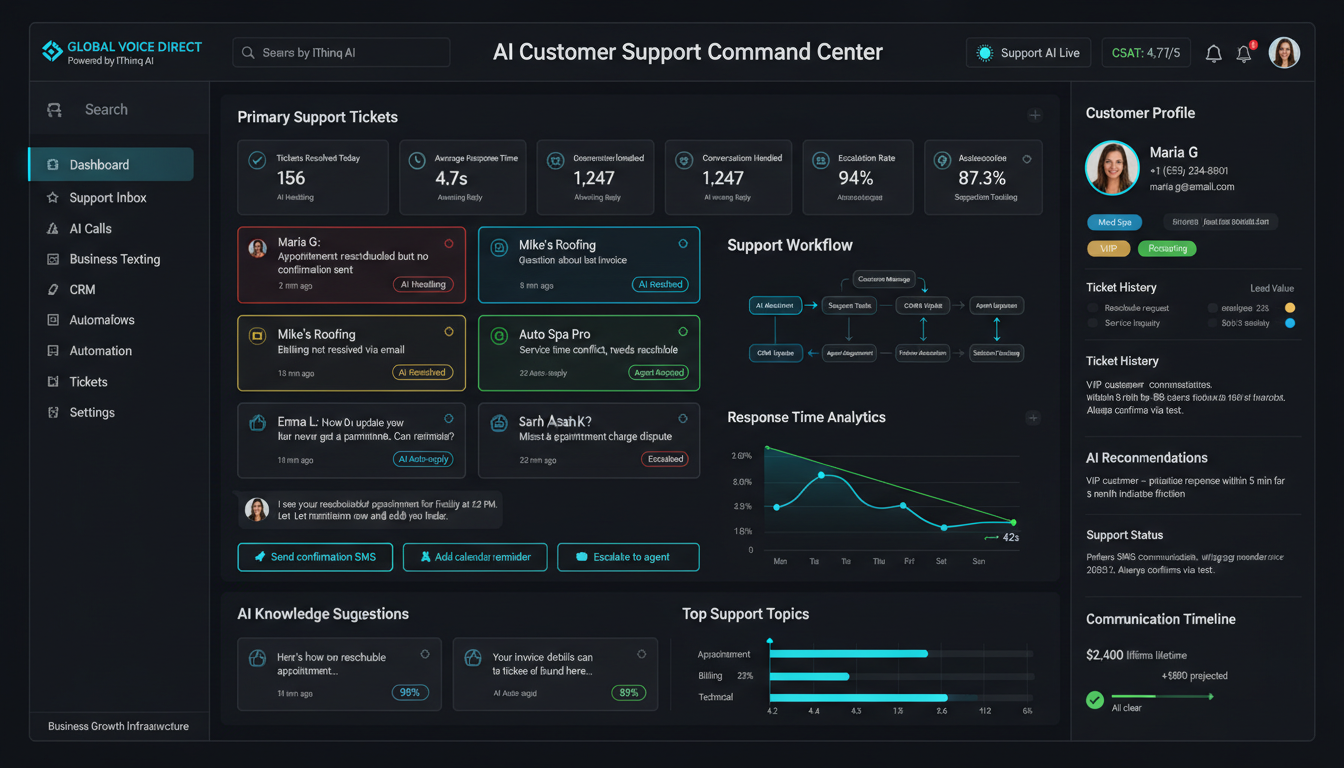
Customer experience is the engine of referral growth.
Most businesses focus on acquiring customers. The businesses that generate consistent referrals focus on keeping customers and treating them well after the sale.
Customers refer businesses they trust. They trust businesses that deliver on their promises, communicate professionally, and make them feel valued beyond the initial transaction.
The Customer Service Framework provides a useful lens here. Customer service is not a department — it is a system. When customer service is systematic and consistent, it builds the kind of trust that leads to organic referrals and long-term advocacy.
Think about the last time you genuinely recommended a business to someone. What made you do it? It was almost certainly not the advertising. It was an experience — how they made you feel, how well they solved your problem, and how confident you were that the person you referred would be treated the same way.
What Creates a Referral-Worthy Experience?
- Delivering results that match or exceed what was promised
- Responding quickly when customers need help
- Following up after the sale to ensure satisfaction
- Making it easy to get answers and resolve issues
- Treating customers like people, not transactions
None of these require a large marketing budget. They require intentional systems and consistent execution.
Communication Drives Referrals

Consistent, professional communication is a referral growth lever most businesses underestimate.
Poor communication is one of the fastest ways to lose a customer who was on the verge of becoming an advocate.
When customers cannot reach a business quickly, when calls go unanswered, when follow-ups do not happen — trust erodes. And without trust, there are no referrals.
The three pillars of communication that directly affect referral rates are:
Responsiveness
Customers who receive fast, helpful responses are significantly more likely to refer others. Responsiveness signals professionalism and demonstrates that the business values their time.
Consistency
Inconsistent communication — sometimes fast, sometimes slow, sometimes present, sometimes absent — destroys the reliability that referrals require. Customers only refer businesses they can confidently vouch for.
Customer Engagement
Staying in contact with customers after the sale — through check-ins, updates, and relevant follow-up — keeps the relationship warm and creates natural openings for referral conversations.
Businesses that want to improve their referral rates often need to improve their communication infrastructure first. Global Voice Direct is an example of a communication platform specifically designed to help businesses handle inbound customer interactions professionally — ensuring calls are answered, follow-ups are completed, and customers receive a consistently high-quality communication experience. Professional communication infrastructure is not just an operational tool; it is a referral growth lever.
Technology Makes Referral Tracking Easier
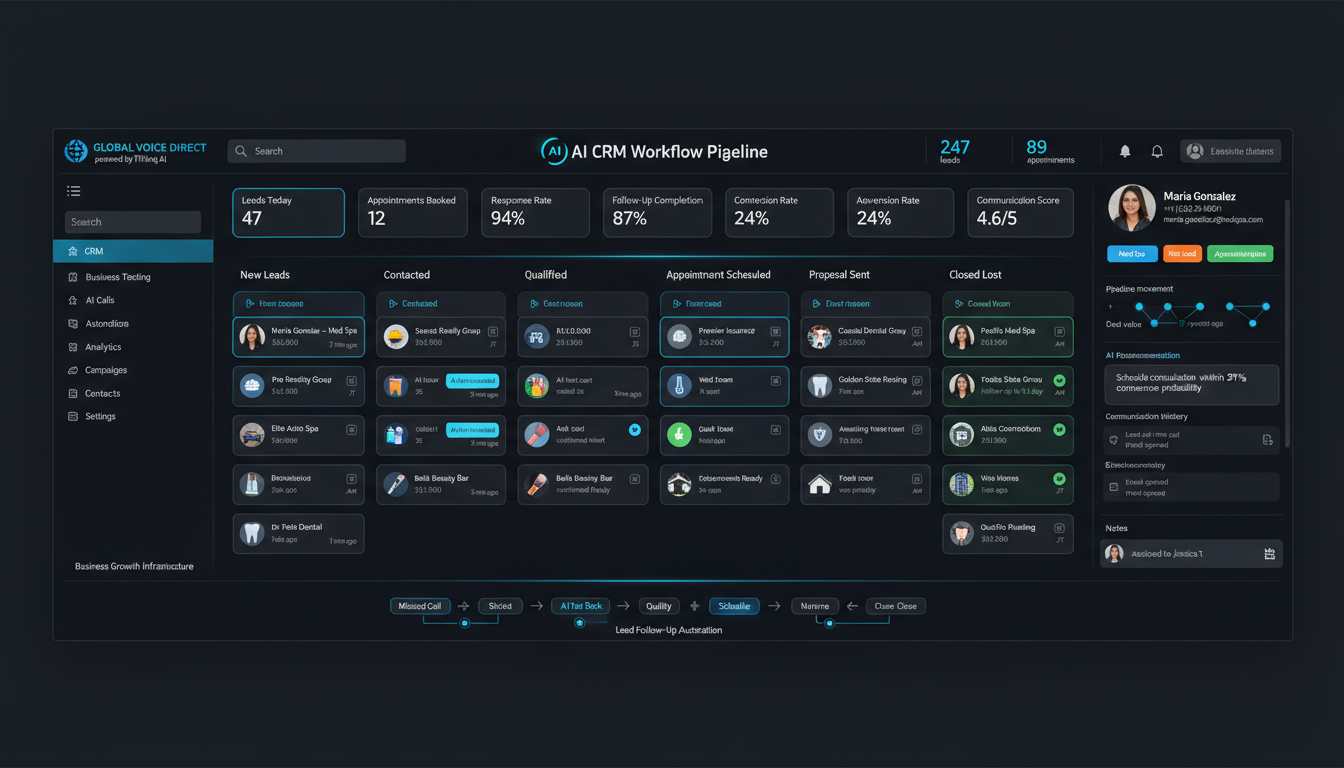
CRM systems and automation make it practical to track and act on referral activity at scale.
Most businesses lose referrals not because customers are unwilling to refer them — but because there is no system to capture, track, or follow up on referral activity.
Technology changes that.
CRM Systems
A customer relationship management system is the foundation of referral tracking. CRMs allow businesses to record where each customer came from, identify referral sources, and measure which customers are most likely to become advocates. This data is what transforms referral growth from guesswork into a repeatable process.
Automation
Automated follow-up sequences ensure that every satisfied customer receives the right message at the right time. Rather than relying on manual outreach, businesses can use automation to trigger referral requests after a positive customer milestone — a completed project, a positive review, or a renewal.
Referral Workflows
A referral workflow is a documented process that outlines exactly what happens from the moment a customer is identified as a potential advocate to when a referral is requested, received, and acknowledged. Workflows eliminate inconsistency and ensure no referral opportunity falls through the cracks.
IThinq AI provides an example of how AI-powered automation can support these workflows — helping businesses engage customers at scale, automate follow-up sequences, and track interactions across the customer lifecycle. When the right technology is in place, referral systems run more consistently and generate more predictable results.
The Referral Flywheel™
Growth systems compound when the output of one stage becomes the input of the next. The Referral Flywheel™ describes exactly how this works in a referral-driven business.
The Referral Flywheel™
The Referral Flywheel™ is self-reinforcing. Each new customer who receives a great experience becomes a potential new referral source. Over time, this creates exponential growth that no advertising budget can replicate.
The critical insight is that the flywheel only spins when every stage is in place. A single broken stage — poor follow-up, inconsistent communication, no referral ask — stops the flywheel entirely.
This is why referral growth is a systems problem, not a marketing tactics problem. The businesses that generate consistent referrals have built infrastructure that keeps the flywheel moving, even when individual team members change.
Common Referral Mistakes Businesses Make
Most businesses that struggle with referrals are not doing anything dramatically wrong. They are simply missing specific stages of the system. Here are the most common gaps.
Happy customers who would be willing to refer a business simply never get asked. Referrals require a direct, intentional request — not a vague hope that customers will mention the business on their own.
No referral system can overcome consistently bad customer experiences. The customer service layer must be solid before asking customers to put their reputation on the line with a referral.
Customers who cannot predict whether a business will respond quickly or not at all lose confidence in the relationship. Inconsistent communication breaks the trust that makes referrals possible.
Without a documented process, referral requests happen randomly — if at all. An undocumented referral strategy produces unpredictable and unmeasurable results.
Following up with customers after a referral is made — to acknowledge the referral, update them on the outcome, and express appreciation — dramatically increases future referral behavior.
Referral Audit™ — Is Your Business Referral-Ready?
Use this checklist to evaluate whether your business has the systems in place to generate consistent referrals.
- We consistently deliver on the promises made during the sales process.
- We have a defined onboarding experience that makes new customers feel confident and welcomed.
- We follow up with customers after delivery or completion to confirm satisfaction.
- We respond to customer inquiries within a consistent, professional timeframe.
- We have a documented process for requesting referrals at the right moment.
- We acknowledge and thank customers who refer others to our business.
- We track which customers have referred others and which referred customers have converted.
- We use a CRM or similar system to manage customer relationships and referral data.
- Our customer service experience is consistent enough that we would confidently ask a customer to refer others.
- We have at least one automated follow-up sequence that engages customers after the initial sale.
- We can identify our highest-value referral sources by name and channel.
- We review referral performance data on at least a quarterly basis.
If your business scores below 8 of these 12 criteria, there are clear system gaps limiting your referral growth. Use the Referral Growth Framework™ stages to identify and close those gaps before investing in paid acquisition channels.
The Best Marketing Often Happens After The Sale
The Startup Growth Systems framework is built on this same principle — that sustainable growth comes from infrastructure and customer experience, not from advertising spend alone. The referral growth layer is where customer experience converts directly into measurable, trackable business growth.
Referral Growth Score™
The Referral Growth Score™ measures how prepared your business is to generate consistent referrals across five critical dimensions. Score each category from 1 to 5 and total your results.
| Category | Description | Score 1–5 | Growth Level |
|---|---|---|---|
| Customer Experience | Consistency and quality of the customer journey from first contact through delivery and follow-up. | Score your current customer experience quality | 1–2: Needs Work 3: Developing 4–5: Strong |
| Trust | How consistently the business follows through on commitments, resolves issues, and earns long-term customer confidence. | Score your trust-building consistency | 1–2: Needs Work 3: Developing 4–5: Strong |
| Communication | Speed, professionalism, and consistency of customer-facing communication across all channels and touchpoints. | Score your communication infrastructure | 1–2: Needs Work 3: Developing 4–5: Strong |
| Referral Process | Whether the business has a documented, repeatable system for requesting referrals at the right moment in the customer lifecycle. | Score your referral request process | 1–2: Needs Work 3: Developing 4–5: Strong |
| Follow-Up | Whether the business consistently follows up with customers after sales, deliveries, and referrals — and tracks the results of those interactions. | Score your follow-up consistency | 1–2: Needs Work 3: Developing 4–5: Strong |
Score interpretation: 20–25 = Strong referral infrastructure. 13–19 = Developing — identify and close gaps systematically. 5–12 = Referral growth is being left on the table. Focus on the lowest-scoring category first.
The Referral Growth Score™ is a diagnostic tool, not a judgment. Most businesses score between 10 and 16 on their first assessment. The value is in identifying where the system breaks down so improvements can be targeted and measured.
Frequently Asked Questions
Referral marketing is a growth strategy where businesses create structured systems to encourage existing customers to recommend their products or services to new prospects. Unlike word-of-mouth marketing, which is organic, referral marketing is intentional and process-driven.
Referred customers convert at higher rates, spend more over their lifetime, and cost significantly less to acquire than customers generated through paid advertising. Referrals also carry built-in trust, which accelerates the sales process and improves close rates.
Businesses get more referrals by delivering exceptional customer experiences, building trust through consistent communication, and creating a structured process for requesting referrals at the right moment in the customer lifecycle. Referrals are earned through performance, not requested through pressure.
Customers only refer businesses they trust and feel confident recommending. A customer who has had an average or negative experience will not risk their personal reputation by referring others. Exceptional customer experiences create the trust that makes referrals natural and frequent.
Word-of-mouth marketing is created by experiences worth talking about. This includes delivering results that exceed expectations, providing outstanding customer service, communicating professionally, and creating moments in the customer journey that feel genuinely different from what competitors offer.
Automation supports referral growth by triggering follow-up sequences after customer milestones, tracking referral sources in CRM systems, sending referral requests at the right moment without relying on manual outreach, and ensuring no satisfied customer falls through the cracks before being asked for a referral.
The Referral Growth Framework™ is a six-stage business system developed by Jonas Janvier for generating consistent customer referrals. It covers delivering value, creating great experiences, earning trust, requesting referrals, rewarding advocacy, and tracking results.
The best time to request a referral is immediately after a customer has experienced a positive outcome — a completed project, a solved problem, a milestone achieved, or when a customer has expressed satisfaction. Asking at peak satisfaction maximizes the likelihood of a positive response.
A referral system is a documented process that defines exactly how a business identifies potential advocates, requests referrals, acknowledges and rewards referral activity, tracks referral sources, and follows up on referred prospects. A referral system creates consistency and removes dependence on individual memory or effort.
Yes, significantly. Customer service quality is one of the strongest predictors of referral behavior. Businesses with responsive, professional, and consistent customer service generate referrals at higher rates because they build the kind of trust that makes customers comfortable putting their personal reputation behind a recommendation.
Referral marketing involves existing customers recommending a business based on personal experience and trust. Affiliate marketing involves third-party promoters (often strangers to the brand) promoting a business in exchange for financial compensation. Referrals typically convert at higher rates because they carry genuine personal trust.
Referrals are tracked through CRM systems that record referral sources, ask every new customer how they heard about the business, assign referred leads to referral sources, and measure conversion rates and revenue generated from referred customers over time.
A referral flywheel is a self-reinforcing growth loop where happy customers create positive experiences that build trust and generate referrals, which bring in new customers who then go through the same process and create more referrals. The flywheel compounds over time, creating exponential growth.
Referral incentives can increase referral activity, but they are not always required. Many customers refer businesses simply because they had an excellent experience and want to help someone they know. When incentives are used, they should feel like appreciation rather than payment — the distinction matters for how referrals are perceived by the recipient.
Communication infrastructure directly affects referral rates because inconsistent or poor communication destroys the trust that referrals require. Businesses that respond quickly, follow up consistently, and communicate professionally create the kind of reliable experience that customers feel confident recommending to others.
The Referral Growth Score™ is a diagnostic framework developed by Jonas Janvier that measures a business’s referral readiness across five categories: Customer Experience, Trust, Communication, Referral Process, and Follow-Up. Each category is scored from 1 to 5, with a maximum total score of 25.
A basic referral system — including a defined referral ask process, a CRM to track referral sources, and a follow-up sequence — can be implemented in 30 to 60 days. A fully mature referral system that produces consistent, measurable results typically takes 90 to 180 days to establish and optimize.
Yes, and small businesses often have an advantage in referral marketing because they can deliver more personal, relationship-driven experiences than larger competitors. The systems required for referral growth scale to any business size — what matters is the consistency and intentionality of execution, not the size of the operation.
Customer advocacy occurs when a satisfied customer becomes an active supporter of a business — publicly recommending it, defending it when challenged, and proactively introducing it to their network without being asked. Advocates are the highest-value asset in a referral growth system.
The Referral Growth Framework connects naturally to broader infrastructure frameworks including the Customer Experience Framework, the Business Execution Framework, and the Entrepreneur Infrastructure Model — a comprehensive system for building all five growth systems that every scaling business needs.
Continue Building Your Growth Infrastructure
The Referral Growth Framework™ is one component of a broader business growth infrastructure. Explore the connected frameworks below.
Coming soon: Customer Experience Framework · The Entrepreneur Infrastructure Model · Why Businesses Lose Customers · Business Execution Framework · The Future Of Small Business Technology
Referrals Are Earned, Not Requested
The businesses that consistently generate referrals create systems that make customers want to recommend them. Start by building the infrastructure that makes referrals the natural outcome of every customer interaction.
Explore The Growth Systems Framework →