

Why Most Startups Stay Small
It is not a marketing problem. It is not a funding problem. Most businesses stop growing because they never build the infrastructure required to support growth.

Why Do Most Startups Stay Small?
Most startups stay small because they hit invisible growth ceilings built into their own operations. The five ceilings are credibility, communication, operations, technology, and leadership. Until each ceiling is addressed, more marketing and more leads will not produce more growth. This is the Startup Ceiling Framework™.
Most startups do not fail overnight.
Most simply stop growing.
Revenue plateaus. Operations become messy. Customers become harder to manage. Growth slows down — and then stops completely.
The founders usually blame marketing. They run more ads. They hire a social media manager. They rewrite the website.
But the real problem is almost never the marketing. The real problem is what lives underneath it.
The business has hit a ceiling. And until that ceiling is removed, adding more marketing will only expose more cracks in the foundation.
This article breaks down exactly why startups stop growing — and what needs to change if a business is going to scale beyond its current ceiling.
What Does It Mean To Stay Small?
Staying small does not always mean low revenue. Some businesses generate solid income for years — and never grow beyond it. The problem is not the number. The problem is the ceiling that prevents the business from moving to the next level.
Growth Plateau
A growth plateau is when a business stops increasing in revenue, customers, or capacity despite continued effort. The business is not failing — it is simply stuck at a level it cannot break through.
Startup Ceiling
A startup ceiling is an invisible limit on how large a business can grow, caused by gaps in its internal infrastructure — not by lack of demand or ambition. Every startup has at least one.
Business Scalability
Scalability is the ability of a business to handle increasing demand, customers, and revenue without proportionally increasing cost, chaos, or founder effort. A business that cannot scale will always stay small.
Growth Infrastructure
Growth infrastructure is the combination of credibility, communication, operations, technology, and leadership systems that a business needs before it can grow reliably. Without it, growth creates problems faster than it creates profit.
The Startup Ceiling Framework™
Most startup growth problems come back to five ceilings. Each ceiling limits growth in a different way. And most businesses are dealing with more than one of them at the same time.
| Ceiling | Category | Root Cause | Growth Impact | Urgency |
|---|---|---|---|---|
| 1 | Credibility | Business appears untrustworthy or unverified | Leads do not convert — customers do not trust | Critical |
| 2 | Communication | Missed calls, slow responses, inconsistent follow-up | Revenue leaks before it is captured | Critical |
| 3 | Operations | No documented systems — everything lives in people’s heads | Delivery breaks as volume increases | High |
| 4 | Technology | Disconnected tools, manual processes, no automation | Growth creates more work, not more revenue | High |
| 5 | Leadership | Founder is the bottleneck for every decision | The business cannot operate without the founder | Moderate |
These five ceilings are not separate problems. They compound. A credibility problem makes every communication problem worse. An operations gap makes every technology investment less effective. A founder bottleneck multiplies every other issue across the business.
Lack of Credibility
Before a customer spends money with a business, they need to believe the business is real, established, and trustworthy. This happens in seconds — often before a single conversation takes place.
A startup without credibility infrastructure will struggle to convert leads even when the product is good. The prospect looks the business up, sees inconsistent information, finds no verified listings, and quietly moves on to a competitor.
Credibility is not built through branding alone. It is built through:
- A verified business address and registered entity
- Consistent business name, phone, and address across directories
- A professional business phone number — not a personal cell
- Documented verifications with Dun & Bradstreet, Google Business Profile, and industry directories
- A visible track record — reviews, case studies, testimonials
The Business Credibility Framework outlines the complete credibility infrastructure a startup needs to convert leads at a higher rate. Most businesses skip this work and wonder why marketing does not produce results.
Poor Communication Infrastructure

Every missed call is a missed opportunity. Every slow response is a prospect that moved on. Every inconsistent follow-up is a lead that slipped through the cracks.
Communication failure is one of the most common — and most expensive — reasons startups stop growing. The business generates interest. The interest does not convert. The founders blame the ad spend or the offer. The real problem is the communication layer that exists between the prospect and the sale.
A startup with poor communication infrastructure will:
- Miss inbound calls during peak hours
- Fail to follow up with leads within the window that drives conversion
- Send inconsistent messages across team members
- Lose returning customers because no system tracks their history
Businesses like those using Global Voice Direct have addressed this by building a dedicated communication infrastructure — separate from personal devices, with consistent handling, automated responses, and a professional presence that signals the business is real and ready. That infrastructure is what prevents revenue from leaking before it is ever captured.
No Operating Systems
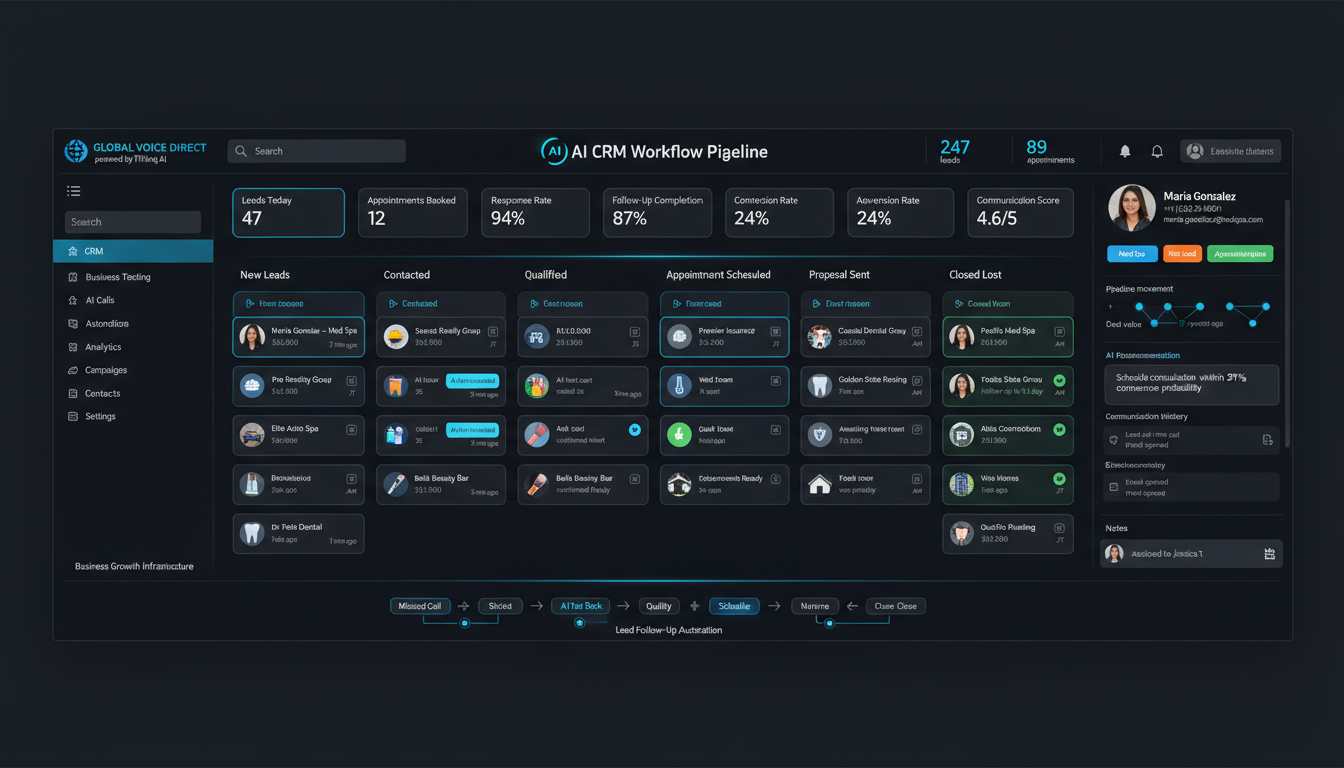
A startup that runs on memory and individual effort cannot scale.
When there are no documented systems, every task depends on a specific person doing it a specific way that lives only in their head. As soon as that person leaves, gets busy, or makes a mistake, the process breaks — and so does the customer experience.
This is how startups become their own ceiling. They attract more customers than their informal systems can handle. The quality drops. The complaints increase. Growth reverses.
The most scalable businesses in the world are not built on talented people. They are built on documented, repeatable systems that talented people execute. The Startup Operating System framework covers how to build this layer from the ground up.
Systems answer the question: what happens when I am not here?
Technology Debt
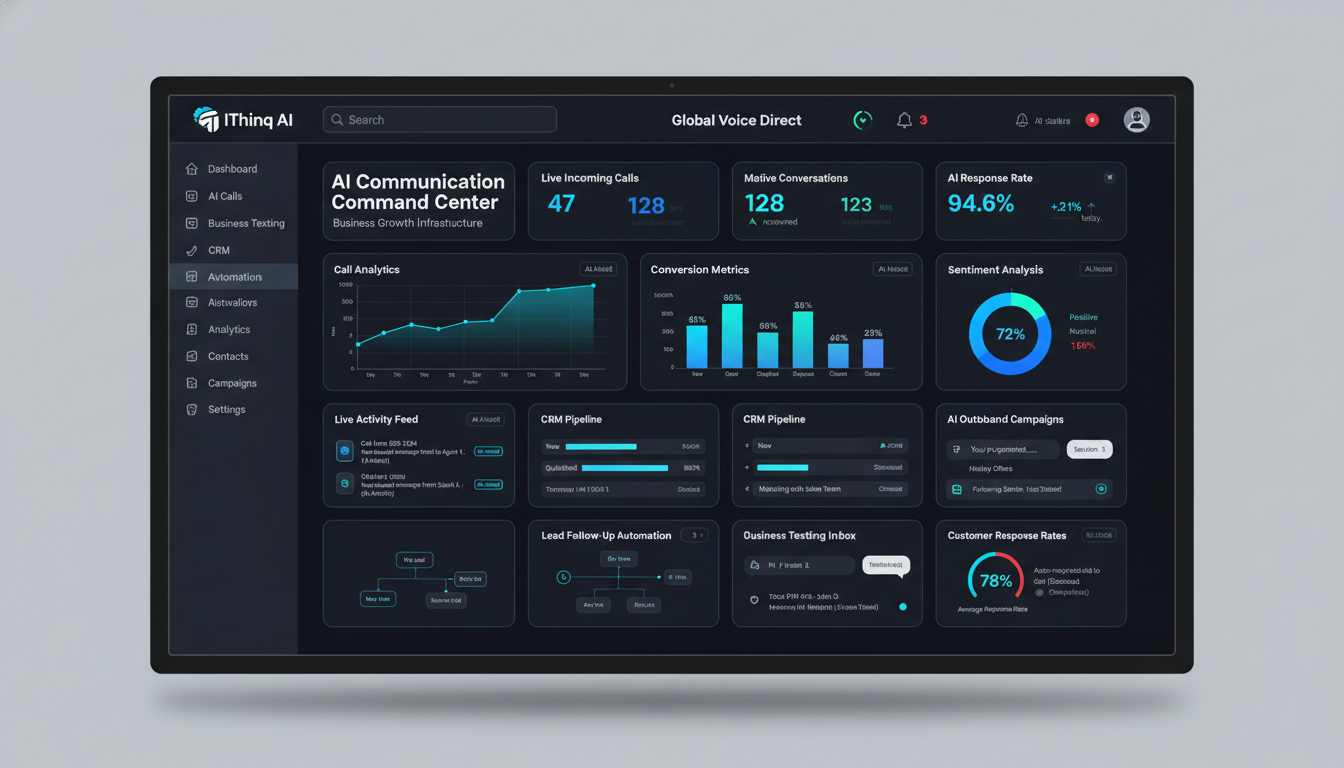
Technology debt is not about having the wrong software. It is about having disconnected tools, manual processes filling the gaps between them, and outdated workflows that require human effort to maintain.
A startup with technology debt grows slowly because growth creates more manual work rather than more automated output. Every new customer means more data entry. Every new service means more coordination. Every new team member means more training on workarounds.
The businesses that scale efficiently use technology as infrastructure — not as a set of individual apps. They automate the repetitive. They connect their tools. They use AI where it replaces manual labor without reducing quality.
Platforms like IThinq AI represent how modern businesses approach this layer — using intelligent automation to handle communication, scheduling, and response workflows that would otherwise require constant human intervention. That is not a luxury. That is infrastructure.
The Business Automation Framework breaks down how to sequence technology investment so automation serves growth rather than adding complexity.
Founders Become Bottlenecks
The fifth ceiling is the most personal one — and the one founders resist addressing the longest.
When a founder is the decision-maker for everything, the business can only grow as fast as one person can think. Every hire, every project, every price negotiation, every customer complaint runs through the same human brain. That brain has limits. And when it hits those limits, the business stops growing too.
A founder-bottleneck business has specific symptoms:
- Nothing important happens without founder approval
- Team members constantly ask for direction on tasks that should be documented
- Decisions get delayed because the founder is overloaded
- Vacations, illness, or personal situations halt business operations
- The founder works more hours as the business grows, not fewer
The solution is not working harder. The solution is building systems that allow decisions to happen without the founder’s direct involvement — through documentation, delegation frameworks, and trained team members who understand the business well enough to act without constant input.
The Scalability Formula™
Growth is not the starting point. Growth is the result of getting the foundations right. Most founders approach this in reverse — they try to grow their way into infrastructure. The businesses that scale sustainably build infrastructure first, then grow into it.
Scalability Formula™
Fix the ceilings first. Growth follows the infrastructure.
This is why two businesses with identical marketing budgets can produce wildly different results. The business with stronger infrastructure converts more leads, retains more customers, and can handle more volume without breaking. The Startup Growth Systems framework maps out how these five layers connect and build on each other.
Common Startup Growth Myths
Most of the advice startups receive about growth is incomplete — because it focuses on demand generation without addressing the infrastructure required to capture and convert that demand.
More Marketing Fixes Everything
Marketing brings attention. Infrastructure converts it. A business with broken credibility, poor communication, and no systems will waste every marketing dollar it spends. More traffic to a leaking bucket still leaves the bucket empty.
More Leads Solve Growth Problems
More leads expose more infrastructure gaps. When a business cannot handle its current volume cleanly, adding more volume multiplies the problems — not the revenue. Fix the conversion system first.
More Employees Create Scale
Headcount without systems creates controlled chaos. Hiring more people into a business with no documented processes just means more people doing things differently. Systems create scale. People execute the systems.
Technology Alone Solves Inefficiency
Software installed on top of a broken process creates an expensive broken process. Technology amplifies what already exists. If the underlying operations are inefficient, automation makes them inefficient faster. Fix the process, then automate it.
Startup Scalability Audit™
Use this checklist to assess where your business currently stands across each of the five growth ceilings.
- My business has a verified, registered entity with a consistent name across all directories
- My business has a dedicated professional phone number — separate from personal devices
- All calls and inquiries are handled consistently — no missed opportunities due to availability
- My business has documented SOPs for every recurring process and customer interaction
- A new team member can understand and execute core processes without asking the founder for direction
- My tools are connected — data does not require manual transfer between platforms
- Repetitive tasks (scheduling, follow-up, responses) are automated rather than manually handled
- My business can operate for a week without my direct involvement — nothing critical would stop
- Decisions at the team level are guided by documented standards — not escalated to me by default
- My business has a credibility stack: Google Business Profile, D&B listing, verified address, professional presence
Count how many of these you can check off. Each unchecked item is a ceiling. Each ceiling is a limit on your growth.
Most Businesses Hit The Ceiling They Built
After working with founders across service businesses, technology startups, and professional practices, the pattern is almost always the same. The business did not stop growing because the market stopped wanting what they offer. The business stopped growing because the founder tried to scale demand before they built the infrastructure to handle it.
I have seen businesses run paid ads to a phone number that nobody answers consistently. I have seen companies hire salespeople and give them no documented process to follow. I have seen founders spend thousands on software that automates a broken workflow instead of fixing the workflow first.
The ceiling is not external. The market usually has more room than the business can reach. The ceiling is almost always internal — credibility that has not been established, communication that leaks revenue, operations that depend on memory, technology that adds noise instead of clarity, and a founder who has not yet built the team or systems that allow the business to run without them.
Growth is infrastructure first. Everything else is output.
Startup Scalability Score™
Score your business across each infrastructure layer. Two points for fully built, one point for partially built, zero points for not yet addressed. A score of 8–10 indicates a scalable foundation. Below 6 means the business is actively limited by its own infrastructure.
Credibility
Verified entity, consistent NAP data, professional presence, active review profile, and business credit identity established.
Communication
Dedicated business phone, consistent call handling, automated response workflows, and lead follow-up system in place.
Operations
Documented SOPs for all recurring processes, onboarding documentation, and a business that can run without founder involvement for five or more business days.
Technology
Connected tools, automated repetitive tasks, AI used where it reduces manual work, and a technology stack that grows with the business rather than creating friction.
Leadership
Documented decision frameworks, a team that operates independently on day-to-day matters, and a founder who works on the business more than in it.
| Score | Growth Level | What It Means |
|---|---|---|
| 9–10 | Scale-Ready | Infrastructure is built. Growth investment will produce compounding returns. |
| 7–8 | Growth-Ready | Strong foundation with minor gaps. Prioritize the two weakest ceilings before scaling. |
| 5–6 | Growth-Constrained | Multiple ceilings limiting performance. Infrastructure work will produce faster results than more marketing. |
| 3–4 | Ceiling-Bound | Foundational gaps across most layers. Adding more demand will increase problems faster than revenue. |
| 0–2 | Infrastructure Crisis | The business is operating on effort alone. Significant infrastructure work required before growth strategy makes sense. |
Frequently Asked Questions
Most startups stay small because they hit one or more of five internal ceilings: credibility, communication, operations, technology, and leadership. These are infrastructure problems, not marketing problems. Until the ceilings are addressed, adding more demand to the business makes the problems worse rather than producing growth.
Businesses stop growing when their internal infrastructure can no longer support increased demand. This shows up as revenue plateaus, declining quality, customer churn, and founder burnout. The business has grown to the edge of its foundation — and the foundation has not been built to go further.
Business growth is limited by five key factors: lack of credibility (prospects do not trust the business), poor communication infrastructure (leads are lost before conversion), missing operating systems (execution breaks under volume), technology debt (manual processes replace automation), and founder bottlenecks (the business cannot operate beyond one person’s capacity).
Startups scale successfully by building infrastructure before pushing for growth. That means establishing credibility, creating consistent communication systems, documenting operations, investing in connected technology, and developing leadership capacity that removes the founder as the bottleneck. Growth built on this foundation is sustainable. Growth without it is fragile.
Growth infrastructure is the combination of business systems — credibility, communication, operations, technology, and leadership — that a business needs before it can scale reliably. It is the foundation that determines whether growth creates profit or creates chaos.
Systems allow a business to deliver consistent results regardless of who is doing the work or how much volume the business is handling. Without systems, growth depends on individual effort — and individual effort has limits. Systems remove those limits by making the process repeatable, trainable, and scalable.
The Startup Ceiling Framework™ identifies the five internal ceilings that prevent startups from growing beyond their current level: credibility, communication, operations, technology, and leadership. Each ceiling represents a gap in growth infrastructure that limits how much demand a business can capture and convert.
Startup scalability is the ability to handle significantly more customers, revenue, and operational volume without a proportional increase in cost, effort, or complexity. A scalable startup has infrastructure that grows with the business rather than breaking under increased demand.
Marketing is rarely the core reason startups fail to grow. Marketing drives attention and demand. Infrastructure determines whether that demand converts to revenue and whether that revenue can be sustained. Most startups that blame marketing for slow growth have infrastructure problems that more marketing will not solve.
Communication infrastructure directly determines how much revenue a business captures from its incoming leads. Missed calls, slow responses, and inconsistent follow-up leak revenue before it is ever booked. A business with strong communication infrastructure captures more of the demand it generates — without spending more on marketing.
A founder bottleneck occurs when the business cannot make decisions, complete work, or serve customers without the founder’s direct involvement. It means the business is limited to one person’s time and cognitive capacity. As the business grows, the bottleneck grows with it — eventually choking off growth entirely.
Technology debt in a startup is the accumulation of disconnected tools, manual workarounds, and outdated processes that create friction as the business scales. It means that growth produces more manual work rather than more automated output. Technology debt grows over time if not actively addressed.
A startup can generate initial revenue without strong credibility, but it will hit a ceiling quickly. Leads that cannot verify the business is legitimate will not convert. Vendors and partners that cannot find a credible business presence will not engage. Credibility is the foundation that makes every other growth lever more effective.
A growth plateau is when a business stops increasing in revenue, customers, or market presence despite continued effort. It often feels like the business is working harder but not moving forward. A growth plateau is almost always caused by an infrastructure ceiling that has not yet been identified or addressed.
Yes — in most cases, a startup should invest in basic operating systems and communication infrastructure before scaling marketing spend. Marketing without systems means more leads entering a process that cannot convert them consistently. Systems built before marketing amplify every marketing dollar spent.
The Scalability Formula™ is: Credibility + Communication + Operations + Technology + Leadership = Sustainable Growth. It represents the five infrastructure inputs that must be in place for growth to be both achievable and sustainable. Growth is the output of getting these inputs right — not the starting point.
Automation helps startups grow by removing the manual effort required to handle repetitive tasks — follow-up, scheduling, responses, data entry — so that the team can focus on higher-value work. When automation is applied to a healthy process, it multiplies output without multiplying headcount.
The most common startup growth mistakes are: spending on marketing before fixing conversion infrastructure, hiring people without documented systems for them to follow, investing in technology before fixing the underlying process, and failing to build credibility before pursuing larger customers or partnerships.
The difference between a small business and a scalable business is infrastructure. A small business handles customers through individual effort, memory, and founder involvement. A scalable business handles customers through documented systems, connected technology, and trained teams — meaning volume can increase without proportionally increasing founder workload or operational cost.
After fixing the startup ceiling, a business is positioned to pursue compounding growth strategies — including referral systems, retention frameworks, and authority-based marketing that builds on a credible, operational foundation. The next layer after infrastructure is growth strategy built to last.
Growth Requires More Than Ambition
The businesses that scale successfully usually build the infrastructure needed to support growth before growth arrives. Start with the foundation.
Explore the Business Infrastructure Framework