

Business Lessons I Wish I Knew Earlier
Ten honest lessons from building multiple businesses — the ones that changed how I think about growth, systems, and what actually moves the needle.

If I could go back and talk to my younger self, I would probably say one thing.
Stop chasing shortcuts. Build better systems.
Most of the lessons that matter in business are not obvious when you’re starting out. You don’t read them in a book. You don’t hear them in a podcast. You learn them by making decisions, watching what happens, and adjusting course.
You learn them through experience. Through mistakes. And sometimes through hard, expensive lessons you could have avoided if someone had been honest with you earlier.
This article is my attempt to be that honest voice. Not a list of generic advice. Not motivational filler. These are the specific lessons that changed the way I build businesses — and the ones I wish I had understood from day one.
The Experience Advantage Framework™
A practical lens for turning what you learn from building businesses into compounding advantage — across systems, communication, credibility, and long-term growth.
Quick Summary — 10 Business Lessons
- Growth exposes problems — it doesn’t solve them
- Systems multiply hard work over time
- Communication is a real competitive advantage
- Technology should simplify, not complicate
- Trust and credibility compound like interest
- Infrastructure matters more than tactics
- Customer experience outlasts features
- Consistency beats intensity every time
- Documentation protects your business
- Business is a long game — play it that way
Growth Doesn’t Solve Problems — It Exposes Them
Early on, I believed that if a business could just get bigger, its problems would shrink in proportion. More revenue would bring more solutions. More customers would validate the model. More momentum would carry everything forward.
That belief was wrong.
Growth doesn’t fix broken communication. It amplifies it. Growth doesn’t fix operational gaps. It turns them into crises. If your team can’t coordinate at ten clients, they definitely can’t coordinate at a hundred. If your follow-up system is unreliable at a small scale, it will collapse under pressure.
What I’ve learned: Fix the foundation before you push for growth. Audit your communication, your operations, your systems — not after you scale, but before. Because the problems you ignore at ten clients become the fires you’re fighting at a hundred.
“Growth is a stress test, not a solution. Whatever is weak in your business, growth will find it first.”
Systems Scale Better Than Hustle
Hard work matters. I am not here to tell you otherwise. But hard work without systems is a treadmill. You run hard, you stay in the same place, and eventually you burn out.
The entrepreneurs I’ve watched build durable businesses all have one thing in common. They systematize everything they can, so their effort goes toward decisions and direction — not repetitive execution.
A system turns one good action into a repeatable outcome. A follow-up system means every lead gets contacted consistently. An onboarding system means every new client has the same experience. A reporting system means you see problems before they become emergencies.
Hard work is the input. Systems are the multiplier. You need both, but only one of them scales.
Communication Is a Competitive Advantage

Most small businesses treat communication as an afterthought. They answer calls when they’re available. They respond to messages when they remember. They follow up when it’s convenient.
That behavior costs them customers every single day — and they don’t even know it’s happening.
Here is a fact most founders won’t say out loud: the business that responds fastest usually wins. Not because they have the best product. Because they showed up. Because they were responsive. Because they made the customer feel like they mattered.
Responsiveness is a form of respect. Follow-up is a form of professionalism. Consistent communication is a form of credibility.
This is one reason I built around communication infrastructure from the start. Tools like Global Voice Direct exist specifically to give businesses a professional communication foundation — one that handles inbound calls, follow-up, and customer interaction with consistency, regardless of team size. That kind of infrastructure turns communication from a weakness into an advantage.
Technology Should Create Simplicity
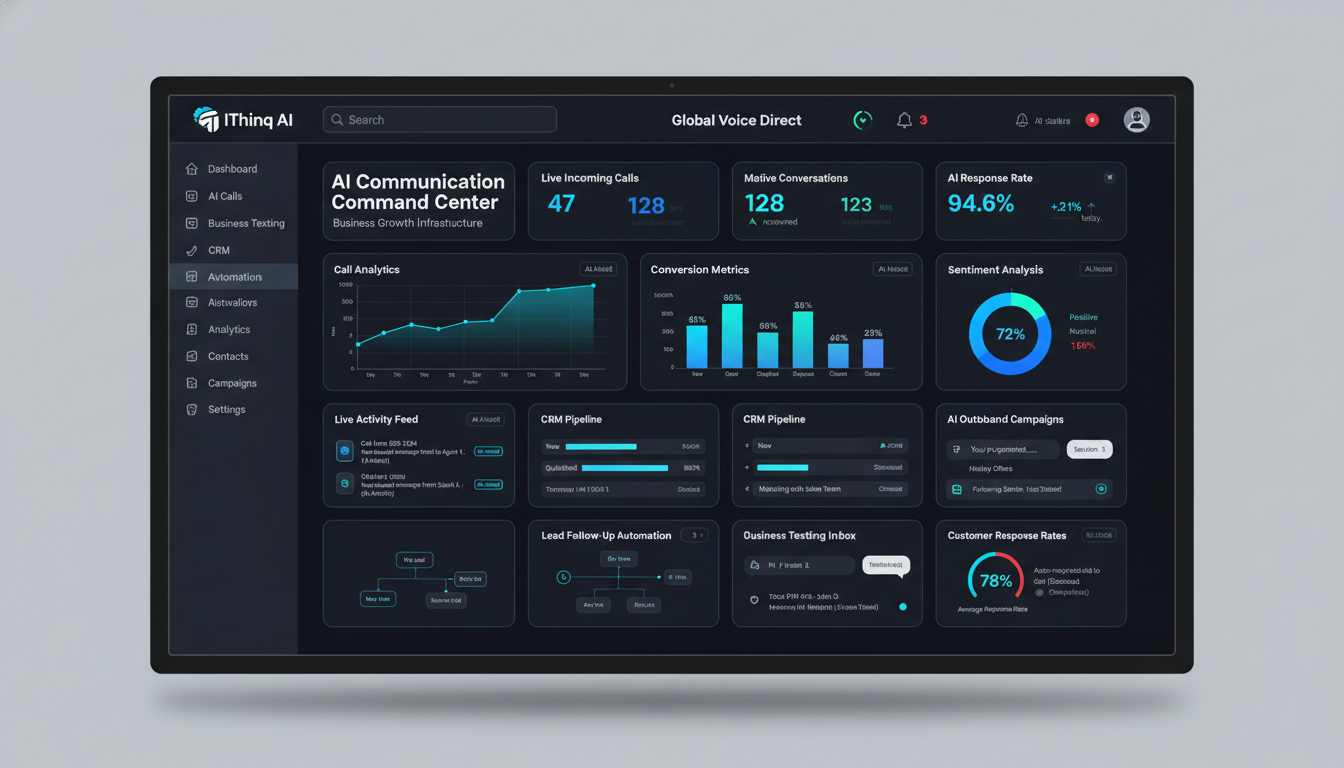
There is a version of technology adoption that makes your business more complicated. More tools, more logins, more dashboards, more noise. I’ve been there. I’ve bought software that added more work than it saved.
But there is another version of technology adoption — the right version — where the right tools collapse complexity into clarity. Where automation handles the work that drains your team. Where AI takes over the repetitive tasks so your people can focus on the decisions that actually matter.
That is the version worth building toward. Technology should give you time, not take it.
This is the philosophy behind IThinq AI — helping businesses use artificial intelligence and automation to simplify operations, improve communication, and reduce the burden of repetitive work. When technology is deployed with intention, it becomes infrastructure. It runs quietly in the background and keeps your business moving forward.
Trust Compounds
Reputation is not built in a moment. It is built in a thousand small interactions — and it compounds over time, just like interest.
Every time you do what you said you would do, trust deposits into your account. Every time you communicate proactively instead of waiting to be asked, you add to it. Every time you show up consistently, you build on it.
The opposite is also true. One broken promise, one missed follow-up, one experience where a customer felt ignored — those withdrawals take time to recover from.
Credibility is the only sustainable competitive advantage that can’t be copied. Your competitor can match your price. They can copy your features. They can replicate your offer. They cannot replicate ten years of earned trust.
Most Entrepreneurs Focus on Tactics — They Should Focus on Infrastructure
I see this pattern everywhere. A founder is struggling to grow, so they chase the next marketing tactic. They try a new ad platform. They test a different offer. They change their social media strategy again.
The problem is not the tactics. The problem is that there is no infrastructure underneath them.
Tactics bring people to your door. Infrastructure determines what happens when they get there. Do they get a professional response or a missed call? Do they get a consistent onboarding experience or confusion? Do they get a follow-up or silence?
Infrastructure is the thing that makes tactics work. Without it, you are pouring water into a bucket with holes. You can pour faster — but nothing stays.
This is the core belief I’ve built my businesses around: most businesses don’t have a marketing problem. They have an infrastructure problem.
Customer Experience Matters More Than Features
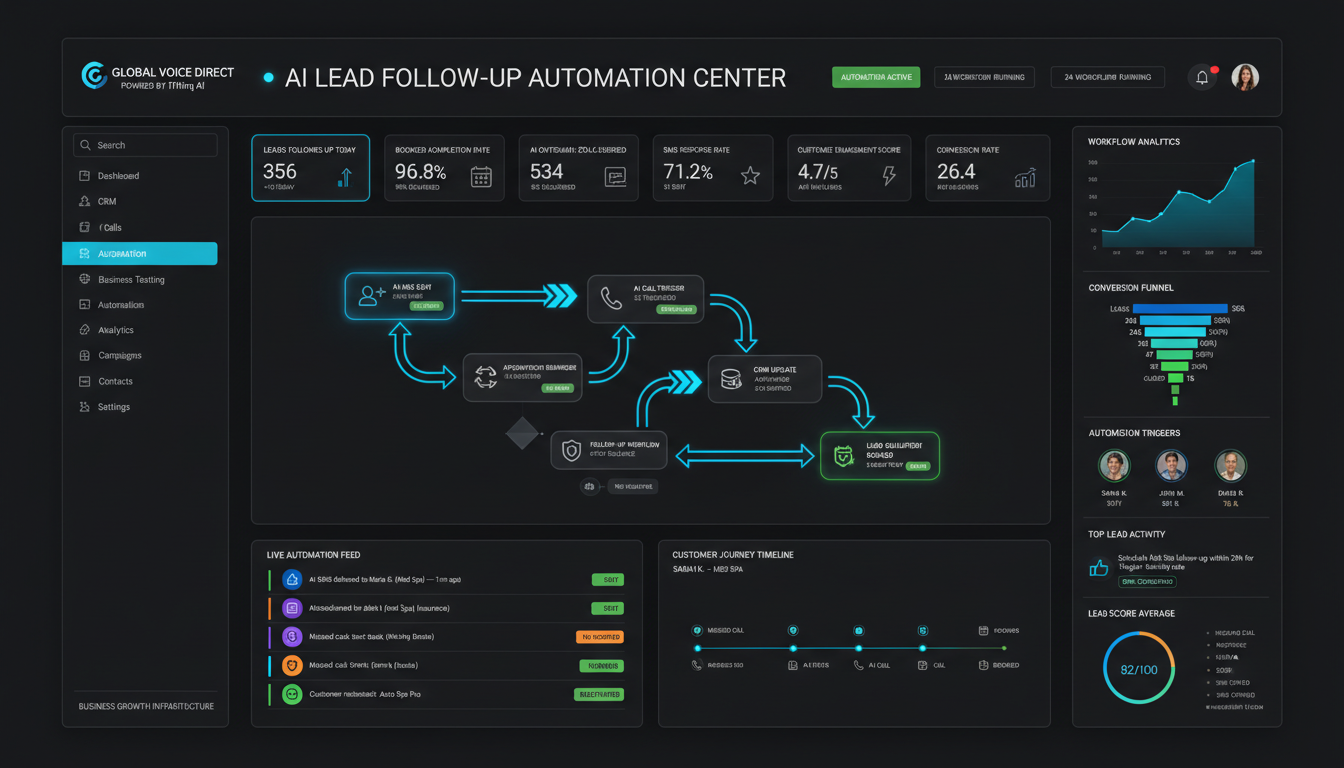
Customers don’t remember your feature list. They remember how you made them feel.
They remember if someone answered the phone. They remember if you followed up when you said you would. They remember if the experience was smooth and professional, or frustrating and inconsistent. They remember the moments where you exceeded expectations — and the moments where you fell short.
Features are table stakes. Experience is the differentiator.
The businesses that keep customers are the ones that make customers feel like they chose correctly. That emotional confirmation — the sense that they made a smart decision by working with you — is what drives referrals, retention, and long-term revenue.
Consistency Beats Intensity
I spent years confusing activity with momentum. I would go hard for a week, then burn out and go quiet for two. I would produce a burst of content, then disappear. I would push on sales, then stop when it got uncomfortable.
That pattern produces nothing sustainable.
The entrepreneurs who build the most durable businesses are not the loudest or the most intense. They are the most consistent. They show up every day, at a pace they can maintain, and they execute with discipline.
Small actions repeated over time produce extraordinary results. Ten consistent outreaches a week, every week, for a year will outperform a frantic month of one hundred outreaches followed by three months of silence.
Consistency is a system. Build it like one.
Documentation Saves Businesses
When a key person leaves, what leaves with them? If the answer is “most of how things actually work around here” — that is a crisis waiting to happen.
Documentation is not glamorous. Nobody puts it on their investor pitch or their homepage. But it is one of the most valuable things a business can invest in. Written processes create consistency. Documented systems enable training. Captured knowledge protects against turnover.
When processes live in people’s heads, your business is dependent on those people. When processes live in documented systems, your business can scale independent of any single individual.
Document what works. Document what doesn’t. Document the why behind both. That knowledge is an asset — and most businesses treat it like it has no value until it’s gone.
Business Is a Long Game
This might be the hardest lesson for impatient people — and I was one of the most impatient people I know.
Business does not reward speed alone. It rewards compounding. And compounding requires time.
The relationships you build this year will pay off in three years. The credibility you earn through consistent execution will compound into opportunities you can’t see yet. The systems you put in place today will multiply your output years from now.
Patience is not passive. Patient execution with consistent effort, maintained over years, is the most powerful business strategy I know.
The entrepreneurs who quit too early never get to see what consistent execution actually produces. They walk away at year two, never knowing what year five would have looked like.
Stay in the game. Do the work. Build for the long term. That’s where the real outcomes live.
The Lesson That Changed the Way I Build Businesses
There is one lesson that sits underneath all of the others. One insight that changed the way I approach every business decision I make.
For years, I thought the goal was to build a great product or service. I focused all of my energy on what we were offering — how it worked, what it did, how it compared to competitors. I thought that if we built something excellent, the rest would follow.
It doesn’t work that way.
What I eventually understood — and what I now consider the foundation of every business I build — is this: the infrastructure around your product is what determines whether that product ever reaches the people who need it.
Your communication infrastructure determines whether leads become customers. Your operational infrastructure determines whether customers have a good experience. Your credibility infrastructure determines whether those customers trust you enough to refer others. Your technology infrastructure determines how much of this can happen without burning your team out.
I stopped thinking like a product builder and started thinking like an infrastructure architect. That shift changed everything — the kinds of problems I focus on, the kinds of solutions I build, and the kinds of businesses I create.
Most businesses don’t have a marketing problem. They have an infrastructure problem. And once I started seeing it that way, I couldn’t unsee it.
The Lessons Checklist™
Practical actions for putting these lessons into practice inside your business.
Communication
- Audit how quickly your business responds to inbound inquiries
- Set a standard response time and build a system around it
- Create a follow-up sequence that runs automatically
- Use a professional phone number and answering system
Systems
- Identify your three highest-repetition tasks and systematize them
- Map your client journey from first contact to delivery
- Build an onboarding system that runs without you
- Create a weekly operating rhythm and stick to it
Technology
- Audit your current tools — eliminate anything that adds complexity
- Implement a CRM if you don’t already have one
- Identify one task that AI or automation could handle this month
- Build technology around your process, not on top of it
Credibility
- Establish your business verification across key directories
- Collect and display client testimonials consistently
- Do what you say, every time — without exception
- Build a public presence that reflects your professional standards
Customer Experience
- Map the experience from a customer’s point of view, not yours
- Identify the three most friction-filled moments in your process
- Follow up after delivery to close the experience loop
- Make it easy for customers to refer you
Documentation
- Document your top five repeatable processes this week
- Create a simple internal wiki or knowledge base
- Record the “why” behind your key decisions, not just the what
- Treat documentation as an ongoing habit, not a one-time project
Business Lessons Dataset™
A structured reference covering each lesson, its business impact, and implementation priority.
| Lesson | Description | Business Impact | Priority |
|---|---|---|---|
| Growth Exposes Problems | Fix foundation before scaling — growth amplifies weaknesses | Prevents operational failure during growth phases | Critical |
| Systems Scale Better Than Hustle | Systematize repetitive work so effort goes toward high-value decisions | Multiplies output without proportional labor increase | Critical |
| Communication as Advantage | Responsiveness and follow-up convert more leads than any tactic | Direct impact on conversion rate and customer retention | Critical |
| Technology Creates Simplicity | Right tools reduce complexity — wrong tools multiply it | Reduces operational overhead and team burnout | High |
| Trust Compounds | Consistent delivery builds credibility that no competitor can copy | Drives referrals, retention, and premium pricing power | Critical |
| Infrastructure Over Tactics | Tactics bring traffic — infrastructure determines outcomes | Makes every marketing investment more effective | Critical |
| Experience Over Features | Customers remember how they felt, not your feature list | Increases retention and word-of-mouth referrals | High |
| Consistency Beats Intensity | Sustainable pace over time outperforms short bursts of effort | Builds momentum that compounds into durable growth | High |
| Documentation Saves Businesses | Written processes reduce dependence on any single person | Enables training, scaling, and knowledge continuity | High |
| Business is a Long Game | Compounding rewards patience and consistent execution over years | Produces relationships, reputation, and resilience | Medium |
Frequently Asked Questions
Straightforward answers to the questions entrepreneurs ask most about business growth, systems, and long-term success.
What business lessons matter most for early-stage entrepreneurs?
Build systems early, communicate professionally from day one, and focus on infrastructure before tactics. Most early-stage failures come from operational gaps, not bad ideas.
Why don’t most business lessons come from books?
Books give frameworks. Experience gives instincts. The most valuable lessons require context — the kind that only comes from making decisions, watching outcomes, and adjusting.
What do entrepreneurs learn over time that they didn’t know starting out?
That infrastructure matters more than tactics, consistency outperforms intensity, and trust compounds slowly — but nothing else compounds quite like it.
Why are business systems so important?
Systems multiply effort. Without them, every result requires the same manual input. With them, your earlier work keeps paying returns without additional cost.
Why does communication matter so much in business?
Because trust is built through interaction. Responsiveness signals reliability. Follow-up signals professionalism. Consistent communication is a form of ongoing credibility.
How do businesses grow sustainably?
By building strong infrastructure before pushing for growth. Sustainable growth requires strong communication, reliable operations, consistent customer experience, and sound technology.
What mistakes should entrepreneurs avoid?
Scaling before the foundation is ready. Prioritizing tactics over infrastructure. Treating communication as an afterthought. Ignoring documentation until someone leaves.
What is the Experience Advantage Framework™?
It’s a lens for converting business experience into compounding advantage — covering systems thinking, communication infrastructure, credibility building, technology adoption, and long-term execution.
How does trust compound in business?
Every consistent delivery, every kept promise, and every professional interaction deposits into your reputation account. Over time, that account earns referrals, loyalty, and premium positioning.
What is the difference between tactics and infrastructure?
Tactics bring potential customers into contact with your business. Infrastructure determines what happens when they get there. Without infrastructure, tactics produce one-time results at best.
Why do most small businesses have an infrastructure problem?
Because infrastructure is invisible until it fails. Founders focus on visible outputs — leads, sales, content — while the systems that convert those outputs quietly underperform.
How does technology help small businesses scale?
When deployed with intention, technology handles repetitive work, reduces human error, and creates consistent customer experiences — all at a scale no small team could manage manually.
What is business credibility and why does it matter?
Credibility is the accumulated evidence that your business does what it says it will do. It determines whether potential customers trust you enough to buy — and whether existing customers refer others.
Why is customer experience more important than product features?
Features can be copied. Experience cannot. A customer who feels genuinely well-served becomes an advocate. A customer who feels ignored becomes a negative review.
How does consistency beat intensity in business growth?
Intensity burns out. Consistency compounds. A sustainable pace maintained over months produces more durable results than short bursts of extreme effort followed by inaction.
Why is documentation critical for business growth?
Documentation converts individual knowledge into organizational assets. It enables training, protects against turnover, and creates the consistency required to scale without breaking.
What does it mean to play the long game in business?
It means making decisions based on where you want to be in five years, not just next quarter. It means building credibility, relationships, and systems that compound — not just optimizing for immediate wins.
How does AI improve business communication?
AI handles the consistent, high-volume parts of communication — answering calls, sending follow-ups, capturing lead information — so your team can focus on the high-value human interactions that move relationships forward.
What is business infrastructure for startups?
The systems, tools, processes, and communication channels that allow a new business to operate professionally and consistently — independent of how much a founder is personally involved in every interaction.
How do startups build credibility quickly?
Through consistent communication, professional presentation, verified business information, reliable follow-through, and a track record of doing what they said they would do — consistently, over time.
Experience Is a Powerful Teacher
The lessons that help businesses survive are often the same lessons that help them grow. Start with infrastructure. Build systems. Communicate with intention. Play the long game.