


The Focus Framework: Why Entrepreneurs Struggle To Scale When Everything Feels Important
Most entrepreneurs do not have a lack of ideas. They have too many.
A new opportunity appears Monday morning. A new tool launches Wednesday. A competitor makes a move Friday. And by the weekend, nothing important got done.
The problem is not effort. Most founders work harder than anyone in the room.
The problem is scattered focus.
When attention splits across too many directions, activity goes up and progress goes down. That is the trap the Focus Framework™ was built to break.
The Focus Framework™ is a five-level system — Vision, Priorities, Execution, Measurement, Optimization — that helps entrepreneurs eliminate distraction and build the strategic focus required to scale. Less doing. More compounding.
Table of Contents
- What Is Strategic Focus?
- The Focus Framework™ — Five Levels
- Why Entrepreneurs Lose Focus
- Focus Creates Leverage
- Communication Helps Maintain Focus
- Technology Can Help Or Hurt Focus
- The Focus Flywheel™
- Common Focus Killers
- Focus Audit™
- Founder Insight
- Focus Score™
- How To Focus On What Matters Most
- 20 FAQs
What Is the Focus Framework and Why Does Strategic Focus Matter?
Being busy and making progress feel the same from the inside. They produce very different results.
The deliberate decision to point your energy at one thing while saying no to everything else. In business, focus is not what you say yes to — it is what you are willing to leave behind.
Aligning your time, team, and money around the single goal most likely to grow your business. Direction before speed. Always.
Ranking your tasks by what they actually return, then cutting the rest. Without this, urgent always beats important.
Strategic focus is not a personality trait you are born with. It is a skill. It is a system. And it can be built.
The Focus Framework™ — Five Levels of Strategic Clarity
Most entrepreneurs jump straight to execution. They skip the two steps before it. The Focus Framework™ puts the levels in the right order.
| Level | Layer | Core Question | What It Produces |
|---|---|---|---|
| 1 | Vision | Where are we going and why? | Direction, conviction, mission clarity |
| 2 | Priorities | What are the three things that get us there? | Ranked initiatives, protected resources |
| 3 | Execution | Who does what, by when, measured how? | Accountable tasks, daily rhythm |
| 4 | Measurement | How do we know if we are winning? | Key metrics, weekly data review |
| 5 | Optimization | What is working and what needs to change? | Compounding improvement, sustainable growth |
Most entrepreneurs operate at Level 3 — executing hard — without ever locking in Levels 1 or 2. They build speed before they build direction. Fast motion in the wrong lane.
Why Entrepreneurs Lose Focus
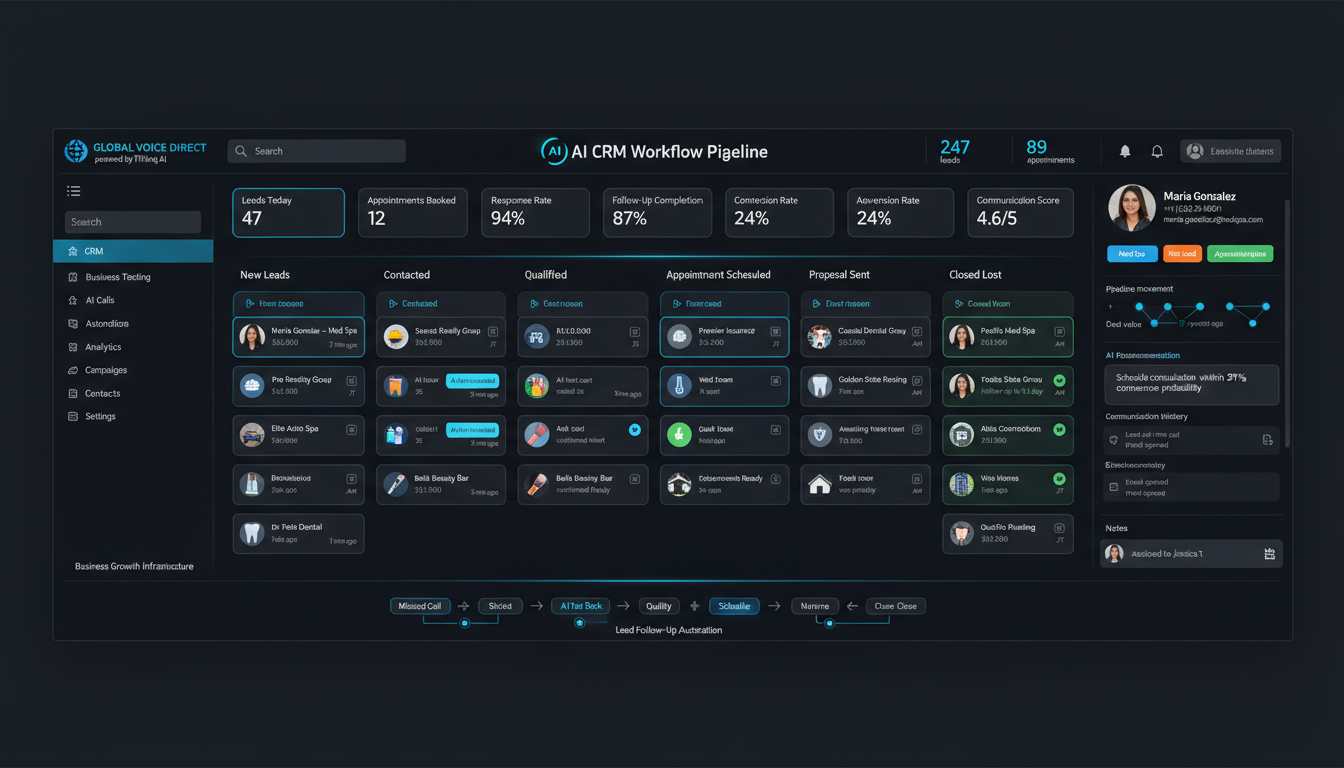
Entrepreneurs are wired to see opportunity. That is a strength. Without a filter, it becomes the reason they stall.
- Opportunity overload. Every new idea feels like the one. None of them get finished.
- Shiny object syndrome. A new tool replaces the last one before it has time to work.
- Fear of missing out. A competitor moves and panic replaces strategy.
- No written priorities. When everything is equally important, nothing is.
Most busy entrepreneurs are not executing a strategy. They are reacting to a stream of inputs that feel like strategy but produce the illusion of progress.
Real progress looks slower. It compounds faster.
Focus Creates Leverage
When an entrepreneur commits to fewer priorities, something counterintuitive happens: output increases.
This is the core idea behind the Leverage Framework and the Decision-Making Framework. Strategic focus does not slow you down — it removes the friction that was slowing you down all along.
- Momentum builds through repetition. The more you do one thing, the faster and better you do it.
- Consistency compounds. Thirty focused days beats ninety scattered ones, every time.
- Progress becomes visible. Traction on one initiative fuels the confidence that drives better decisions next.
Leverage is not about working harder. It is about removing everything that dilutes the work that matters most. This is the same principle powering Startup Growth Systems — focused sprints, not scattered marathons.
Communication Helps Maintain Focus

A founder who is focused but cannot communicate that focus to the team will still see execution fragment.
Strategic focus requires alignment — and alignment requires communication infrastructure.
- Team alignment. When priorities are communicated clearly, every person knows what deserves their best effort this week.
- Customer communication. Consistent outreach builds trust and cuts the time wasted on repeated explanations.
- Accountability. Short, focused check-ins tied to priorities keep execution on track without eating the calendar.
Businesses that invest in communication infrastructure — like the kind built through Global Voice Direct — give their focus a place to land across the whole operation, not just inside the founder’s head.
Focus without communication is intention. Focus with communication is execution.
Technology Can Help Or Hurt Focus
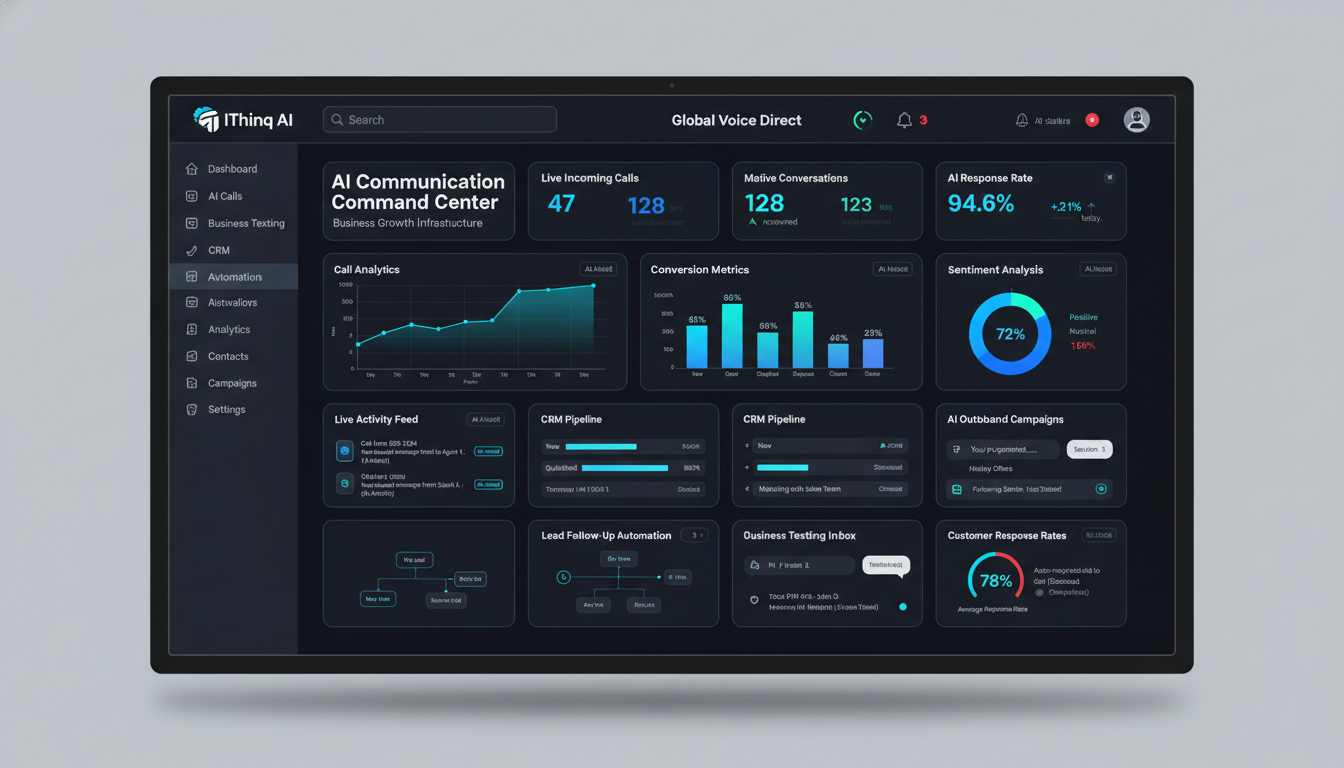
Technology multiplies whatever you feed into it. Focused effort in, amplified results out. Scattered effort in, amplified chaos out.
Technology that protects focus: automation that handles repetitive tasks, dashboards that show what matters, CRM systems that keep customers organized without manual effort.
Technology that destroys focus: constant notifications, ten overlapping apps, software that creates more decisions than it removes.
Platforms like IThinq AI reduce the repetitive communication work that quietly consumes hours every week — returning that time to the work that actually builds the business.
The test for any new tool: does it reduce the number of decisions I make each day, or increase them?
The Focus Flywheel™
Focus is not a one-time decision. It is a self-reinforcing system. The more you practice it, the more powerful it gets.
The flywheel starts slowly. The first few weeks of focused effort may feel less exciting than scattered work. But 60 focused days on one priority produces more progress than 12 scattered months. The wheel becomes self-sustaining.
This is the same compounding logic behind the Business Execution Framework and What Entrepreneurs Get Wrong About Growth.
Common Focus Killers
These five patterns silently drain momentum from growing businesses:
- Too many projects. Five things in progress, none finished.
- Too many priorities. When everything is Priority 1, nothing is.
- Constant switching. Moving between tasks every 20 minutes kills deep work.
- No systems. Reinventing the same process every single time.
- Reactive planning. Deciding what to work on after the inbox does.
Name your biggest focus killer. You cannot solve what you have not identified.
Focus Audit™ — Checklist
Check what is true right now. Be honest — this is a diagnostic, not a performance.
- I can name my single most important business priority this quarter without thinking
- My team can name that same priority unprompted
- I have a written list of what I am NOT doing this quarter
- I block focused work time on my calendar that cannot be interrupted
- I have fewer than five active projects right now
- I review my priorities weekly and adjust deliberately
- I track progress on my top priority with one specific number
- My notifications are configured to protect my focus hours
- I can say no to a good opportunity because I am committed to a better one
- My daily schedule reflects my priorities — not my inbox
Fewer than seven checked: your business has a focus problem. It is fixable — and faster than you think.
Not Everything Deserves Your Attention
Running multiple businesses at once teaches you something no book covers cleanly: everything will compete for your attention, and almost nothing deserves it.
When I was building Global Voice Direct, IThinq AI, and GrowthEdge CRM at the same time, I made the classic founder mistake. I was everywhere. Good ideas in every direction. Mediocre execution in all of them.
The shift came when I stopped asking “What should I add?” and started asking “What should I stop?” That question is harder. It forces you to admit that a good idea is not the same as a right-now idea.
I started running focused sprints — one initiative per sprint, defined output, defined end date. The results compounded fast. The businesses did not get less attention. They got better attention, because the attention was no longer diluted.
Not everything deserves your focus. The work is finding the one thing that does — and protecting it.
— Jonas Janvier, Founder of Global Voice Direct, IThinq AI, GrowthEdge CRM
Focus Score™ — Rate Your Business
Score each category from 1 (low) to 5 (high). Total: 25 points possible.
Clarity
How defined is your primary direction right now?
Priorities
Can you rank your top 3 initiatives with confidence?
Execution
Does your daily work match your stated priorities?
Consistency
How often do priorities shift due to distraction?
Measurement
Are you tracking progress on your top goal with data?
- 20–25: High focus. You are compounding. Protect it.
- 14–19: Moderate focus. Close your single biggest focus leak first.
- 8–13: Fragmented. Reset priorities before adding anything new.
- Below 8: Scattered. Stop adding. Start subtracting. That is the only move.
How To Focus On What Matters Most
Simple. Repeatable. Timeless.
- Write your single most important goal this quarter. One sentence. If it does not fit in one sentence, it is not a goal — it is a wish list.
- List every current project and cross off what does not serve that goal. Not pause — cross off. Subtraction is strategy.
- Block three focused hours per day for that goal. Guard them like a board meeting. No email. No notifications.
- Track one number each week. Pick the single metric that shows whether you are making progress. Review it every Friday. Let it guide Monday.
This connects directly to the Entrepreneur Operating System and the Systems Thinking Advantage. Operational clarity multiplies the impact of individual focus.
Focus is not about doing less because you are lazy. It is about doing less because you understand leverage.
20 Frequently Asked Questions About the Focus Framework
What is the Focus Framework™?
A five-level business system — Vision, Priorities, Execution, Measurement, Optimization — that replaces scattered effort with disciplined, compounding momentum.
Why do entrepreneurs struggle with focus?
Entrepreneurs are wired to spot opportunity. Without a filter, every new idea competes equally for attention — leading to constant starting and infrequent finishing.
What is strategic focus in business?
Aligning all business resources — time, money, team — around the single goal most likely to accelerate growth. Direction before speed.
How do I prioritize business tasks when everything feels urgent?
Ask: “If I could only complete one thing this week, what moves the business forward most?” That is your priority. Everything else is distraction in disguise.
How does focus improve business growth?
Focus creates momentum. Concentrated effort compounds — execution quality rises, results follow, confidence builds, and better decisions come faster.
What causes distraction in business?
Opportunity overload, shiny object syndrome, fear of missing out, and no written priorities. Remove any one of these and focus improves immediately.
How can business owners stay focused?
Write your quarterly goal, block daily focus time, track one metric weekly, and practice deliberate subtraction — actively cutting what does not serve the primary goal.
What is shiny object syndrome?
The pattern of abandoning a current strategy the moment something newer and more exciting appears — before the original work has had time to produce results.
What is the Focus Flywheel™?
Focus → Execution → Results → Confidence → Momentum → More Focus. A self-reinforcing cycle that compounds over time.
How many priorities should a business have at once?
Three maximum per quarter. One per sprint. Ten priorities equals zero priorities — nothing gets protected attention.
What is the Focus Score™?
A five-category self-assessment — Clarity, Priorities, Execution, Consistency, Measurement — rated 1–5 each, indicating whether a business is focused or scattered.
How does communication relate to focus?
A focused founder with a misaligned team still fragments execution. Communication infrastructure moves priorities from the founder’s head to every person’s daily work.
Can automation help entrepreneurs focus?
Yes. Automation handles repetitive tasks and returns that cognitive bandwidth to high-leverage work. That is technology serving focus, not competing with it.
What is the Focus Audit™?
A ten-point checklist evaluating priority clarity, calendar alignment, measurement habits, and project load — producing a clear diagnostic of where focus is leaking.
How is the Focus Framework™ different from time management?
Time management schedules tasks efficiently. The Focus Framework™ determines which tasks are worth doing at all. Right direction beats right speed every time.
What is entrepreneur focus?
The ongoing practice of protecting high-value attention from low-value inputs — not fewer hours, but better hours directed at work that compounds.
How does the Focus Framework™ relate to business scalability?
Businesses that cannot scale are almost always suffering from operational scatter. The Focus Framework™ creates the operational narrowing that makes scalable systems possible.
Is focus the same as productivity?
No. Productivity is the rate of output. Focus is the direction. You can be highly productive on the wrong things. Focus decides what productivity goes toward.
How does startup infrastructure relate to business focus?
Infrastructure means systems and processes that run without constant decisions. When it is in place, focus is protected — you are not reinventing the wheel every morning.
What comes after the Focus Framework™?
Momentum — the ability to sustain and compound focused growth over time. The Momentum Framework: Why Some Businesses Keep Growing While Others Stall covers that next layer.
Focus Is A Competitive Advantage
The entrepreneurs who achieve the most are often not doing more things. They are doing fewer things with greater consistency and discipline.
Get Started With Global Voice Direct