

The Compound Growth Framework™: Why Small Improvements Create Massive Results Over Time
Most entrepreneurs overestimate what they can do in a month — and dramatically underestimate what they can build in five years. This guide changes that.

⚡ Quick Answer
The Compound Growth Framework™ is a six-stage business system — Small Improvements → Consistency → Momentum → Compounding → Scale → Long-Term Growth — that helps entrepreneurs build durable businesses through consistent incremental progress rather than chasing dramatic breakthroughs. Like financial compound interest, small improvements made consistently over time produce results that are far larger than any single big bet.
Table of Contents
- What Is Compound Growth?
- The Compound Growth Framework™ — Six Stages
- Why Entrepreneurs Ignore Compounding
- Systems Compound Over Time
- Communication Improvements Compound
- Technology Improvements Compound
- The Compound Growth Flywheel™
- Common Compounding Mistakes
- Compound Growth Audit™
- Founder Insight: Most Big Wins Start Small
- Compound Growth Score™
- The 1% Better Principle™
- Compound Growth Readiness Dataset™
- 20 Frequently Asked Questions
Most entrepreneurs are looking for the big break.
The viral campaign. The monster launch. The overnight transformation.
Here’s what nobody tells you: that’s not how most great businesses actually get built.
The businesses that last — the ones that grow for ten, twenty, thirty years — almost always share a different story. A better process here. A sharper system there. A slightly better customer experience every quarter.
These improvements look almost invisible in the short term. Over time, they become your biggest competitive advantage.
That is the central insight behind the Compound Growth Framework™.
What Is Compound Growth?
Most people hear “compound growth” and think of a savings account. But compounding is not a financial concept — it is a universal law. It applies to money, skills, relationships, reputation, and businesses.
Compound growth in business means that every improvement you make builds on the improvements before it. The result is not linear growth — it is exponential growth over time.
Key Definitions
- Compound Growth
- Growth that accelerates over time because each improvement builds on the last, producing results larger than the sum of individual efforts.
- Business Compounding
- The process of making consistent operational, system, and experience improvements that stack on each other month after month and year after year.
- Sustainable Growth
- Growth that can be maintained over years without burning out the team or requiring constant reinvention — built on repeatable systems rather than heroic efforts.
- Incremental Improvement
- A small, deliberate upgrade to a process, product, or system that may seem minor in isolation but compounds into major results over time.
The key insight: compound growth is not about speed. It is about direction and consistency. A business improving 1% per week in the right areas will outperform a competitor chasing shortcuts almost every time.
The Compound Growth Framework™ — Six Stages
The Compound Growth Framework™ breaks business compounding into six sequential stages. Most businesses skip straight to Stage 5 or 6 and wonder why it doesn’t stick.
| Stage | Name | What It Means | Business Example |
|---|---|---|---|
| 1 | Small Improvements | Identify one process, system, or experience that can be 5–10% better | Reducing missed calls by installing a better phone system |
| 2 | Consistency | Apply improvements on a regular, predictable schedule — not just when motivated | Reviewing customer feedback every Monday morning |
| 3 | Momentum | Improvements start producing visible results; team sees proof that progress is real | Fewer complaints, more repeat customers, better reviews |
| 4 | Compounding | Each improvement builds on previous ones, producing results larger than expected | Better communication + better follow-up = significantly higher retention |
| 5 | Scale | Proven systems can now be expanded without re-inventing the wheel | Opening a second location using the same operational playbook |
| 6 | Long-Term Growth | The business operates with durable advantages that are hard for competitors to replicate | Brand reputation, customer loyalty, and operational efficiency built over years |
Framework Summary
- Stage 1 — Small Improvements: Start with one thing you can make better today.
- Stage 2 — Consistency: Repeat the improvement process on a schedule, not just when inspired.
- Stage 3 — Momentum: Results become visible; the team starts to believe.
- Stage 4 — Compounding: Improvements stack on each other and accelerate growth.
- Stage 5 — Scale: Proven systems expand without collapsing under pressure.
- Stage 6 — Long-Term Growth: You have built something competitors cannot copy overnight.
Why Entrepreneurs Ignore Compounding
If compounding is so powerful, why don’t more entrepreneurs focus on it?
Four reasons come up over and over again.
Impatience
Small improvements don’t show dramatic results in week one. Entrepreneurs quit before compounding has a chance to work.
Comparison
Social media shows the highlight reel — overnight successes, massive launches, viral moments. It hides the years of boring consistency that came before.
Chasing Shortcuts
A new marketing hack, a new platform, a new tactic every 90 days. Constant pivoting resets the compounding clock every time.
Unrealistic Expectations
When entrepreneurs expect massive results fast and don’t see them, they assume the strategy is wrong — and abandon something that was just starting to work.
The antidote to all four is the same: a framework that anchors you to long-term thinking while delivering visible short-term progress. That is what the Compound Growth Framework™ is designed to do.
Systems Compound Over Time
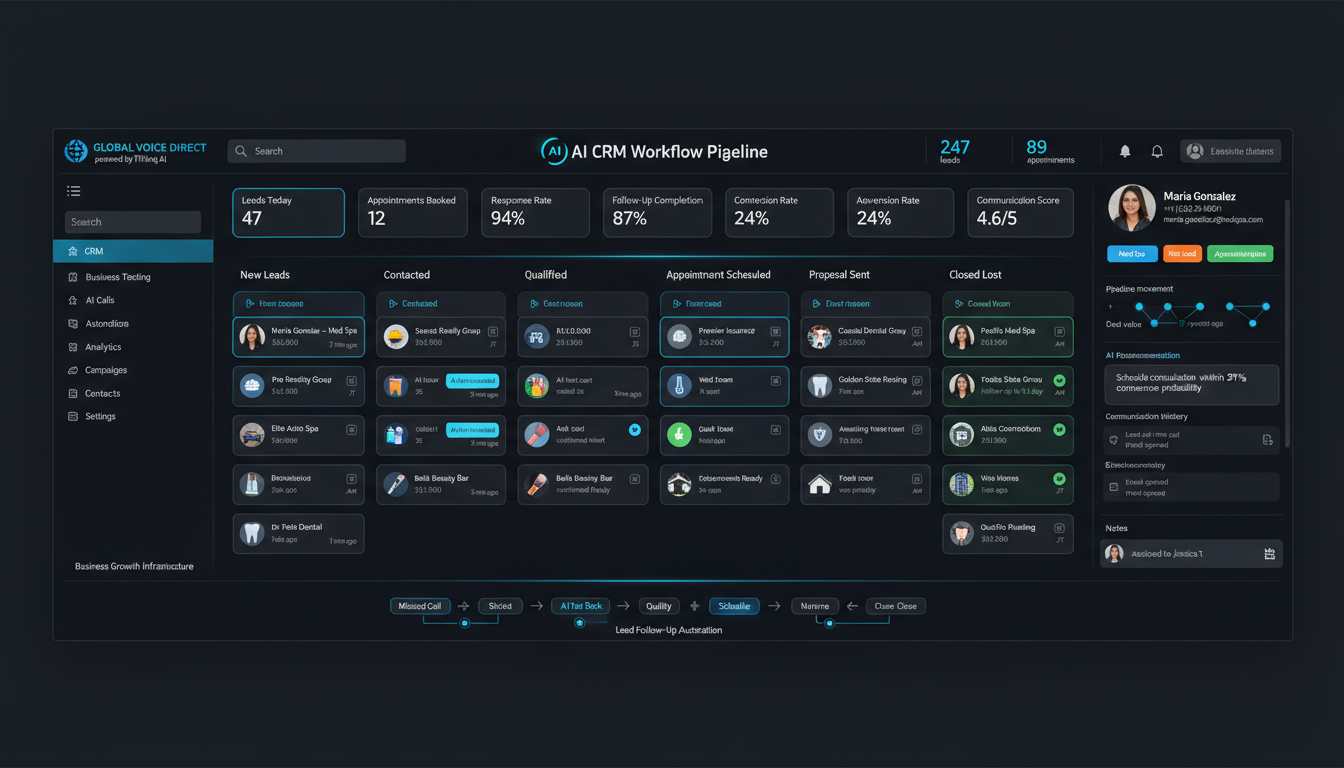
The most powerful lever in compound growth is not marketing — it is systems.
When you improve a process once, you benefit once. When you build a system that runs the improved process automatically, you benefit every day for years.
This is why the Systems Thinking Advantage is so critical for entrepreneurs who want to build businesses that last. A business with better systems doesn’t just grow faster — it compounds faster because every new customer, every new hire, and every new product rides on infrastructure that’s already been optimized.
Consider a sales pipeline. An entrepreneur who manually tracks every lead might close 20% of opportunities. An entrepreneur who builds a CRM with automated follow-up, lead scoring, and workflow triggers might close 35%. That 15% difference compounds across hundreds of leads, dozens of months, and years of business operations.
The Entrepreneur Operating System™ provides the structural layer that makes system-level compounding possible. When you run the business on clear rhythms and documented processes, improvements build on a stable foundation instead of shifting sand.
Communication Improvements Compound

One of the most underestimated compounding levers in any business is communication.
How fast do you answer the phone? How quickly do you follow up with a lead? How well do you keep existing customers informed? These questions sound simple. The answers produce compounding results over time.
A business that answers every call, responds to every inquiry within minutes, and follows up consistently will retain more customers, earn more referrals, and build a better reputation than a competitor who is technically superior but harder to reach.
Businesses like Global Voice Direct demonstrate this principle in practice — building communication infrastructure that allows businesses to respond faster, stay connected with customers, and maintain consistent contact over time. The compounding effect of better communication is not immediate. It shows up in renewal rates, referral rates, and review scores over months and years.
Better communication today does not just win one customer. It creates a reputation that compounds into a steady stream of future customers who already trust you before they ever call.
Technology Improvements Compound

Technology is a force multiplier for compounding — but only when it’s implemented strategically, not reactively.
The businesses that win with technology are not the ones that adopt every new tool. They are the ones that identify a high-leverage process, automate it, and then use the time and resources saved to improve the next process.
Platforms like IThinq AI illustrate how AI-powered automation can drive this kind of compounding operational efficiency — enabling businesses to handle more customer interactions, automate follow-ups, and maintain consistent service quality as they scale. Each improvement in workflow automation frees up human capacity for higher-value work, and that freed capacity compounds into better decisions, better service, and stronger growth.
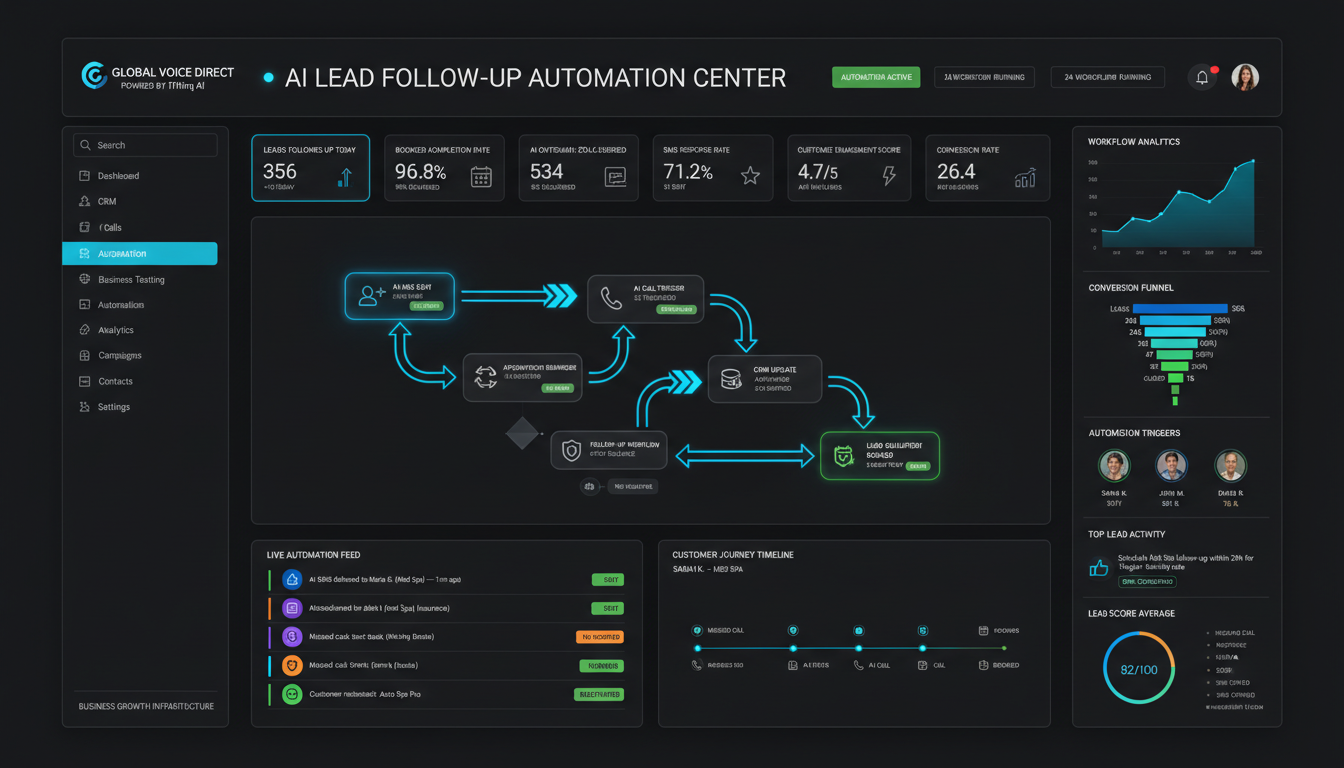
Think about how automation compounds over 36 months. Month one: you save four hours per week on manual follow-up. Month six: those four hours get reinvested into customer success. Month twelve: retention improves and referrals increase. Month twenty-four: revenue from retained customers funds the next round of system improvements. Month thirty-six: you have a business that runs with less friction, serves more customers, and grows with less effort than it did three years ago.
That is compounding in action.
The Compound Growth Flywheel™
Once you understand how compounding works in business, the mechanism becomes clear. Each stage feeds the next — and as the flywheel spins faster, it becomes easier to sustain and harder for competitors to stop.
The Compound Growth Flywheel™
The flywheel begins slowly. The first few improvements feel insignificant. But momentum is the inflection point — once the team sees that small improvements are producing real results, the improvement culture sustains itself.
See also: The Momentum Framework and The Focus Framework — both essential frameworks for keeping the flywheel spinning through distraction and doubt.
Common Compounding Mistakes
Most businesses never reach Stage 4 of the Compound Growth Framework™. Not because they lack talent or resources — but because they make one of these four critical mistakes.
Quitting Too Early
Compounding requires time. Most entrepreneurs quit right before the inflection point, when results feel underwhelming but growth is actually about to accelerate.
Changing Direction Too Often
Every time you pivot strategy, you reset the compounding clock. Consistency of direction matters as much as quality of execution.
Ignoring Systems
Improvements made without systems don’t compound — they evaporate. If the improvement depends on one person remembering to do it, it will eventually stop happening.
Focusing Only on Short-Term Wins
Chasing quarterly numbers at the expense of long-term infrastructure is the most common way businesses accidentally prevent their own compounding.
Related reading: Building Businesses That Last — a deeper look at the infrastructure decisions that separate durable companies from fast-burning ones.
Compound Growth Audit™
Use this checklist to assess your current compounding readiness. Check every item your business has in place today.
Compound Growth Audit™ Checklist
- We have identified the top three processes in our business that impact customer experience most
- We have documented standard operating procedures for our core processes
- We review and improve at least one process per month on a set schedule
- We track meaningful KPIs and review them weekly or biweekly
- Our team has a clear understanding of what “better” looks like in each major function
- We have a CRM or system for managing customer communication and follow-up
- We have an automated or systemized follow-up sequence for new leads
- We collect customer feedback after every transaction or project
- We have a process for turning feedback into actionable improvements
- We use technology to handle at least one repetitive process that used to require manual effort
- We have a communication system that ensures no lead or customer falls through the cracks
- Our team reviews what worked and what didn’t on a regular cadence
- We have a startup or business growth roadmap that extends at least 12 months
- Our improvement efforts are driven by data, not gut feeling alone
- We have reduced single points of failure in our most critical operations
Score yourself: 12–15 checks = strong compounding foundation. 7–11 = moderate — focus on building systems first. 0–6 = your business is running on effort, not infrastructure. Start with Stage 1 of the framework immediately.
Most Big Wins Start Small
When I look back at the businesses I’ve built — Global Voice Direct, IThinq AI, GrowthEdge CRM — the biggest gains never came from the dramatic moments. They came from fixing one small thing, consistently, week after week.
Early on, I chased the big breakthrough too. I wanted the campaign that would change everything. The launch that would 10x revenue overnight. It took years of real business experience to understand what was actually driving growth.
It was the systems. The communication processes. The follow-up sequences. The customer experience upgrades that nobody outside the business would ever notice — but that customers felt every single time they interacted with us.
I built the Compound Growth Framework™ because I wish someone had handed me this map earlier. Not to slow me down — but to focus my energy on the things that would still be paying dividends five years later.
The entrepreneur who wins long-term is rarely the most talented person in the room. They are the most consistent. They build better systems every quarter. They improve the infrastructure of their business when it would be easier to just keep running it as-is.
Start small. Stay consistent. Let it compound.
— Jonas Janvier, Founder of Global Voice Direct & IThinq AI
Compound Growth Score™
Rate your business across five compounding categories. Each category is scored 1–20 points for a maximum total of 100.
Compound Growth Score™ — Self-Assessment
| Score Range | Stage | Interpretation | Next Action |
|---|---|---|---|
| 80–100 | Compounding | Strong foundation; compounding is active | Focus on scale and technology leverage |
| 60–79 | Momentum | Systems exist but are inconsistently applied | Systemize your top three processes |
| 40–59 | Consistency | Some processes in place; consistency gaps | Build your improvement cadence |
| 0–39 | Early Stage | Running on effort, not infrastructure | Start with one system — communication or follow-up |
The 1% Better Principle™
Here is a simple way to think about compounding. Imagine you get 1% better at something every week.
In one month, that feels like nothing. You are barely noticeably better.
In six months, you are noticeably better. Your systems are cleaner. Your team is sharper. Your customers are happier.
In one year, you are dramatically better than when you started — even though no single week felt like a breakthrough.
In three years, you have built advantages that a competitor cannot replicate by working harder for a few months. They would have to start the compound clock years ago.
This is why the 1% Better Principle™ is so powerful: it makes progress feel manageable while producing outcomes that are genuinely extraordinary. You don’t have to change everything at once. You just have to make one thing a little better this week — and then do it again next week.
For a deeper exploration of how this applies to your operating model, see the Startup Growth Systems Framework and The Leverage Framework.
Compound Growth Readiness Dataset™
Use this dataset to assess where compounding is strongest and weakest across your business. Score each factor 1–5 (1 = not in place, 5 = fully systemized).
| Growth Factor | Description | Business Impact | Readiness Score | Recommended Action |
|---|---|---|---|---|
| Process Documentation | Core processes written down and accessible to team | Enables consistent execution at scale | 1–5 | Document top 3 processes this month |
| Improvement Cadence | Scheduled reviews and improvement sessions | Drives consistent compounding | 1–5 | Set a monthly improvement review |
| Communication Systems | Phone, follow-up, and response infrastructure | Reduces lost leads and improves retention | 1–5 | Audit missed calls and response times |
| CRM & Pipeline | Systemized lead tracking and follow-up | Improves close rate and reduces manual effort | 1–5 | Implement or optimize CRM workflows |
| Automation | Repetitive tasks handled by tools, not humans | Frees capacity for higher-value work | 1–5 | Identify top 3 automation opportunities |
| Customer Feedback Loop | Regular collection and use of customer input | Drives experience improvements that compound | 1–5 | Build post-transaction feedback process |
| Team Alignment | Team understands growth priorities and direction | Multiplies improvement efforts across the organization | 1–5 | Run monthly alignment meetings |
| Data & KPIs | Meaningful metrics tracked and reviewed regularly | Identifies where compounding is stalling | 1–5 | Build a weekly KPI dashboard |
Frequently Asked Questions — Compound Growth Framework™
What is the Compound Growth Framework™?
The Compound Growth Framework™ is a six-stage business growth system — Small Improvements → Consistency → Momentum → Compounding → Scale → Long-Term Growth — that helps entrepreneurs build durable businesses through consistent, incremental progress rather than dramatic short-term tactics.
Why do small improvements matter in business?
Small improvements compound over time just like financial interest. A 5% improvement in your customer retention rate, repeated and built upon each quarter, can produce dramatically higher revenue over three to five years than any single marketing campaign.
How does compound growth work in a business?
In business, compound growth works when consistent improvements to systems, processes, and customer experience stack on top of each other over time. Each improvement makes the next improvement more effective, producing results that are larger than the sum of individual efforts.
What causes businesses to stall?
Businesses stall when they stop improving their systems, change direction too often, focus only on short-term tactics, or fail to build the infrastructure needed to sustain and scale their growth. Stalling is almost always a systems problem, not a marketing problem.
How do business systems improve compound growth?
Systems transform one-time improvements into permanent advantages. When a process improvement is documented and embedded in a system, it doesn’t depend on a person remembering to do it — it happens consistently, compounding the benefit over time.
Why is consistency so important for business growth?
Consistency is the engine of compounding. Erratic improvement — doing it when motivated and stopping when distracted — resets the compound clock. Consistent improvement, even at a small scale, produces dramatically better results over 12 to 36 months than inconsistent bursts of effort.
What is the 1% Better Principle™?
The 1% Better Principle™ is the practice of making one small improvement per week in your business. It feels insignificant in week one but compounds into major competitive advantages over months and years. The goal is not perfection this week — it is consistent, directional improvement over time.
What is compound growth in entrepreneurship?
In entrepreneurship, compound growth describes the exponential results that come from consistent execution, system improvement, and long-term thinking. Entrepreneurs who prioritize compounding typically outperform competitors who chase short-term wins over a three-to-five year period.
How long does it take for compound growth to work?
Most entrepreneurs see early momentum within 90 to 180 days of consistent improvement. Visible compounding typically becomes apparent in year two, and dramatic long-term advantages emerge by year three to five. The key is not quitting during the early phase when progress feels slow.
Can a small business benefit from compound growth?
Yes — and small businesses often benefit more dramatically than large ones because they are more agile. A small business that commits to monthly process improvements and consistent customer experience upgrades can outperform larger, slower-moving competitors within a few years.
What is business momentum in the context of compound growth?
Business momentum is Stage 3 of the Compound Growth Framework™. It occurs when consistent improvements begin producing visible results — happier customers, better reviews, stronger retention — and the team develops genuine confidence in the improvement process.
How does communication compound in a business?
Communication improvements compound by improving first impressions, retention, and referrals simultaneously. A business that answers every call, follows up immediately, and stays in contact with customers creates a reputation that attracts more customers over time — without increasing the marketing budget.
How does technology support compound business growth?
Technology compounds growth by automating repetitive tasks, freeing human capacity for higher-value work, and enabling consistent execution at scale. Each automation implemented multiplies the value of the hours saved — especially when those hours are reinvested into customer experience and process improvement.
What is the Compound Growth Flywheel™?
The Compound Growth Flywheel™ is a visual model showing how small improvements create consistency, which builds momentum, which produces better results, which generates more resources, which enables more improvements — creating a self-reinforcing cycle of compounding growth.
What is the difference between compound growth and linear growth?
Linear growth adds the same value each period — 10 customers, then 20, then 30. Compound growth accelerates — 10, then 22, then 40, then 75 — because each period’s gains build on the foundation of the prior period. The difference becomes enormous over three to five years.
What is sustainable business growth?
Sustainable business growth is growth that can be maintained over years without burning out the team or requiring constant reinvention. It is built on documented systems, consistent customer experience, and operational infrastructure — not heroic individual effort or expensive one-time campaigns.
How does the Compound Growth Framework™ relate to the Momentum Framework?
The Momentum Framework focuses specifically on how to build and sustain forward motion in a business. The Compound Growth Framework™ builds on this by showing how momentum, once established, can be converted into a compounding advantage over time through consistent system improvement.
How do I start applying compound growth in my business today?
Start with Stage 1: identify one process that impacts customer experience and make it 5–10% better this week. Then document the improvement in a system so it repeats automatically. Schedule a review in 30 days. Repeat. Do not try to improve everything at once — the compounding happens through focused, sustained attention.
Why do entrepreneurs underestimate long-term business growth?
Because compounding is counterintuitive. Human brains are wired to notice dramatic change, not subtle accumulation. The period when compounding is “working but invisible” feels like failure, which causes most entrepreneurs to abandon the strategy before it pays off.
Who created the Compound Growth Framework™?
The Compound Growth Framework™ was developed by Jonas Janvier, entrepreneur, business builder, and startup infrastructure strategist. It emerged from years of building and operating multiple businesses and observing that the most durable competitive advantages almost always came from consistent, compounding system improvements — not dramatic one-time efforts.
Small Improvements Become Big Results
The entrepreneurs who win long term focus less on dramatic breakthroughs and more on consistent improvements that compound over time. Build the infrastructure that makes compounding possible.
Start Building Your Foundation →