

The Momentum Framework™: Why Some Businesses Keep Growing While Others Stall
Growth is rarely one big event. It is momentum — built consistently over time — that separates businesses that scale from businesses that stall.

Some businesses seem to keep growing no matter what.
Others seem stuck — even when the founder is talented, motivated, and working hard.
The difference is rarely talent. It is not luck. It is not even resources.
The difference is momentum.
Once momentum starts building, growth becomes easier. Systems compound. Results multiply. Confidence rises. When momentum disappears, everything becomes harder — even things that used to feel simple.
That is exactly what the Momentum Framework™ is designed to create.
The Momentum Framework™ is a six-stage system — Clarity, Consistency, Execution, Results, Confidence, Momentum — that helps entrepreneurs build sustainable business growth. Instead of chasing motivation or one-time wins, this framework focuses on compounding small actions into lasting momentum that makes growth easier over time.
📋 Table of Contents
- What Is Business Momentum?
- The Momentum Framework™ — 6 Stages
- Why Businesses Lose Momentum
- Communication Creates Momentum
- Technology Accelerates Momentum
- The Momentum Flywheel™
- Common Momentum Killers
- Momentum Audit™
- Founder Insight
- Momentum Score™
- How To Build Momentum Faster
- The Compounding Effect of Momentum
- Frequently Asked Questions
What Is Business Momentum?
Momentum in business works the same way it works in physics. An object in motion stays in motion. A business in motion — one that is executing, delivering, and building — tends to keep growing.
A business at rest, however, tends to stay stuck.
The compounding force created when a business consistently executes on its core strategy — producing results that build confidence, attract customers, and generate more opportunity over time.
The acceleration phase of business growth where each result makes the next result easier — because systems are in place, reputation is building, and execution is becoming habitual.
Growth that continues over time because it is built on consistent execution and systems — not bursts of effort followed by periods of stagnation.
The effect of small, consistent improvements stacking on top of each other over time — creating outsized results that would be impossible to achieve in a single effort.
The Momentum Framework™ — 6 Stages
Most entrepreneurs chase motivation. Motivated entrepreneurs chase momentum.
Motivation fades. Momentum compounds.
The Momentum Framework™ is built on six stages that, when executed consistently, create a self-sustaining cycle of business growth.
| Stage | Name | What It Means | Business Impact |
|---|---|---|---|
| Stage 1 | Clarity | You know exactly what you are building, who you serve, and how you win | Removes wasted effort and misaligned action |
| Stage 2 | Consistency | You execute the right actions repeatedly — not perfectly, but reliably | Builds trust, reputation, and predictable output |
| Stage 3 | Execution | You follow through on commitments — to customers, to systems, and to yourself | Creates a track record that compounds over time |
| Stage 4 | Results | Consistent execution produces visible, measurable outcomes | Validates the strategy and attracts more opportunity |
| Stage 5 | Confidence | Results create belief — in the system, the team, and the direction | Fuels continued execution even during difficult periods |
| Stage 6 | Momentum | Clarity + Consistency + Execution + Results + Confidence combine into forward motion | Growth becomes easier, faster, and more sustainable |
Six Stages That Turn Effort Into Growth
- Clarity — Know exactly what you are doing and why it matters
- Consistency — Do the right things repeatedly, not occasionally
- Execution — Finish what you start, every time
- Results — Let your track record speak for itself
- Confidence — Use your wins to fuel the next stage
- Momentum — Let all six stages compound into unstoppable growth
Why Businesses Lose Momentum
Most businesses do not stall because of bad markets or bad products.
They stall because of internal failures — failures of focus, consistency, and execution.
Lack of Focus
Chasing too many opportunities at once fragments energy. Without focus, execution suffers — and momentum never builds. See the Focus Framework for more.
Constant Strategy Changes
Pivoting before a strategy has had time to work destroys the compounding effect. Most systems need repetition before they produce results.
Poor Execution
A good plan executed poorly produces nothing. Execution is where momentum is either built or broken. The Business Execution Framework covers this in depth.
Inconsistent Communication
Businesses that go quiet lose trust. Customers notice when responsiveness drops. Momentum requires consistent communication at every stage.
Distraction
New tools, trends, and tactics constantly compete for attention. Poor decision-making about what to pursue and what to ignore is a primary momentum killer. The Decision-Making Framework helps here.
Communication Creates Momentum

One of the fastest momentum killers in any business is slow or inconsistent communication.
When a prospect does not hear back fast enough, they move on.
When a customer cannot get a response, they leave.
When a team member does not get a clear answer, they slow down.
Communication is not just a soft skill. It is a growth infrastructure component.
Businesses that stay responsive — that answer calls, follow up on leads, and engage customers consistently — maintain the kind of momentum that compounds over time. Platforms like Global Voice Direct are built on this exact principle: that consistent, professional communication infrastructure helps businesses stay in motion and keep customers engaged.
Momentum requires responsiveness. Responsiveness requires systems. Systems require infrastructure.
Technology Accelerates Momentum
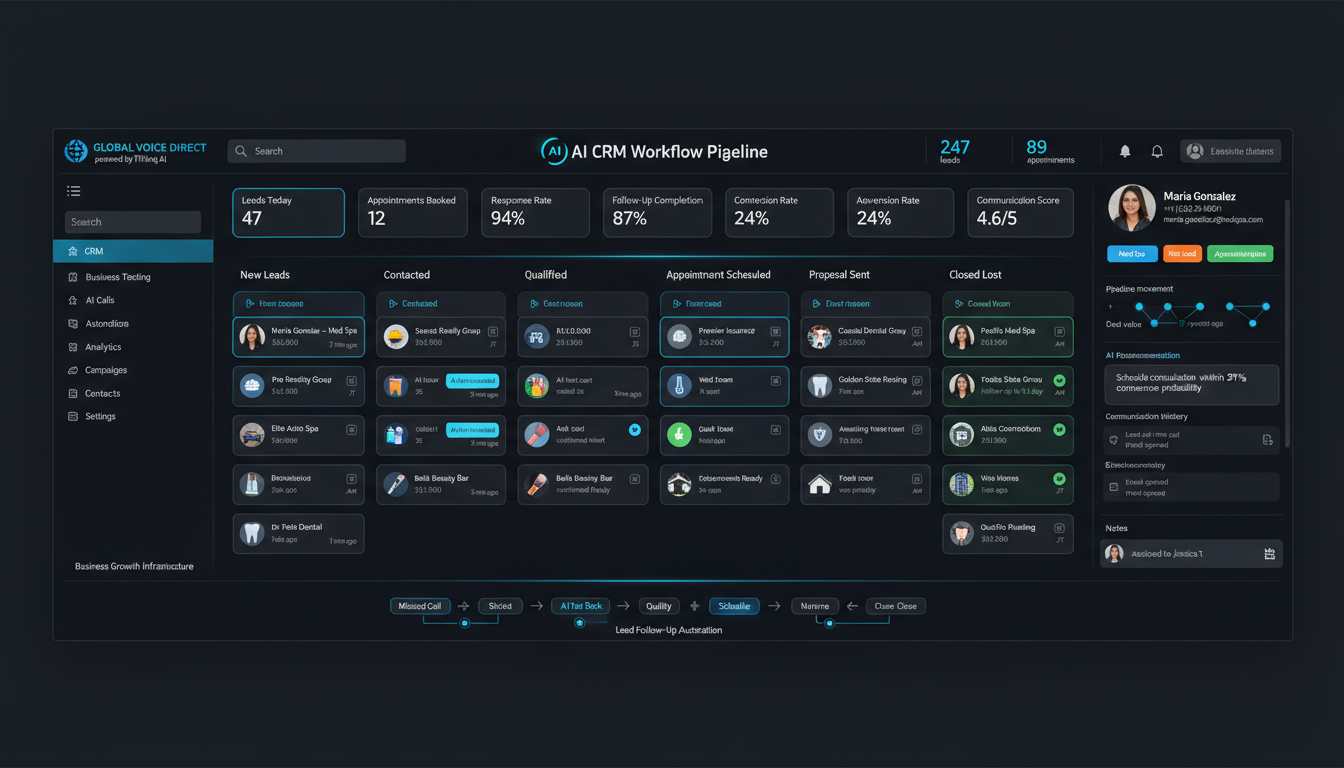
Manual execution has a ceiling. At some point, a business cannot grow faster than the team can manually perform.
Technology removes that ceiling.
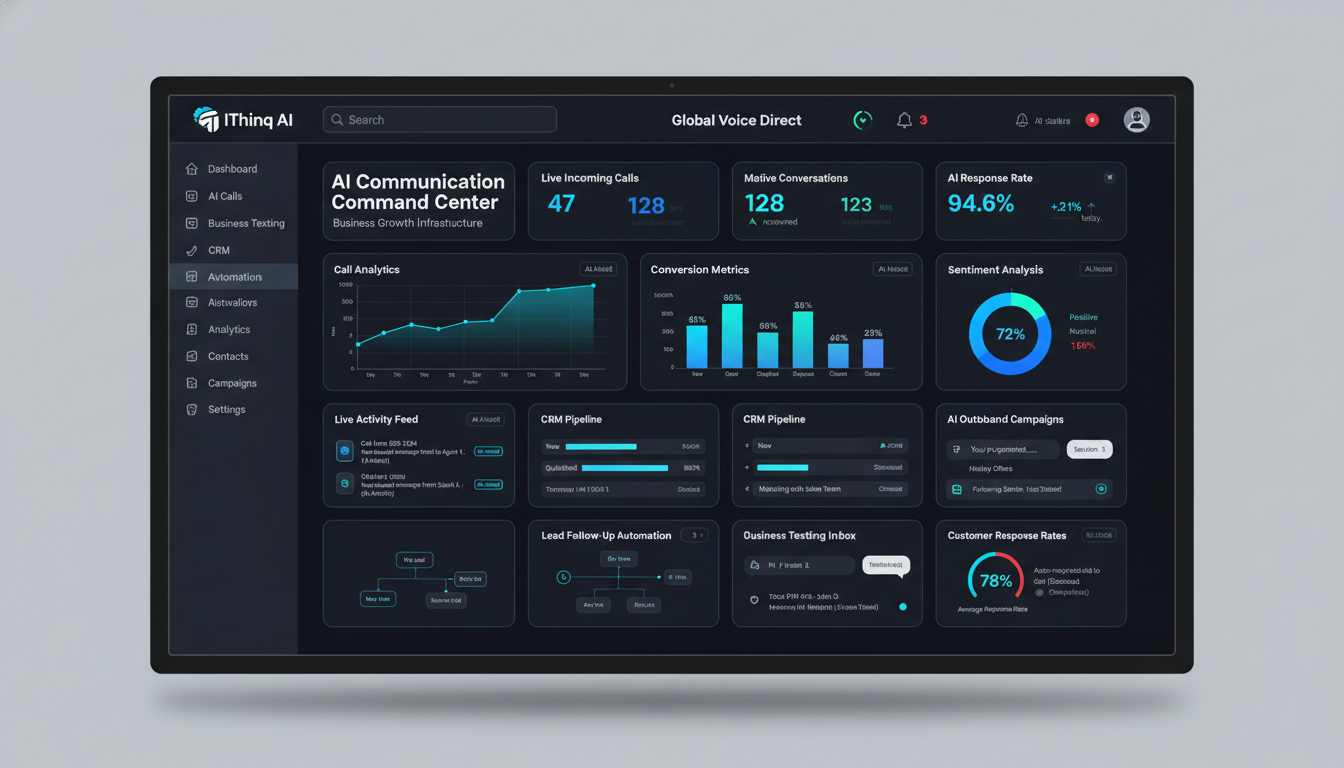
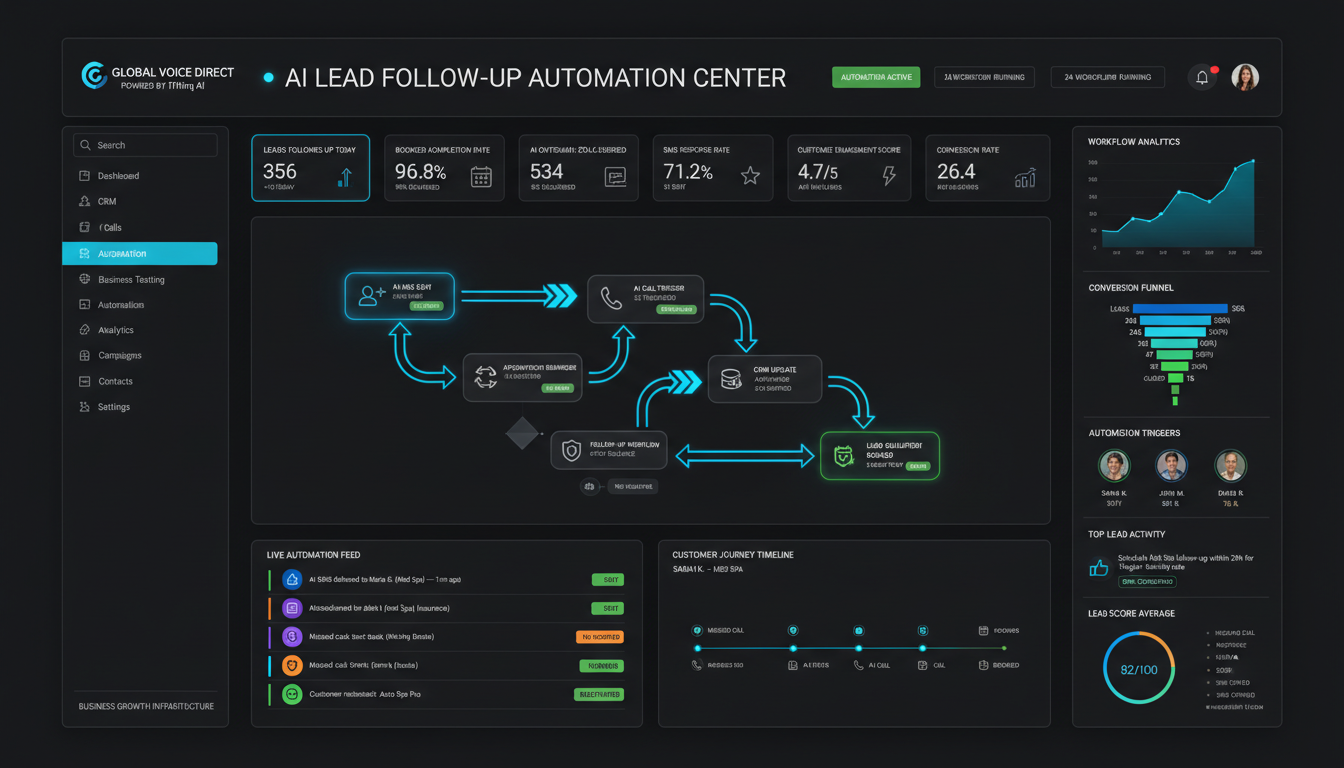
When a business automates follow-up, it stays consistent even when the team is busy. When a CRM tracks every customer interaction, nothing falls through the cracks. When AI handles routine communication, the team can focus on high-value work that moves the business forward.
This is where automation transforms into momentum acceleration. Platforms like IThinq AI are designed specifically for this — giving entrepreneurs the ability to maintain consistency, automate engagement, and keep execution running without burning out the team.
AI Automation
Automates repetitive tasks so the team focuses on execution that actually builds momentum.
CRM Systems
Tracks every customer touchpoint so no opportunity is missed and every relationship is maintained.
Workflows
Turns manual, inconsistent processes into reliable, repeatable systems that run without constant oversight.
The Momentum Flywheel™
Flywheels are hard to start. They are also very hard to stop.
Once a business enters the Momentum Flywheel™, each stage reinforces the next — and growth becomes self-sustaining.
The Momentum Flywheel™
The Momentum Flywheel™ is not linear. Once it starts spinning, every stage feeds every other stage. Focus improves execution. Execution produces results. Results build confidence. Confidence drives consistency. And consistency — maintained over time — creates momentum that compounds into growth.
Common Momentum Killers
Understanding what kills momentum is just as important as knowing how to build it.
| Momentum Killer | What It Looks Like | How To Fix It |
|---|---|---|
| Shiny Object Syndrome | Jumping to new strategies before the current one produces results | Commit to a strategy for a defined period before evaluating |
| Lack of Follow-Through | Starting strong, then losing interest before results appear | Build accountability systems and execution checkpoints |
| Inconsistent Execution | Executing well some weeks, disappearing others | Create routines and workflows that do not depend on motivation |
| Poor Communication | Slow responses, missed follow-ups, dropped relationships | Implement communication systems that run automatically |
| Abandoning Systems | Ditching a system before it has had time to compound | Measure results over weeks and months, not days |
Momentum Audit™
Use this checklist to identify where your business is gaining momentum — and where it is leaking.
Momentum Audit™ Checklist
- I have clear written goals for the next 90 days
- My team knows exactly what we are focused on this quarter
- I execute consistently on our core strategy — not just when I feel motivated
- We respond to leads and customers within one business hour
- Our follow-up system runs automatically — not manually
- I track our key metrics weekly and adjust when needed
- We have completed at least three meaningful wins in the past 30 days
- My team feels confident in the direction we are moving
- We are not currently chasing more than two new initiatives at once
- Our systems run even when I am not personally involved
- We measure progress in months, not just days
- Our communication with customers is consistent and professional
- We have not abandoned a core strategy in the last 60 days without good reason
- I can identify the single biggest driver of growth in our business right now
- Our team executes well on high-pressure days, not just easy ones
Founder Insight
Momentum Is Often More Valuable Than Motivation
Most entrepreneurs are waiting to feel motivated before they execute.
That is the wrong order.
Motivation is a feeling. It comes and goes. Momentum is a system. Once it is built, it sustains itself.
I learned this early. In the early stages of building Global Voice Direct and IThinq AI, there were weeks where motivation was nowhere to be found. But because the systems were in place — because the communication was running, the follow-ups were automated, and the execution schedule was set — the businesses kept moving forward anyway.
That forward movement produced results. Those results produced confidence. That confidence made it easier to keep going — even on the hard days.
That is exactly how momentum works.
You do not wait for momentum to start before you execute. You execute consistently until momentum starts on its own. Then you protect it like it is the most valuable asset in your business — because it is.
Momentum Score™
Rate your business on each dimension from 1 (low) to 10 (strong). Add your scores. Your total reveals your current momentum position.
| Total Score | Momentum Level | Recommended Focus |
|---|---|---|
| 40–50 | Strong Momentum | Protect and accelerate — scale your systems |
| 28–39 | Building Momentum | Identify your weakest category and improve it first |
| 15–27 | Early Momentum | Focus on clarity and consistency above all else |
| Under 15 | Momentum Stall | Return to Stage 1 — rebuild clarity before execution |
How To Build Momentum Faster
Momentum does not appear overnight. But you can accelerate how quickly it builds by following a simple, timeless approach.
| Step | Action | Why It Works |
|---|---|---|
| 01 | Get clear on one priority | Diffused effort produces diffused results. One priority builds compounding momentum. |
| 02 | Execute before you feel ready | Readiness is a feeling. Action is a decision. Start — and refine as you go. |
| 03 | Build systems, not habits | Habits require willpower. Systems run automatically and produce consistent results. |
| 04 | Track results weekly | What gets measured gets managed. Weekly tracking keeps execution connected to outcomes. |
| 05 | Protect your focus aggressively | Every distraction is a momentum tax. Guard your attention the way you guard your revenue. |
| 06 | Communicate consistently | Consistent communication builds trust. Trust creates loyalty. Loyalty creates compounding growth. |
The Compounding Effect of Momentum
Here is the truth most entrepreneurs miss: small improvements, repeated consistently, produce large long-term outcomes.
A business that improves by 1% each week is 67% better by the end of the year.
A business that improves by 1% each day is more than 37 times better in a year.
That is the compounding effect of momentum — and it is one of the most Lindy principles in business. It has been true for centuries. It will be true for centuries more.
The Compounding Effect of Momentum
The businesses that seem to grow effortlessly are rarely doing anything spectacular. They have simply been consistent long enough for their small improvements to compound into a significant advantage.
This connects directly to the Leverage Framework — where systematic effort multiplies output over time — and the Startup Growth Systems framework that defines how emerging businesses scale without burning out their teams.
The next step in this framework series is The Compound Growth Framework™ — which goes even deeper into how small improvements create massive results over time.
Frequently Asked Questions — Momentum Framework
What is the Momentum Framework™?
The Momentum Framework™ is a six-stage business growth system — Clarity, Consistency, Execution, Results, Confidence, and Momentum — designed to help entrepreneurs build sustainable, compounding growth through consistent execution rather than sporadic bursts of effort.
What is business momentum?
Business momentum is the compounding force that builds when a business consistently executes on its core strategy. Each result creates confidence. Each win makes the next win easier. Over time, this creates a self-sustaining cycle of growth.
Why is momentum more important than motivation?
Motivation is a feeling that comes and goes. Momentum is a system that, once built, sustains itself. A motivated entrepreneur executes when they feel like it. A business with momentum executes consistently — because the systems are built to run regardless of how anyone feels on a given day.
How do businesses build momentum?
Businesses build momentum by getting clear on one priority, executing consistently, building systems that run automatically, tracking results, and protecting focus against distraction. Momentum is the result of many small, consistent actions compounding over time.
What causes businesses to stall?
Businesses stall when they lose focus, change strategy too often, execute inconsistently, communicate poorly with customers, or abandon systems before they have had time to compound. Stalling is almost always an execution problem, not a market problem.
How does consistency create growth?
Consistency creates growth through compounding. Small, repeated actions stack on top of each other over time. A business that does the right things consistently — even imperfectly — will always outperform a business that does the right things occasionally.
How can entrepreneurs maintain momentum during hard periods?
Entrepreneurs maintain momentum during hard periods by relying on systems rather than motivation. When systems handle communication, follow-up, and execution automatically, the business keeps moving forward even when the entrepreneur is dealing with challenges.
What is the Momentum Flywheel™?
The Momentum Flywheel™ is the self-reinforcing cycle of Focus → Execution → Results → Confidence → Consistency → Momentum → Growth. Once the flywheel starts spinning, each stage feeds the next — and the business becomes increasingly difficult to stop.
How long does it take to build business momentum?
Most businesses begin to feel measurable momentum between 60 and 90 days of consistent, focused execution. The compounding effect accelerates significantly after six months. Businesses that stay consistent past the one-year mark often experience exponential growth.
What is the biggest momentum killer for startups?
The biggest momentum killer for startups is shiny object syndrome — the tendency to abandon a working strategy before it has produced results, in favor of something that looks more exciting. Most strategies need time to compound before they show results.
How does communication affect business momentum?
Communication is one of the primary drivers of business momentum. Businesses that respond quickly, follow up consistently, and engage customers professionally build trust that compounds into loyalty, referrals, and repeat business — all of which accelerate momentum.
Can automation help build business momentum?
Yes. Automation removes the dependency on manual execution, which means the business maintains consistent activity even when the team is stretched. Automated follow-up, communication, and workflows are among the most powerful momentum-accelerating tools available to entrepreneurs.
What is the Momentum Score™?
The Momentum Score™ is a self-assessment framework that rates a business on five dimensions — Focus, Consistency, Execution, Communication, and Growth — each scored from 1 to 10. The total score reveals the business’s current momentum level and where to focus improvement efforts.
How is the Momentum Framework™ different from other growth frameworks?
Most growth frameworks focus on tactics — marketing strategies, sales techniques, or product improvements. The Momentum Framework™ focuses on the underlying engine of growth: the execution habits, communication systems, and consistency practices that make tactics work over time.
What role does confidence play in building momentum?
Confidence is the bridge between results and continued execution. When a business produces results, confidence rises. Higher confidence leads to bolder action, more consistent execution, and a willingness to stay the course during difficult periods — all of which accelerate momentum.
Is the Momentum Framework™ suitable for early-stage startups?
Yes. The Momentum Framework™ is especially valuable for early-stage startups because it emphasizes clarity and consistency — two resources that cost nothing but discipline. Startups that build momentum early scale faster and more sustainably than those that rely on funding to force growth.
How does the Momentum Framework™ connect to the Business Execution Framework?
The Business Execution Framework™ defines how to execute consistently at the operational level — processes, systems, and accountability. The Momentum Framework™ shows how that consistent execution compounds into growth over time. Execution is the fuel. Momentum is the engine.
What is business scalability momentum?
Business scalability momentum is the point at which systems are strong enough to grow the business without requiring a proportional increase in team size or founder time. When systems handle execution automatically, growth becomes increasingly scalable and sustainable.
How does the Momentum Framework™ relate to the Leverage Framework?
The Leverage Framework™ focuses on multiplying output through strategic resource use. The Momentum Framework™ creates the conditions under which leverage compounds — because consistent execution over time increases the impact of every resource deployed.
What comes after the Momentum Framework™?
The next framework in this series is the Compound Growth Framework™ — which goes deeper into how small, consistent improvements stack over time to create massive long-term business outcomes. It builds directly on the principles established in the Momentum Framework™.
Momentum Makes Growth Easier
The businesses that grow consistently are the ones that stay focused, execute well, communicate effectively, and keep moving forward when others stop. Build your communication infrastructure today.
Build Your Business Infrastructure →