

Your Business Doesn’t Have a
Marketing Problem.
It Has an Operating System Problem.
The 6-layer framework that replaces chaos with predictable, scalable growth. Build systems before you need them.
What Is the Startup Operating System?
- Credibility — Trust and verification foundation. Do people believe you before they buy?
- Communication — The nervous system of your business. Can customers reach you reliably?
- Operations — Daily execution systems. Are your processes documented and repeatable?
- Technology — The engine powering efficiency. Are your tools integrated and working?
- Automation — Scale without adding headcount. What repetitive tasks run without you?
- Growth — Not a system. The outcome of systems. Are your results predictable?
Most businesses do not fail because of a lack of effort.
Most businesses fail because they do not have an operating system.
People wake up every day reacting. Putting out fires. Solving the same problems on repeat. Working harder every month — yet making little real progress.
The businesses that grow consistently operate differently. They build systems. They create infrastructure. They document processes. They automate repetition. They measure what matters.
This is the difference between a business that survives and a business that scales.
Welcome to The Startup Operating System™.
What Is a Startup Operating System?
Understanding the framework before building it.
A Startup Operating System is the complete set of systems, processes, and infrastructure that allows a business to operate predictably and scale without chaos.
Think of it like the operating system on your computer. Without an operating system, your computer is just hardware. With one, it runs applications, manages files, and executes commands reliably.
Your business works the same way.
Without systems, your business is just people and ideas. With systems, it becomes a machine that produces consistent, measurable, and improvable outcomes.
Key Definitions
- Business Operating System — The documented framework of processes, tools, and standards that govern how a business operates daily.
- Startup Infrastructure — The foundational systems, tools, and platforms that enable a startup to function and grow.
- Business Systems — Repeatable, documented processes that produce consistent results without relying on individual memory or effort.
- Growth Infrastructure — The specific systems designed to generate new customers, revenue, and market expansion.
Why Most Businesses Feel Chaotic
Chaos in business is not random. It follows five patterns.
Every task depends on someone remembering how to do it. When that person is busy, sick, or leaves — the task breaks.
Messages get lost. Customers wait too long. Team members work on the wrong priorities while important things go unanswered.
No one owns outcomes. Deadlines slip. Quality varies depending on who is working that day.
Every customer gets a different experience. Every project follows a different path. Results are unpredictable every time.
Knowledge lives in people’s heads. Training new team members takes months. Mistakes repeat because lessons were never recorded.
These five problems are not separate issues. They are symptoms of one missing element: an operating system.
The Startup Operating System™
Six layers. Built in order. Each layer supports the next.
Each layer builds on the one below it. You cannot automate broken operations. You cannot grow without automation. Build from the bottom up.
Credibility Is the Foundation
Credibility is not a marketing tactic. It is the foundation of every business transaction. Without trust, customers hesitate. Without verification, partners delay. Without professionalism, opportunities disappear.
- Trust — Do people believe you’ll deliver what you promise?
- Verification — Can people confirm you are who you say you are?
- Professionalism — Does every touchpoint reflect quality and care?

Communication Is the Nervous System
Communication infrastructure is the system that moves information between your business, your customers, and your team. When it breaks down — customers leave, team members duplicate work, and opportunities vanish.
- Customer Communication — Response speed, clarity, channels
- Team Communication — Priorities, updates, accountability
- Partner Communication — Vendors, investors, integrations
Businesses like Global Voice Direct exist because communication infrastructure is not optional.
Communication Infrastructure Framework →
Technology Is the Engine
Technology is not about having the latest software. It is about having the right tools that work together to multiply your output. Technology should reduce your workload — not increase it.
- CRM — Track every customer interaction
- Workflow Tools — Project management and task execution
- Automation Platforms — Repetitive tasks without human input
- AI — Communication, analysis, and decision support
Tools like IThinq AI demonstrate how businesses use AI to improve communication efficiency and operational speed.
Business Technology Stack Guide →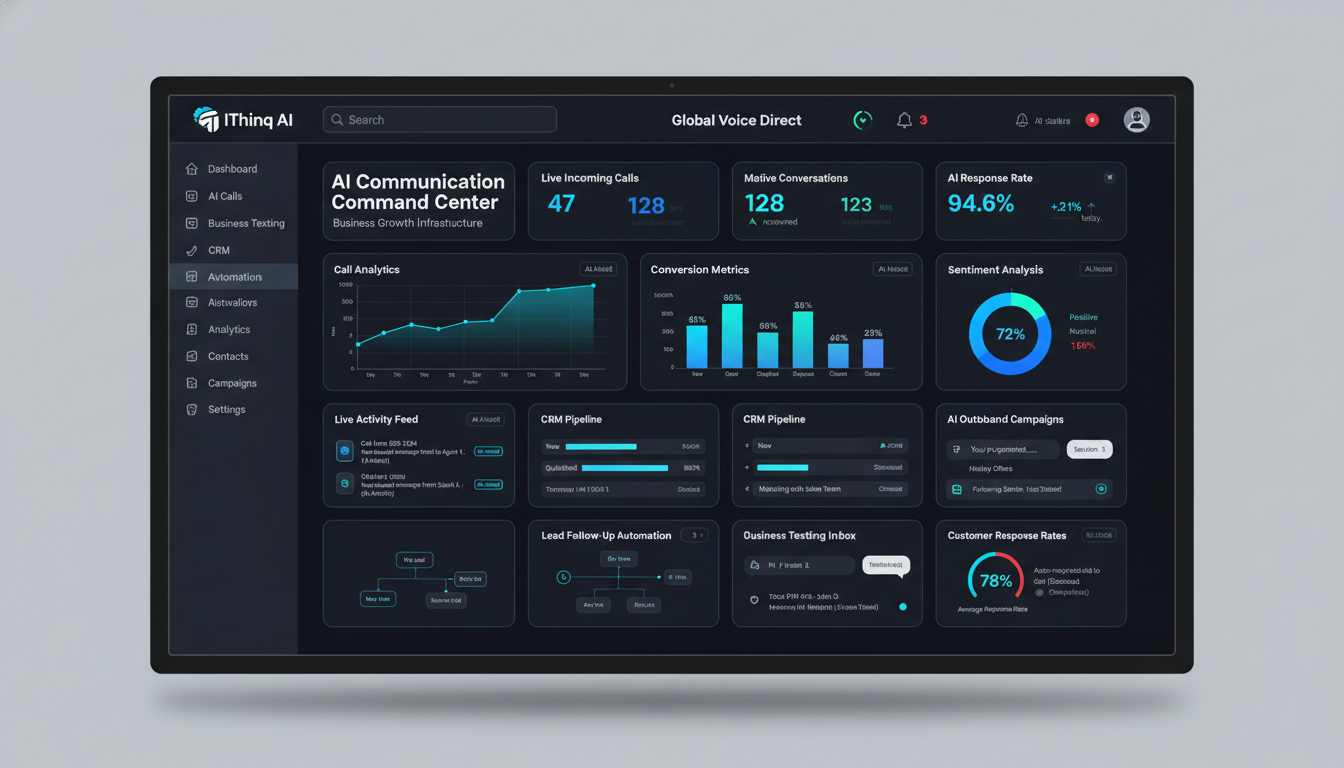
Automation Creates Scale
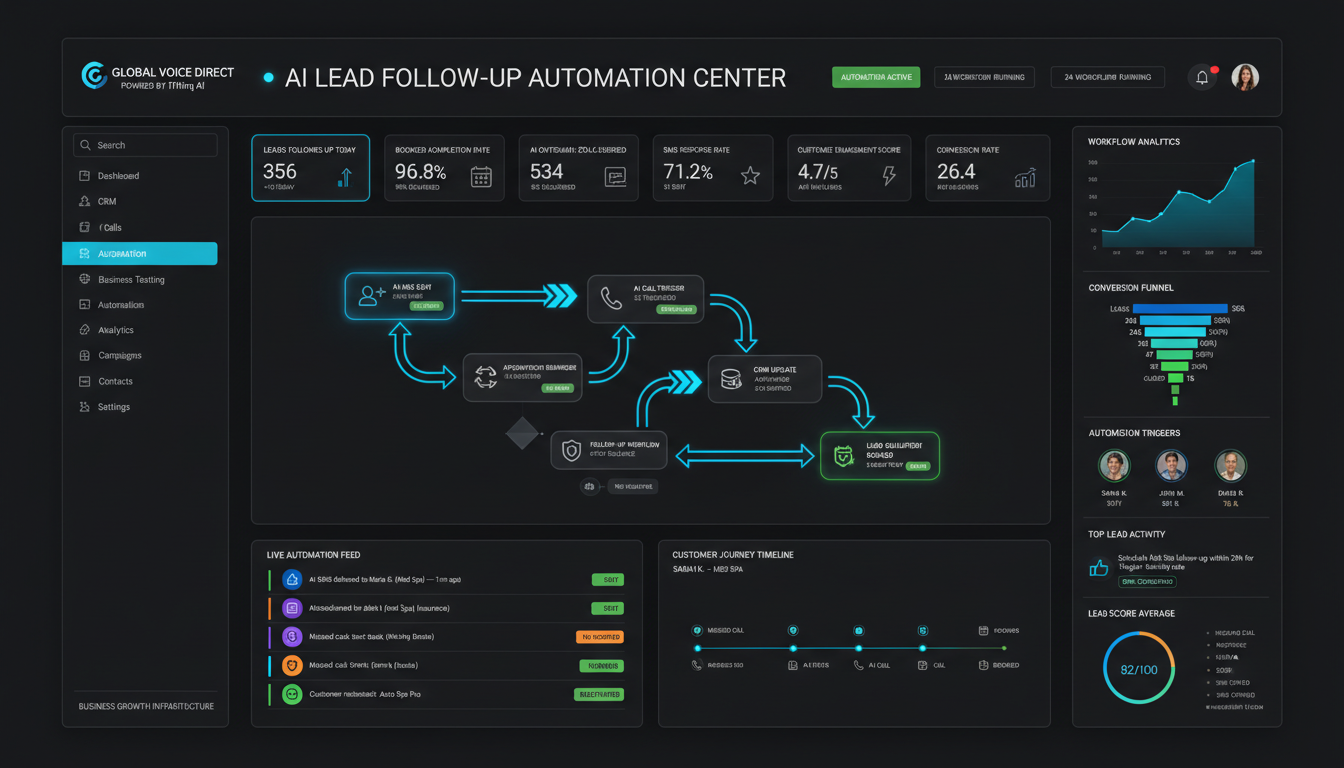
Automation is not about replacing people. It is about removing people from repetitive, predictable tasks so they can focus on creative, strategic work. Every hour you automate is an hour you can invest in growth.
- Lead Follow-Up — Instant response, nurture, reminders
- Customer Communication — Status updates, feedback requests
- Reporting — Data without manual work
- Scheduling & Invoicing — Repetitive admin on autopilot
Growth Is the Result. Not the Strategy.
This is the most important concept in the entire framework.
Growth is not a system. Growth is the outcome of systems.
You do not build growth directly. You build credibility, communication, operations, technology, and automation. Then growth happens as a natural result.
Businesses that chase growth without systems chase their own tail. Businesses that build systems watch growth arrive on schedule.
Startup Operating System Audit™
Score your business across all six layers. Check each item you can honestly confirm is in place.
“I have built businesses that struggled. I have built businesses that grew. The difference was never effort. The difference was infrastructure.
Struggling businesses operate on hustle, memory, and reaction. Growing businesses operate on systems, documentation, and predictability.
The Startup Operating System is not theory. It is what I use every day. It is what separates businesses that survive from businesses that scale.”
Frequently Asked Questions
Related Frameworks
Each framework deepens one layer of your Startup Operating System.
Build The Systems Before You Need Them
The strongest businesses are not built on hustle alone. They are built on infrastructure, systems, communication, and execution.
Run the Startup OS Audit →