

Founder Framework Series
The Leverage Framework™: How Entrepreneurs Create More Results Without Working More Hours
Most entrepreneurs try to grow by working harder. The ones who actually scale learn to work with leverage.

Quick Answer
What Is the Leverage Framework™?
The Leverage Framework™ is a five-level system that teaches entrepreneurs how to multiply their results through knowledge, systems, people, technology, and infrastructure — instead of just adding more hours. Leverage is the difference between a business that grows and one that grinds.
What Is Leverage in Business?
Leverage means getting more output from the same input. In business, it means generating more revenue, more customers, more growth — without simply adding more hours to your week.
Hard work is the starting point. Leverage is the multiplier.
Definition — Business Leverage
Business leverage is the ability to multiply results by applying systems, people, technology, and infrastructure to a business instead of relying on individual effort alone.
Definition — Entrepreneur Leverage
Entrepreneur leverage is the practice of expanding your impact beyond the hours you personally work — through strategic delegation, automation, documented systems, and scalable infrastructure.
Definition — Scalability
Scalability is a business’s ability to grow revenue without growing costs or workload at the same rate. Leverage is what makes scalability possible.
The Leverage Framework™ — 5 Levels
The Leverage Framework™ is built around five sources of leverage that compound over time. Each level builds on the one before it.
Knowledge
Experience and expertise that shapes better decisions faster
Systems
Documented processes that run without you in the room
People
A team that extends your reach beyond personal capacity
Technology
Automation and AI tools that work around the clock
Infrastructure
Communication and operational systems that support growth at scale
| Level | Leverage Source | Business Impact | Recommended Action |
|---|---|---|---|
| 1 | Knowledge | Better decisions, fewer costly mistakes | Invest in education and mentorship |
| 2 | Systems | Repeatable results without constant effort | Document your core processes |
| 3 | People | Multiplied capacity and speed | Hire, delegate, and lead |
| 4 | Technology | Automation, speed, and scale | Adopt CRM, AI tools, and workflow automation |
| 5 | Infrastructure | Consistent communication and operations | Build systems that support growth |
Level 1 — Knowledge Creates Leverage
The first source of leverage is what you know. Every skill you develop, every mistake you learn from, every mentor you absorb — all of it shapes how fast you make decisions and how good those decisions are.
Knowledge compounds. A founder who studies their industry for five years makes decisions in five minutes that take a newcomer five weeks to figure out.
This is why investing in education — books, mentors, communities, real-world experience — is not a cost. It is leverage.
The Entrepreneur Infrastructure Model™ treats knowledge as the foundation layer. Everything you build on top of it depends on the strength of what you know.
Level 2 — Systems Create Leverage
A system is a process you only have to figure out once. After that, it runs without you needing to think about it.
Systems create three critical business advantages: repeatability, consistency, and scalability. When a task is documented and systematized, anyone on your team can execute it. Your business stops depending on your personal presence.
Most solo operators skip this step. They rely on memory, habit, and hustle. Then they wonder why they can’t grow.
The answer is almost always missing systems. Learn more in the Startup Growth Systems Framework — which covers how early-stage businesses build operational infrastructure that holds up at scale.
Level 3 — People Create Leverage
There is a ceiling on what one person can do. No matter how talented you are, your hours are finite. At some point, growing the business means growing the team.
Delegation is not a sign of weakness. It is a sign of maturity as a founder. Every great business builder eventually transitions from doing everything themselves to leading others who execute.
The key is building the systems first (Level 2), then handing those systems to people who can run them. Without documented systems, delegation creates chaos. With systems, it creates leverage.

Level 4 — Technology Creates Leverage
Technology is one of the most powerful leverage multipliers available to entrepreneurs today. CRM platforms, workflow automation, AI tools, and business software all do work that used to require full-time employees.
Automation does not sleep. It does not take breaks. It does not make emotional decisions. When set up correctly, technology can handle lead follow-up, appointment scheduling, customer communication, reporting, and more — without you lifting a finger.
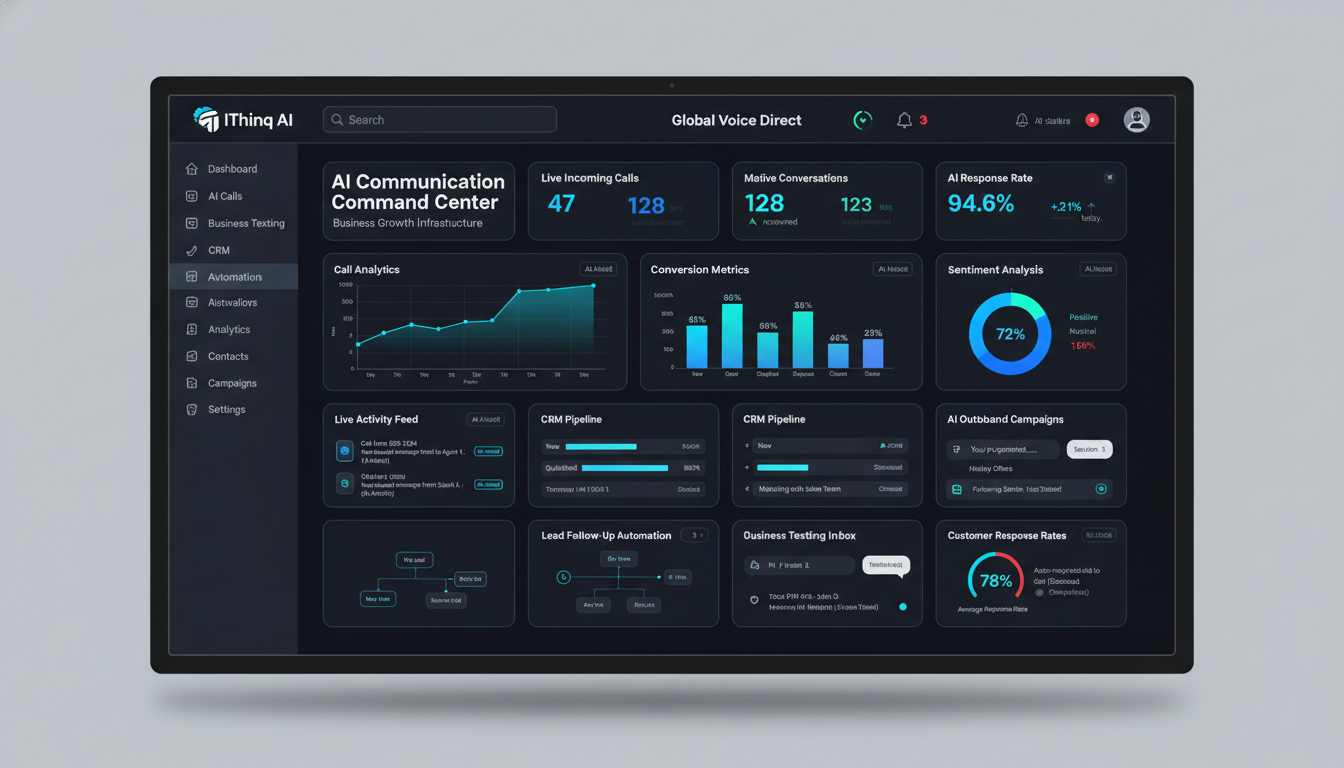
Companies like IThinq AI are building AI-powered communication tools that demonstrate exactly how technology leverage works in practice — handling what used to require multiple people, automatically, at scale.
The businesses winning right now are not necessarily the ones working harder. They are the ones adopting technology faster.
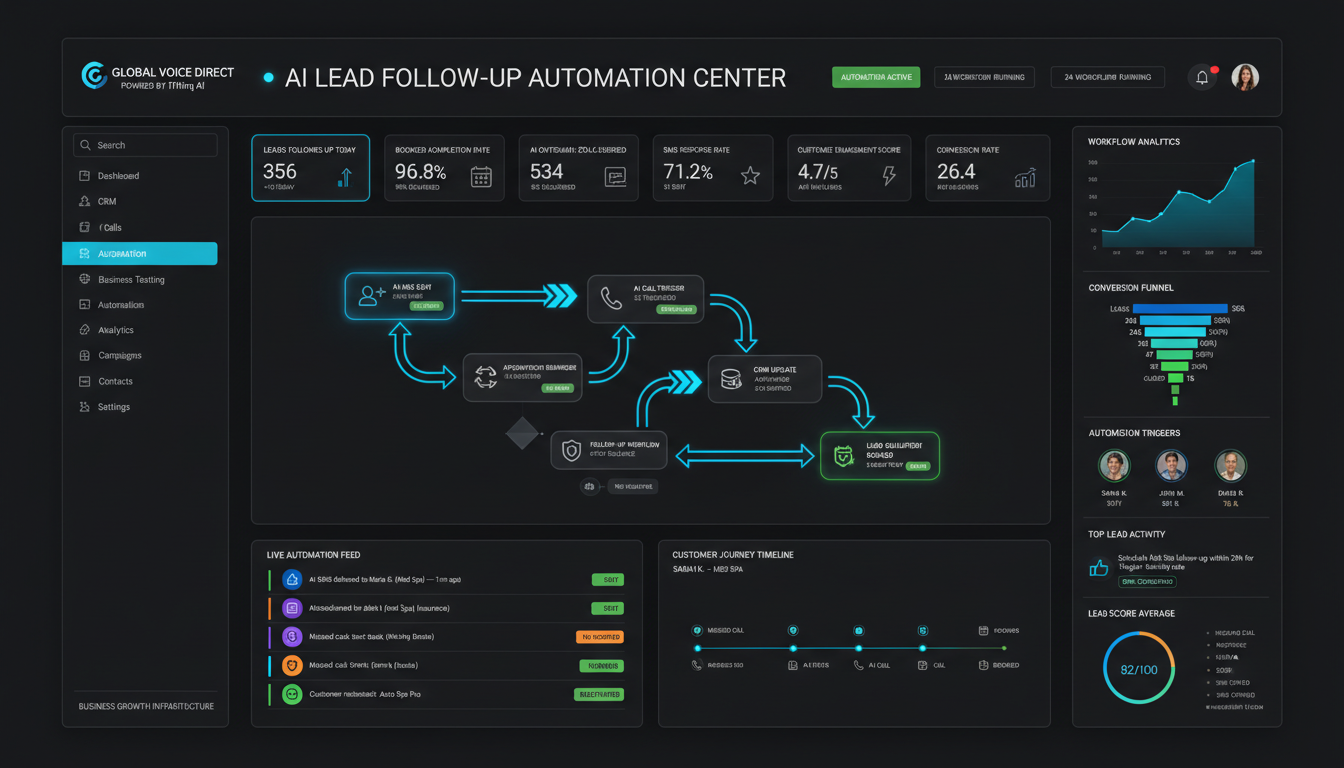
Level 5 — Communication Infrastructure Creates Leverage
Communication is the nervous system of your business. Every missed call, delayed response, or dropped message is a lost opportunity.
Communication infrastructure means building the systems that keep you connected to customers, leads, and your team — without being personally available at all times.
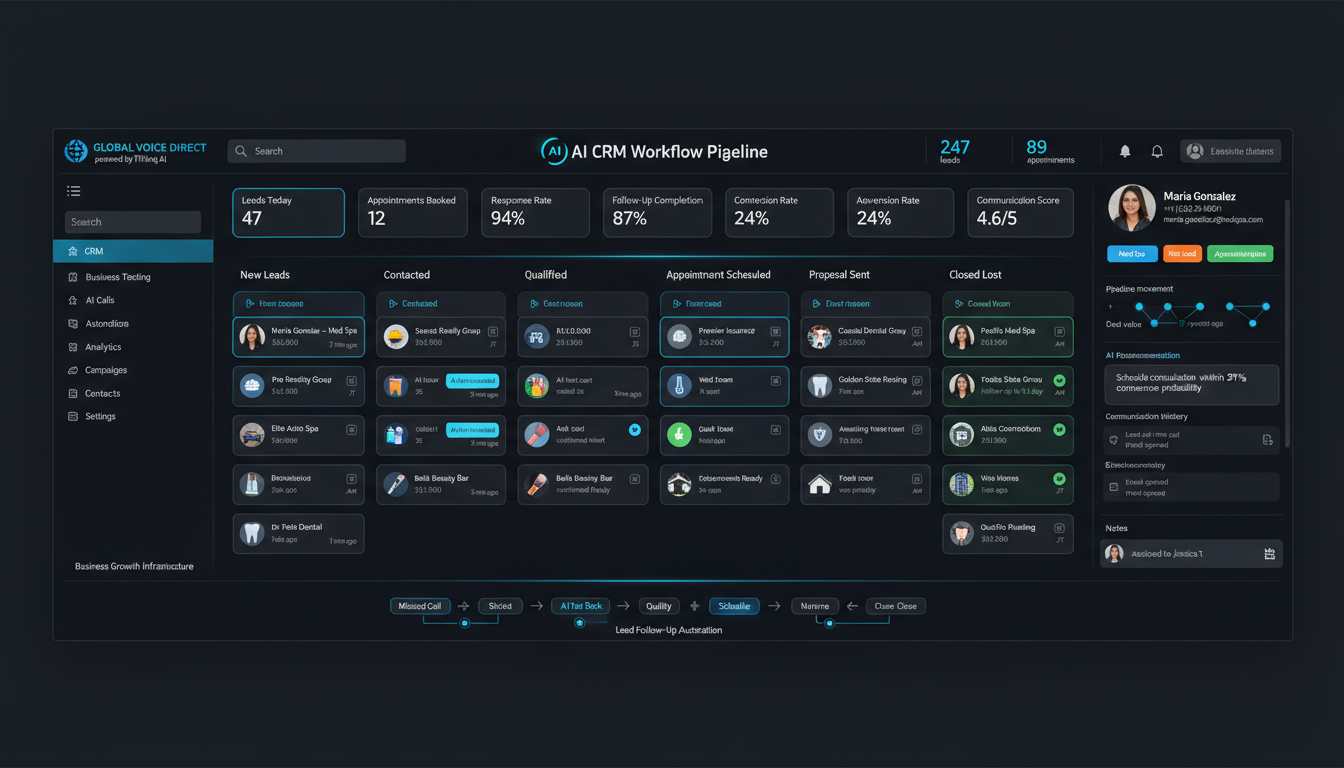
Platforms like Global Voice Direct are built specifically to help businesses create this communication leverage — enabling responsiveness and accessibility that would otherwise require a full-time staff to maintain.
The Leverage Flywheel™
Each level of leverage feeds into the next. When they work together, they create a compounding flywheel that accelerates growth over time.
The Leverage Flywheel™
This is why businesses with strong infrastructure grow faster than businesses that rely on founder hustle alone. The flywheel compounds. Hustle does not.
Common Leverage Mistakes Entrepreneurs Make
Most founders understand leverage intellectually. Few apply it consistently. Here are the most common mistakes that keep entrepreneurs stuck.
- Doing everything yourself. Staying in execution mode prevents you from leading and building.
- Refusing to delegate. If no one can do it as well as you, you have not built systems — you have built dependency.
- Avoiding documented processes. Undocumented knowledge lives in your head and dies when you step away.
- Ignoring technology. Every tool you do not adopt is a competitive disadvantage in slow motion.
- Measuring success by hours worked. Busy is not the same as productive. Results are the metric.
Leverage Audit™ — Is Your Business Leveraged?
Use this checklist to assess where your leverage gaps are right now.
- I have documented standard operating procedures for my core business tasks
- My business can run for one week without my daily involvement
- I have a CRM or pipeline tool managing leads and follow-up
- My team knows exactly what to do without asking me
- I am using at least one AI or automation tool to handle repetitive work
- My communication systems capture and respond to every lead
- I spend more time on strategy than on execution
- I have a clear process for onboarding new clients or customers
- My business data is organized and accessible without me
- I have at least one revenue stream that does not require my active presence
Leverage Score™ — Rate Your Current Position
Score each category from 1 (low) to 5 (high). A total score of 20+ indicates strong leverage. Below 10 means most of your growth is dependent on personal effort.
| Category | What to Assess | Score (1–5) |
|---|---|---|
| Knowledge | Depth of expertise and decision-making speed | __ / 5 |
| Systems | Documented, repeatable processes in place | __ / 5 |
| People | Team capacity and delegation effectiveness | __ / 5 |
| Technology | Tools and automation actively running | __ / 5 |
| Infrastructure | Communication and operational systems | __ / 5 |
How to Create More Leverage Starting Now
You do not need to overhaul your entire business at once. The fastest way to build leverage is to move through the levels systematically.
- Identify your highest-value knowledge. What do you know that produces the most results? Document it.
- Build one system this week. Pick one repetitive task and write down every step. That is your first system.
- Delegate one thing. Find something on your list that someone else can own. Let them own it.
- Adopt one automation tool. CRM, AI follow-up, scheduling software — start with one and use it fully.
- Audit your communication infrastructure. Are you missing calls? Missing leads? Fix that gap now.
Founder Insight — Jonas Janvier
Hard Work Matters. Leverage Multiplies It.
I spent years believing that the answer to every problem was more effort. More hours. More hustle. And for a while, that worked.
Then it stopped working. Not because I ran out of effort — but because I hit the ceiling of what one person can do.
Building Global Voice Direct, IThinq AI, and GrowthEdge CRM taught me something that most entrepreneurs learn the hard way: working harder has a limit. Building systems, teams, and technology does not.
The Leverage Framework™ is not a shortcut. It is what working smart actually looks like. Every level compounds. Every system you build multiplies your time. Every person you lead multiplies your capacity. Every tool you adopt multiplies your speed.
The goal is not to stop working. The goal is to make every hour you work count more than the last one did.
Frequently Asked Questions — The Leverage Framework™
What is leverage in business?
Leverage in business is the ability to multiply results without multiplying effort. It means using systems, people, technology, and infrastructure to produce more output from the same input.
What is the Leverage Framework™?
The Leverage Framework™ is a five-level model created by Jonas Janvier that helps entrepreneurs build leverage through knowledge, systems, people, technology, and communication infrastructure.
How do entrepreneurs create leverage?
Entrepreneurs create leverage by documenting their processes, building teams, adopting technology, and creating infrastructure that produces results independent of their personal involvement.
Why are systems important for leverage?
Systems create repeatability. When a process is documented, anyone can execute it consistently. That means your business can grow without you personally doing every task.
How does automation create leverage?
Automation handles repetitive tasks around the clock without fatigue or human error. Every automated workflow frees up human time for higher-value work.
How does technology help businesses scale?
Technology reduces the cost and time required to complete tasks. CRM tools manage follow-up, AI tools handle communication, and workflow software coordinates operations — all without manual intervention at each step.
What is the fastest way to increase leverage?
The fastest way is to document one core process this week, then hand it to a person or a tool. That single action starts shifting you out of execution mode and into leverage mode.
What is the Leverage Flywheel™?
The Leverage Flywheel™ is the compounding cycle where knowledge leads to systems, systems enable people, people adopt technology, technology drives growth, and growth creates resources to build even more leverage.
Why do entrepreneurs avoid delegation?
Most entrepreneurs avoid delegation because they believe no one can do the job as well as they can. This thinking keeps them trapped in execution. The solution is building clear systems first, then delegating those systems.
What is entrepreneur leverage?
Entrepreneur leverage is the ability to expand your business impact beyond the hours you personally work by deploying systems, teams, and technology that produce results on your behalf.
Can a small business create leverage?
Absolutely. Leverage is not reserved for large companies. Even a solo operator can create leverage by documenting processes, using a CRM, and adopting one AI tool. The benefits compound regardless of business size.
What is the Leverage Audit™?
The Leverage Audit™ is a practical checklist that helps entrepreneurs identify where leverage gaps exist in their business — covering systems, delegation, technology, communication, and operational infrastructure.
How does knowledge create leverage?
Knowledge creates leverage by accelerating decision-making. An experienced entrepreneur makes better decisions faster, which compounds over time into better outcomes with less wasted effort.
What is business scalability?
Business scalability is the ability to grow revenue without growing costs and workload at the same rate. Leverage is what makes scalability achievable — you cannot scale a business that depends entirely on the founder’s personal effort.
How does communication infrastructure create leverage?
Communication infrastructure creates leverage by ensuring every lead, customer, and team interaction is captured and responded to consistently — without requiring the founder to be personally available at all times.
What is the Leverage Score™?
The Leverage Score™ is a self-assessment tool that rates a business across five leverage categories — knowledge, systems, people, technology, and infrastructure — to reveal where the biggest opportunities for improvement exist.
Is working hard a bad thing?
No. Hard work is essential — especially in the early stages. But hard work alone has a ceiling. Leverage multiplies the results of hard work. The goal is not to work less, it is to make each hour produce more.
How does the Leverage Framework™ relate to the Entrepreneur Infrastructure Model™?
The Entrepreneur Infrastructure Model™ explains how businesses scale. The Leverage Framework™ explains how entrepreneurs personally scale. They work together — one is about business architecture, the other is about founder capacity.
What tools help entrepreneurs build leverage?
CRM platforms, AI communication tools, workflow automation software, project management systems, and business phone infrastructure all help entrepreneurs build leverage by reducing manual effort and increasing operational consistency.
Where do I start if I want to build more leverage today?
Start with Level 2 — Systems. Pick one task you do repeatedly and write down every step. That document is your first system. From there, delegate it or automate it. That is leverage in its simplest form.
Leverage Is How Businesses Grow Beyond the Founder
The entrepreneurs who create the most impact are often the ones who build systems, teams, technology, and infrastructure that multiply their efforts.
Start Building Leverage