

The Execution Framework: Why Knowing More Is Not The Same As Growing More
Most entrepreneurs don’t have an information problem. They have an execution problem.

Many entrepreneurs read books.
Watch videos. Listen to podcasts. Attend conferences.
Yet their businesses stay the same.
The reason is simple. Knowledge without execution rarely creates results.
You do not grow your business by knowing more. You grow it by doing more — consistently, deliberately, and with the right systems in place.
That is the foundation of the Execution Framework™.
The Execution Framework™ is a six-step business system — Clarity, Planning, Action, Consistency, Measurement, and Improvement — that turns knowledge into results. It is designed for entrepreneurs who want to stop learning and start growing. The single biggest separator between businesses that scale and businesses that stagnate is not information. It is execution.
- What Is Execution In Business?
- The Execution Framework™ — 6 Steps
- Why Entrepreneurs Struggle With Execution
- Execution Creates Momentum
- Communication Supports Execution
- Technology Supports Execution
- The Execution Flywheel™
- Common Execution Mistakes
- Execution Audit™ Checklist
- Founder Insight: Ideas Are Common. Execution Is Rare.
- Execution Score™
- The Action Gap™
- How To Become A Better Executor
- Frequently Asked Questions
Section 1
What Is Execution In Business?
Execution is the act of doing the work. It is turning a plan into reality through consistent daily action.
Many entrepreneurs are great at ideas. Fewer are great at executing them.
Execution
The consistent, disciplined process of taking a business strategy from concept to result through planned, repeatable action.
Business Execution
The operational practice of carrying out your goals inside a business — assigning tasks, building workflows, measuring progress, and improving systems over time.
Implementation
The act of putting a specific plan, strategy, or system into actual practice within your business operations.
Operational Excellence
The sustained ability of a business to deliver consistent results through optimized processes, clear accountability, and a culture of continuous improvement.
Think of execution like planting a seed. Knowing which seed to plant is useful. But the plant only grows when you plant it, water it, and tend to it every single day. That is execution.
Section 2
The Execution Framework™
The Execution Framework™ is a six-step repeating cycle. It is not a one-time plan. It is a system you run continuously inside your business.
Six Steps From Idea To Growth
- Step 1: Clarity — Know exactly what you are trying to accomplish
- Step 2: Planning — Break the goal into specific, sequenced actions
- Step 3: Action — Start before conditions feel perfect
- Step 4: Consistency — Repeat the right actions over time
- Step 5: Measurement — Track what is working and what is not
- Step 6: Improvement — Adjust your approach based on real data
| Step | Phase | What It Means | Common Failure Point |
|---|---|---|---|
| 1 | Clarity | Define one specific outcome to pursue | Pursuing too many goals at once |
| 2 | Planning | Map out the specific steps required | Overplanning without starting |
| 3 | Action | Begin executing — imperfectly if needed | Waiting for perfect conditions |
| 4 | Consistency | Repeat the right actions daily | Stopping when results are slow |
| 5 | Measurement | Track your key performance metrics | Operating without data |
| 6 | Improvement | Refine based on what the data shows | Ignoring feedback and repeating errors |
This framework connects directly to the Compound Growth Framework and the Momentum Framework — both of which depend on this cycle running consistently inside your business.
Section 3
Why Entrepreneurs Struggle With Execution
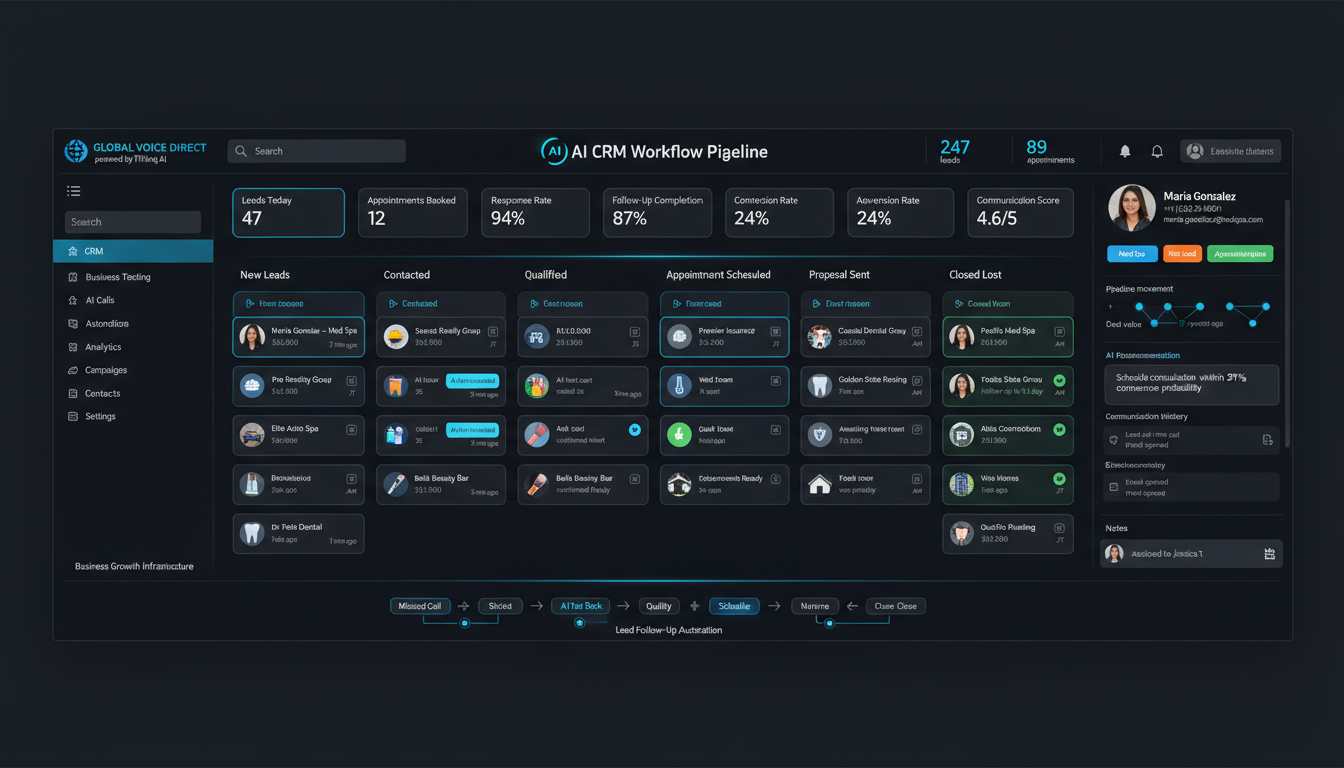
If execution is so important, why do so few businesses do it well?
Here are the five biggest execution killers:
| Execution Killer | What It Looks Like | The Cost |
|---|---|---|
| Perfectionism | “I’ll launch when it’s ready.” | Delays that kill momentum |
| Procrastination | “I’ll start Monday.” | Lost weeks, months, years |
| Distraction | Chasing every new idea or trend | Scattered effort, scattered results |
| Overlearning | Reading another book instead of acting | Knowledge without growth |
| Lack of accountability | No one tracking commitments or progress | Slow drift away from goals |
Perfectionism sounds like discipline. It is actually fear wearing a professional suit.
Overlearning feels productive. But reading about running is not the same as running.
The antidote to all five is the same: a repeating execution system.
Section 4
Execution Creates Momentum
When you execute consistently, something shifts.
Small actions compound. Results build confidence. Confidence fuels more action. That is the momentum cycle.
Momentum is not accidental. It is the output of consistent execution over time.
One percent better every day for a year equals 37 times better by year end. That is the power of the Compound Growth Framework — and it only activates when execution is consistent.
Consistency is the most underrated growth strategy in business. You do not need to be brilliant every day. You need to show up every day.
Progress — even slow progress — builds real confidence. And confidence is what keeps entrepreneurs moving when results are not yet visible.
Section 5
Communication Supports Execution

Execution does not happen in isolation.
Teams need clear communication to execute. Customers need reliable communication to trust. Accountability requires communication to function.
When communication breaks down, execution breaks down with it.
Business communication infrastructure — the systems that ensure your team can reach customers and customers can reach you — is a direct enabler of operational execution. Platforms like Global Voice Direct are built around this principle: that reliable, professional business communication is not a luxury — it is the operational backbone that makes consistent execution possible.
Three communication layers every executing business needs:
- Team communication — Clear channels for delegation, updates, and accountability
- Customer communication — Reliable systems for lead response, follow-up, and support
- Accountability communication — Regular check-ins that keep commitments on track
Section 6
Technology Supports Execution
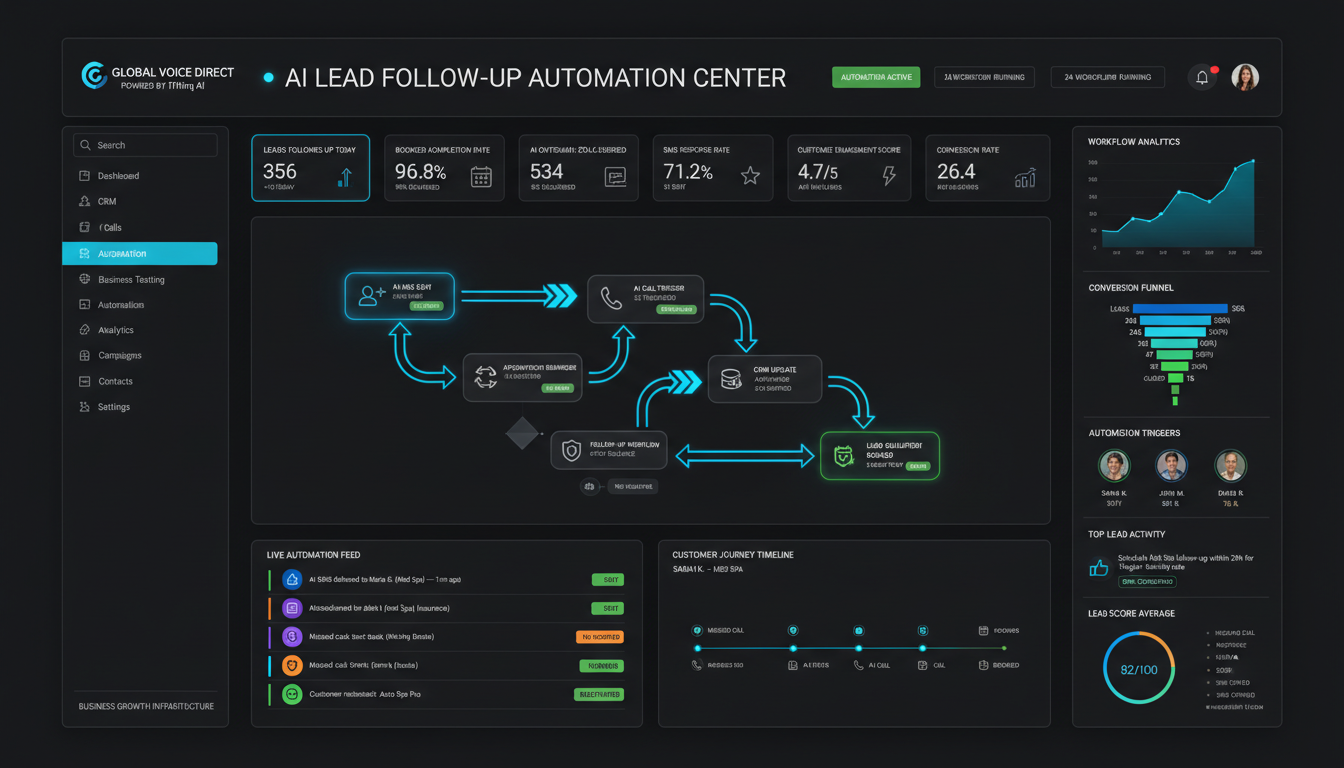
The right technology removes friction from execution.
Automation handles repetitive tasks so your team focuses on high-value work. CRM systems track relationships so nothing falls through the cracks. Workflow management tools keep processes running without requiring constant manual oversight.
AI tools are increasingly central to operational execution. Platforms like IThinq AI demonstrate how businesses can use artificial intelligence to improve communication consistency, automate follow-up sequences, and reduce the human error that typically interrupts execution cycles.
Technology does not replace execution discipline. It amplifies it. A disciplined executor with the right tools outperforms a skilled executor without them, every time.
| Technology Category | Execution Role | Business Outcome |
|---|---|---|
| Automation | Removes repetitive tasks from human load | More consistent output, less human error |
| CRM Systems | Tracks relationships and pipeline stages | No leads lost, better follow-up rates |
| Workflow Management | Structures repeatable processes | Faster task completion, team clarity |
| AI Tools | Enhances communication and decision speed | Improved responsiveness, fewer execution gaps |
Section 7
The Execution Flywheel™
Execution creates a self-reinforcing cycle. Once it is spinning, it becomes easier to keep it spinning than to stop.
The flywheel is hardest to start. Once it builds speed, it accelerates on its own. This is why the first weeks of consistent execution feel difficult — and why businesses that push through that early resistance compound faster than those that stop.
Section 8
Common Execution Mistakes
Even motivated entrepreneurs make these errors. Recognizing them is the first step to correcting them.
| Mistake | What It Looks Like | The Fix |
|---|---|---|
| Waiting for perfect conditions | “I’ll start when the timing is right.” | Set a start date and honor it |
| Overplanning | Endless strategy sessions with no action | Plan 20%, execute 80% |
| Constant course changes | Pivoting before the strategy has time to work | Commit to a system for 90 days minimum |
| Lack of measurement | Not tracking results at all | Choose 3 metrics and review weekly |
| Abandoning systems too early | Quitting a process before it compounds | Trust the system long enough to see results |
Section 9
Execution Audit™ Checklist
Use this checklist to evaluate how well your business executes today.
Execution Audit™
- I have one clear primary goal my business is focused on right now
- That goal has a specific deadline and measurable outcome
- I have broken that goal into weekly action steps
- My team knows what they are responsible for each week
- We have a system for tracking progress on key actions
- I take action daily — even if conditions are not perfect
- I have eliminated or delegated low-priority distractions
- I review my key metrics at least once per week
- I have an accountability structure — a partner, coach, or system
- I update or improve our processes based on what the data shows
- My communication systems ensure no leads or tasks fall through cracks
- My team has the tools they need to execute without bottlenecks
- I am not spending more time learning than doing
- I have a repeating weekly rhythm that supports consistent execution
- I celebrate progress — not just final outcomes — to build confidence
Score yourself. Every unchecked item is a gap between your current state and the execution standard your business requires.
Ideas Are Common. Execution Is Rare.
I have built multiple businesses across different industries. And the pattern I see most clearly — both in my own journey and in the entrepreneurs I work with — is this: the gap between knowing and doing is where most businesses die.
Early on, I believed that more information was the answer. If I could just find the right strategy, the right framework, the right mentor — everything would click. What I discovered is that clarity comes from action, not from thinking. You learn your business by running it.
The entrepreneurs who grow fastest are not always the smartest. They are the most consistent. They make decisions quickly, execute imperfectly, learn from what the market tells them, and adjust. That cycle — action, feedback, adjustment — is what builds real business infrastructure.
Ideas are everywhere. The room is always full of people with great ideas. What separates the businesses that scale from the ones that stall is execution — and the systems built to support it.
— Jonas Janvier, Founder, Global Voice Direct & IThinq AI
Section 11
Execution Score™
Rate your business 1–10 in each of these five execution categories. Your total out of 50 is your current Execution Score™.
Do you have one specific goal your business is pursuing right now?
Are you taking meaningful steps toward that goal every day?
Are those actions happening on a reliable, repeating schedule?
Do you track results with specific metrics and review them regularly?
Do you update your approach based on what the data tells you?
| Score Range | Execution Level | Recommended Focus |
|---|---|---|
| 40–50 | High Executor | Optimize for scale and delegation |
| 28–39 | Developing Executor | Strengthen consistency and measurement |
| 15–27 | Early-Stage Executor | Build clarity and daily action habits |
| 0–14 | Pre-Execution | Start with one clear goal and one daily action |
Section 12
The Action Gap™
The Action Gap™ is the distance between what an entrepreneur knows they should do and what they actually do.
It is not an information gap. It is a behavior gap.
Imagine you know exactly how to ride a bike. You have read the instructions. You have watched videos. You have studied the physics. But you have never actually gotten on the bike and tried. That is the Action Gap™. The knowledge is there. The result is not — because the action never happened.
The Action Gap™ is caused by:
- Fear of failure or judgment
- Waiting until the plan feels complete
- No clear system for starting
- No accountability to maintain momentum
- Confusing activity with execution
The only way to close the Action Gap™ is to start — before you are ready, before it is perfect, before the timing feels right.
Section 13
How To Become A Better Executor
Execution is a skill. Like every skill, it can be trained.
| Practice | Why It Works | How To Start |
|---|---|---|
| One goal at a time | Focus multiplies execution power | Write your single priority and post it where you see it daily |
| Daily non-negotiables | Routine removes the decision to start | Identify 3 actions that must happen every day, no exceptions |
| Weekly reviews | Measurement reveals what is working | Spend 30 minutes every Friday reviewing your key metrics |
| Accountability partner | External pressure increases follow-through | Find one person to review commitments with each week |
| Done over perfect | Progress beats paralysis every time | Set a deadline that forces completion — not perfection |
| Systems over willpower | Systems run even when motivation fades | Build a checklist, workflow, or process for every recurring action |
This framework aligns directly with the principles inside the Focus Framework, the Decision-Making Framework, and the Entrepreneur Operating System — all of which depend on strong execution habits as their operational foundation.
Section 14
Frequently Asked Questions: Execution Framework
What is business execution?
Business execution is the practice of consistently carrying out your goals through planned, repeatable action. It is the process of turning strategy into results through disciplined daily effort and operational systems.
Why is the Execution Framework important?
The Execution Framework is important because knowledge alone does not create business growth. Most entrepreneurs know what they need to do — they simply do not do it consistently. A structured execution system closes that gap and creates repeatable results.
How do entrepreneurs improve execution?
Entrepreneurs improve execution by narrowing focus to one goal at a time, building daily non-negotiable actions, creating accountability structures, measuring progress weekly, and building repeating systems that remove the need for constant willpower.
What causes poor execution in business?
Poor execution is typically caused by perfectionism, procrastination, overlearning, lack of accountability, and constant course changes before a strategy has time to compound. The underlying cause is usually behavioral, not informational.
How do systems improve execution?
Systems replace willpower with structure. When the right actions are embedded into a repeating process, execution happens consistently regardless of motivation levels. Systems also create accountability and make it easier to measure what is working.
Why do some businesses grow faster than others?
Businesses that grow faster are typically better executors. They make decisions quickly, act on those decisions consistently, measure results, and adjust rapidly. The speed of their execution cycle — not their ideas — is usually the differentiator.
What is the difference between execution and activity?
Activity is motion. Execution is directed motion toward a specific outcome. A business can be extremely busy — full of meetings, emails, and tasks — while making very little real progress. Execution is busy-ness pointed at a measurable goal.
What is operational excellence?
Operational excellence is the sustained ability to deliver consistent results through optimized processes and clear accountability. It is what high-execution businesses look like from the inside — efficient, measurable, and continuously improving.
How does the Execution Framework™ relate to business growth?
The Execution Framework™ is the operational engine that drives growth. Without it, strategy remains theoretical. With it, strategy becomes a repeating system that compounds over time, building momentum, confidence, and measurable business results.
What is the Action Gap™?
The Action Gap™ is the distance between what an entrepreneur knows they should do and what they actually do. It is not caused by a lack of knowledge — it is caused by fear, perfectionism, lack of accountability, or the absence of a clear starting system.
How does accountability improve execution?
Accountability creates external pressure that increases follow-through. When a business owner commits to specific actions in front of a partner, coach, or system, they are statistically more likely to complete those actions than when working alone.
Can small businesses benefit from an execution framework?
Yes — especially small businesses. With limited resources, small businesses cannot afford wasted effort. An execution framework focuses energy on the highest-impact actions and ensures that limited time and money compound toward real outcomes rather than scattered activity.
What role does technology play in business execution?
Technology reduces friction and removes repetitive tasks from human execution. Automation, CRM systems, and AI tools allow teams to execute more consistently with fewer errors. Technology amplifies execution discipline — it does not replace it.
What is the Execution Flywheel™?
The Execution Flywheel™ is the self-reinforcing cycle that begins when consistent action produces results, which build confidence, which drive more consistency, which creates momentum, which accelerates growth, which enables more action. The flywheel is hardest to start and increasingly powerful once spinning.
How does communication support execution?
Execution depends on coordination — between team members, with customers, and across accountability structures. When communication systems are reliable and professional, execution happens faster and with fewer breakdowns. Weak communication is a silent execution killer.
What is the Execution Score™?
The Execution Score™ is a self-assessment scoring framework built around five execution dimensions: Clarity, Action, Consistency, Measurement, and Improvement. Entrepreneurs rate themselves 1–10 in each category to identify their strongest and weakest execution areas.
Is execution more important than strategy?
A good strategy poorly executed will lose to a mediocre strategy brilliantly executed almost every time. Strategy tells you where to go. Execution determines whether you actually get there. Both matter — but without execution, strategy is just a document.
How long does it take to build an execution system?
Basic execution habits can be established in 30 days. A full operational execution system — with measurement, accountability, and improvement cycles — typically takes 60–90 days to implement and a full quarter to see meaningful compounding results.
What is startup infrastructure and how does execution relate to it?
Startup infrastructure is the combination of systems, processes, communication tools, and operational frameworks that allow a business to function reliably and scale. Execution is what activates that infrastructure — it is the discipline of running the systems you have built, consistently and measurably.
What comes after mastering execution?
After mastering execution comes accountability infrastructure — the systems, structures, and habits that keep high performers on track over time. This is explored in depth in the next framework: the Accountability Framework, which builds directly on the execution habits established here.
Take The Next Step
Execution Turns Potential Into Results
The entrepreneurs who achieve the most are not always the ones who know the most. They are the ones who consistently execute what they know. Build the communication infrastructure that keeps your execution running without gaps.
Build Your Business Infrastructure →