

Business Infrastructure: The Foundation Behind Every Successful Company
Most founders chase growth. Almost none build the systems that growth needs to survive. Here is the framework that separates businesses that scale from businesses that stall.

Most entrepreneurs focus on growth. They focus on sales, marketing, advertising, and social media. Very few focus on infrastructure.
The truth is simple. Businesses rarely fail because they lacked ambition. They fail because they never built the systems needed to support the growth they were chasing.
Think of it like a house. You can pick beautiful furniture, paint, and fixtures. But if there is no foundation underneath, the whole thing cracks the moment any weight lands on it. Business infrastructure is that foundation — invisible when it works, catastrophic when it’s missing.
Business infrastructure is the collection of systems, tools, and processes that let a company operate, communicate, and grow without breaking. It includes your legal foundation, credibility, communication systems, technology, and growth processes. Strong infrastructure turns effort into consistency. Weak infrastructure turns growth into chaos.
What Is Business Infrastructure?
Business infrastructure is everything working behind the scenes so the front of your business can run. Customers rarely see it. But they feel it every time something works smoothly — or doesn’t.
Business Infrastructure
The full set of systems, tools, and processes a company uses to operate, communicate, and scale. It is the backbone everything else depends on.
Startup Infrastructure
The foundational systems a new company sets up early — formation, credibility, and communication — so it can grow without rebuilding from scratch later.
Business Systems
Repeatable processes that handle recurring work the same way every time, so results don’t depend on who happens to be available that day.
Operational Infrastructure
The day-to-day machinery — communication, technology, follow-up, and documentation — that keeps a business running predictably as volume grows.
Why Most Businesses Struggle To Scale
Scaling isn’t a marketing problem. It’s an infrastructure problem. Here is what quietly stalls most companies before they ever hit their ceiling.
No Systems
Everything lives in the founder’s head. The business can’t run for a single day without them physically present.
No Processes
The same task gets done a different way every time, so quality swings wildly and nothing improves.
Poor Communication
Calls go to a personal cell. Messages get missed. Customers can’t reach a business that looks like a side hustle.
Weak Follow-Up
Leads come in and quietly die. No reminders, no sequence, no second touch — just lost money.
Picture a plumber who is genuinely great at the work. Calls flood in. But there’s no system to answer them, no way to schedule, and no follow-up for quotes. Within a month he’s drowning, missing jobs he already won. He didn’t have a demand problem. He had an infrastructure problem.
The Business Infrastructure Framework™
Six layers, built in order. Each one supports the one above it. Skip a layer and everything stacked on top of it gets shaky.
Business Foundation
The legal and structural base that makes you a real, recognized business.
Business Credibility
The signals that tell customers, partners, and lenders you’re legitimate and here to stay.
Communication Infrastructure
The systems that make sure every customer and teammate can reach you — and that nothing falls through.
Technology Infrastructure
The tools that organize information and remove repetitive work from your plate.
Growth Infrastructure
The repeatable engines that turn attention into customers and customers into repeat revenue.
Scale Infrastructure
What lets the business grow beyond you — handing off work, capturing knowledge, and seeing the numbers clearly.
Why Communication Infrastructure Matters
Every business communicates. With customers, with leads, with teammates, with vendors. It’s the one layer that touches every other part of the company.
And it’s the layer most new businesses get wrong. When communication is weak, the damage is invisible at first and then everywhere at once:
- Lost leads who called once, got voicemail, and called a competitor instead
- Missed opportunities buried in a personal inbox no one checks consistently
- Customer frustration from slow, scattered, or unprofessional replies

This is why platforms like Global Voice Direct exist — to give a small business one organized system for calls, texts, and customer communication instead of a personal phone and a prayer. The point isn’t the tool itself. The point is that communication stops being something you hope works and becomes something you can rely on.
Technology Is No Longer Optional
There was a time when a small business could run on memory, sticky notes, and hustle. That time is over. The businesses that win today use technology to do the remembering, the following up, and the organizing — so the humans can do the work that actually needs a human.
CRM Systems
One place where every customer, lead, and conversation lives, so nothing depends on someone’s memory.
Automation
Routine follow-ups, reminders, and replies happen on their own, even while you sleep.
AI Tools
Answering, routing, and drafting handled intelligently, so small teams operate like big ones.
Customer Management
A clear view of who needs what and when, so no relationship gets neglected.
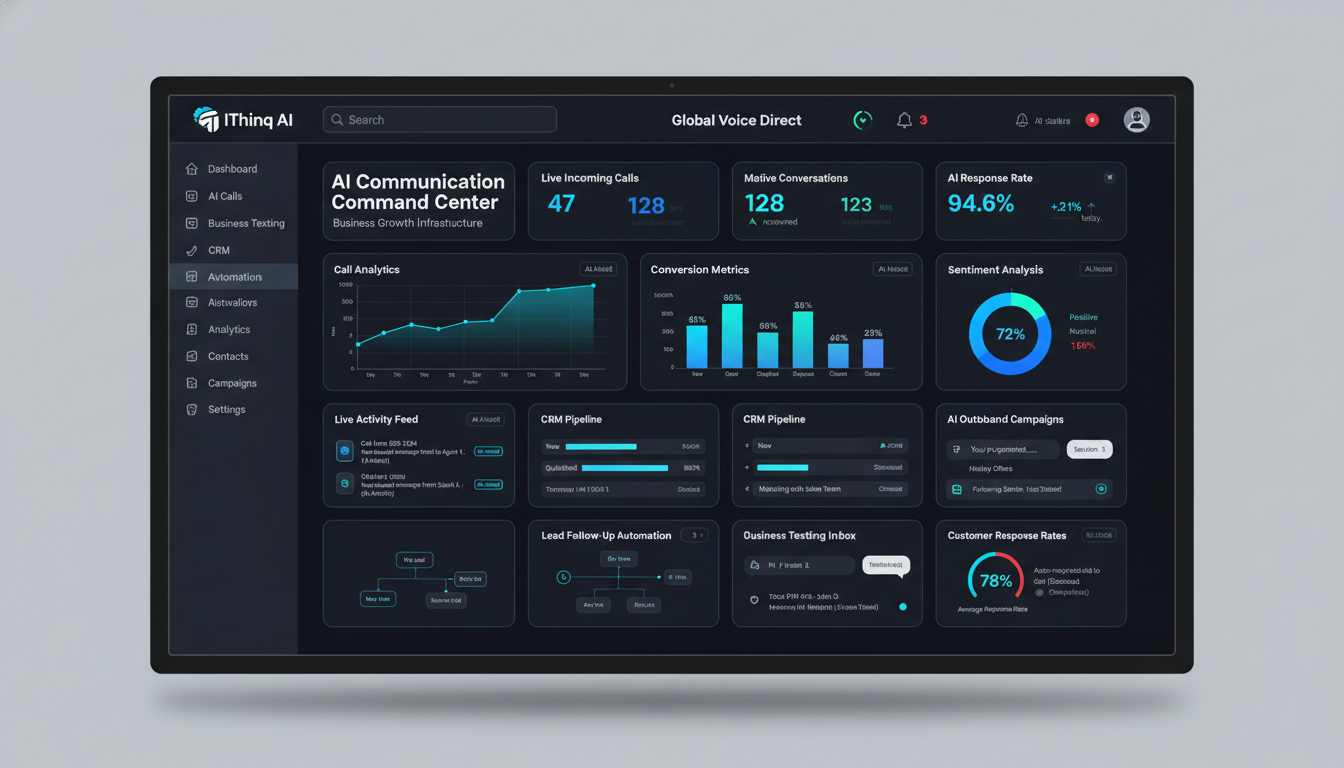
This is where AI changes the math for small companies. Technology like IThinq AI shows how businesses now use AI to handle communication and automation that once required a full team — answering, qualifying, and following up without dropping the ball. A founder with the right technology layer no longer competes at a disadvantage against bigger companies. They compete with the same leverage.
Business Infrastructure vs Business Growth
Growth and infrastructure are not the same thing — and confusing them is one of the most expensive mistakes a founder can make.
Growth without infrastructure creates chaos. Imagine pouring more and more water into a bucket full of holes. The more you pour, the more you lose. That’s marketing on top of broken systems: more leads, more dropped calls, more frustrated customers, more burnout.
Infrastructure creates consistency. Now imagine a real pipe. Whatever you put in comes out the other end, reliably, every time. That’s what systems do. They make growth repeatable instead of accidental.
Or think of a race car. Growth is the engine — raw power. Infrastructure is the brakes, the steering, and the chassis. Add a bigger engine to a car with no brakes and you don’t go faster. You crash sooner.
The Infrastructure Checklist™
Run your business through this. Every box you can’t check is a crack in the foundation.
- Business Foundation — LLC formed, EIN secured, business records organized and separate from personal
- Credibility — Real website, business email on your own domain, consistent professional presence
- Communication — A dedicated business phone system, organized customer messaging, and a way for the team to coordinate
- Technology — A CRM holding every contact, plus automation handling routine follow-up
- Growth Systems — Defined sales steps, a marketing engine, and a follow-up sequence that runs every time
- Documentation — Core processes written down so the business doesn’t live only in your head
Common Infrastructure Mistakes
These show up in almost every struggling business I look at — and they’re all fixable.
- Chasing growth before systems. Spending on ads while calls go to voicemail and leads die.
- No communication process. No reliable way for customers to reach you and get a timely answer.
- No CRM. Contacts scattered across a phone, an inbox, and a notebook.
- No automation. Every follow-up done by hand, which means most never happen.
- No follow-up system. Treating a “maybe later” as a dead end instead of a scheduled next step.
The Biggest Business Mistake I See Repeated Over And Over
I’ve watched a lot of founders pour everything into tactics. A new ad campaign. A new funnel. A new social platform. They’re convinced the next clever move is the thing that finally breaks them through.
But almost every time I look underneath, the tactics aren’t the problem. The foundation is. There’s no system answering the phone. No CRM holding the leads those ads generate. No follow-up catching the people who said “not yet.” They’re filling a leaky bucket faster and wondering why it never gets full.
The hard truth I keep coming back to is this: infrastructure isn’t the exciting part, which is exactly why it gets skipped — and exactly why skipping it is so costly. The founders who win aren’t the ones with the cleverest tactics. They’re the ones who built systems boring enough to actually last.
The Business Infrastructure Score™
Rate each layer from 0 to 20. Add them up. Your total tells you whether you’re building on rock or sand.
| Category | What It Measures | Points |
|---|---|---|
| Foundation | LLC, EIN, organized business records | 0–20 |
| Credibility | Website, business email, professional presence | 0–20 |
| Communication | Business phone system, customer and team messaging | 0–20 |
| Technology | CRM, automation, productivity tools | 0–20 |
| Growth Systems | Sales, marketing, and follow-up processes | 0–20 |
0–40
Fragile. Growth will create chaos faster than revenue. Build the base first.
41–75
Developing. The structure exists but has gaps that leak time and leads.
76–100
Scale-ready. Your systems can absorb growth without breaking.

Go Deeper On Each Layer
Coming next in this series: the Business Credibility Framework, the Startup Technology Stack, the Startup Operations Framework, and Startup Growth Systems.
Frequently Asked Questions
What is business infrastructure?
Business infrastructure is the set of systems, tools, and processes that let a company operate, communicate, and grow reliably. It includes your legal foundation, credibility, communication, technology, and growth systems.
Why is business infrastructure important?
Because growth without infrastructure creates chaos. Strong systems turn effort into consistent, repeatable results instead of one-off wins that depend on the founder being everywhere at once.
What is communication infrastructure?
It’s the systems a business uses to reach and respond to customers and teammates — phone systems, customer messaging, and team coordination — so nothing falls through the cracks.
What business systems are most important?
Start with foundation and communication. Without a legal base and a reliable way to reach customers, every other system you build sits on unstable ground.
How do businesses scale?
By building repeatable systems before adding volume. Scale comes from delegation, documentation, and automation that let the business grow beyond the founder.
What is startup infrastructure?
The foundational systems a new company sets up early — formation, credibility, and communication — so it can grow without rebuilding everything later.
What is the difference between growth and infrastructure?
Growth adds volume. Infrastructure handles that volume reliably. Growth without infrastructure is water poured into a leaky bucket.
Do small businesses really need a CRM?
Yes. A CRM keeps every contact and conversation in one place so leads don’t get lost in a phone or inbox. It’s the difference between organized follow-up and forgotten opportunities.
What is operational infrastructure?
The day-to-day machinery — communication, technology, follow-up, and documentation — that keeps a business running predictably as it grows.
Why do most businesses fail to scale?
Usually because they have no systems, no processes, and weak communication. They hit a ceiling built by their own lack of structure, not by lack of demand.
What is a business phone system?
A dedicated system for handling business calls and texts, separate from a personal phone, so customers reach the business reliably and professionally.
How does automation help a business?
It handles routine follow-ups, reminders, and replies on its own, so important touches happen consistently instead of depending on someone remembering.
What is business credibility?
The signals — a real website, business email, and professional presence — that show customers, partners, and lenders you’re a legitimate, established business.
When should I build infrastructure?
As early as possible. The cheapest time to build systems is before you need them. Retrofitting infrastructure under heavy load is far harder.
What is a follow-up system?
A defined sequence that ensures every lead gets a second, third, and fourth touch on schedule, instead of being treated as a dead end after one contact.
Can technology replace good systems?
No — technology amplifies systems. A tool layered on top of a broken process just produces broken results faster. Build the process, then add the tool.
How is AI used in business infrastructure?
AI now handles communication and automation — answering, qualifying, and following up — letting small teams operate with the leverage of much larger ones.
What is documentation in a business?
Writing core processes down so the business doesn’t live only in the founder’s head. It’s what makes delegation and scaling possible.
What’s the first infrastructure layer to build?
The business foundation — LLC, EIN, and organized records. Everything else, including credibility and credit, depends on it.
How do I measure my business infrastructure?
Score each layer — foundation, credibility, communication, technology, and growth — from 0 to 20. The total shows whether you’re scale-ready or building on sand.
Build The Foundation Before You Build The Empire
The strongest businesses aren’t built on luck or hustle alone. They’re built on systems, infrastructure, and consistency — the layers that turn a good idea into a company that lasts.